• June in the Garden

    June 23, 2025
    Overview

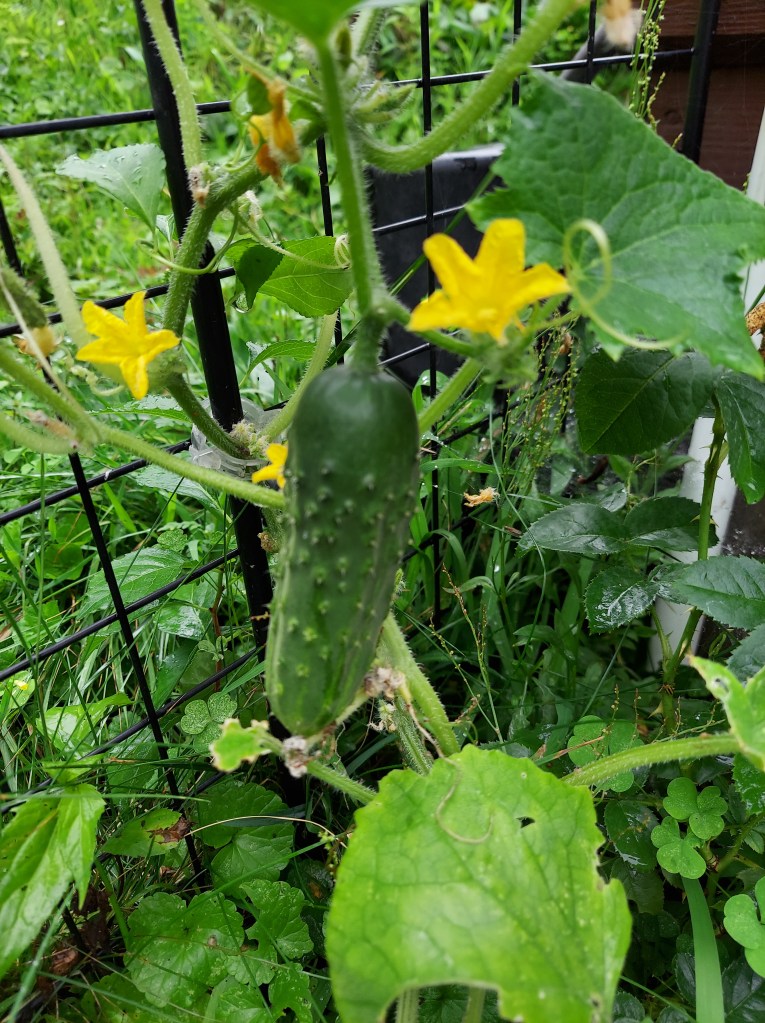
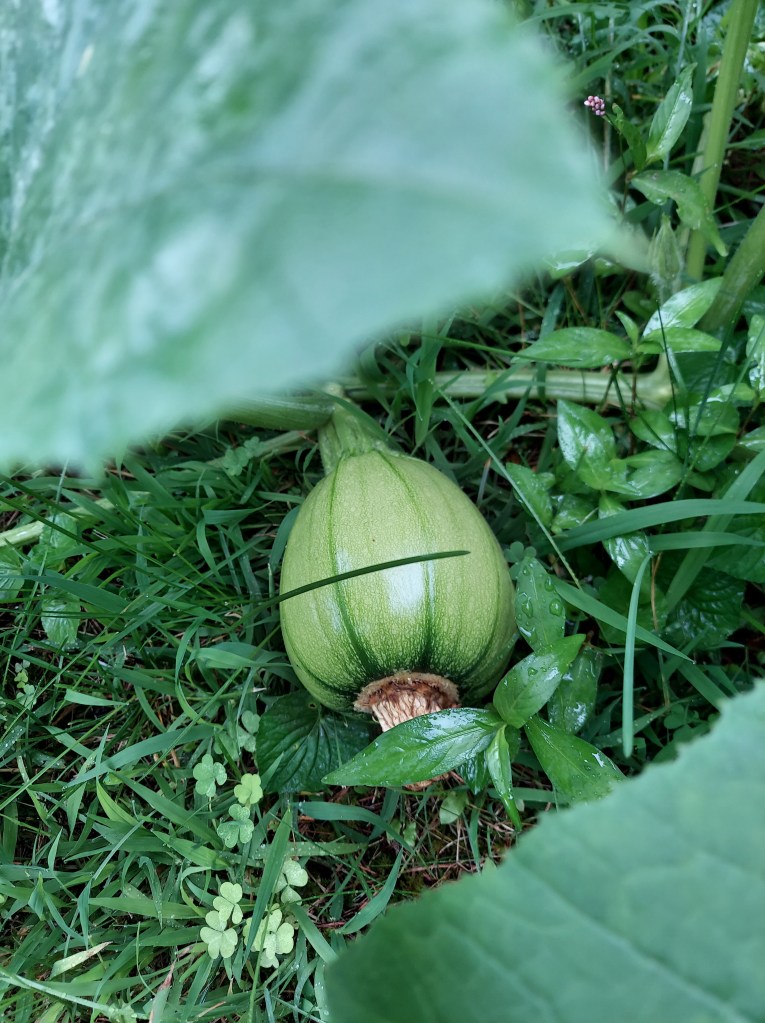
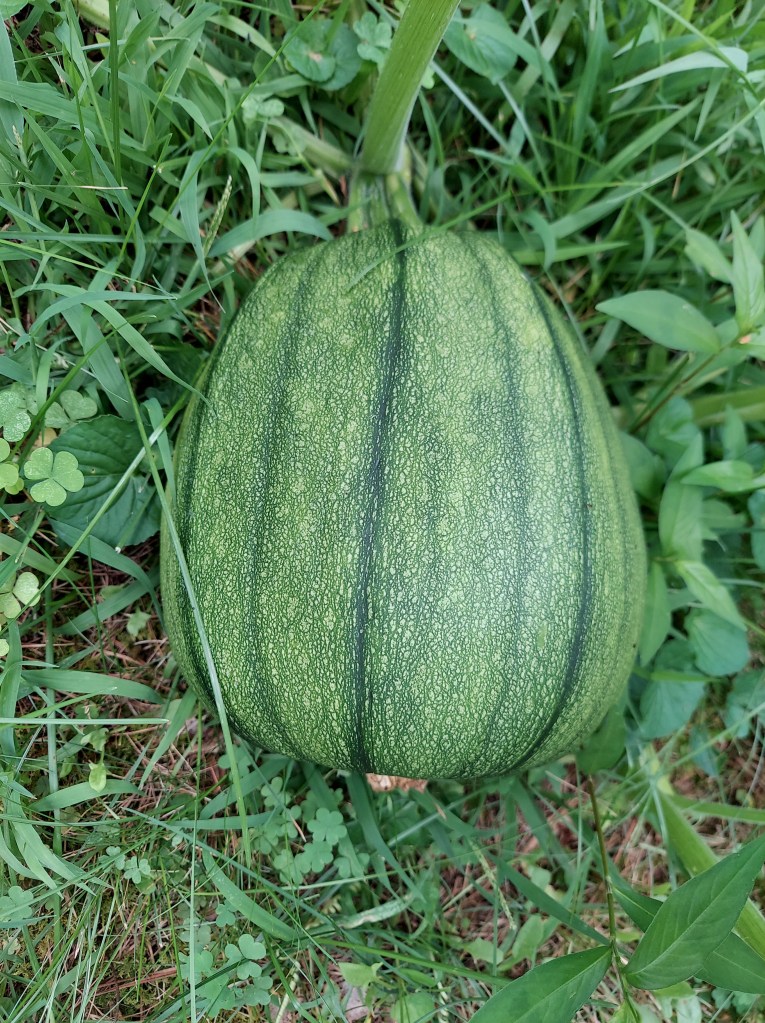
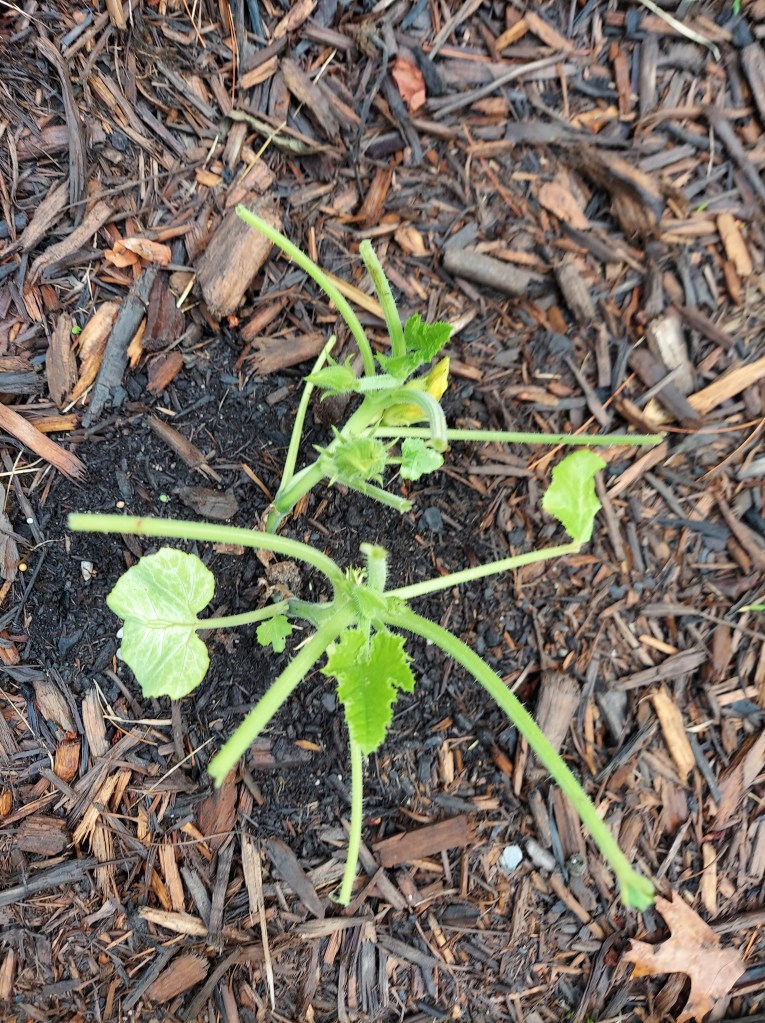
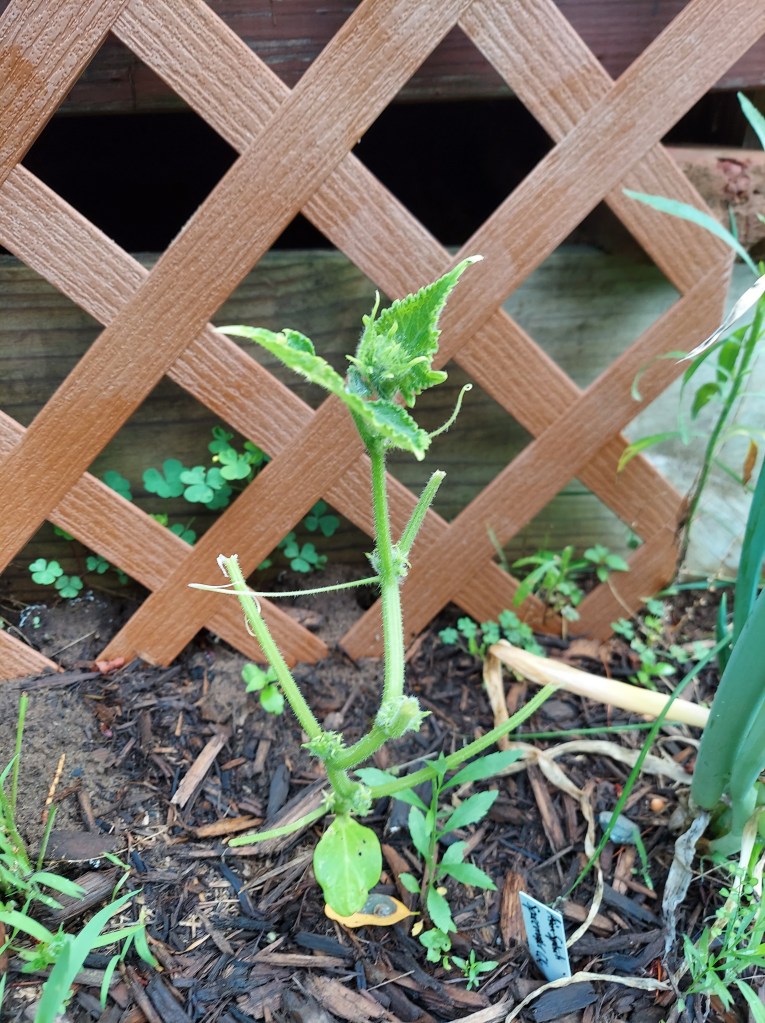
    We have just passed the summer solstice, and the garden is finally looking full and green. Albany has had a fair amount of rain over the past month, and lots of cloudy weather. It has been warming up over the last couple of weeks, and the summer plants are showing signs of growth. Most of the seedlings are now planted, the garlic is almost ready to come out, and the cucumber and squash seedlings are looking good.

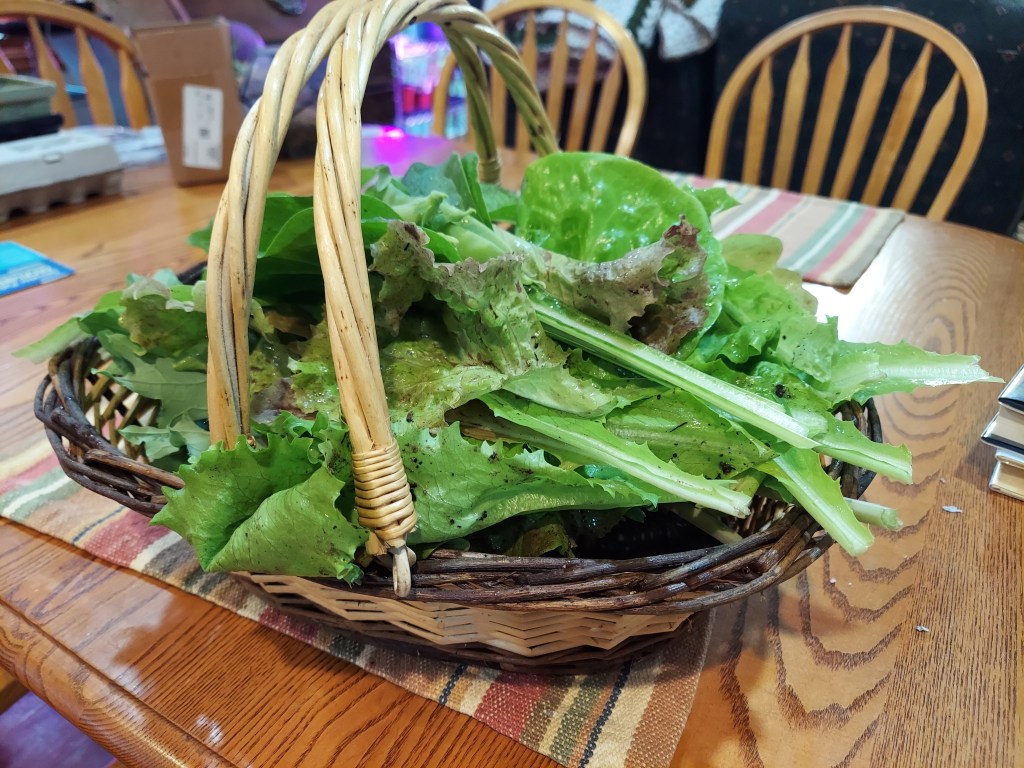
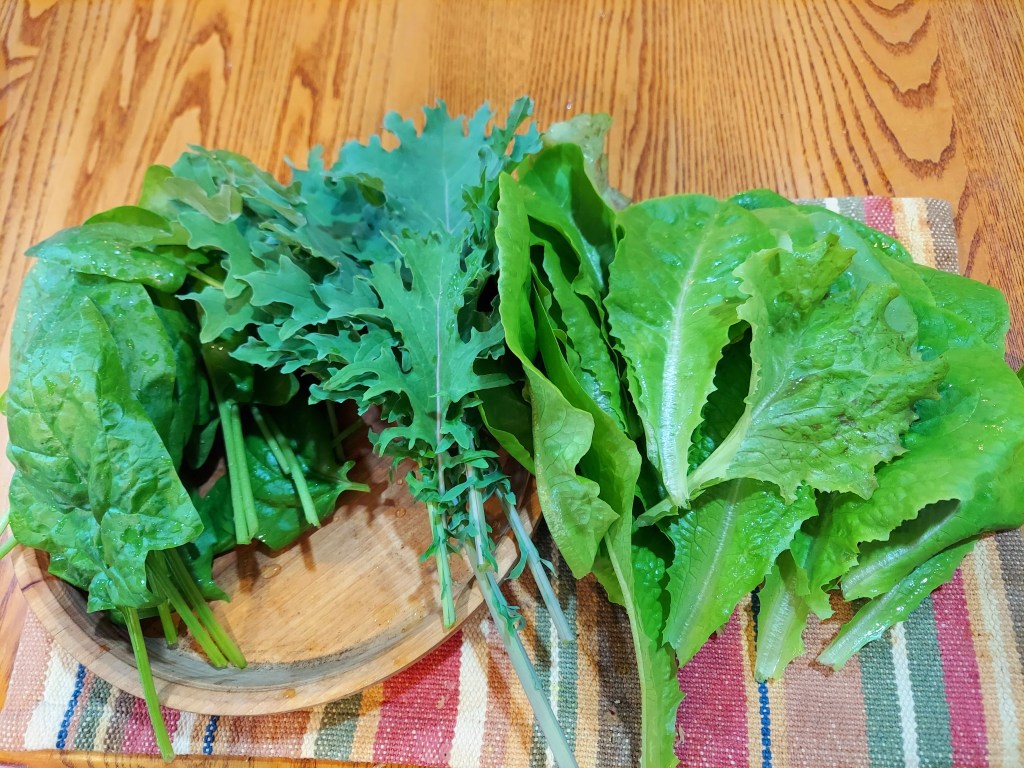
    A single day’s harvest of lettuce

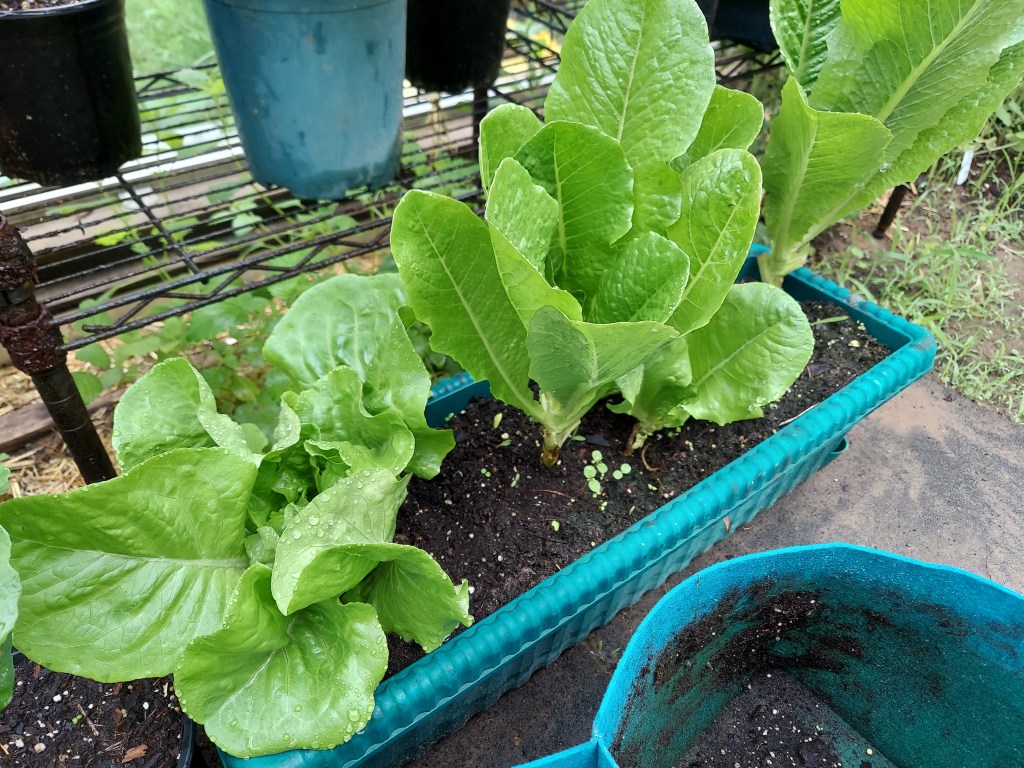
    The star of the show for the spring has been lettuce. I’ve never managed to grow this many lettuce plants before, or to have them be so healthy. I’ve been harvesting just the outer leaves of the plants, and the romaine is now producing full sized leaves.

    I direct sowed a couple of rows of a mesculin mix in the greenhouse in late April. This produced a variety of seedlings including romaine, butter crunch, oak leaf, and merlot lettuce. I have enjoyed the range of colors and shapes that have been growing. I did not thin them and just let them all grow close together. Then in late May I started transplanting them out of the greenhouse corner into other areas because I needed that spot for the cucumber plants.

    About a dozen of the lettuce plants went into planters and the rest were scattered about the garden beds wherever I could find room. The cool spring has allowed them to remain growing longer than I expected. Once the summer heat hits, they will most likely all bolt and start to go to flower. The plants stop focusing on leaves at that point, and they also become bitter. I’m taking advantage now while I have abundant leaves, and am sharing the harvests, since it’s more than 2 people can eat. I plan to sow some more seeds for a fall crop in August.

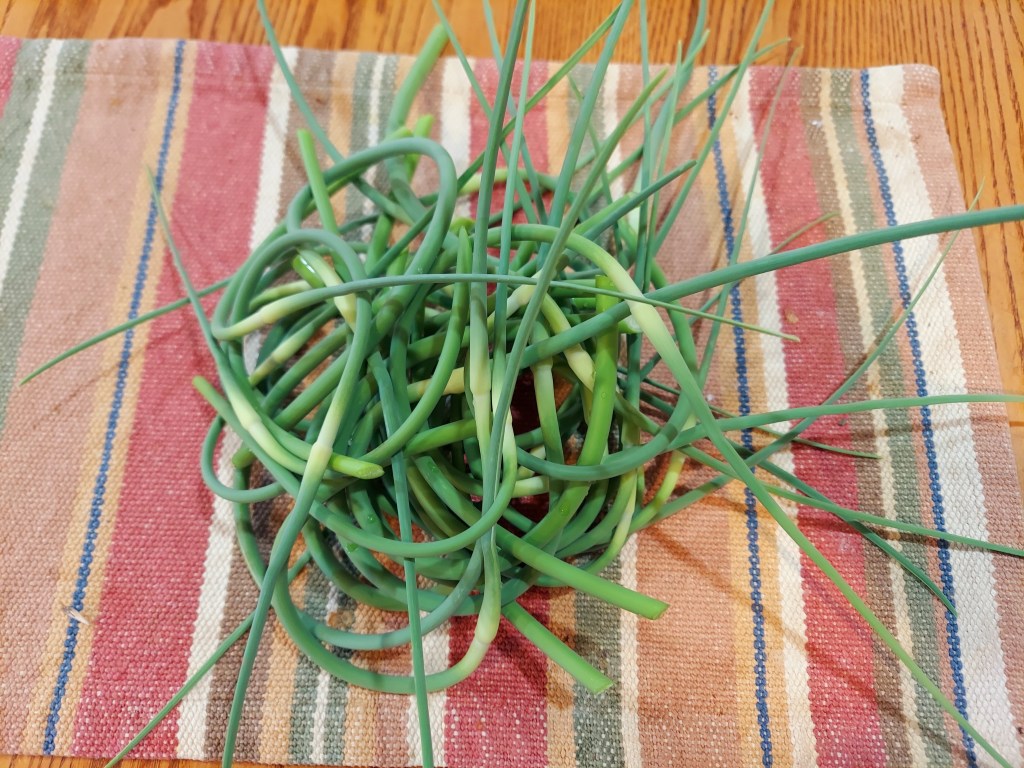
    I started harvesting the garlic scapes about 2 weeks ago from some of my plants. I have made 3 total harvests. Removing the scapes, which are actually the flower stalks, encourages the plant to focus it’s remaining energy into bulb production. This final month is when the garlic bulbs put on most of their growth and bulk up. I will probably harvest the garlic in mid-July.

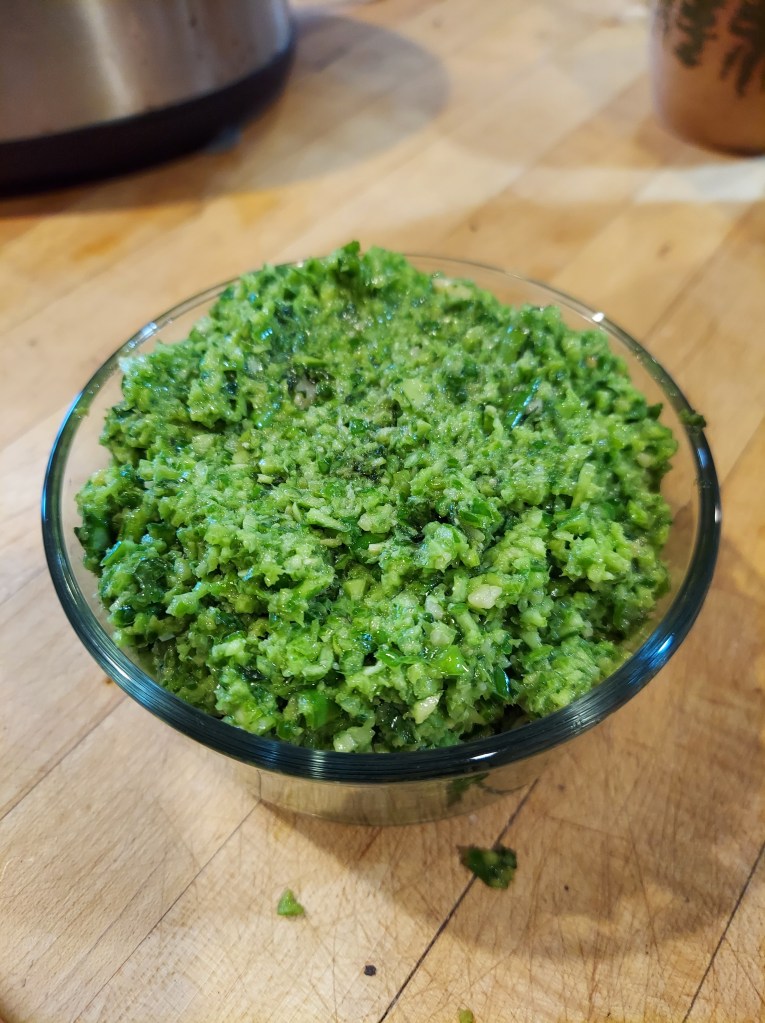
    I made my first batch of pesto, using mostly garlic scapes along with a few sprigs of basil off of my small plants. I ended up with 2 cups. I’ve been enjoying it as a dip for chips and on sandwiches.

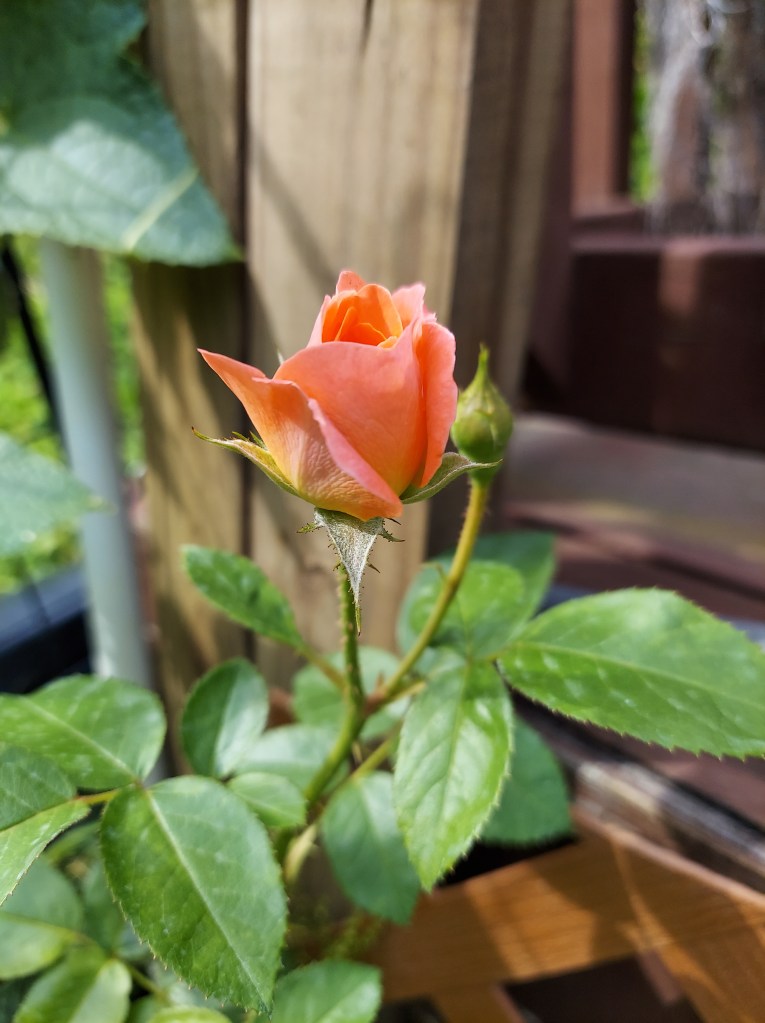
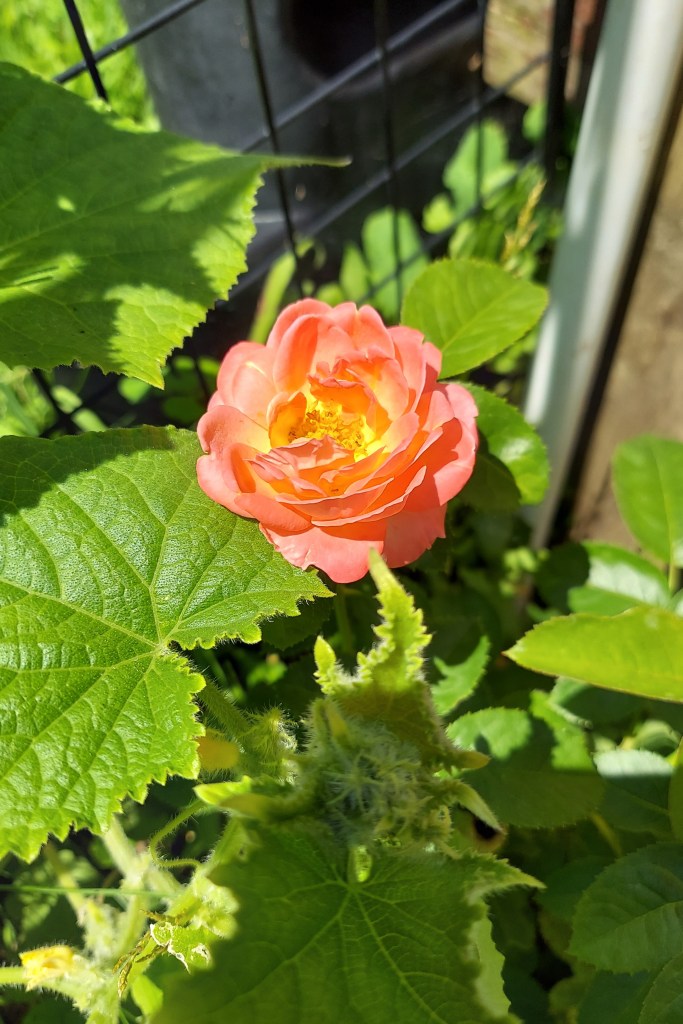
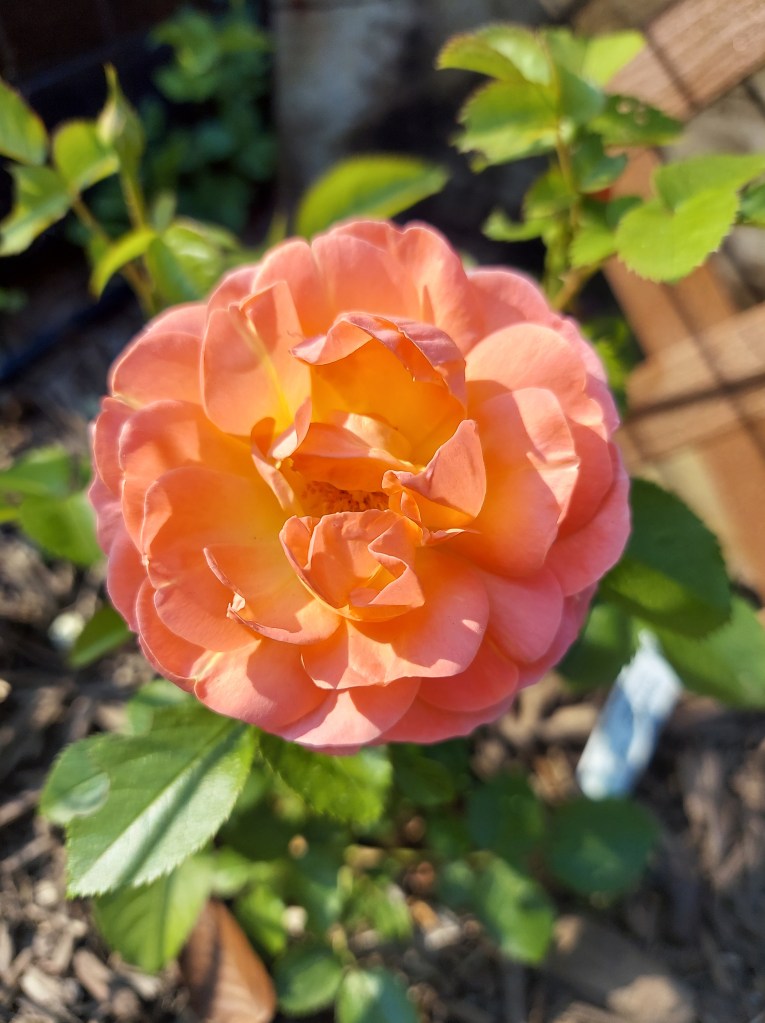
    The flowers in the garden have been starting to pop all over the garden. This is on my new, small peach rose bush.

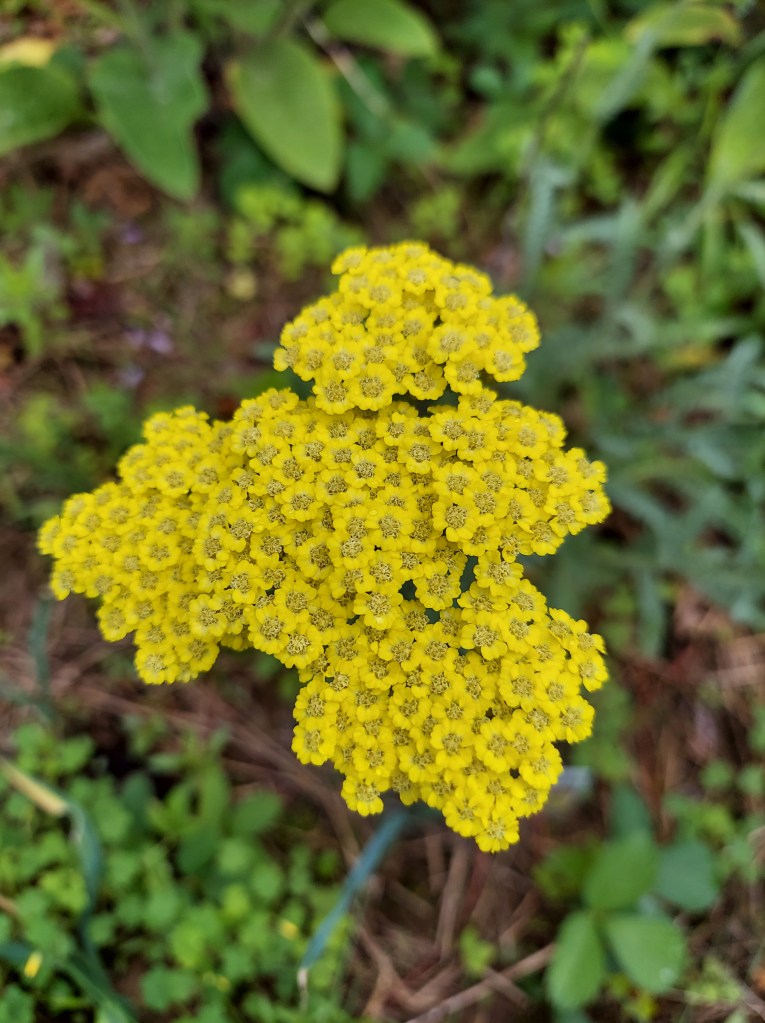
    My two small yarrow plants survived the winter and are starting to bloom now. It is a medicinal herb that I can harvest for use in a first aid salve. It’s also good for certain pollinators because it has lots of tiny flowers.

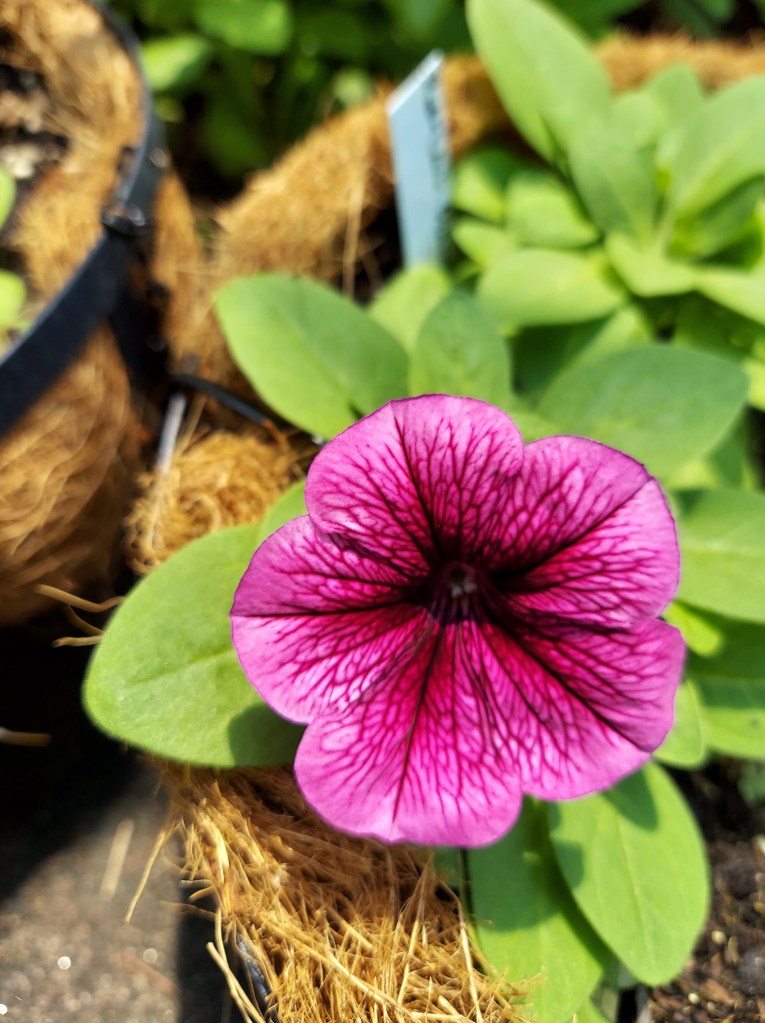
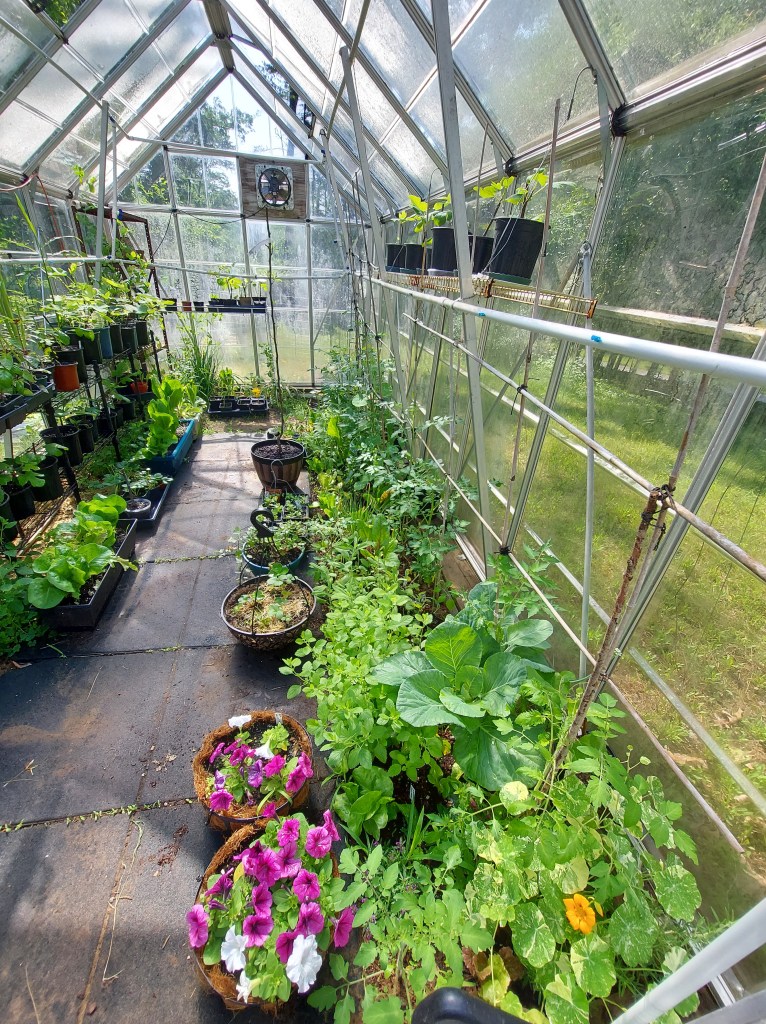
    The petunias in my homemade coco-coir hanging baskets are now blooming. I have purple and white flowers. They have been growing in the greenhouse but are now large enough to be moved outside and actually hung up.

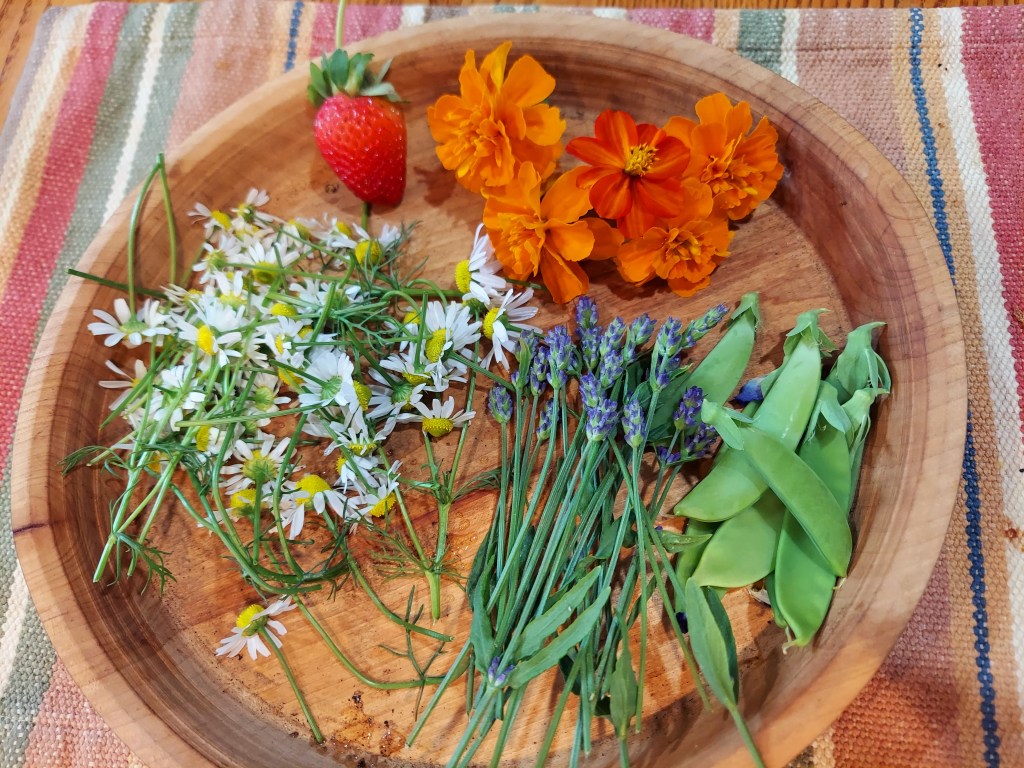
    I have been harvesting and drying my first few bunches of flowers, including lavender and chamomile for tea. The marigolds and cosmos can be used for natural dye.

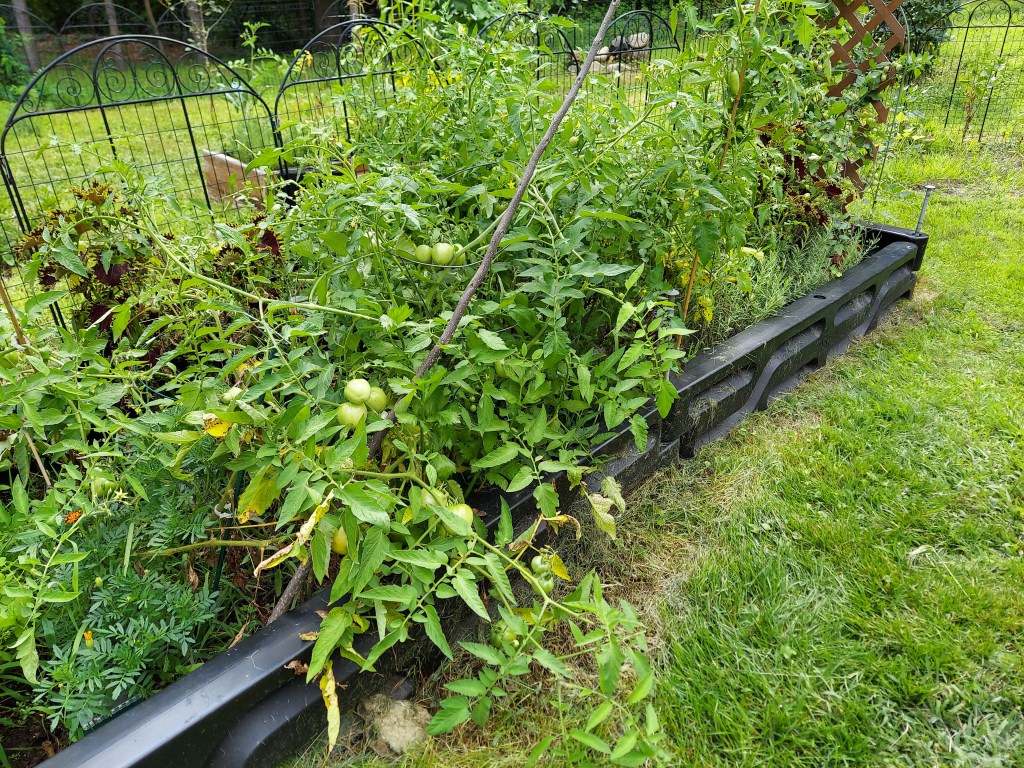
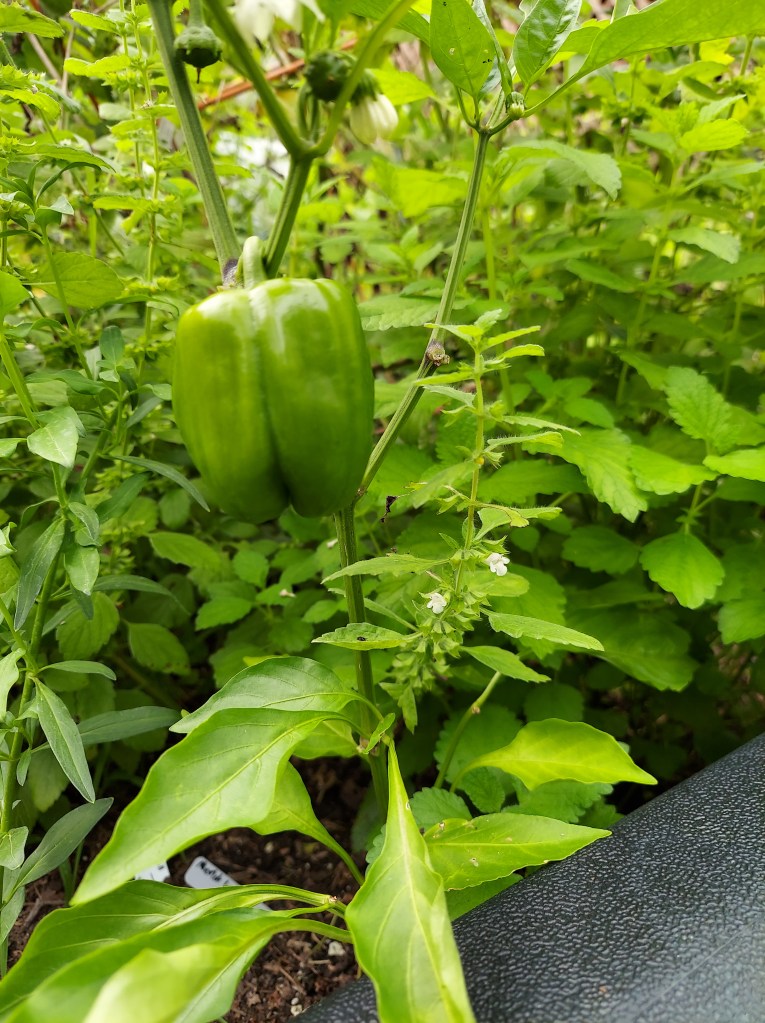
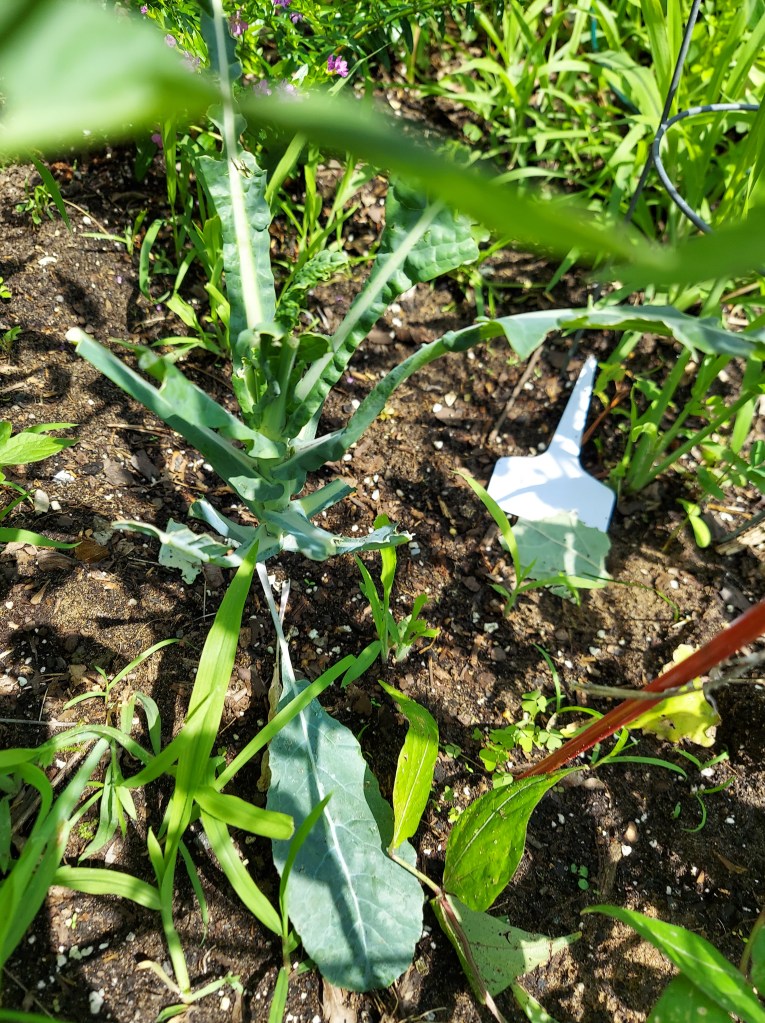
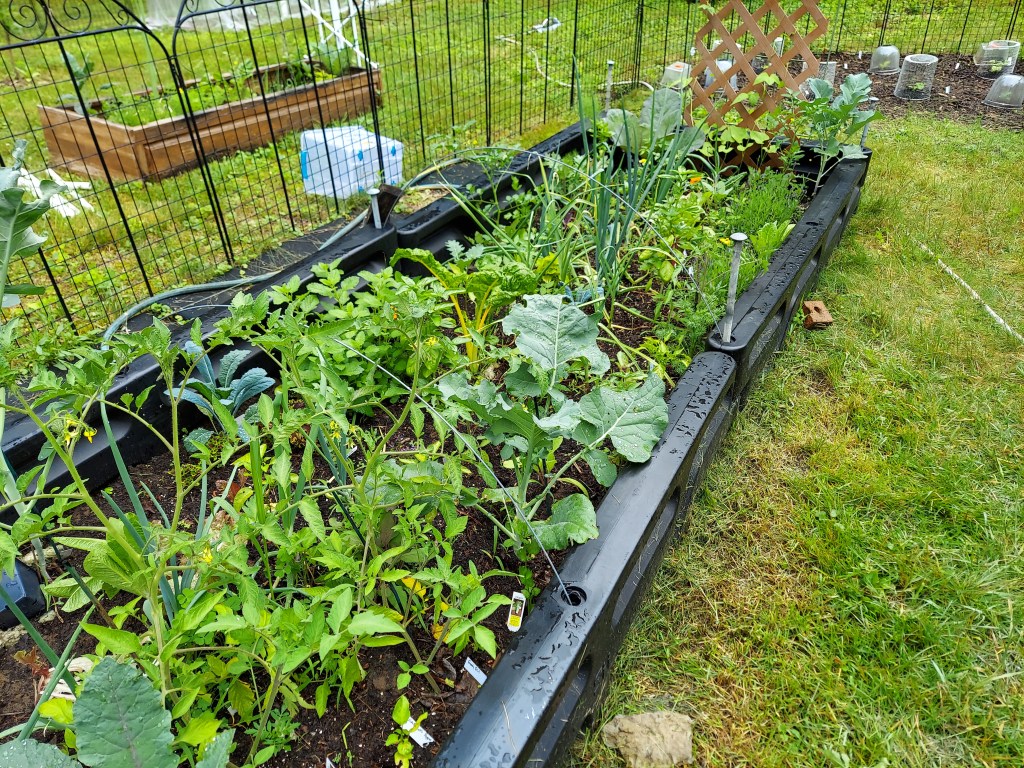
    The main garden bed is full of all sorts of plants, in various stages of growth. Garlic and onions run down the middle along with multiple tomatoes, peppers, kale, broccoli, lettuce, herbs and flowers scattered throughout. Beans are starting to climb the trellis on the end.

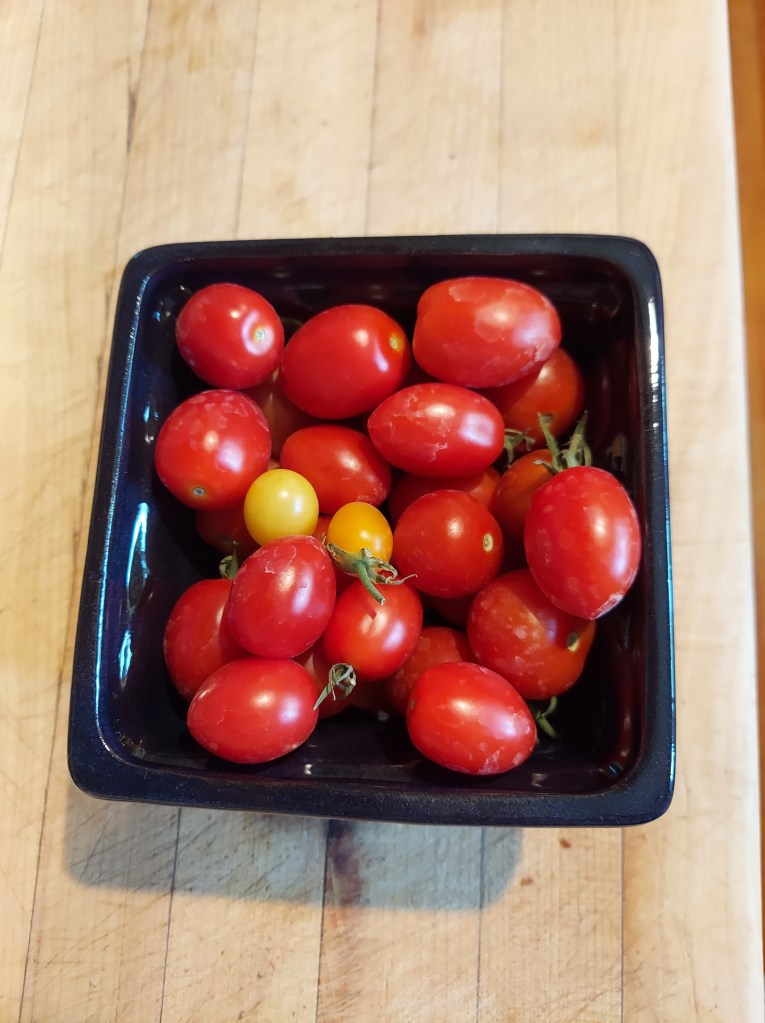
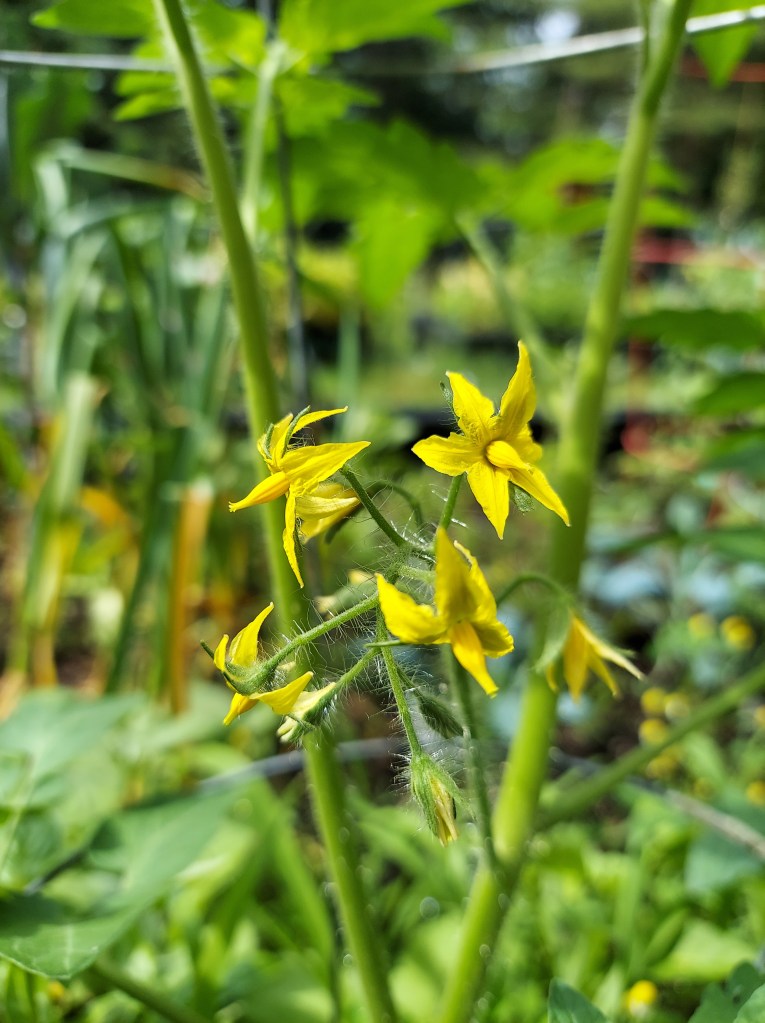
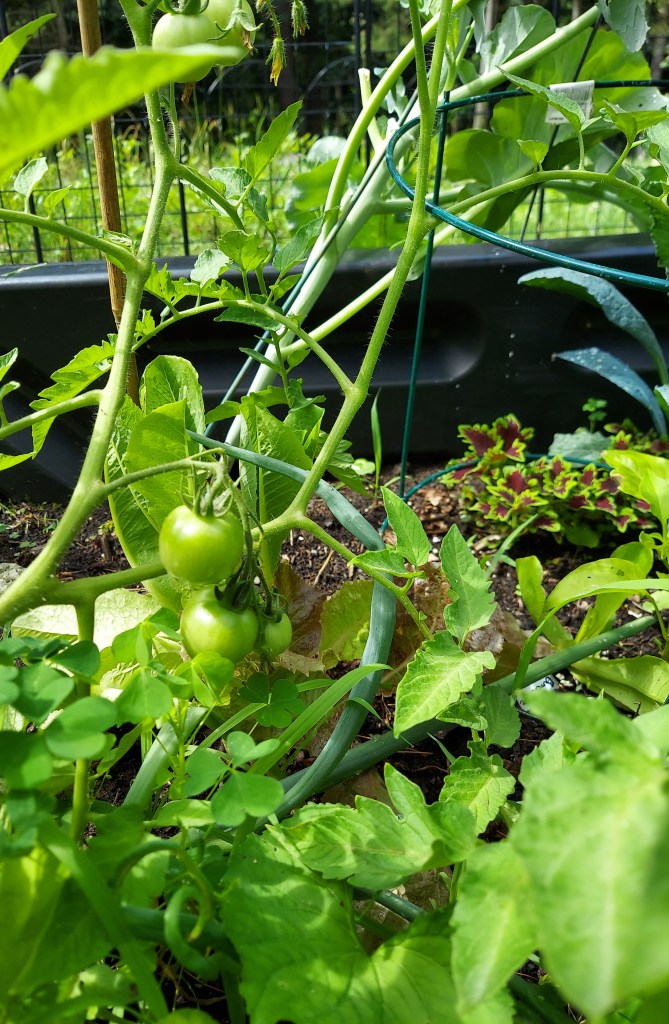
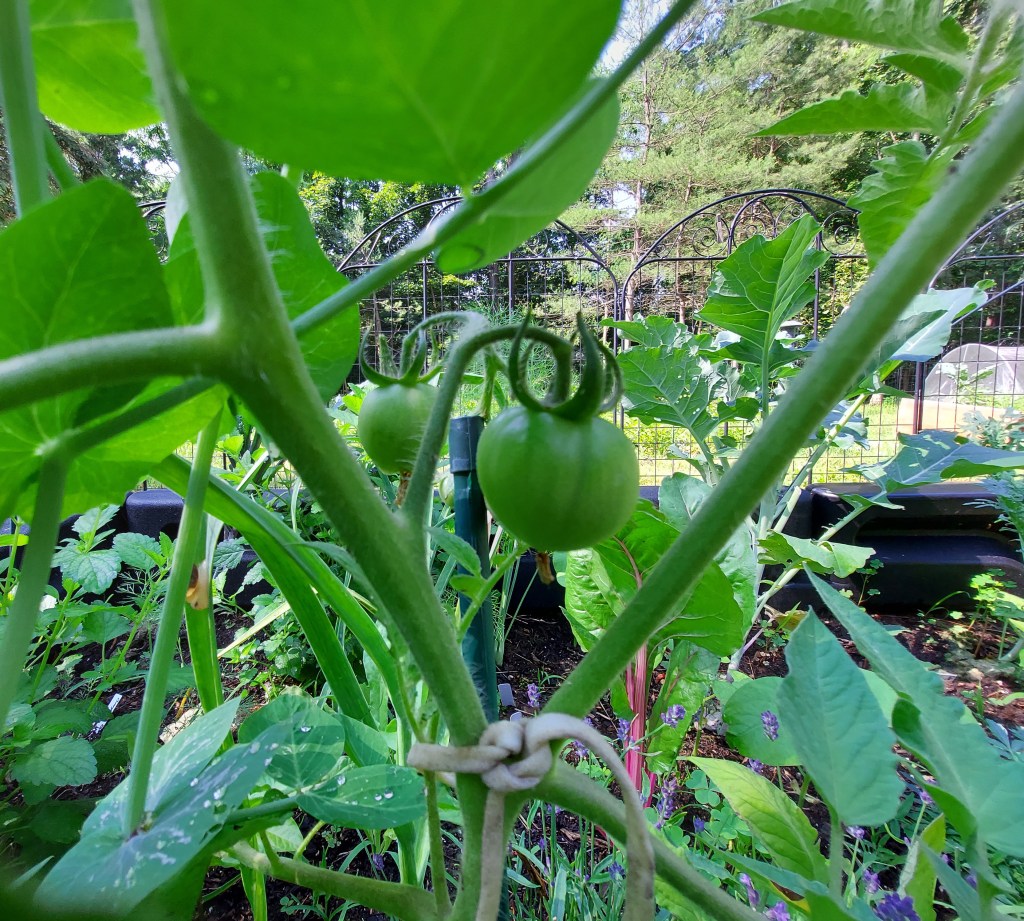
    The first of the Early Girl tomatoes are starting to grow, as are some cherry tomatoes. It’s almost tomato season.

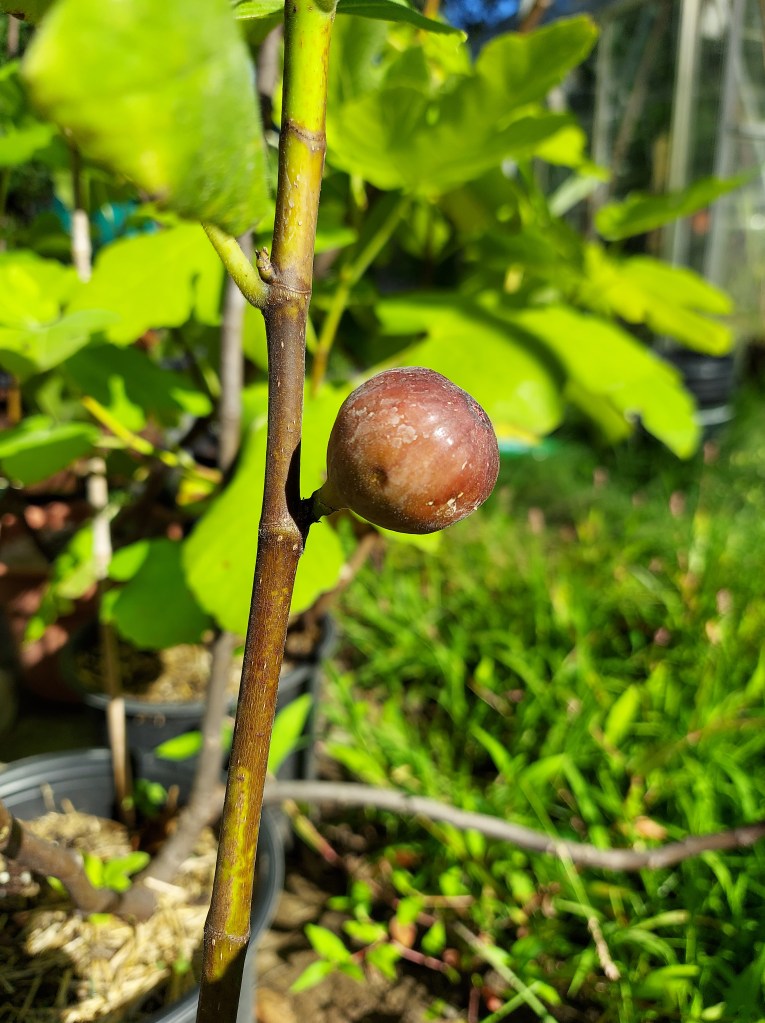
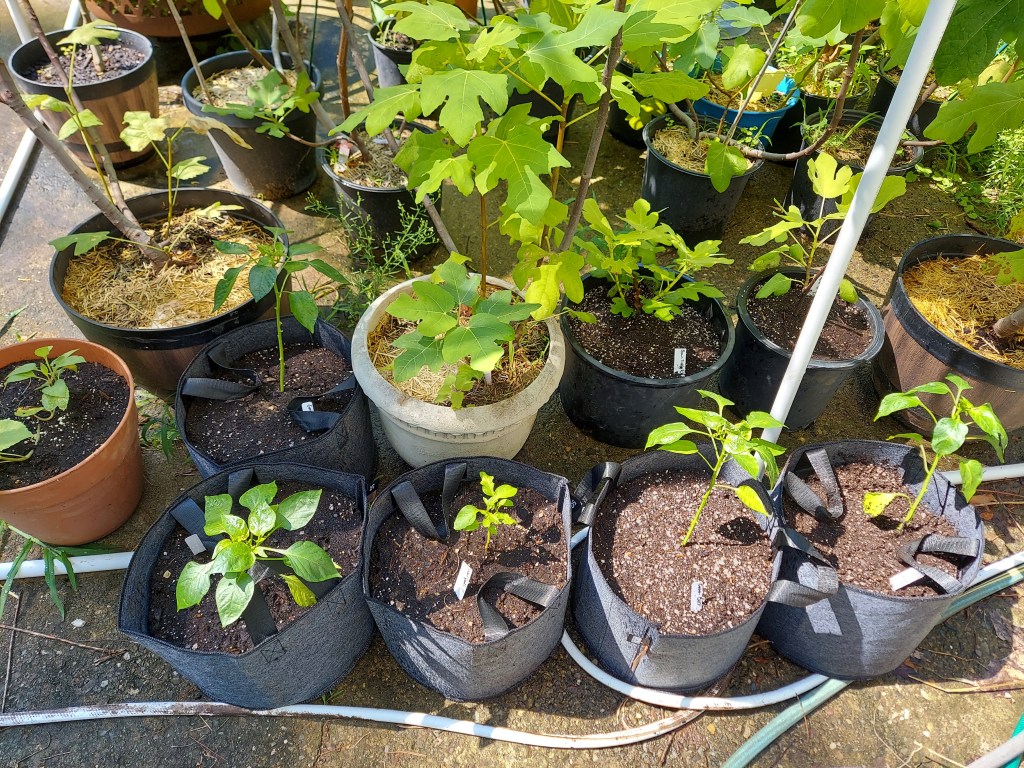
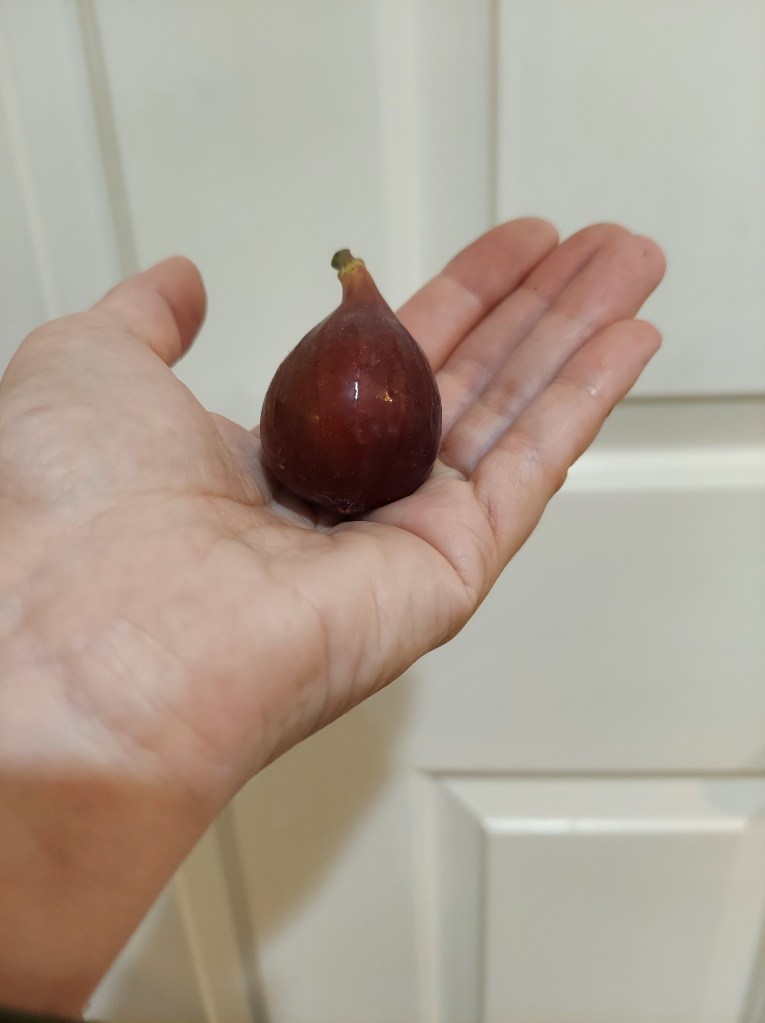
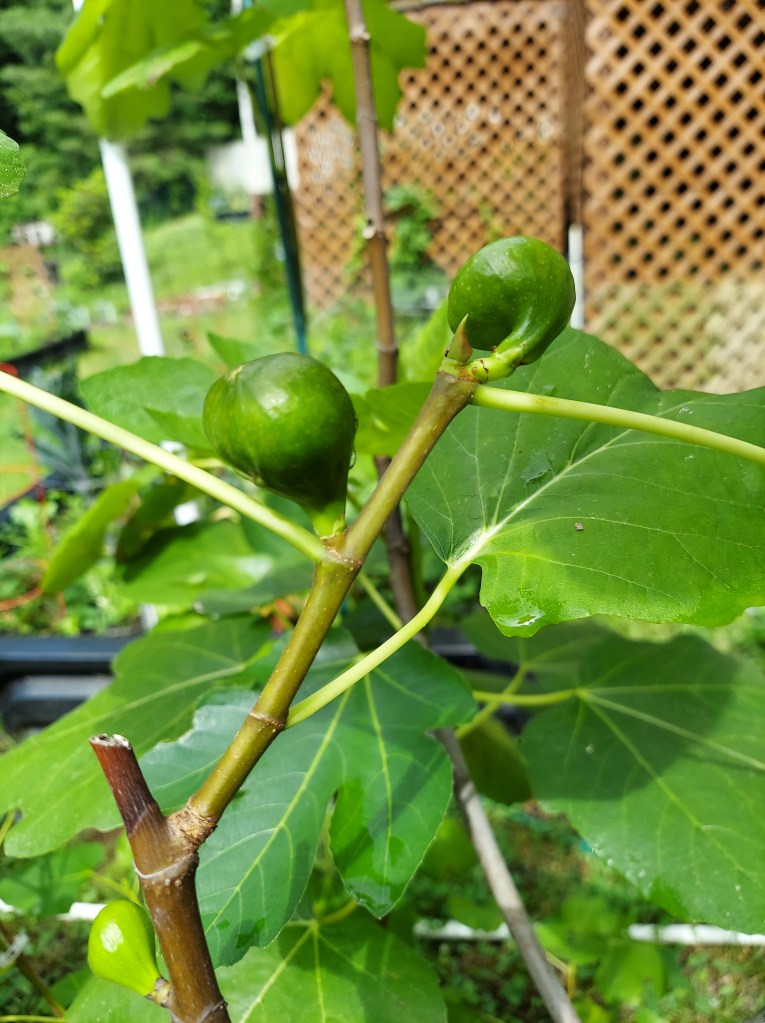
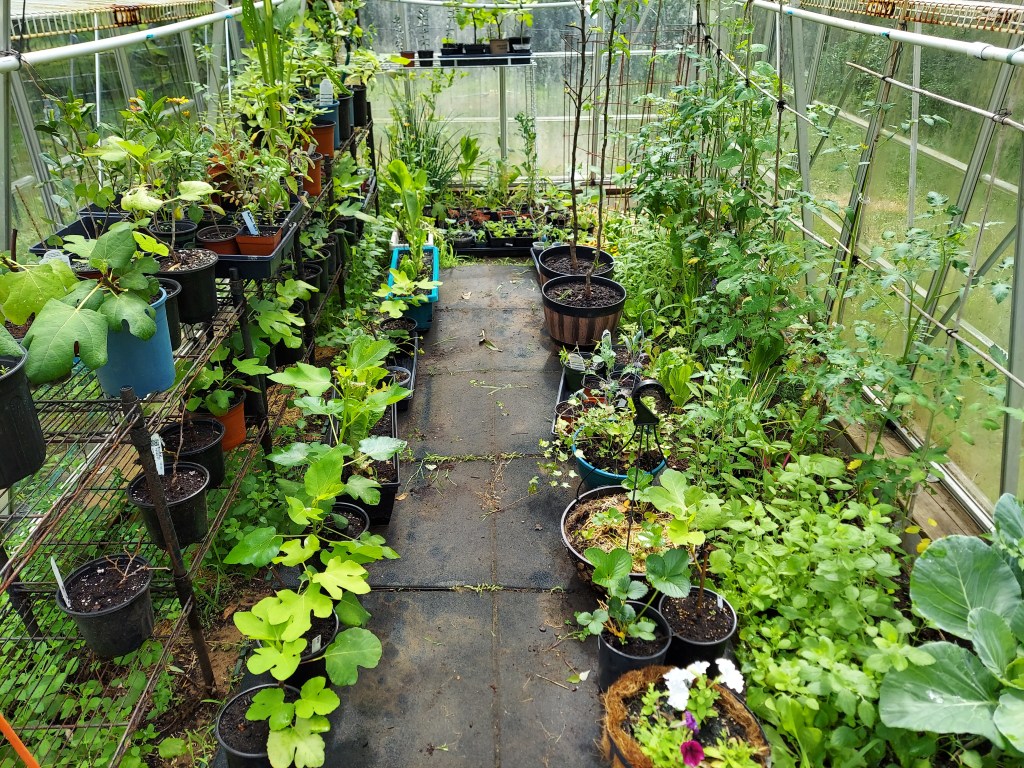
    The greenhouse is quite full at the moment, lots of plants in the ground and also in containers. There are a bunch of tomatoes near the bamboo trellis with lemon balm, sage, peppers, nasturtiums, lettuce, kale, marigolds, and rosemary interspersed throughout. My small potted fig trees are in the greenhouse, and a couple are even trying to produce figs. The far right corner has 5 cucumber plants and we need to put in the trellis before they get too much taller. The far left corner has snow peas.
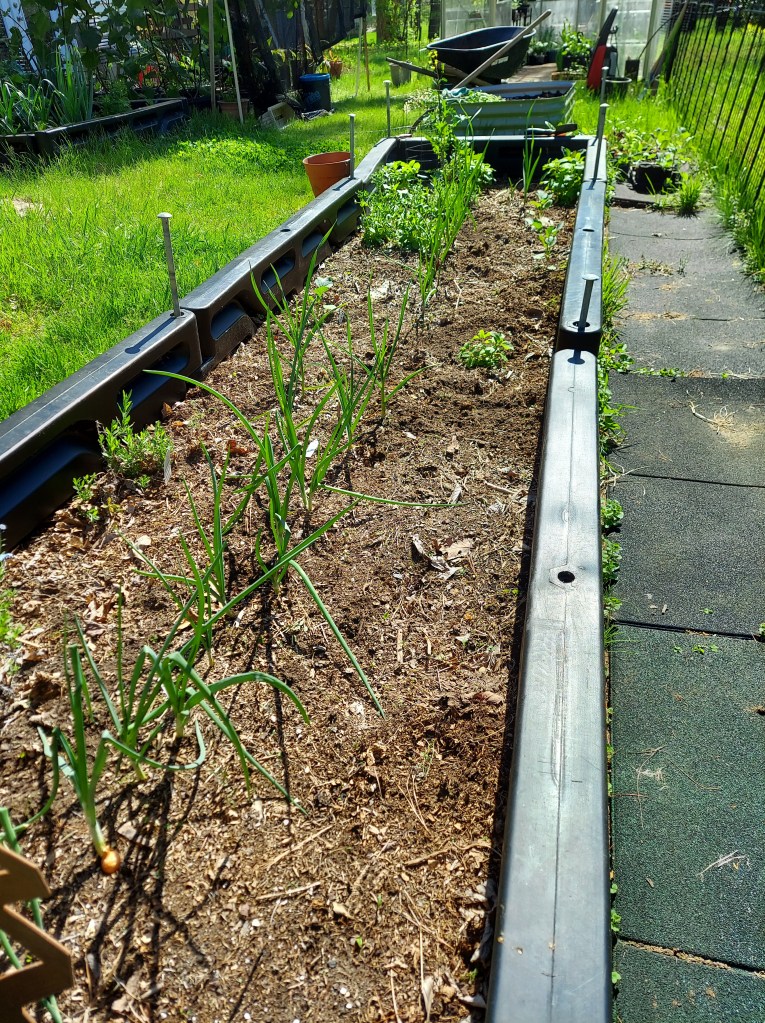
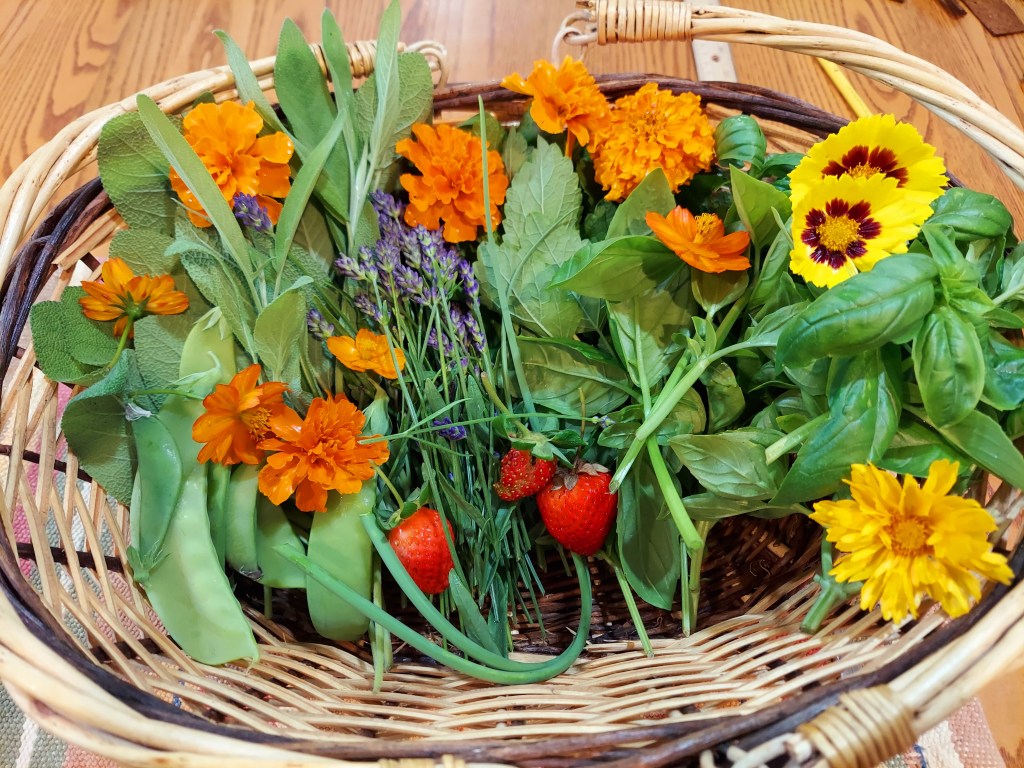
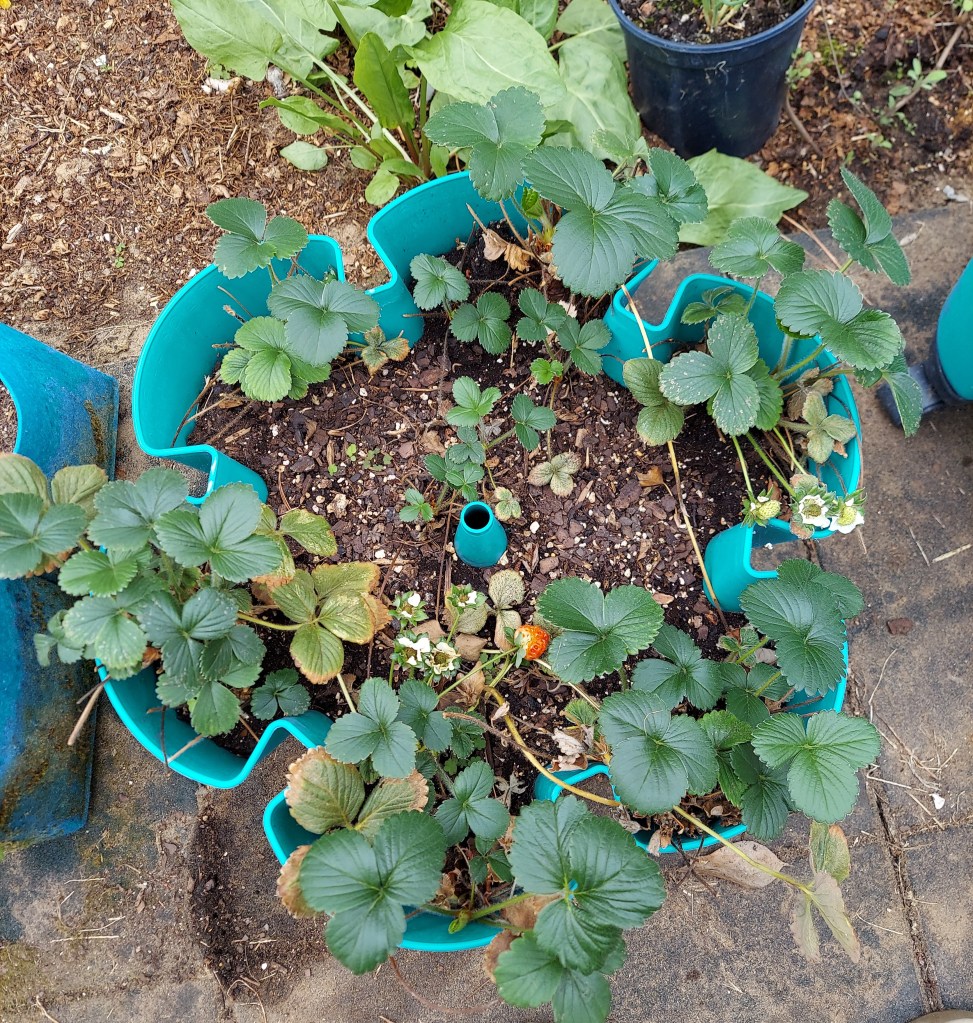
    Typical late spring harvest, lots of herbs have been hung up to dry, and there are a bunch of strawberries growing on their tower.

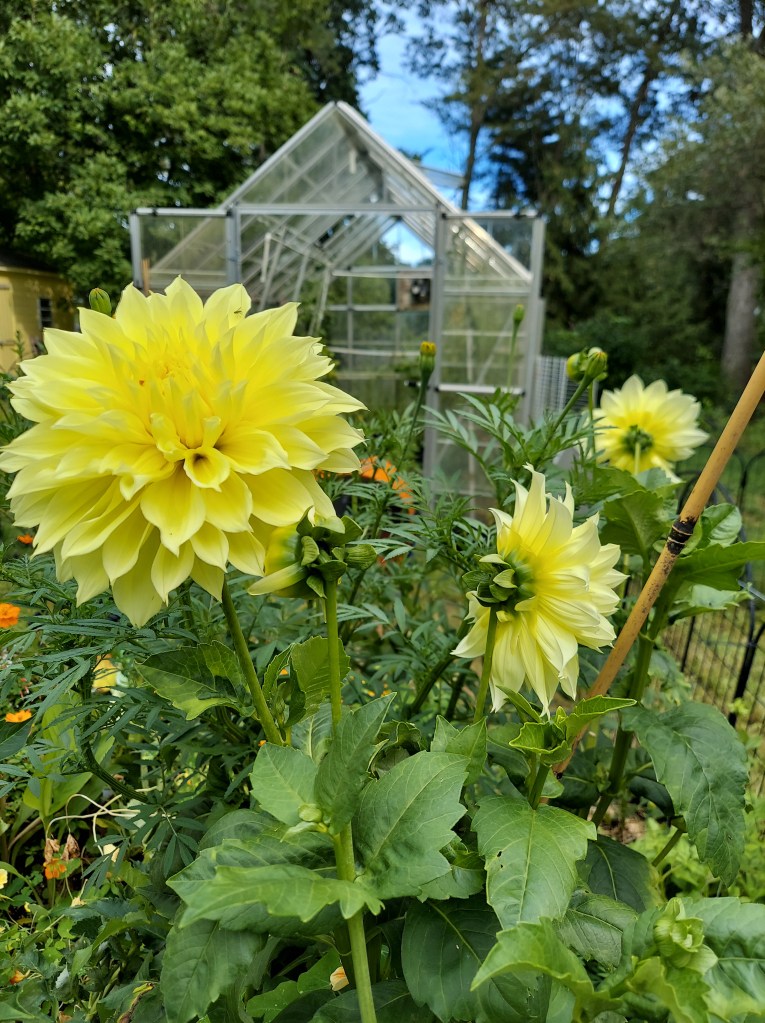
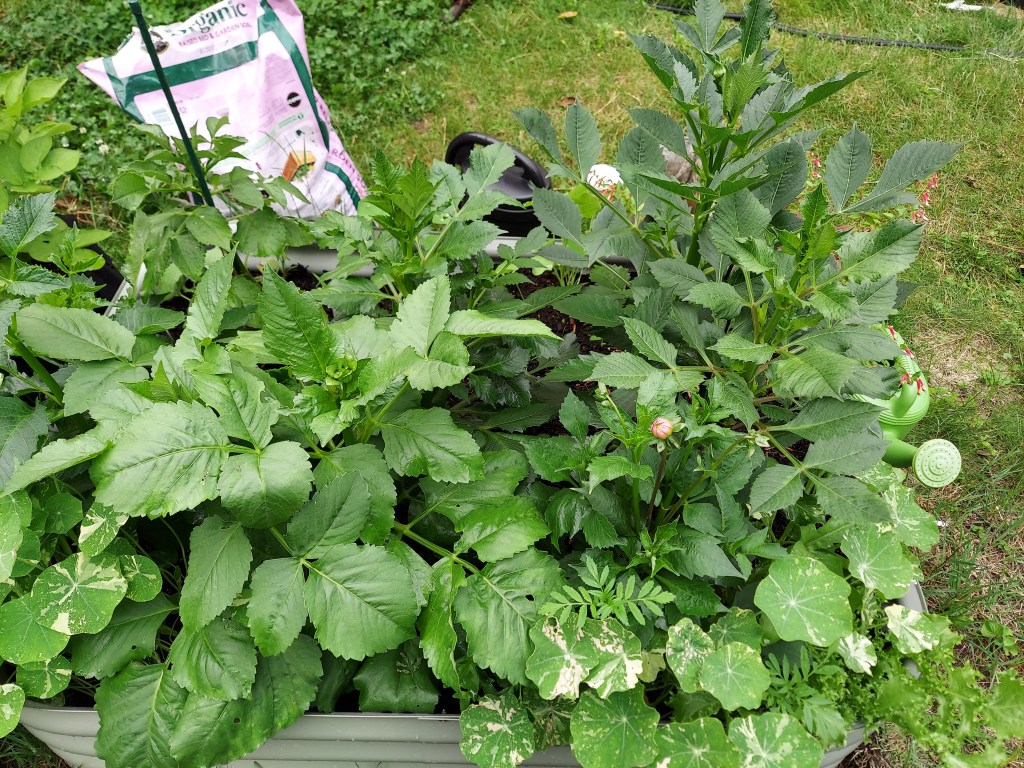
    My new raised bed is absolutely brimming with the dahlia plants. There are 7 in the bed along with some nasturtiums, marigolds, and calendula along the edges. The smaller plants are honestly getting crowded out, but I’m leaving everything to see what makes it.
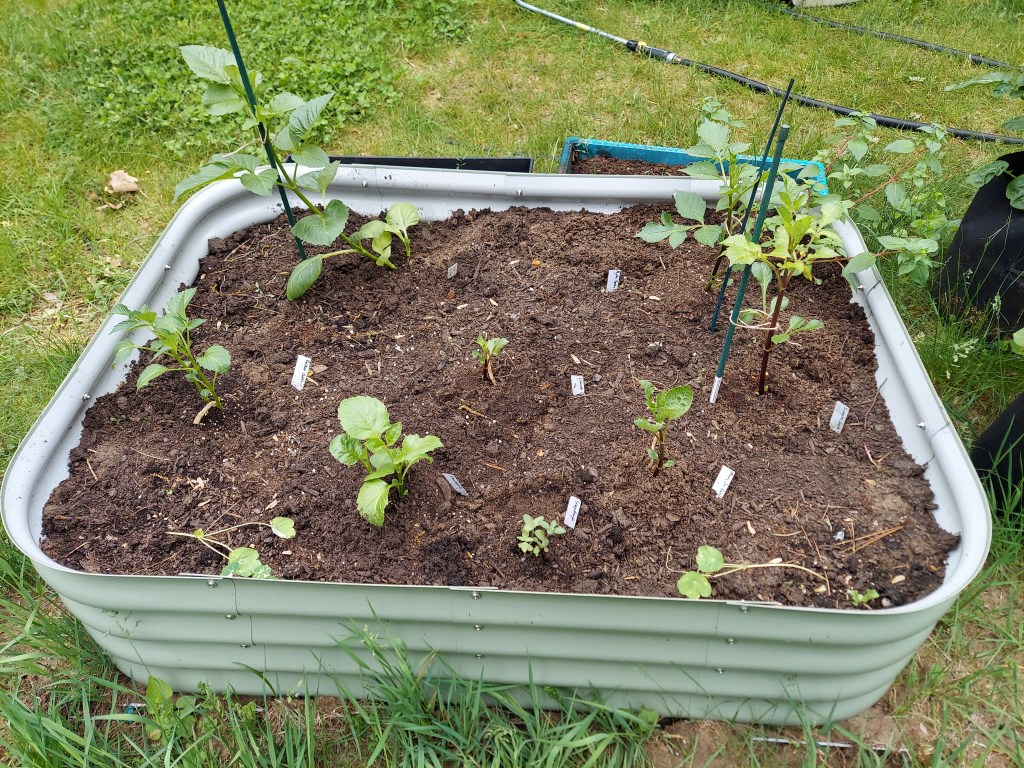
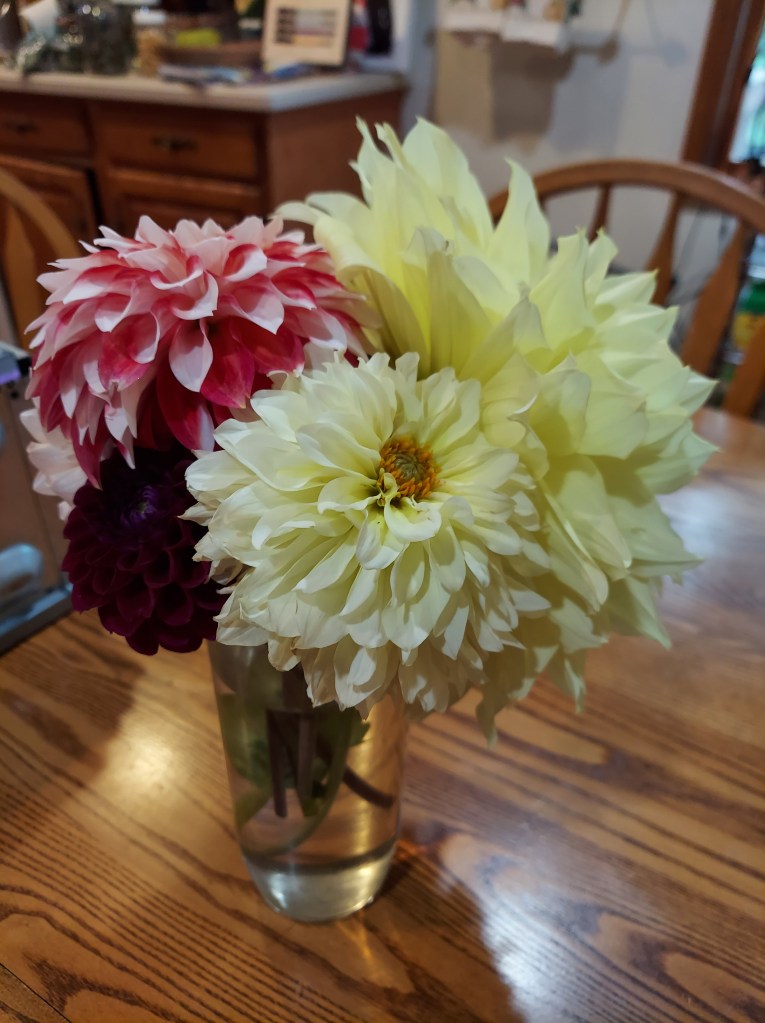
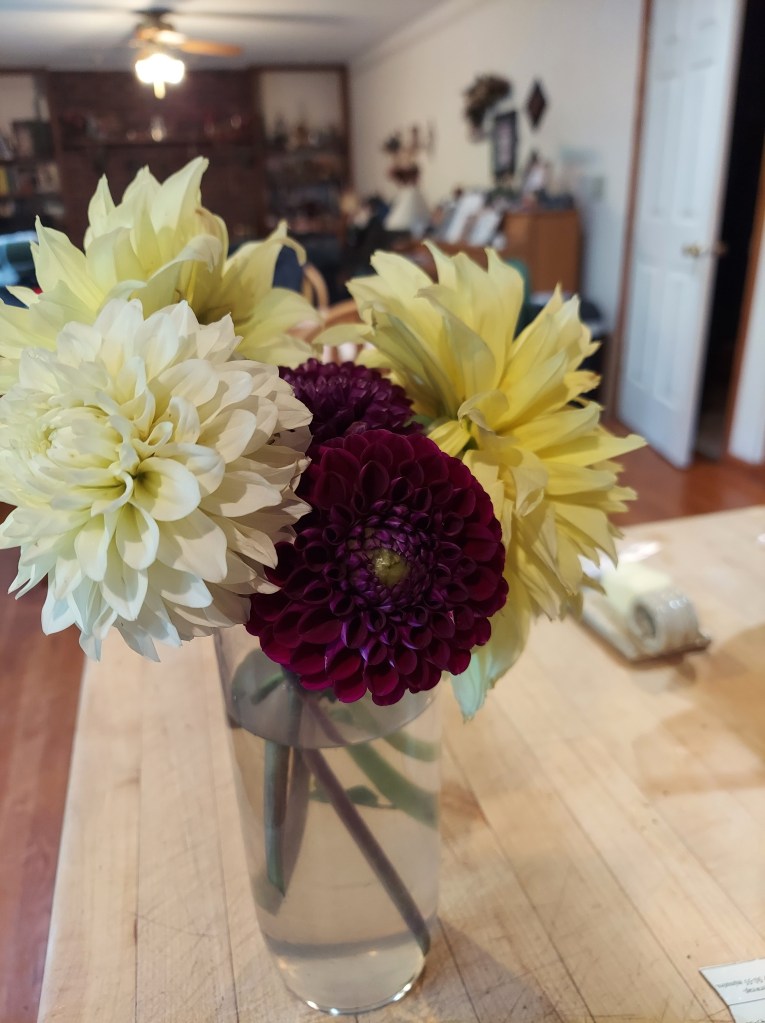
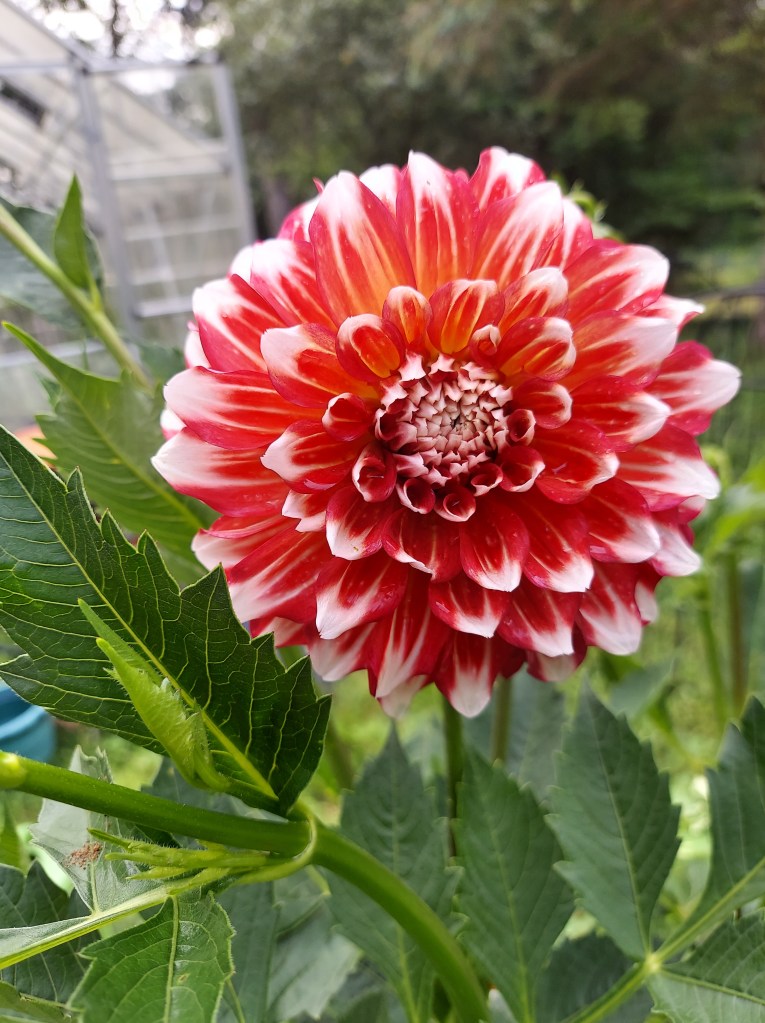
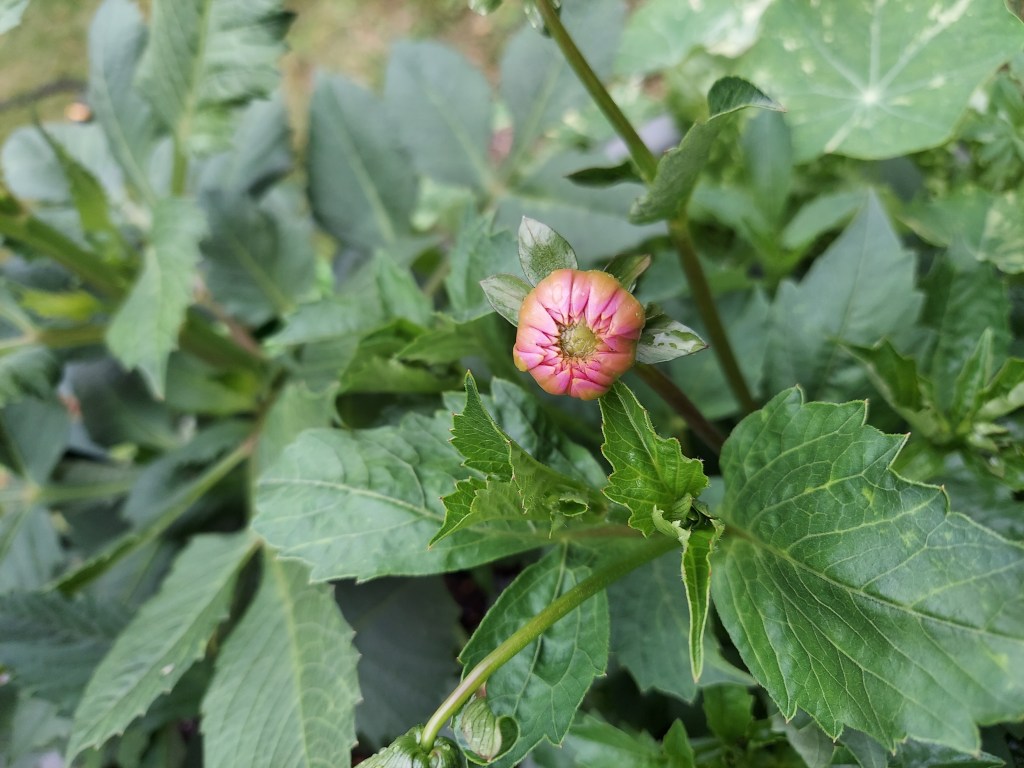
    The first dahlia flower is about to open! Can’t wait to see it in full bloom.

    I have harvested about 9.5 pounds of produce from the garden so far this season! And that’s been mostly lightweight leafy greens and herbs.

    1 comment on June in the Garden
  • Ready…Set…Plant!

    June 1, 2025
    Overview

    The middle of May finally brought nice weather to upstate New York. It rained for the whole first week of the month, but there was a window of cloudy days in the 60/70 F range. During that time, I made huge strides for planting out my seedlings, hardening off the next round, and have direct sowed quite a few seeds as well.

    Getting my seedlings some much needed sunshine during the hardening off process.

    The large garden bed was looking pretty empty at the beginning of May, aside from some garlic and onions down the middle of the bed. Thankfully all 3 of my lavender plants in the bed survived the winter and were starting to put on new growth. Time to start filling it up!

    My new Birdie’s raised bed has been planted. 7 overwintered dahlias as well as some nasturtiums, snapdragons and calendula. I also direct sowed some marigolds and cosmos along two of the edges, as well as one watermelon in a corner.

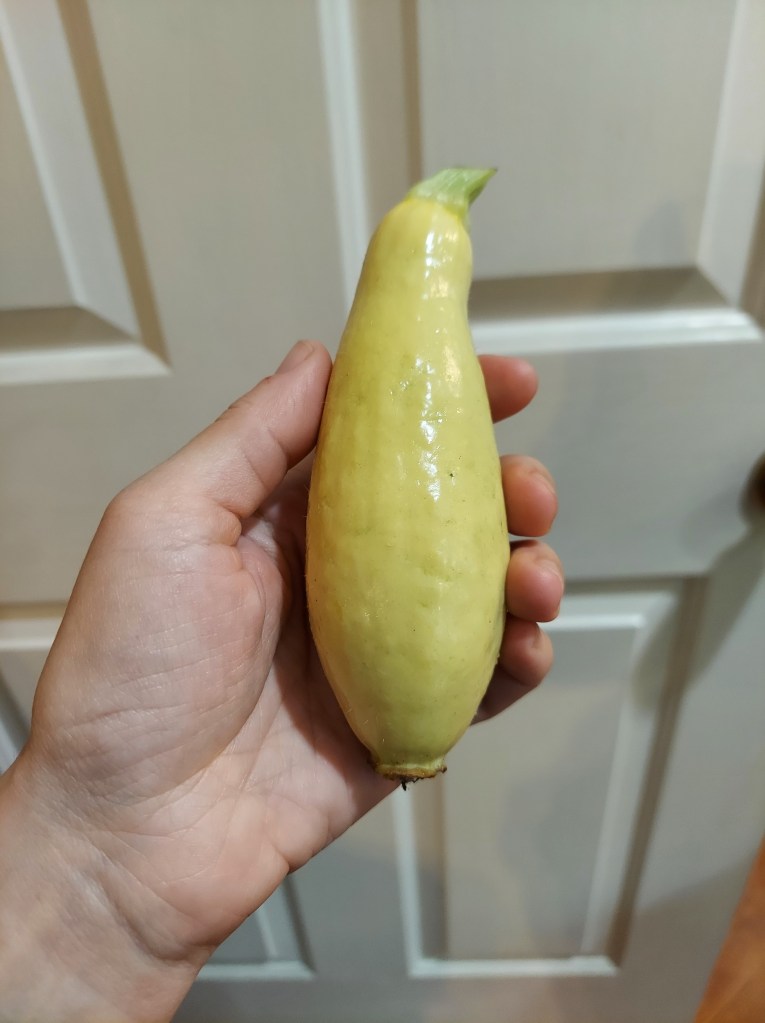
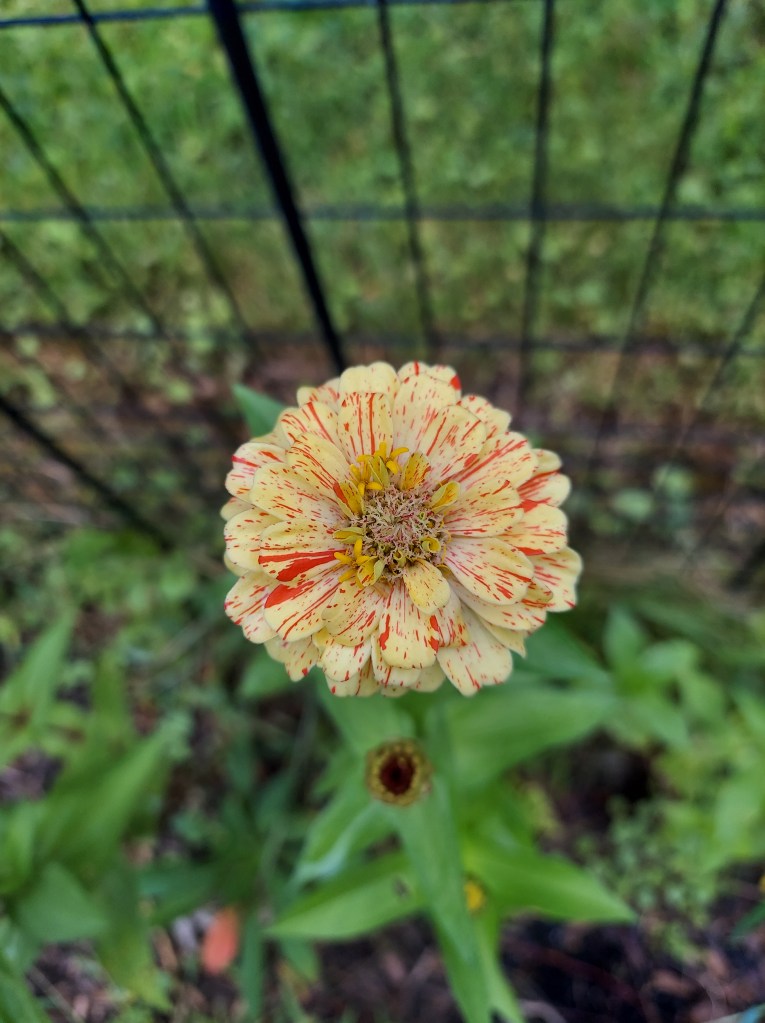
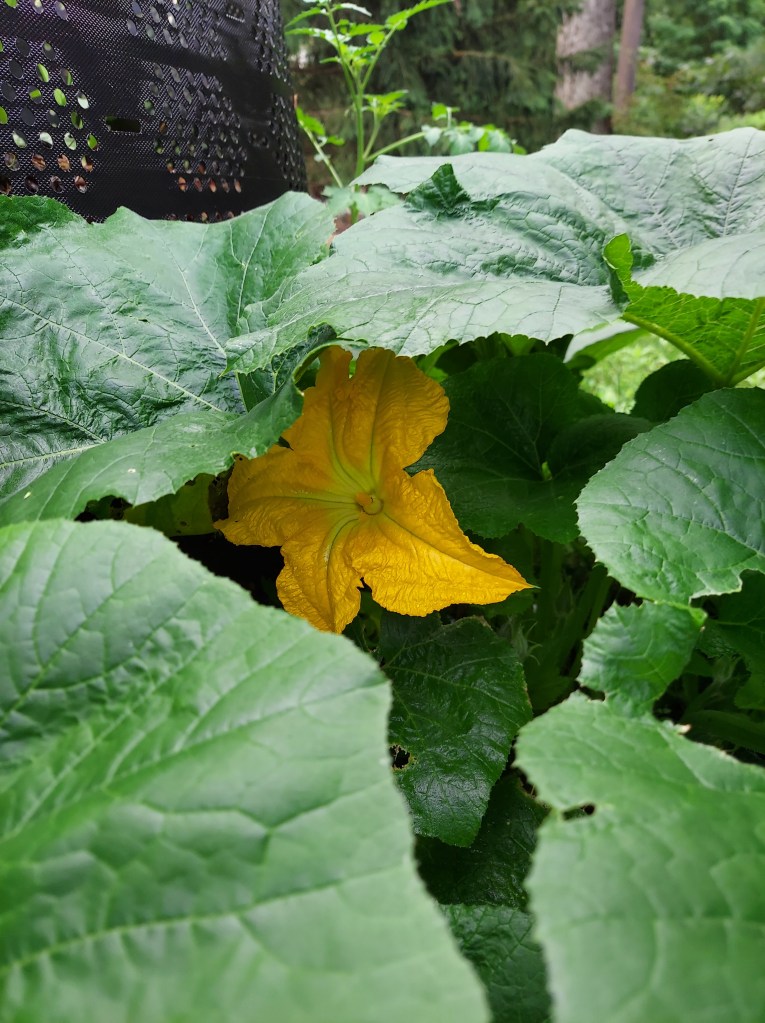
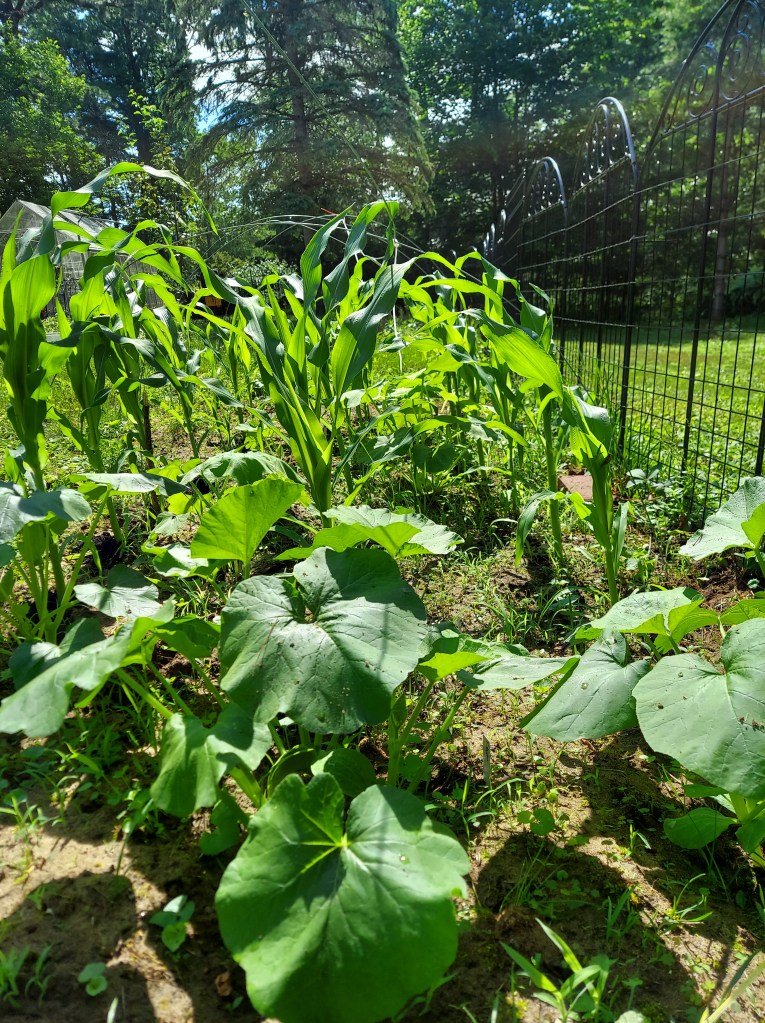
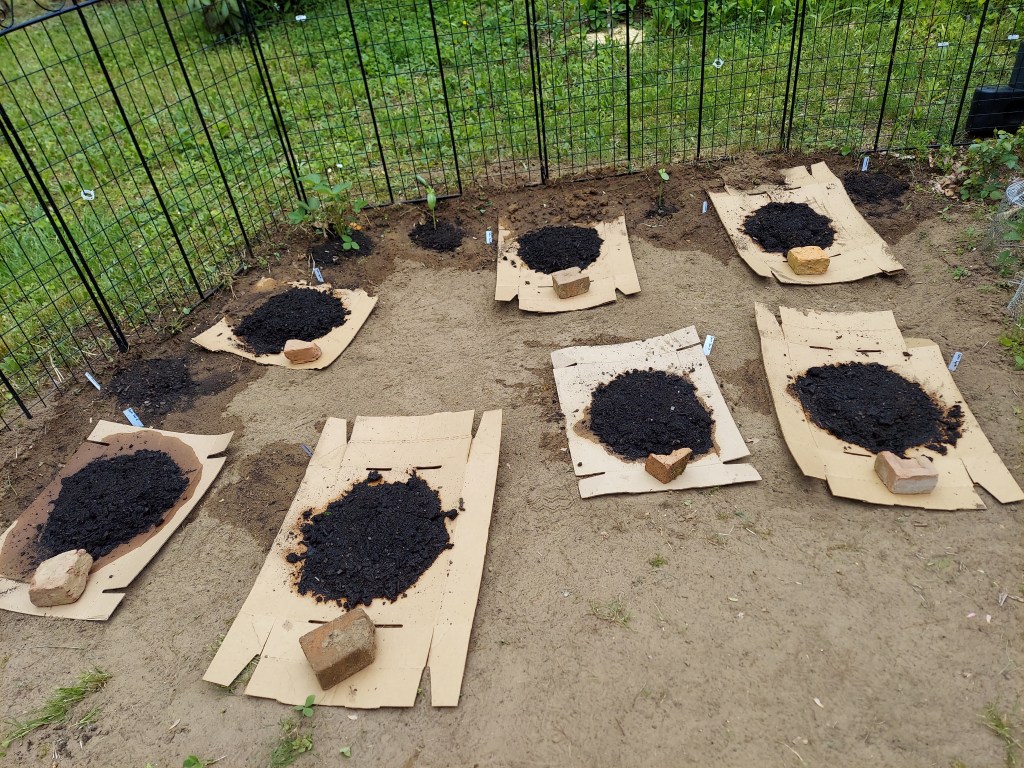
    During a sunny day last week my dad tilled this section between our inner fence and the deck stairs. Once it was mostly weed-free I put down cardboard with a pile of garden soil and compost on top. This will hopefully turn into an explosion of squash plants in a couple months. I direct sowed summer squash, zucchini, and melons. We plan to add wood mulch to hold everything in place and slow down the weeds/grass from regrowing. I planted a couple of zinnias along the fence and there is one large strawberry plant in the corner which is growing 3 berries.

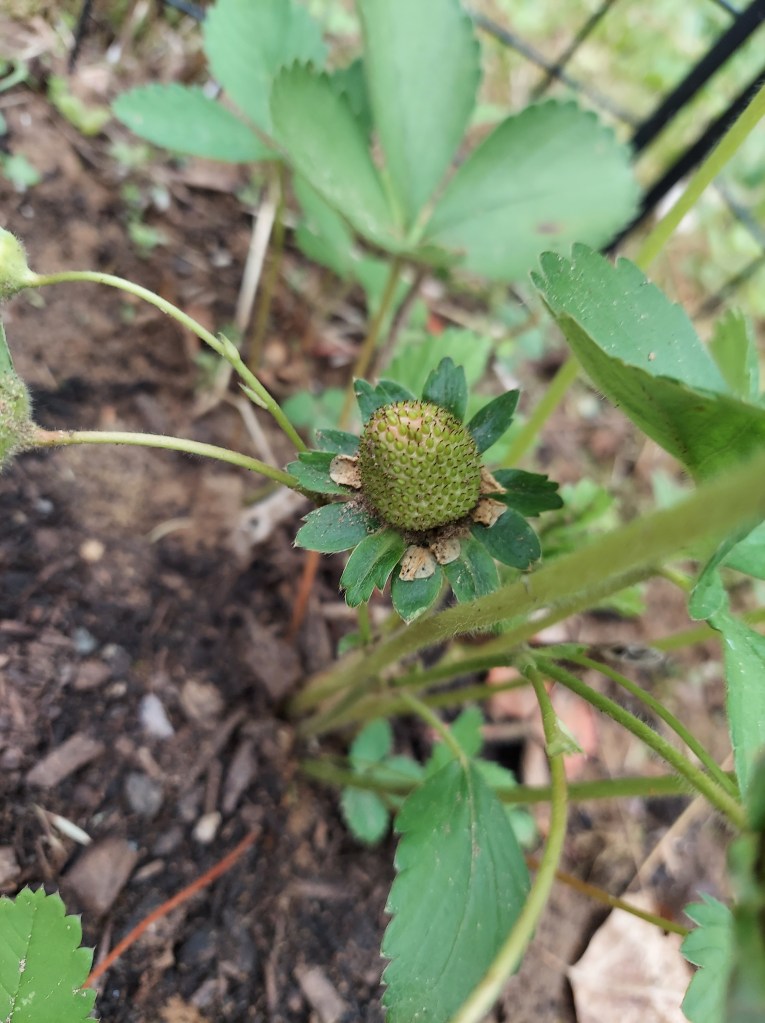
    First couple of in-ground strawberries are sizing up!

    The cold, wet spring has been bad for the summer plants, but it has been very good for the spring sown, cool crops. I’ve made several leafy green harvests like this and my peas in the greenhouse are starting to flower.

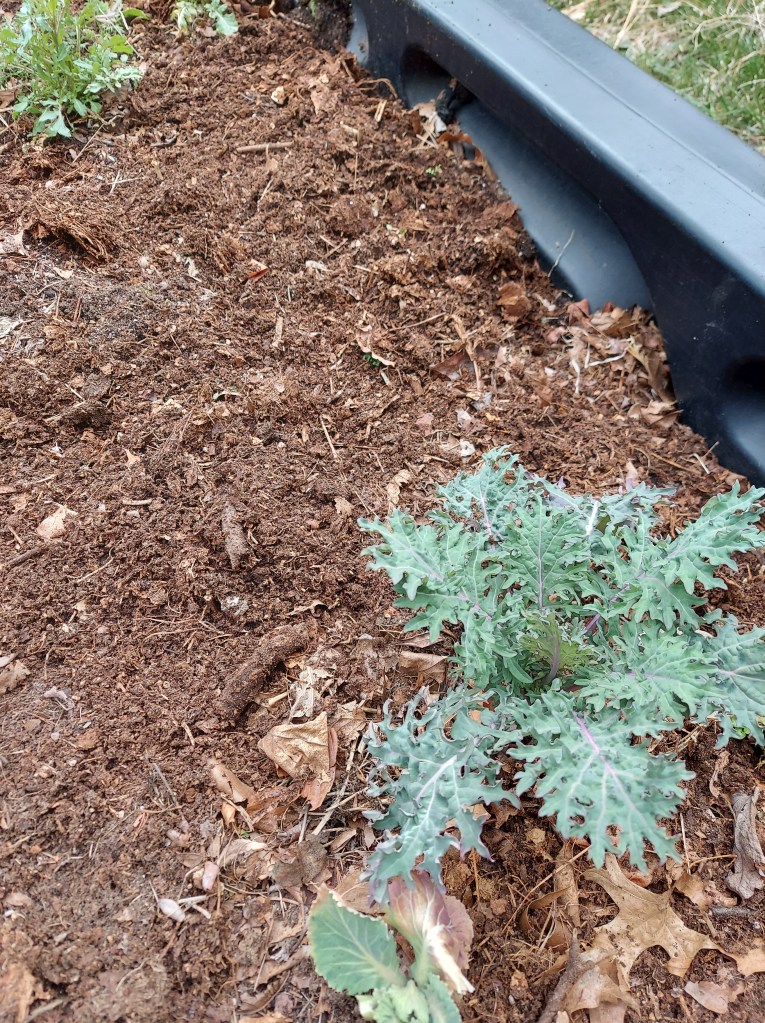
    A bunny rabbit has proved to be a nuisance. It is currently small enough to fit through the chain link fence and has been eating some of my plants. It nibbled on 2 coneflower and one clump of chives. It completely ate 3 broccoli and 2 kale plants this past week. I have put covers on what I can, but soon the plants will be too tall. Hoping we can either catch the bunny or scare it away.

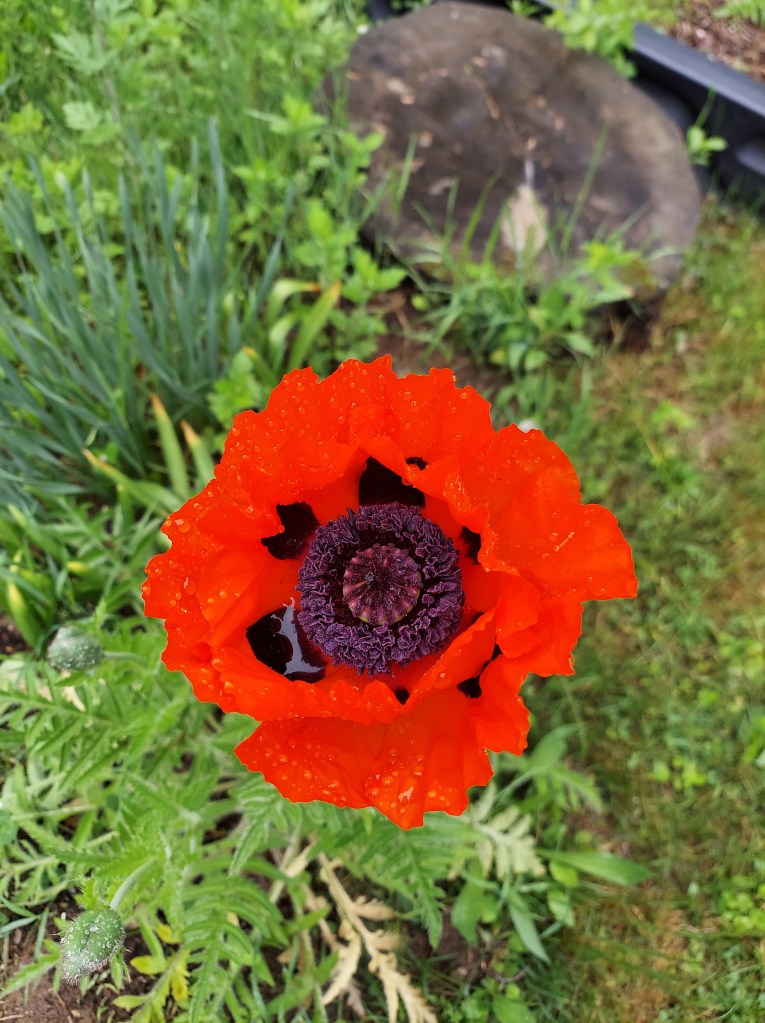
    A few of the flowering perennials are starting to bloom including my first ever poppy flower! It’s huge and bright orange. The other two smaller poppy plants nearby are also working on flower buds, so hopefully there will be more soon, and perhaps in different colors. My rose bushes have leaves and are also working on flower buds.

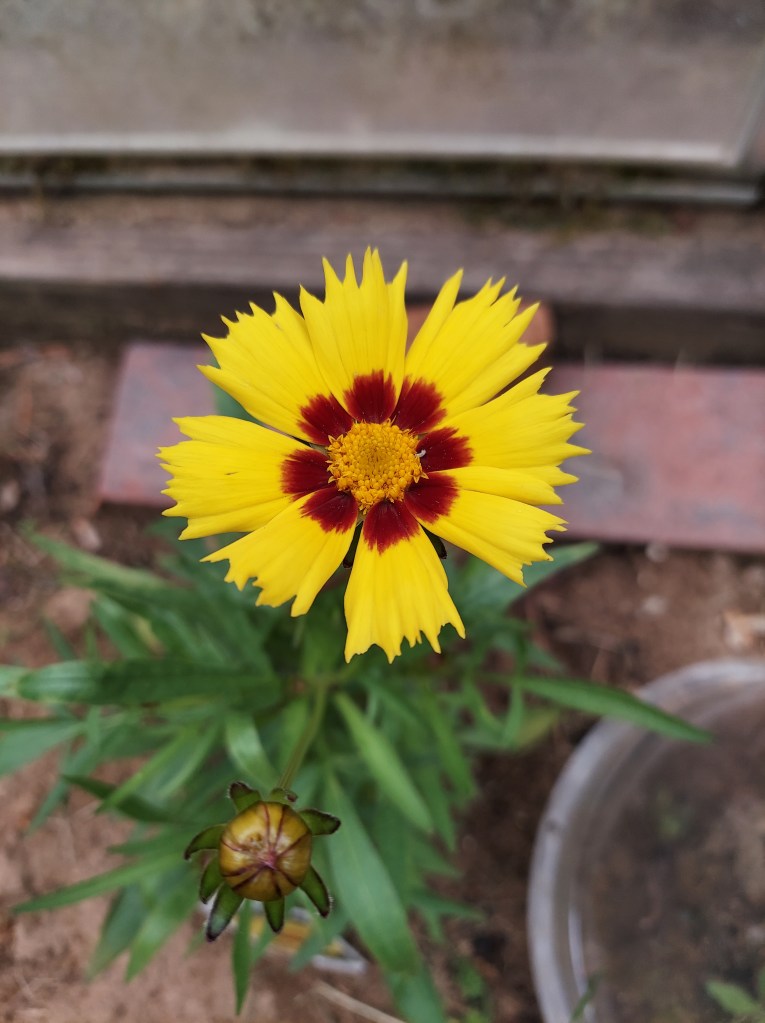
    I tried growing coreopsis from seed and got a few sprouts this spring indoors, but they are still tiny. I decided to purchase 2 small starter plants from work in order to get flowers this year. Coreopsis has small flowers and is a good dye plant, both for a dye pot and for hammering or steam transfer onto fabric. I plan to direct sow some of my seeds around the established plant to widen the patch.

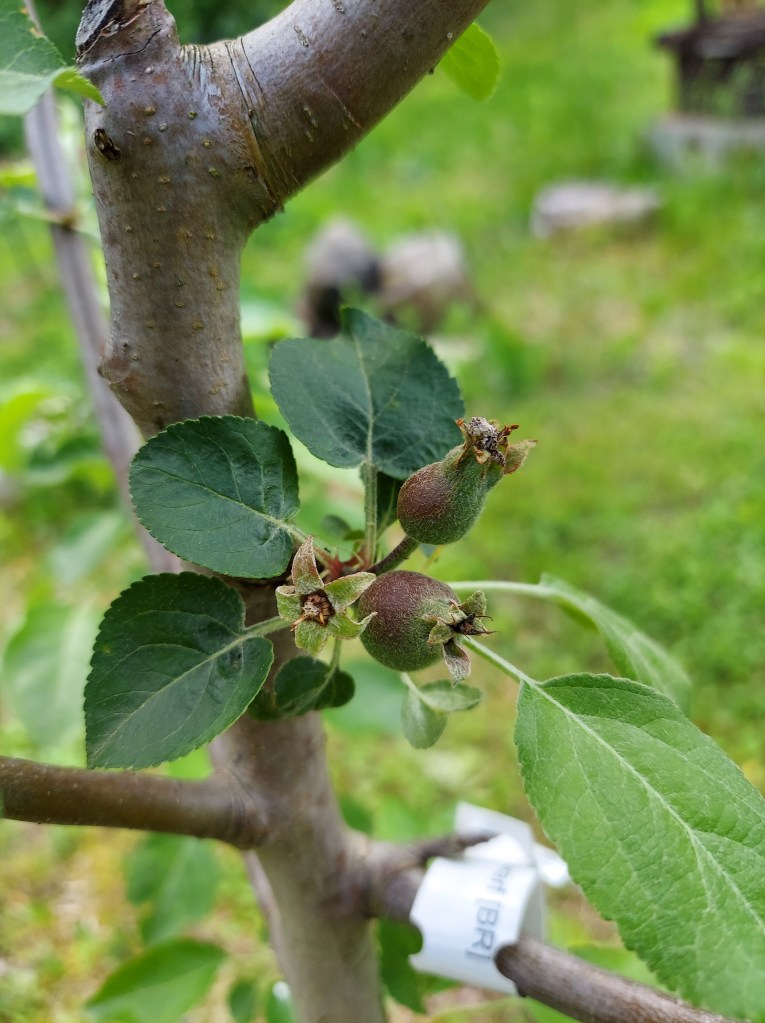
    Two of the three apple trees have several clusters of tiny fruit, the bees pollinated almost all of the flowers. In about a month, I will go through and thin out each cluster to one a single fruit. I will also probably cover the fruit with a mesh bag to try and protect them from pests. These are very young trees, but I am excited to get a couple of apples per tree come fall!

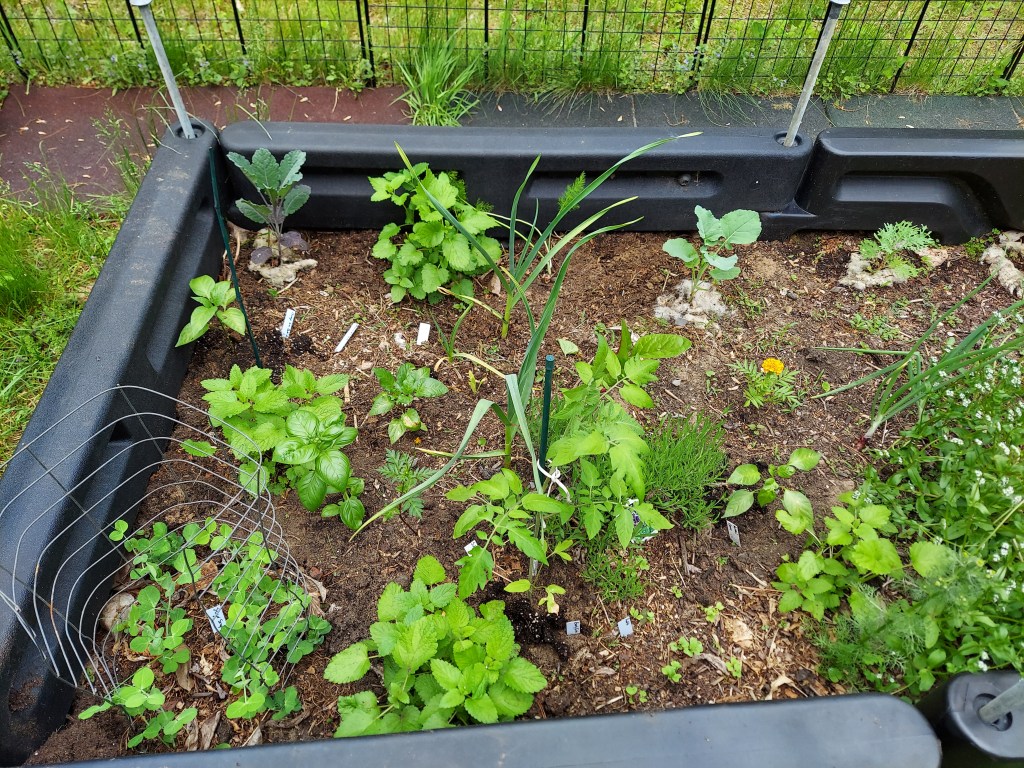
    Here’s a before and after of my initial planting in the large in-ground garden bed. The second photo was taken about a week later. I cleared out a couple of flowering kale and mache plants and re-set the bed with new plants.

    Peas, kale, peppers, broccoli, marigold, cabbage, radishes, basil, cosmos, and the first of the tomatoes. This section also has 3 small perennial lemon balm plants and a large lavender plant which is currently hidden behind the tomato.

    Looking forward to getting more plants moved out in the coming weeks and hoping to see a lot of direct sown seedlings as well.

    No comments on Ready…Set…Plant!
  • Springtime

    April 28, 2025
    Overview

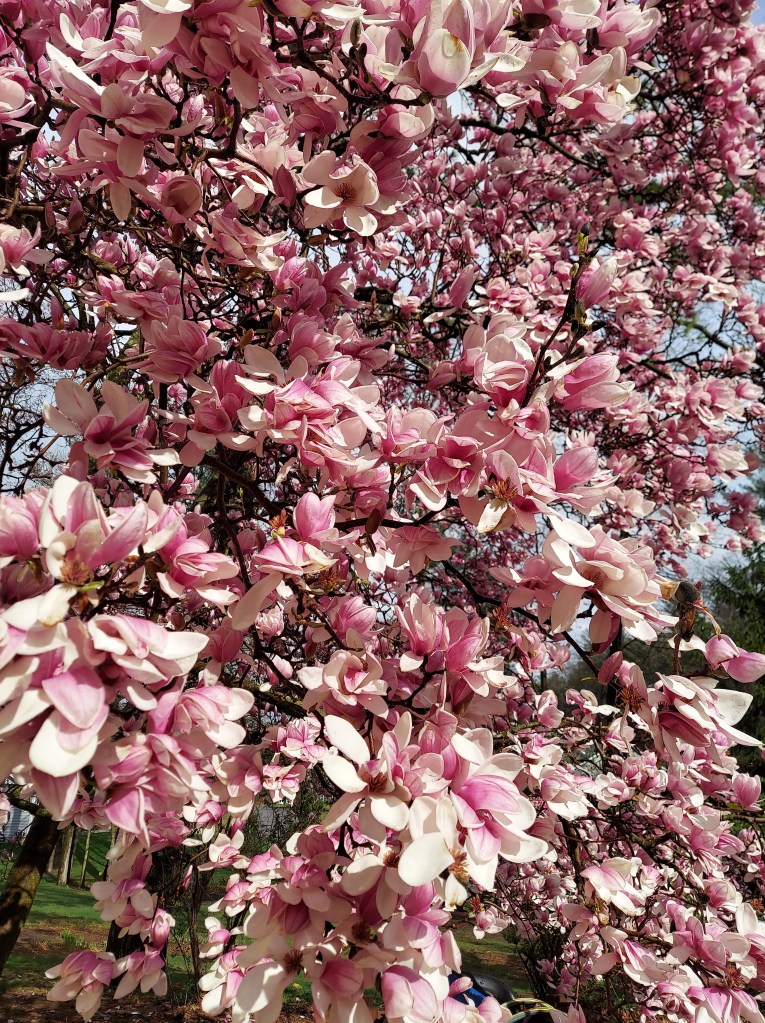
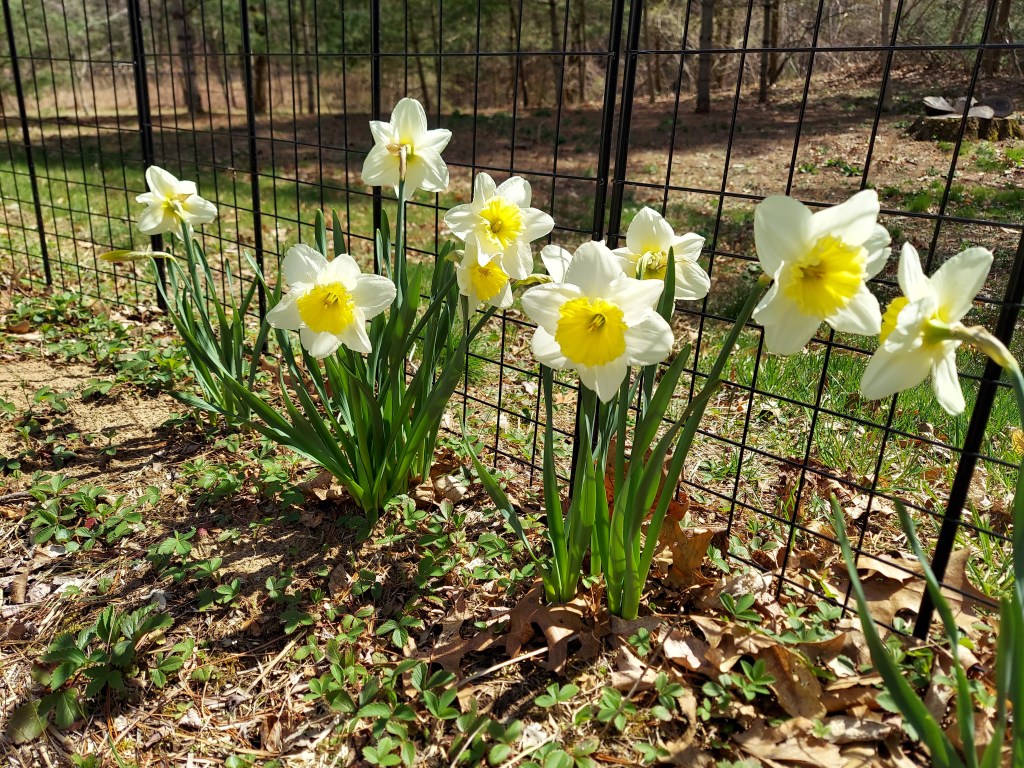
    Spring is finally arriving here in upstate NY! We had a very long and windy winter but new life is finally emerging. The fruit trees are waking up and the daffodils bloomed just in time for Easter. The magnolia tree is currently in full bloom, and a couple of tulips are growing.

    Magnolia tree

    Daffodils

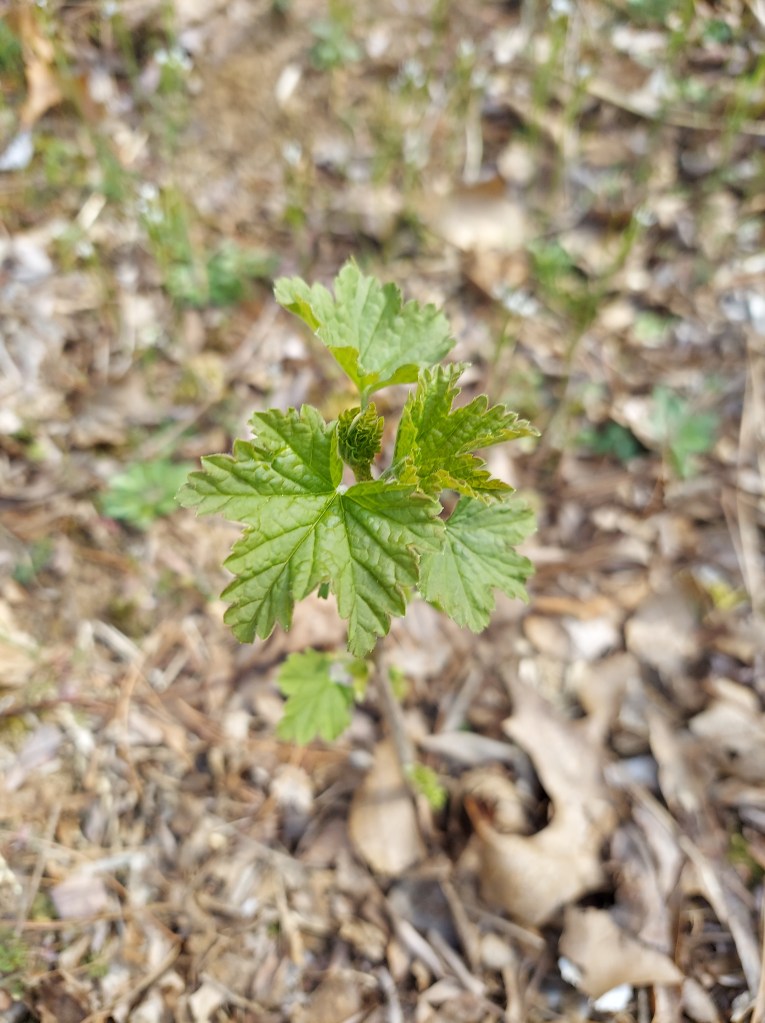
    Many of my perennial herbs survived the winter. I have several patches of oregano, lemon balm, mint, sage, and thyme. Several of the comfrey plants are just starting to peek through the dead stems from last year. The blueberry bushes are starting to bud. All 3 of the black currants that I got for free in the fall survived the winter, as did the thornless black raspberry.

    New flush of black current leaves

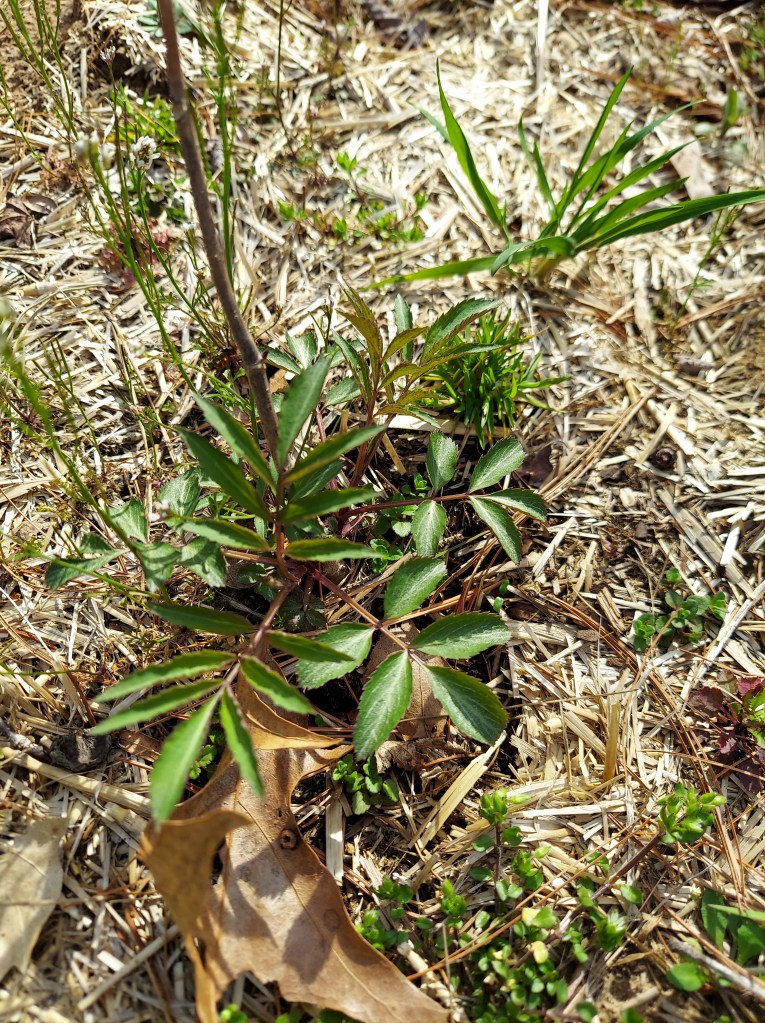
    New growth visible on a couple of my rooted elderberry cuttings as well!

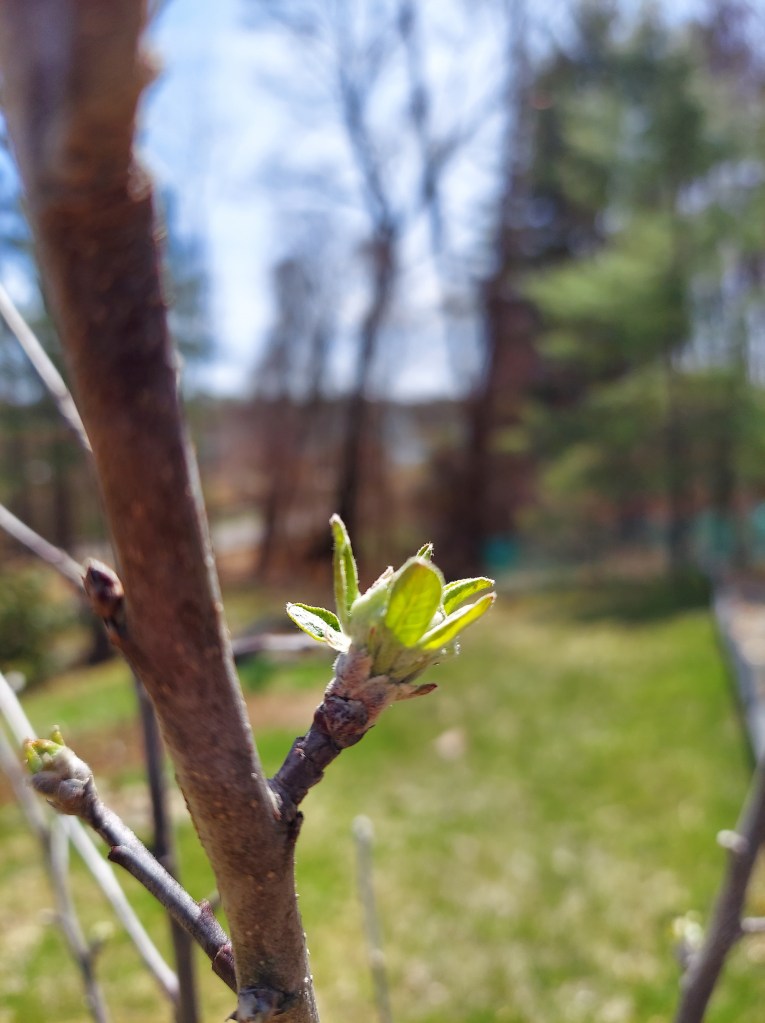
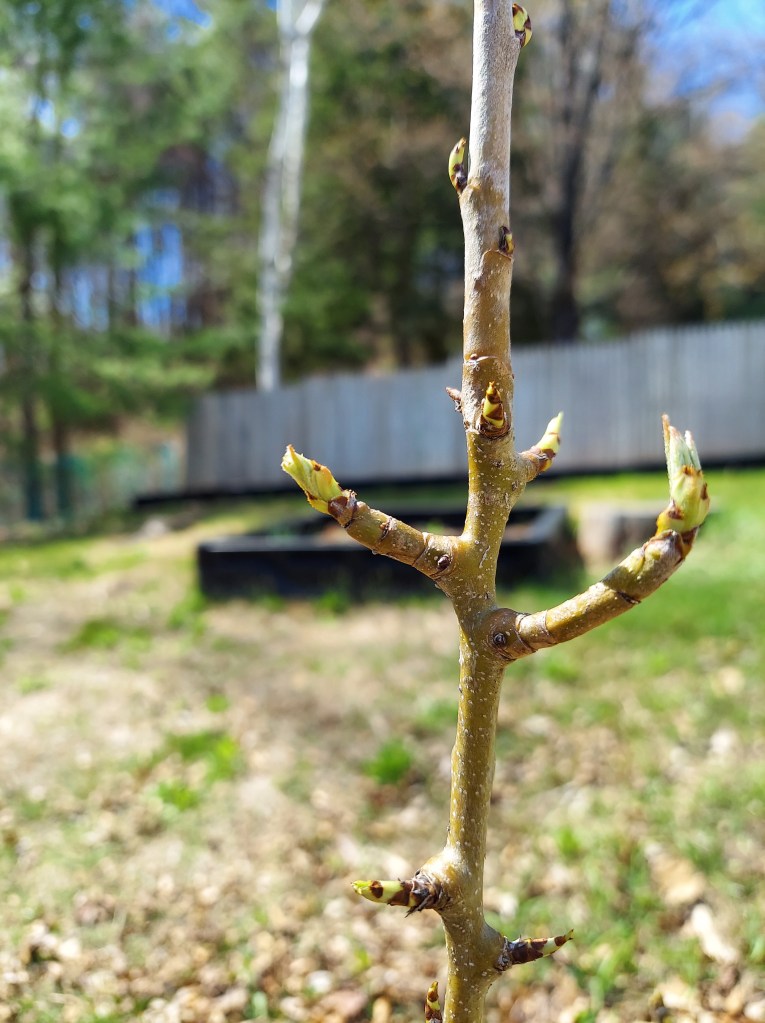
    Two of the apple trees are breaking dormancy and putting out new leaves. The third one, which got damaged by caterpillars last year has a few buds swelling. It lost most of it’s leaves so I imagine it will be making slow progress this year, but at least it is showing signs of waking up. I was afraid it might die off, but that is happily not the case.

    All three of the new pear trees are also just starting to wake up, I expect to see leaves soon.

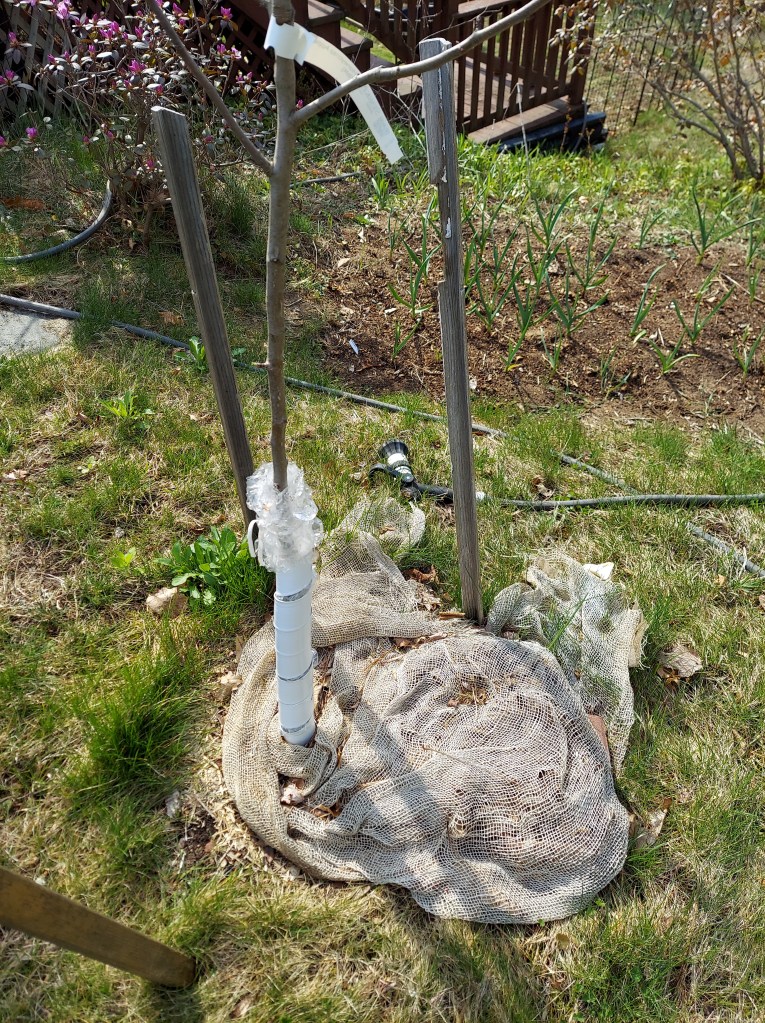
    I started to tidy up the fruit trees by removing the bubble wrap, tree guards, and burlap/leaf mulch. I plan to give them all some fertilizer, compost, and new straw mulch soon.

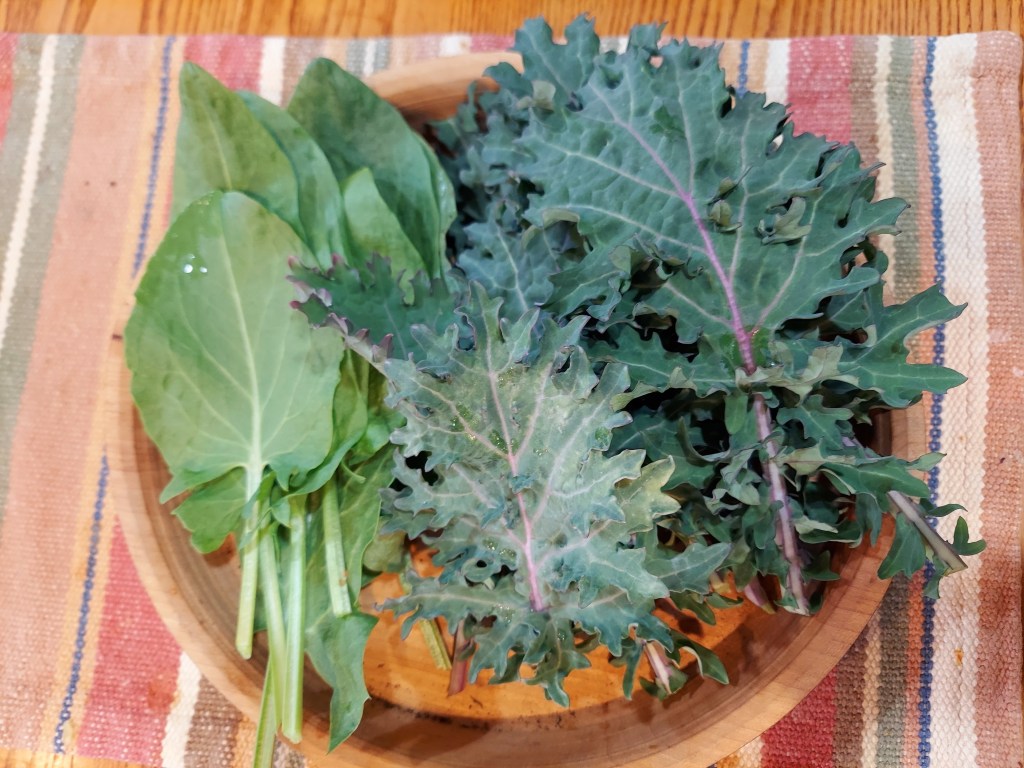
    I had my first small harvest from the garden this week! I harvested sorrel, a perennial in the greenhouse, and overwintered outdoor kale.

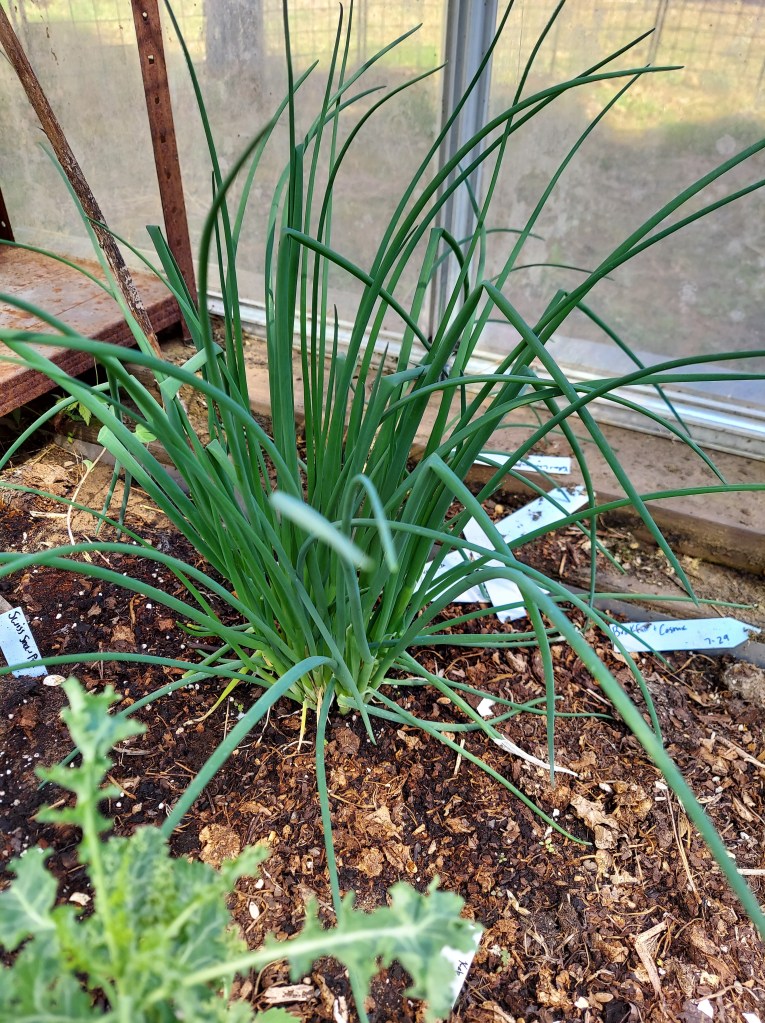
    The chives in the greenhouse are looking good and I’ve spotted a few coneflower sprouts along with lots of self-sown chamomile all across the raised beds.

    Chives in the greenhouse

    The leafy greens and radishes that I direct sowed a couple of weeks ago are now sprouting, as are the 2 types of peas. I planted out a few onion sets and have another batch nearly ready to go out in the ground.

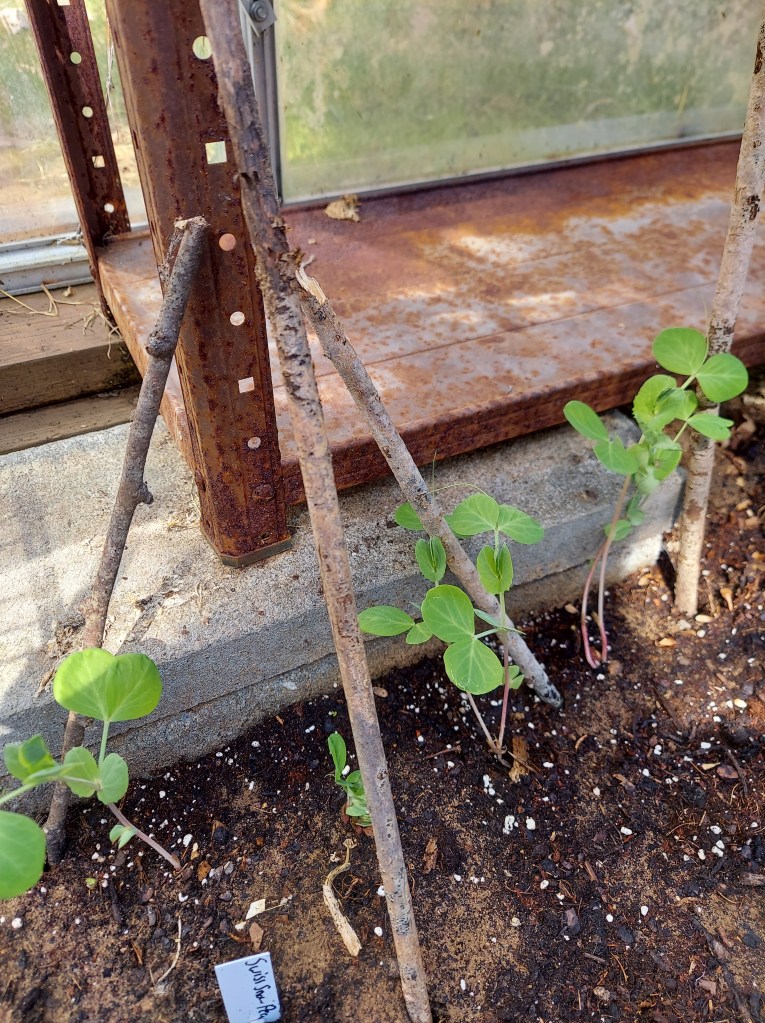
    Hoping the peas will climb the shelf in the corner of the greenhouse. I added a few sticks to encourage them to head in that direction.

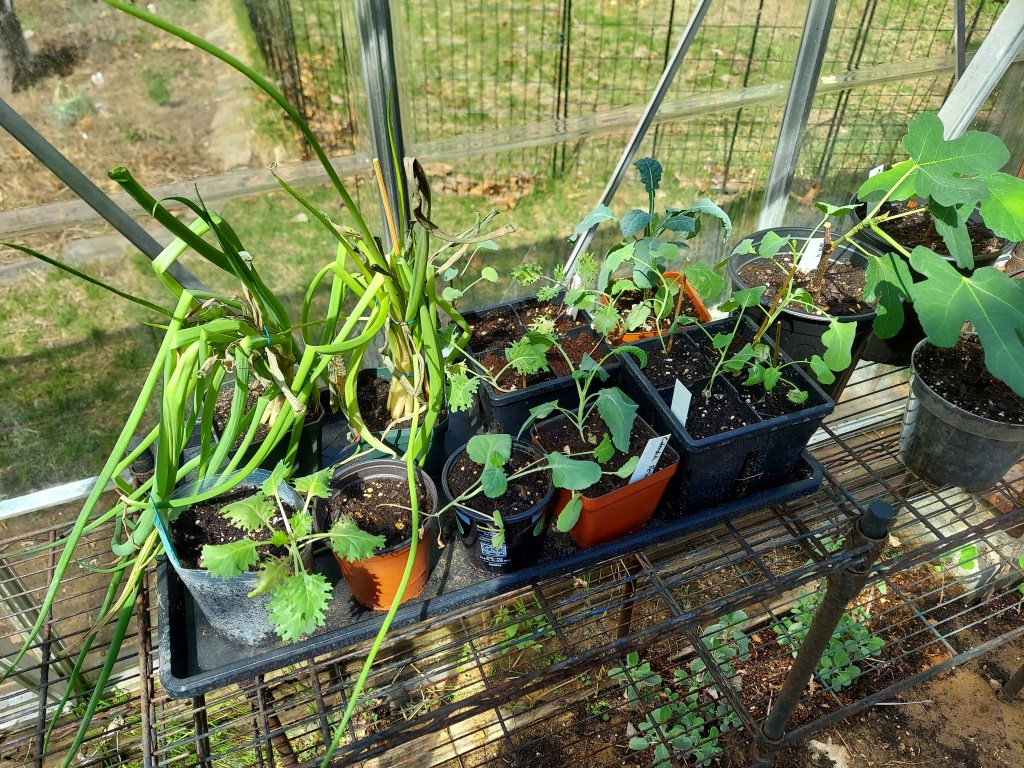
    I have started to harden off a few of my cold weather crops by placing them in the greenhouse. I will leave them out for incrementally more time each day for about a week to get them adjusted to normal growing conditions before transplanting near the end of April/early May. So far, I have a few kale, cabbage, chives, and broccoli seedlings.

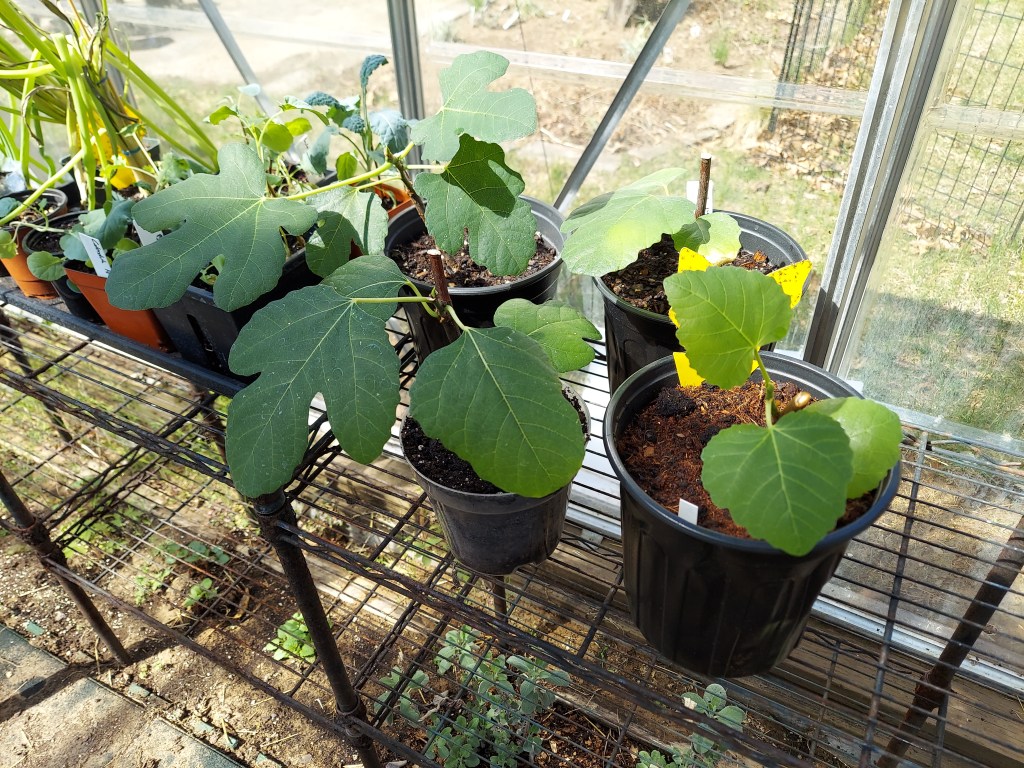
    I am also hardening off a few of the larger fig cuttings so that they can get more sunlight and hopefully start growing more.

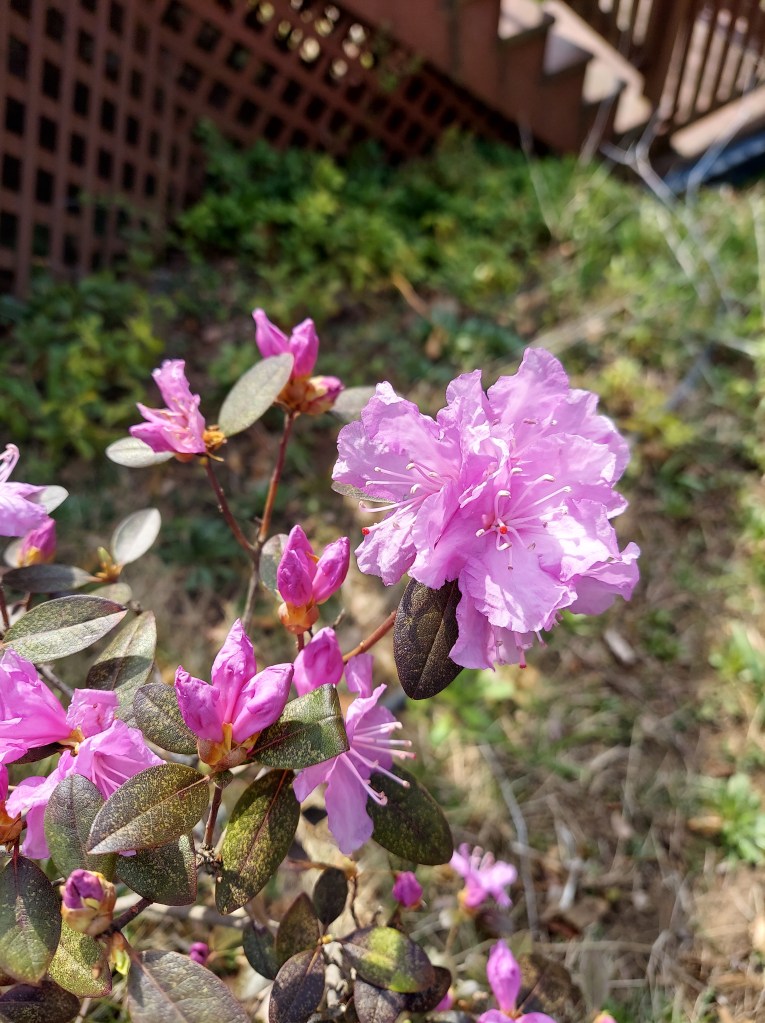
    Azalea blossoms

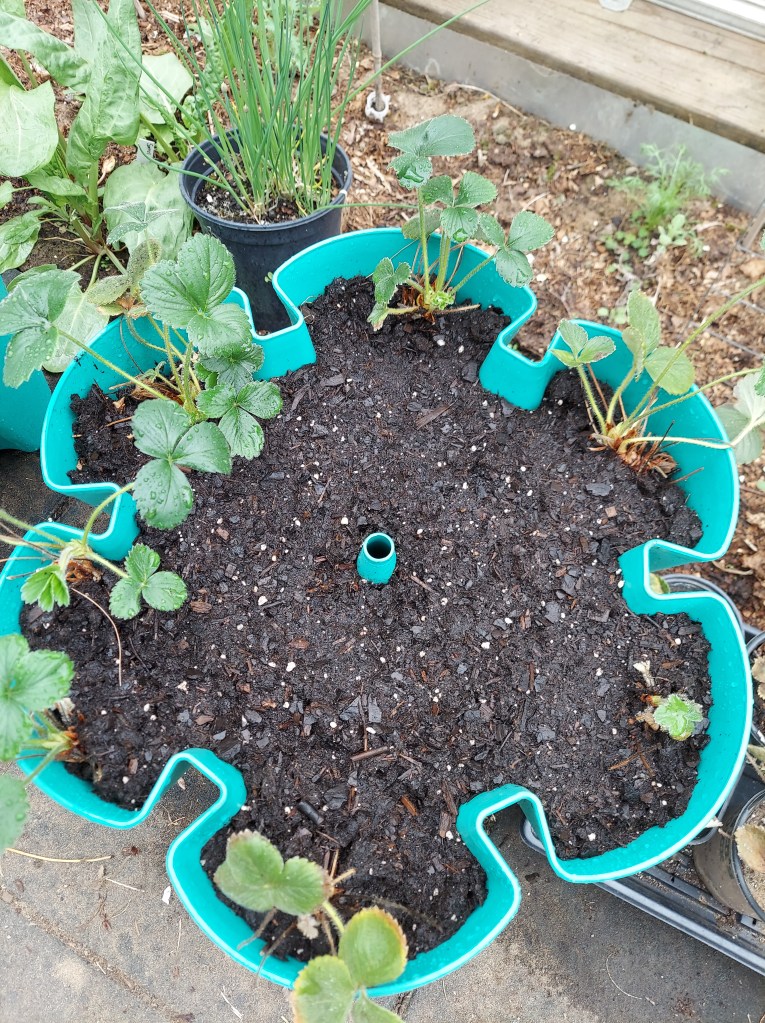
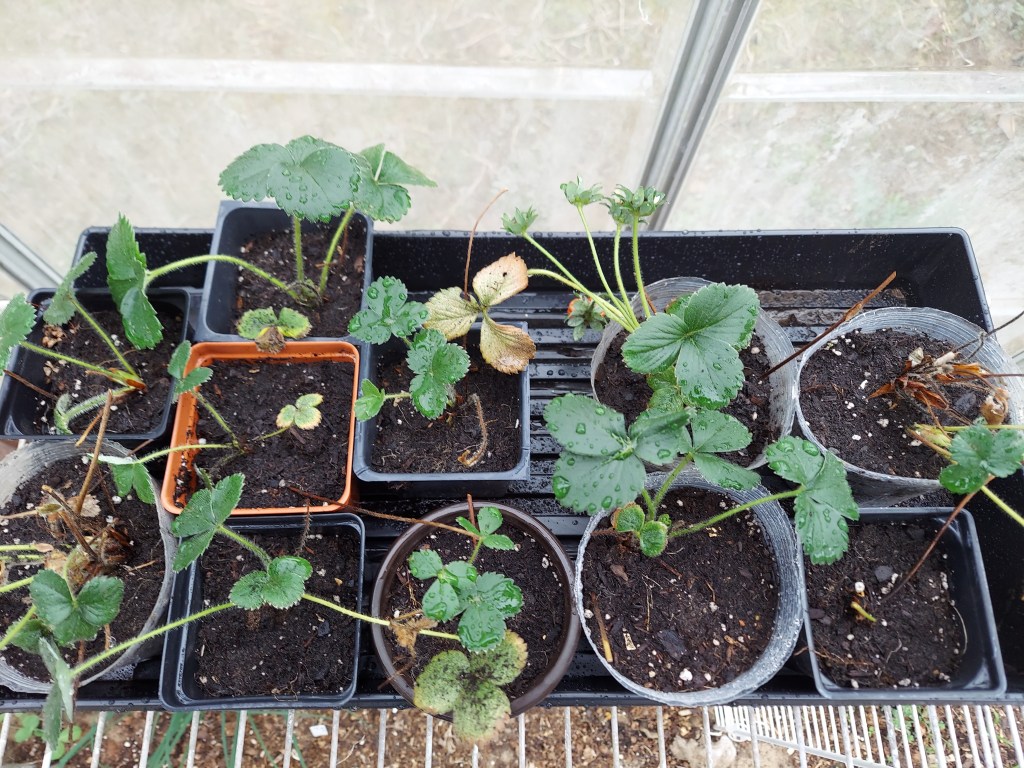
    Last weekend I cleaned up the strawberry tower which had overwintered in the basement. A couple of plants died, but there were about a dozen small runners growing amongst the more mature plants. I carefully divided them out so that there was only one plant per pocket and I put most of the runners in their own pots so that they can grow on without competition.

    Before and after shots of the strawberries. I added some homemade compost, granulated fertilizer, and fresh potting mix to level out the soil and hopefully provide enough nutrients for the season ahead.

    These are an everbearing variety, so that means I should get a bunch of small harvests until frost, rather than one huge glut like June-bearing varieties. I was very happy with how the strawberries did last year, and am looking forward to growing more. I now have extra plants so I might make either another layer of the grow tower, or a couple of hanging baskets, depending on how many of them survive the dividing process.

    I planted all my overwintered dahlia tubers in a variety of small pots and a couple of them are already sprouting. I don’t know how many will make it, but I had over 30 tubers, of 4 varieties. I will be planting some of them in my new raised bed which has hardware cloth on the bottom to keep out the voles.

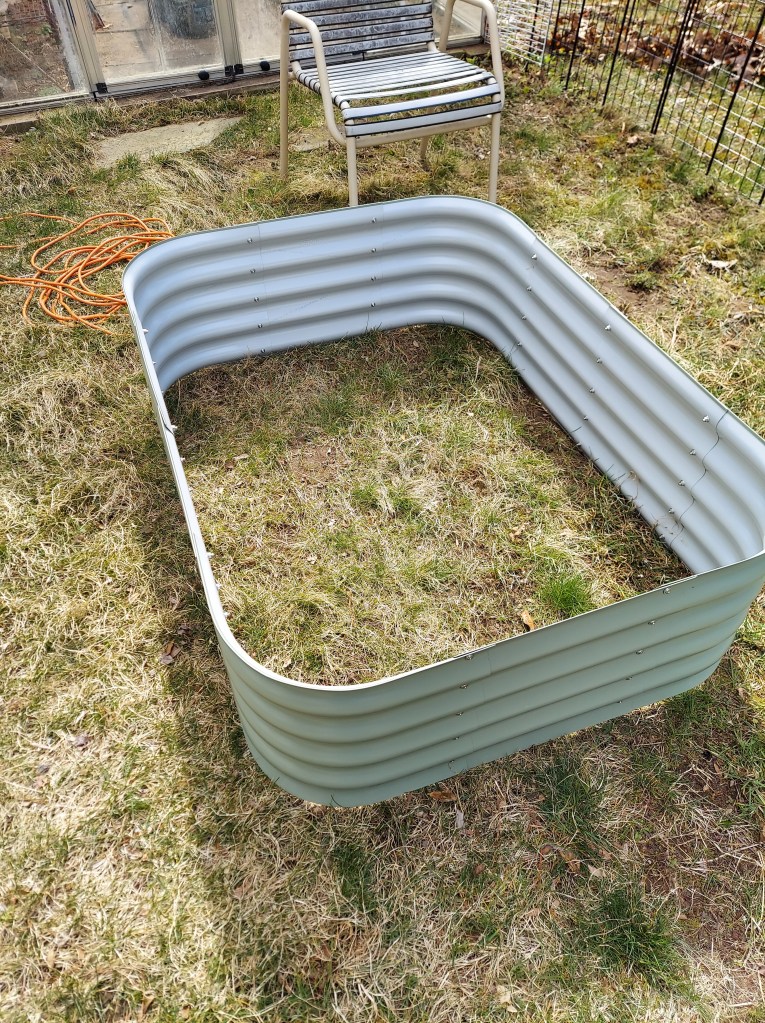
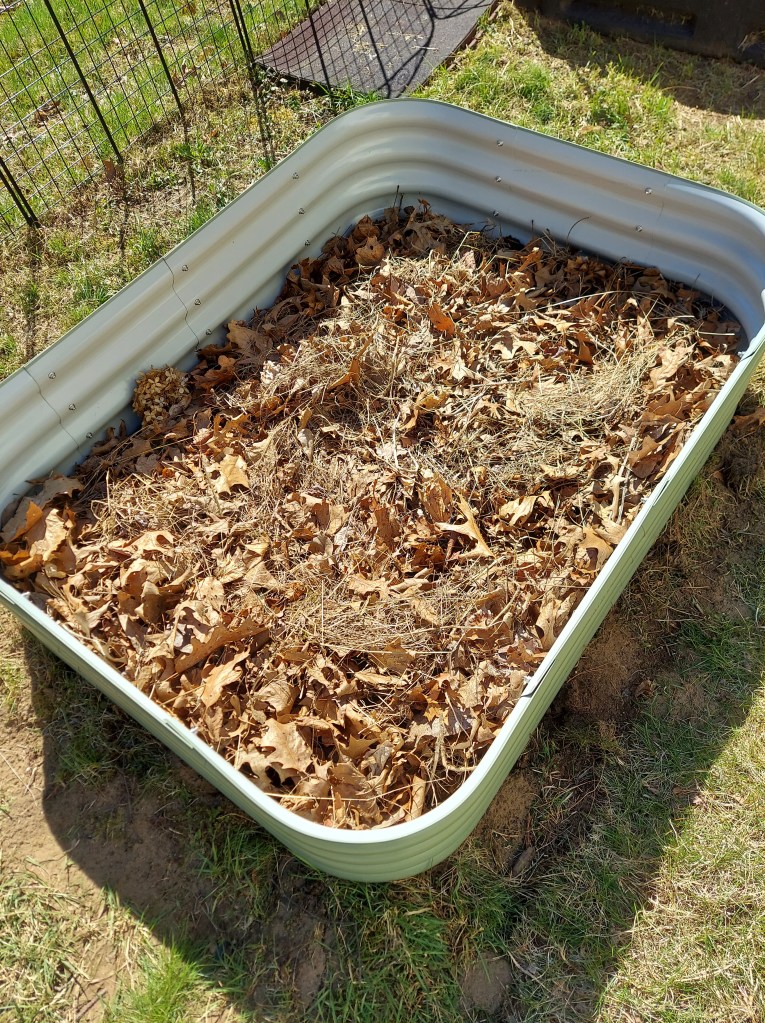
    We assembled the new Birdie’s metal raised bed a couple of weeks ago and figured out where I wanted it. We then filled the bottom half with logs, branches, and leaves.

    My dad then added a layer of topsoil and compost from out huge leaf/debris pile out back. The final 6-8 inches will be filled with purchased manure and raised bed soil. I expect the level to drop a good bit over the coming year as the leaves and sticks start to break down, but then next spring we will be able to top it up with more compost.

    I’m so happy that spring has arrived and that new life is visible on so many plants. Green leaves and fresh shoots are so nice to see after a long, dull winter!

    No comments on Springtime
  • Willow Cuttings

    April 17, 2025
    Uncategorized

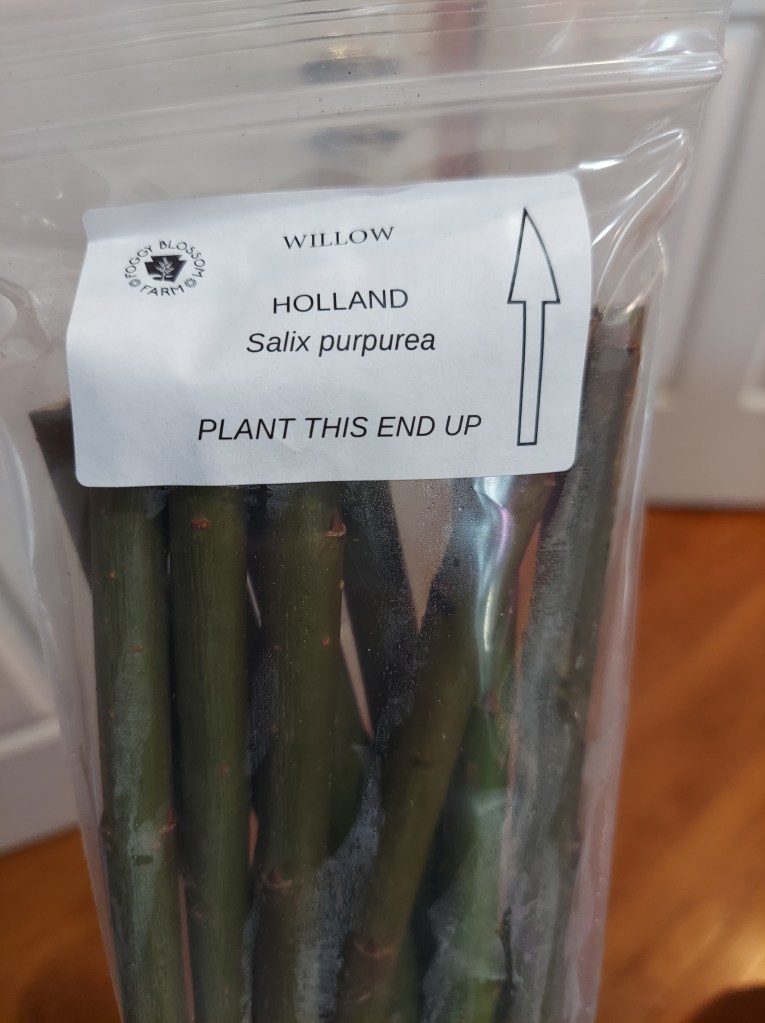
    At the beginning of March I ordered willow cuttings from a farm in PA. They had a small stock of their own cuttings available for sale, and I decided to go for it. I ordered 10 cuttings, and they arrived a few days later in the mail. I enjoy weaving with willow and have attended two classes, and want to make more items with willow. However, classes and materials (willow) are expensive, and not locally offered. I’m going to try to grow my own this year.

    The cuttings arrived quickly, and each cutting was about 1 foot long. I left them in the fridge overnight, while I rehydrated a brick of coco-coir to use as the base of my growing medium for the cuttings.

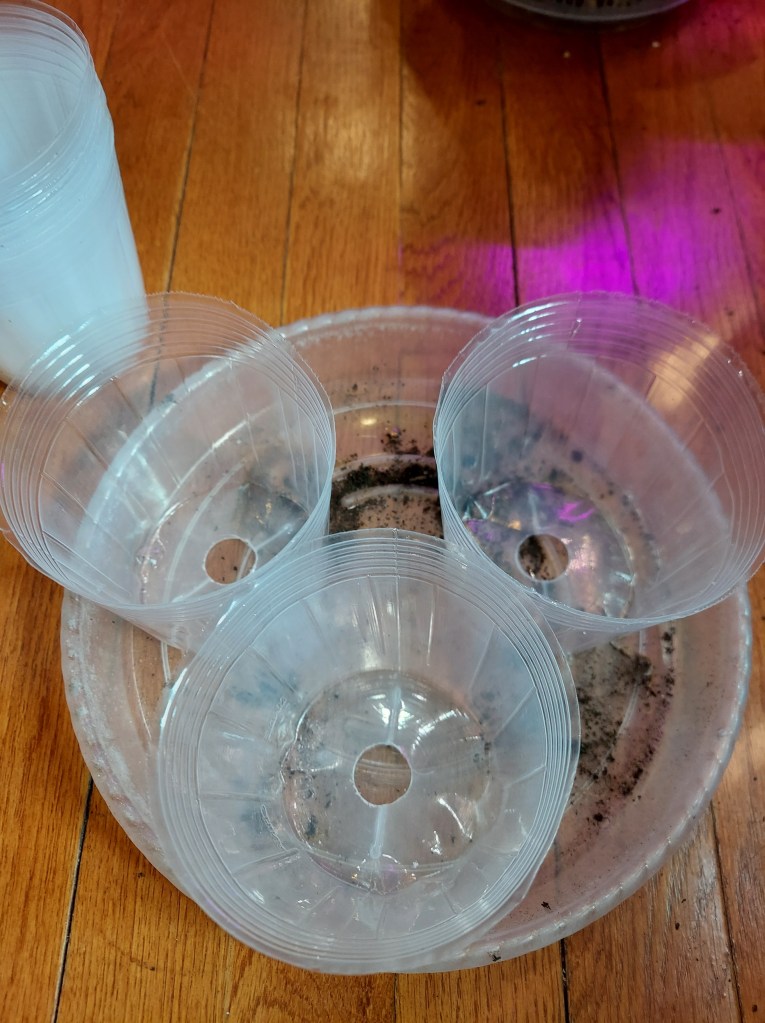
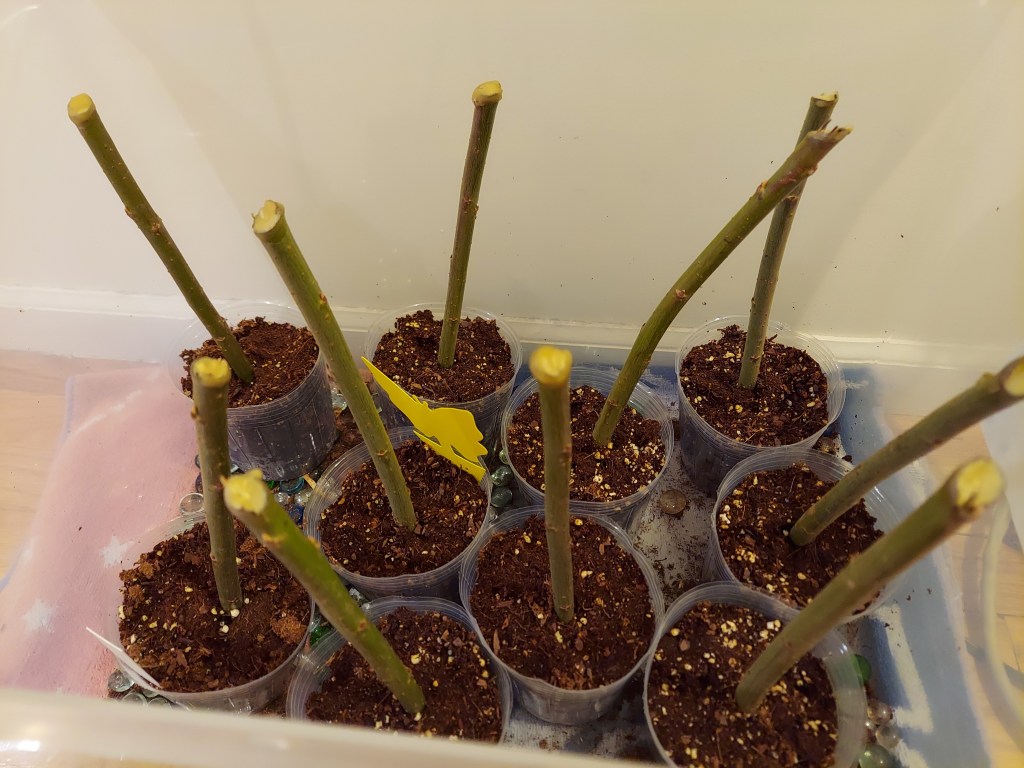
    Once again, I used clear plastic containers to plant in, this time I used 6 inch pots, instead of the small cups. These cuttings were quite a bit thicker and longer than my fig cuttings, and I wanted to be able to plant a couple of the growth points to help with the rooting process.

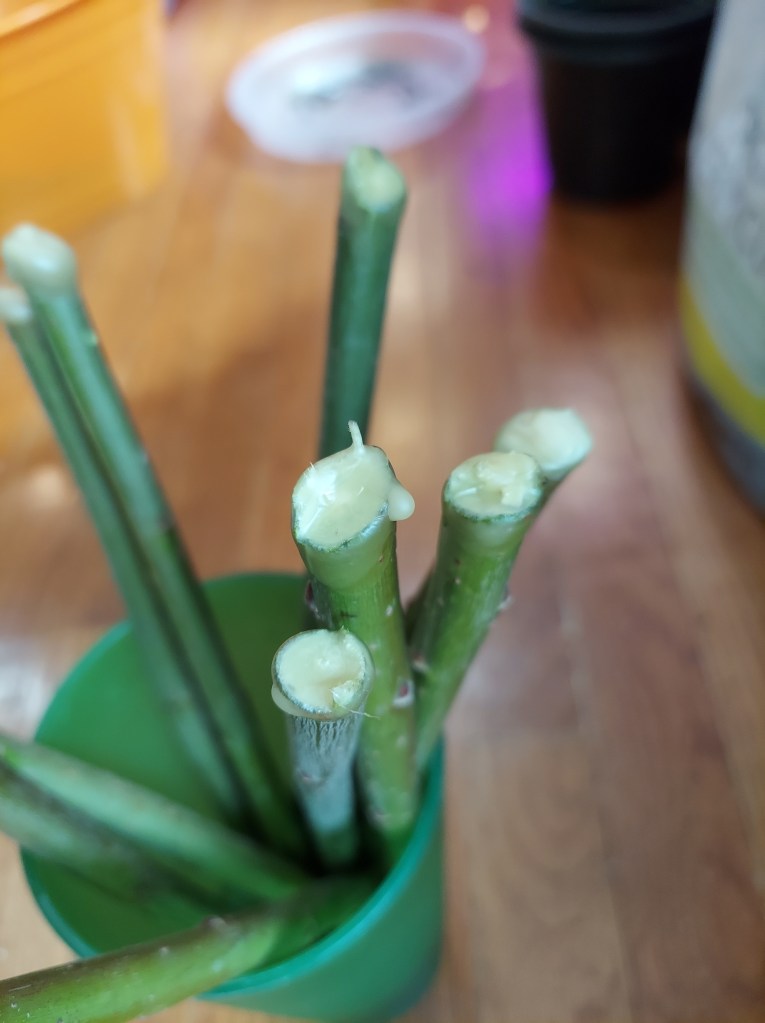
    I’m trying something different this time around. I dipped the top ends of the cuttings in wax before planting. This is supposed to help them better retain moisture and protect them from disease. Not sure yet if it will work, but I had wax, so I decided to give it a go. I did not dip these cuttings in rooting hormone like I did for the figs, willow naturally produce rooting hormone and are supposed to root quickly from cuttings.

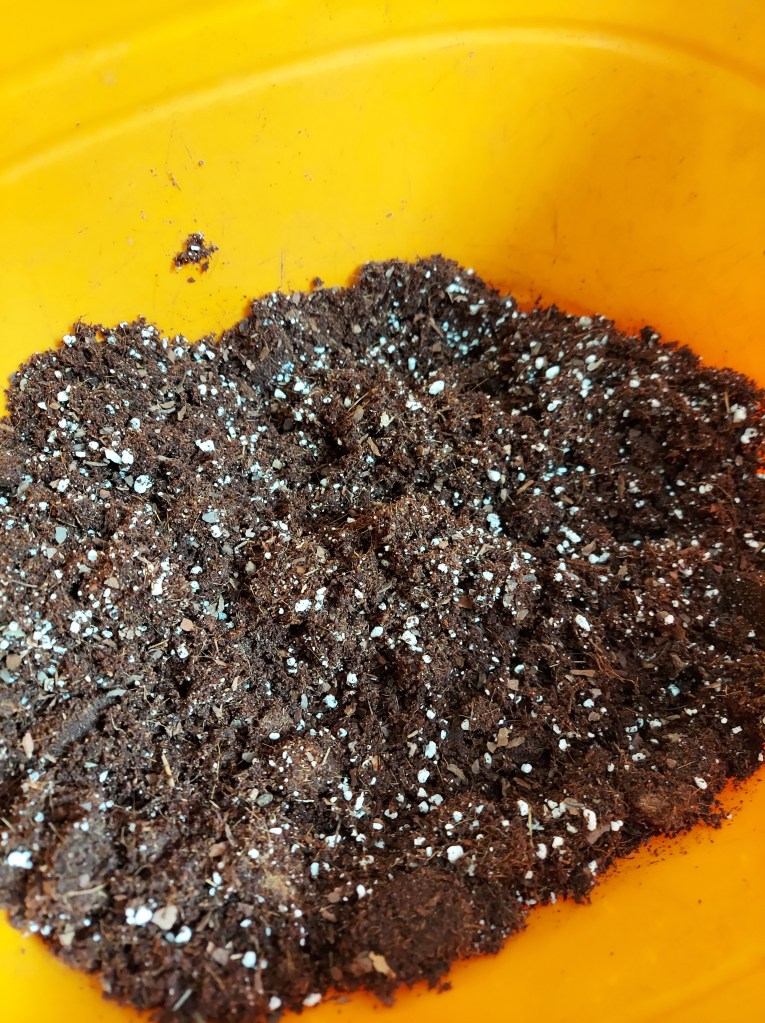
    My light and airy homemade potting mix, which I use for all my cuttings. Coco-coir, pine bark fines, and a small amount of perlite. It retains moisture but doesn’t get soggy. Once all the cuttings were planted, I put them in a tote on a heat mat to make a miniature greenhouse. They were in an area with minimal light, so I was hoping the plants would focus on root growth.

    The cuttings were planted on March 12, and left in the tote with the lid just cracked for the first few days. I misted them with water once to make sure the top of the soil wasn’t drying out. In less than a week there was visible bud growth as they broke dormancy and started growing. I did spot tiny roots around the edge of a couple of the containers, so I think they are going to all make it and do just fine.

    By early April they all had shoots of new growth and some roots were quite visible around the bottom of the clear cups. A couple of them actually started to wilt and go brown, I think this was because the initial growing mix did not contain many nutrients for these fast growing plants. I potted them up into 6 inch pots and gave them fresh potting mix with a bit of compost.

    They are all now in the basement under grow lights and a few are putting out fresh, healthy shoots. I plan to keep them in pots on the back patio so as to not have them become invasive in the yard. Don’t know what kind of a harvest I will get from potted, first year willow, but I’m looking forward to the experiment.

    No comments on Willow Cuttings
  • April Showers

    April 7, 2025
    Overview

    Garden clean-up, potting on seedlings, and sowing more seeds

    March was a cold, windy month. I carefully tended to the seedlings that I had growing and I sowed my tomato seeds towards the end of the month. In the past two weeks I have been slowly potting up my largest pepper plants and several of the fig cuttings. I did a second round of garden cleanup at the end of March and spread some of my homemade compost in the greenhouse.

    The sorrel and chives are putting on lots of fresh growth due to the warmth in the greenhouse. The sad looking kale on the right actually had several new leaves coming off the base of the stem. I trimmed the upper part off, but should get a few baby leaves for salads in a couple weeks. After I spread the compost, I direct sowed some lettuce, spinach, and pea seeds in the greenhouse.

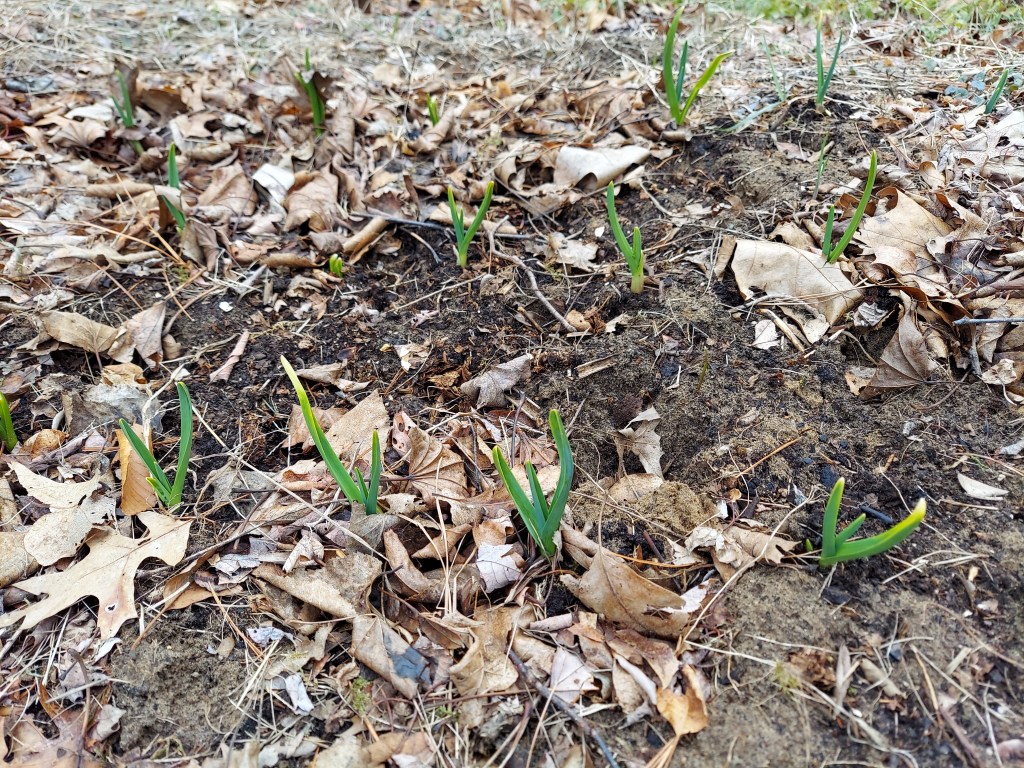
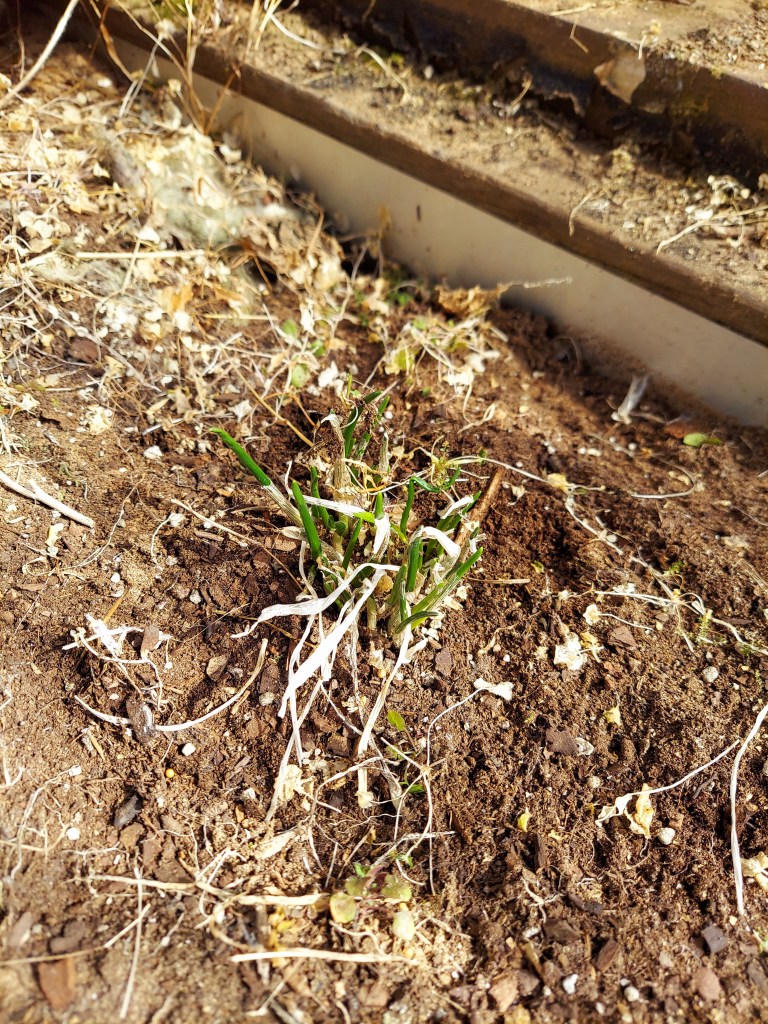
    My garlic is looking pretty good for this time of year. The fresh shoots are pushing through the leaf mulch, and I will need to fertilize them soon so they can put on lots of bulb growth over the next few months.

    I checked the fruit trees, and the Cortland apple is starting to bud up, so that is exciting. Our huge magnolia tree has a bunch of flower buds that are almost opening up. The crab-apple bush is covered in buds. The two clearance rose bushes that I got in the fall survived the winter, so that is exciting. I kept them covered by plastic domes all winter to give them a little extra snow protection and warmth on the sunny days.

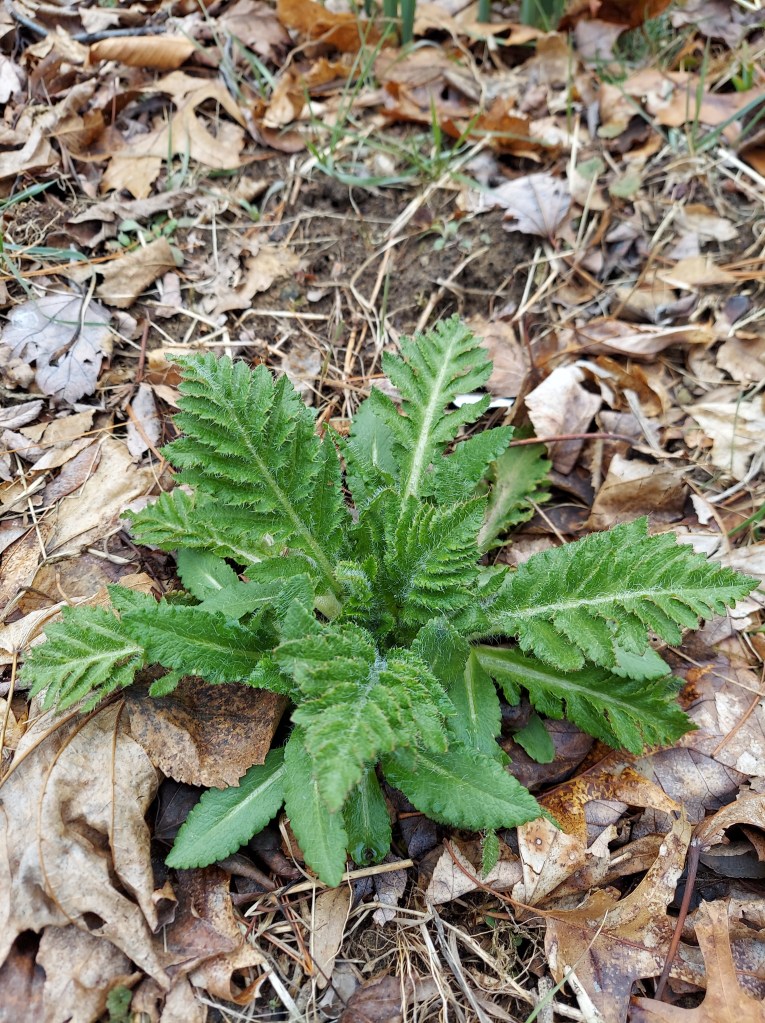
    I planted several small poppy plants in the fall, a couple in raised beds and a couple straight in the ground. This plant is in front of some daffodils at the end of the garlic bed next to a tree stump. I’m hoping the overlap of the daffodils and poppies will provide flowers for multiple months.

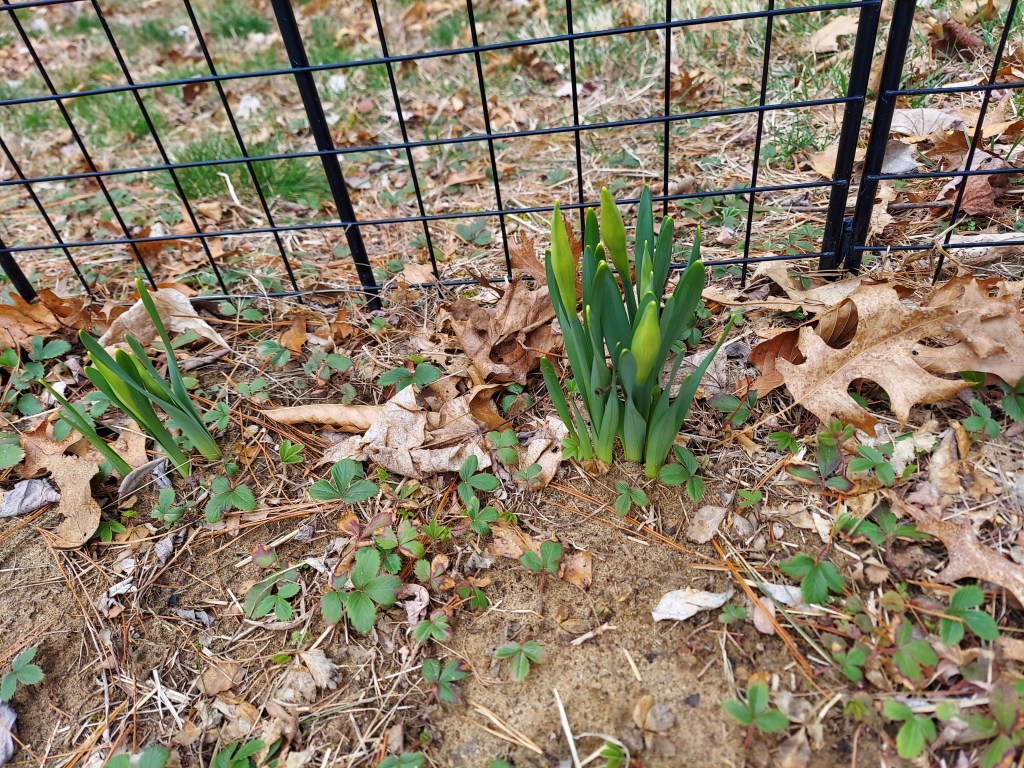
    The daffodils at the back edge of the garden are filling in nicely, I expect to see flowers soon!

    I have a few tulips along the side of the driveway, and I noticed some of the leaves had been munched on about a week ago. I expect it was a rabbit. I put mesh covers over them all and they have recovered and are growing new leaves. I don’t like the aesthetic of the covers, but since these are the only tulips I have and they are outside the fence, I will do what I can to protect them so I might actually get flowers.

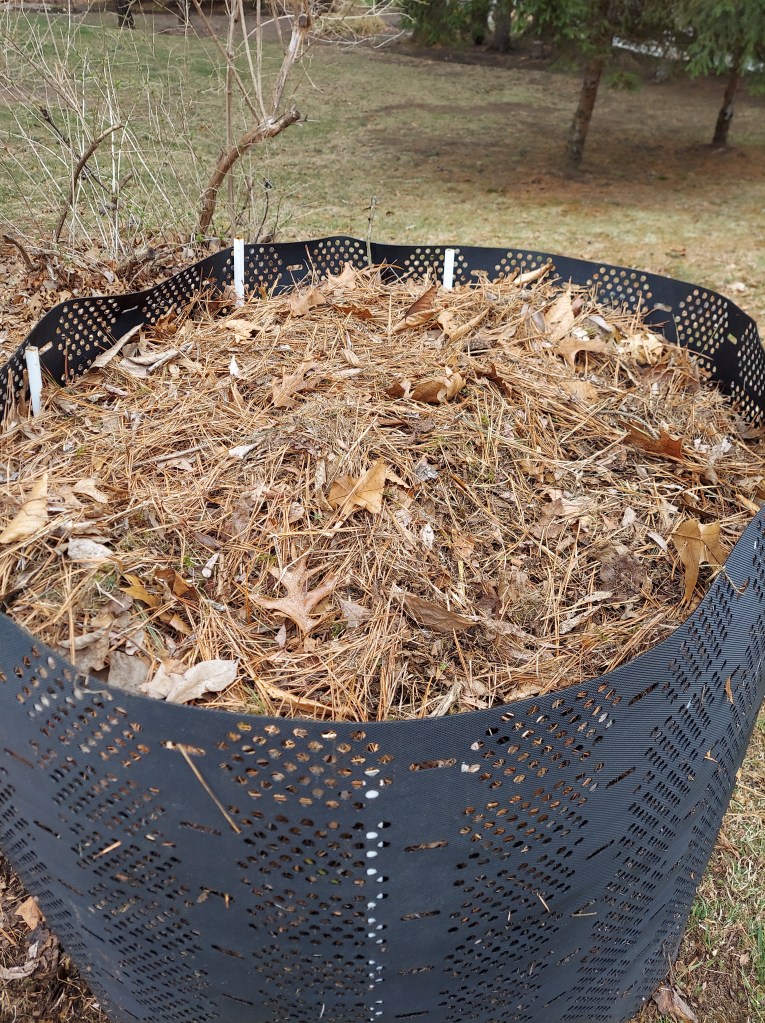
    Yesterday my dad and I flipped the current compost pile from one bin to another one. Now it will all sit and decompose over the next year. I should have nice compost to spread next spring. Slow composting is pretty hands free. We just throw all the grass, leaves, and garden clippings into a pile and leave it and we only turn it once a year. The top layer is the leaves and needles we raked up to set up the new bin. My sandy native soil needs all the nutrition and water retention that it can get from adding compost.

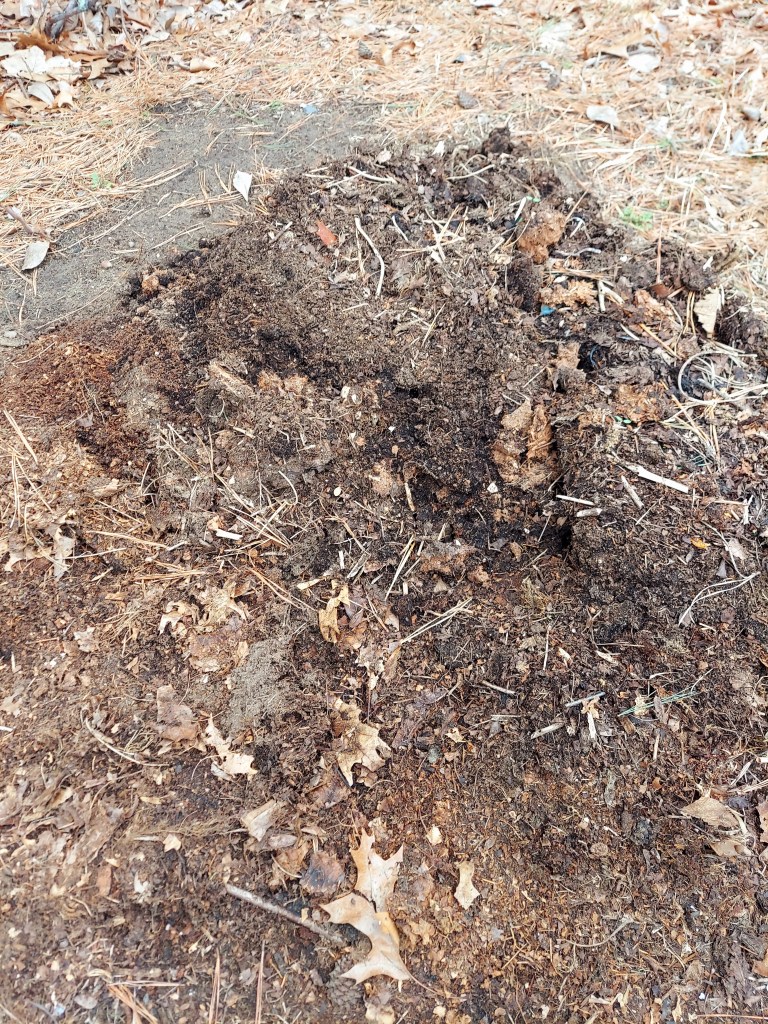
    It might not look like much, but this is last year’s compost pile. Mostly broken down and certainly ready to be utilized in the garden. After I went back inside, I saw a couple robins scratching around in the bare ground/dirt that was left from flipping the pile. Hope they found some bugs.

    I also spread a nice layer of last year’s compost on two of my raised beds yesterday. It’s mostly nice and crumbly, any really large twigs or stems I just tossed on the current pile. I weeded the two beds and removed most of last fall’s leaves which I had been using as a mulch. Took a few buckets worth of material and dumped it on the compost pile.

    This is an overwintered kale which has grown several new leaves this spring already. I should be able to get a few small harvests off of it before it bolts and goes to seed in late May. Kale is a biennial plant, so it naturally will produce seeds in its second year. I may leave it to flower for the pollinators.

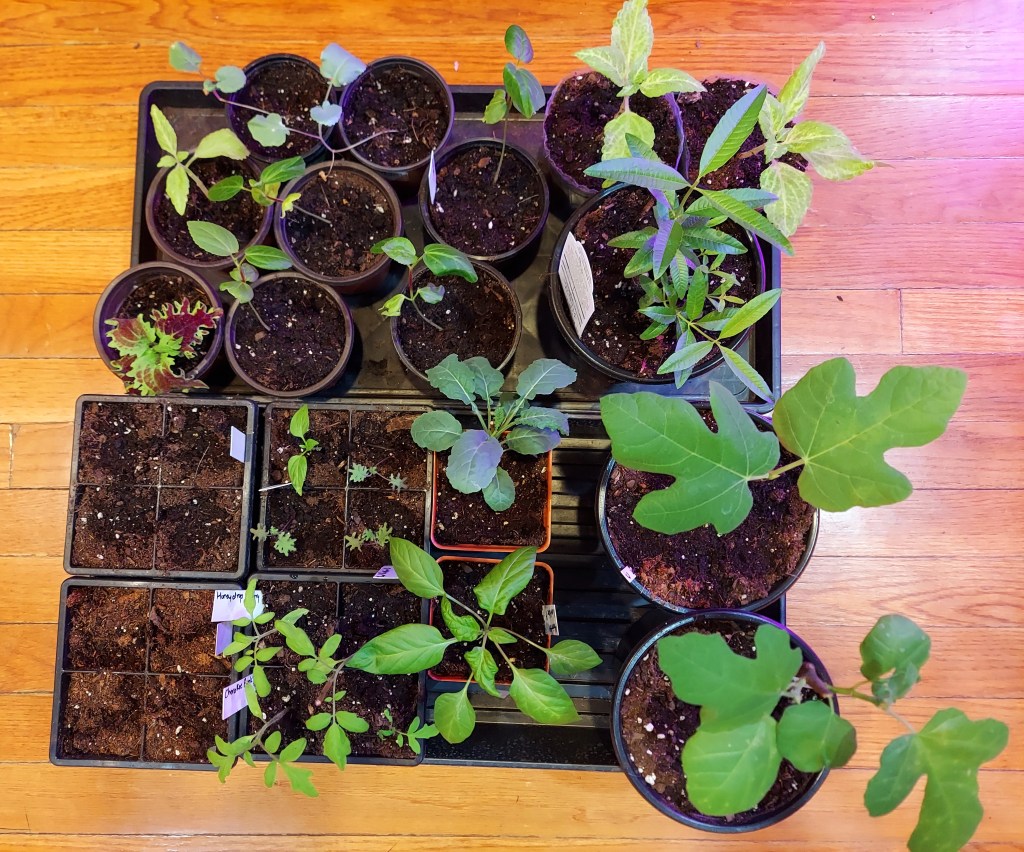
    Indoors I’ve been keeping busy the last few weeks. All stages of indoor seed starting are ongoing, from freshly sown pea seeds to potting up one, two, and three-month-old seedlings. These two trays have kale, peppers, broccoli, coleus, figs, and hibiscus, as well as a recently purchased lemon verbena plant. Now the game of Tetris is in full swing as I try to fit as many plants as possible either under the grow lights or by the sliding back door so they can get the natural light.

    So much potential for the garden: flower, tomato, pepper, leek, and basil seedlings.

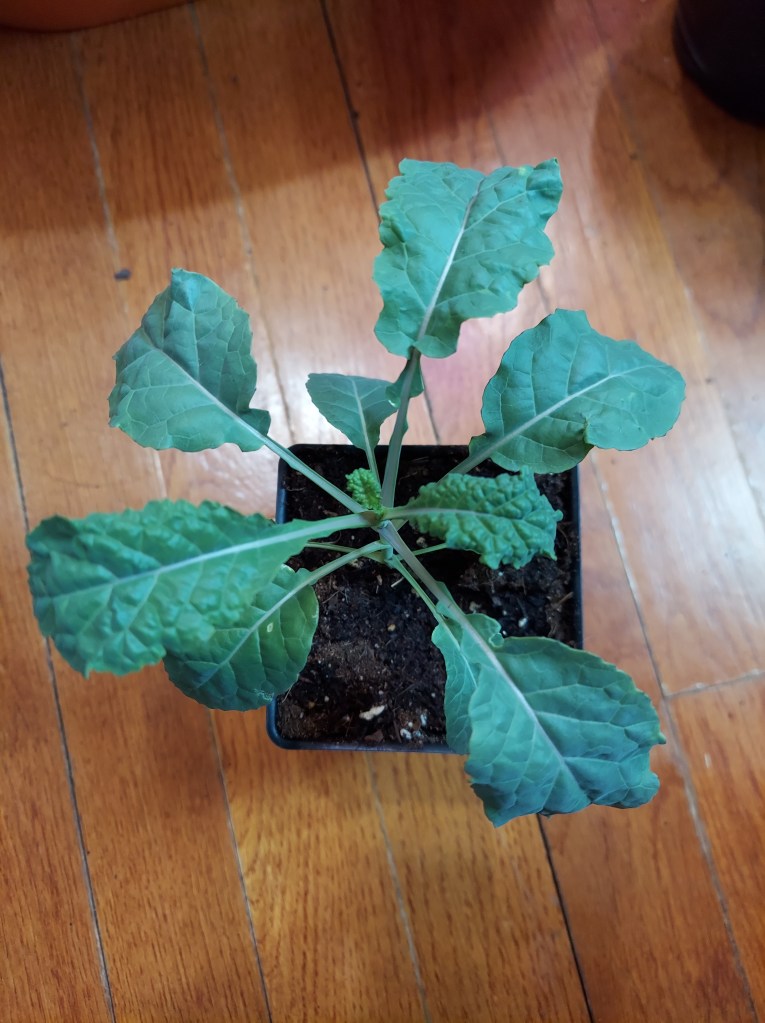
    I am really proud of how nice my kale seedlings look at this stage. They are big enough to go outside but I’m going to wait a couple more weeks, since my neighborhood got a dusting of snow this morning.

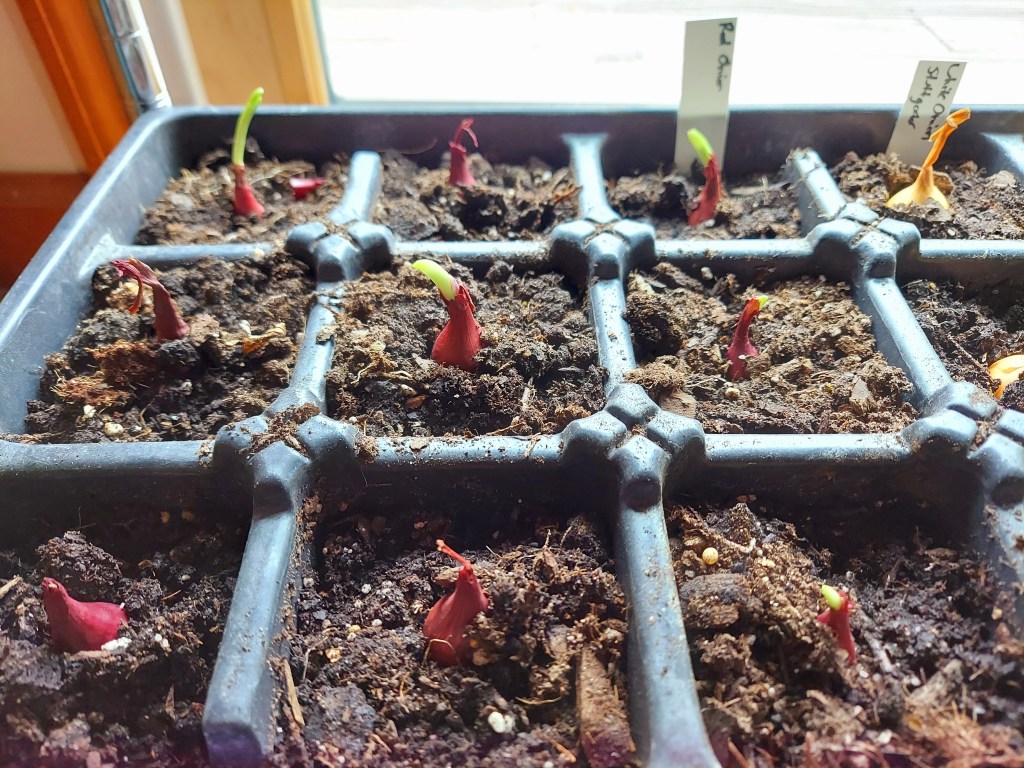
    I am trying onion sets for the first time this year. I purchased both red and white last week and have planted a few inside to give them a head start before transplanting outside. I grew a few onions last year from seedlings, but they didn’t develop into large bulbs. I’m not sure if that was my error or the type of seedlings. Going to see if sets perform any better.

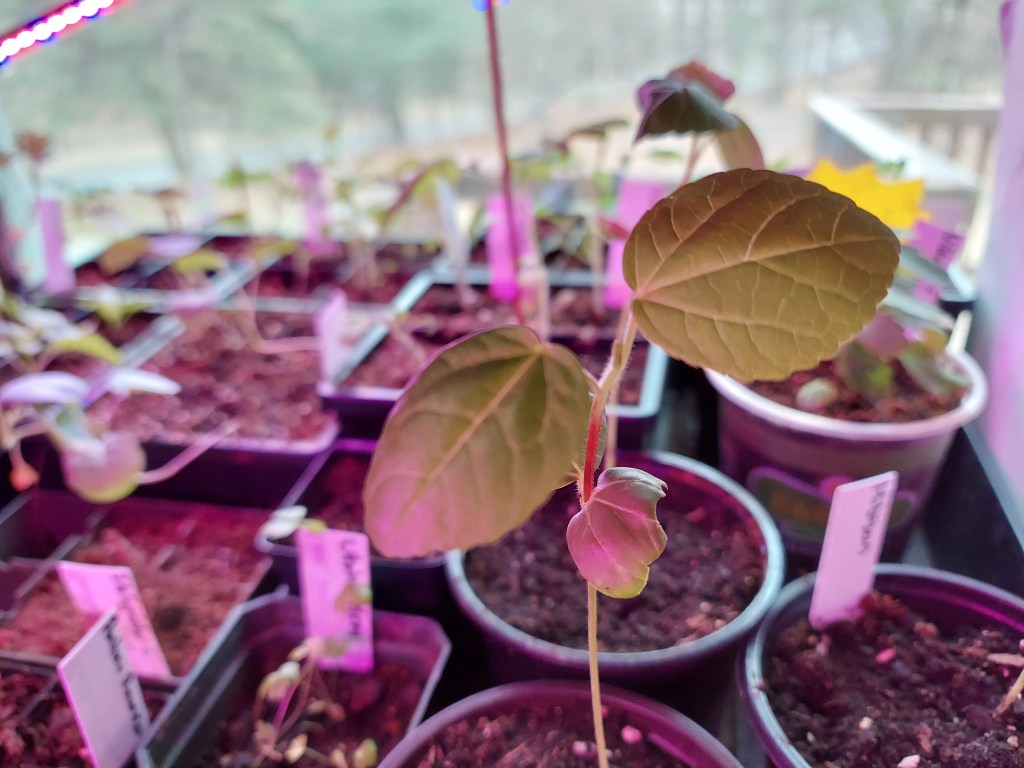
    I’m also attempting to grow hibiscus from seed. I had 5 of 6 seeds sprout, and they are all growing their second set of true leaves now. Don’t know how big they will get this year, but it’s fun to try new things. I will keep them inside for a while before putting them out in the greenhouse. I do enjoy hibiscus tea which uses the flower calyxes for the sour flavor and pink color. With my short growing season, I had to get a big head start on the season, since they like tropical weather. I will put them in pots so that I can bring them inside in the fall because they are not frost tolerant.

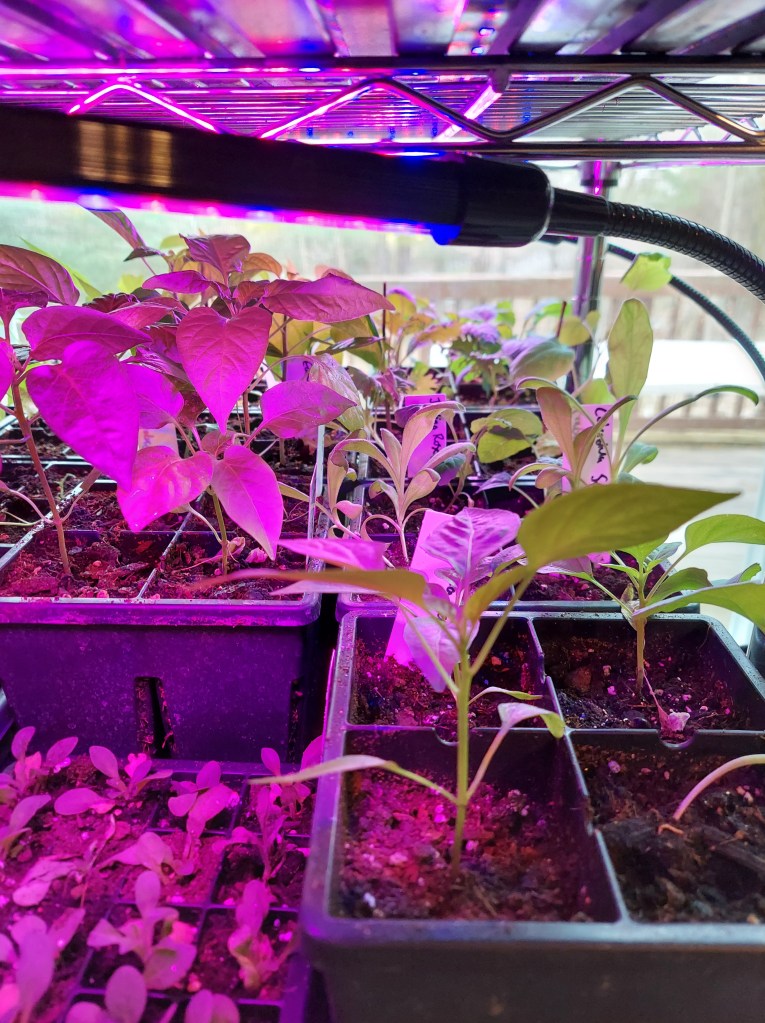
    Lots of pepper seedlings are now in 3- or 4-inch Epic seed cells. I should get a good variety of colors and sizes to harvest over the summer months. This shelf also has calendula, cabbage, and sage seedlings.

    No comments on April Showers
  • Houseplant Propagation

    March 24, 2025
    houseplant

    Another project I have been working on over the winter has been dividing, repotting, and taking cuttings from some of my houseplants.  In December I purchased 2 Anthuriums and decided to divide them up because each contained multiple plants.  I ended up with seven pots and I planted each in a half orchid/half indoor potting mix.  Six of them survived the dividing process.

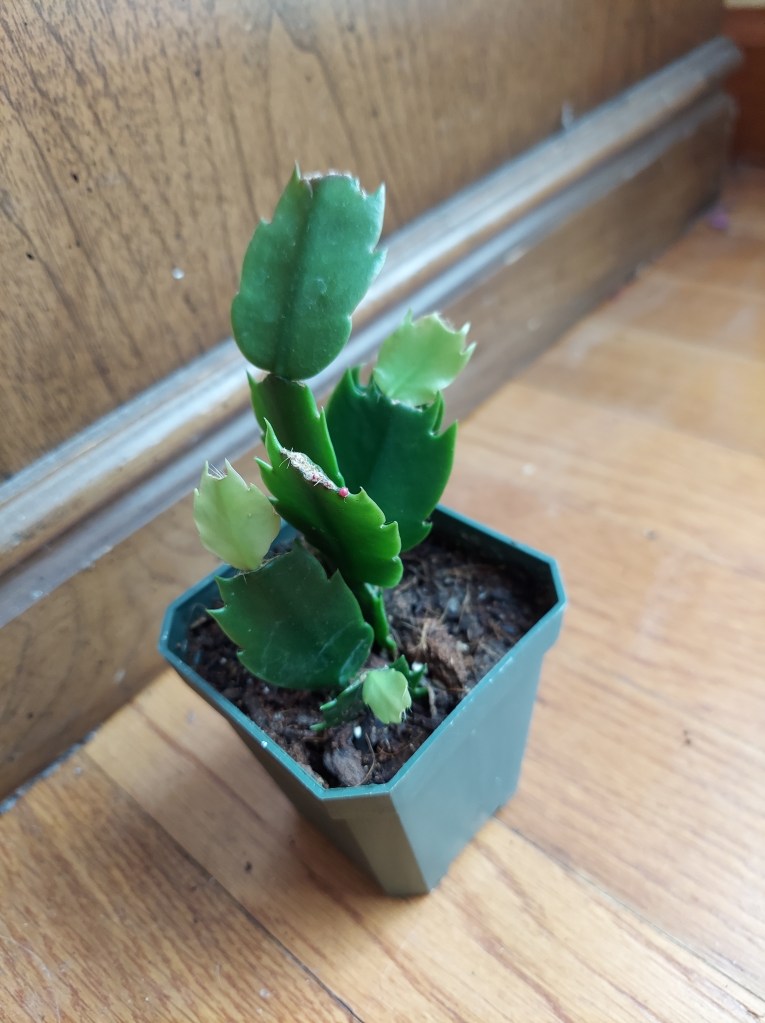
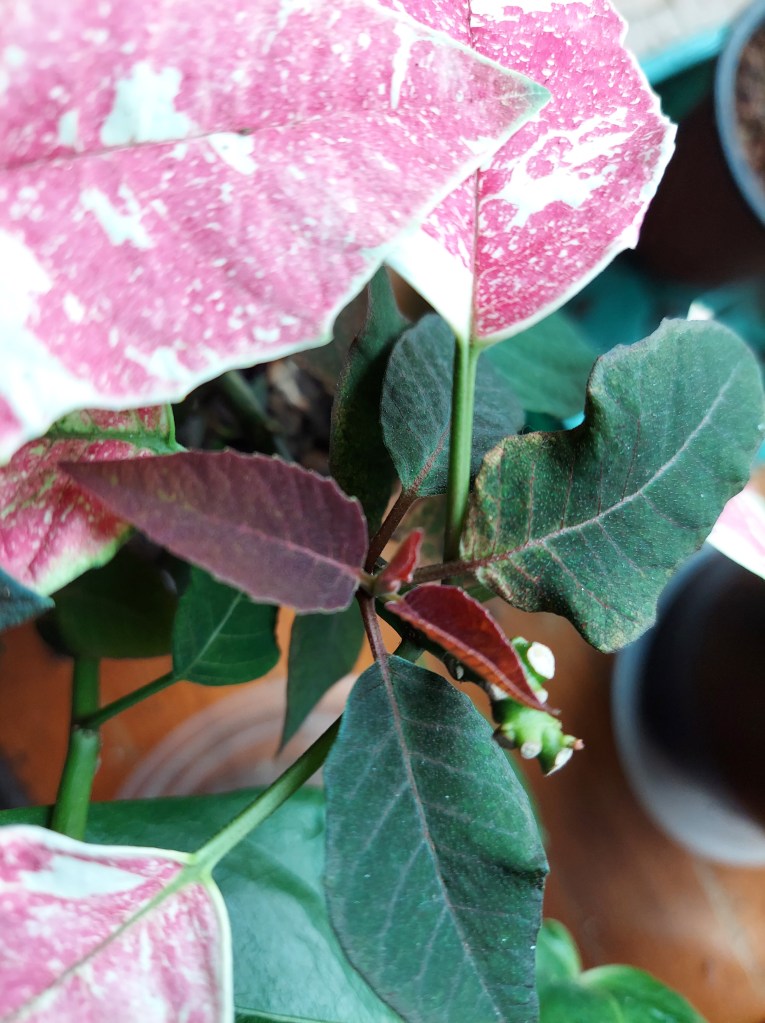
    I have taken and successfully rooted cuttings from my Christmas cactus (pictured above), goldfish, and polka dot plants.  I am also experimenting to see if I can air layer my peperomia succulents to get more plants.  My two poinsettias are still alive, and the hot pink one is putting on a flush of new growth.  The red variegated appears to be in a holding pattern for now, which is better than I have managed in the past.

    My pink poinsettia started a lot of new dark red growth once the initial wave of blooms died back. I try to only water it once a week, and it gets natural light through the sliding glass door. It’s not under the grow lights, or getting any kind of special treatment. The other one is the centerpiece on the kitchen table.

    Successfully rooted goldfish plant cuttings

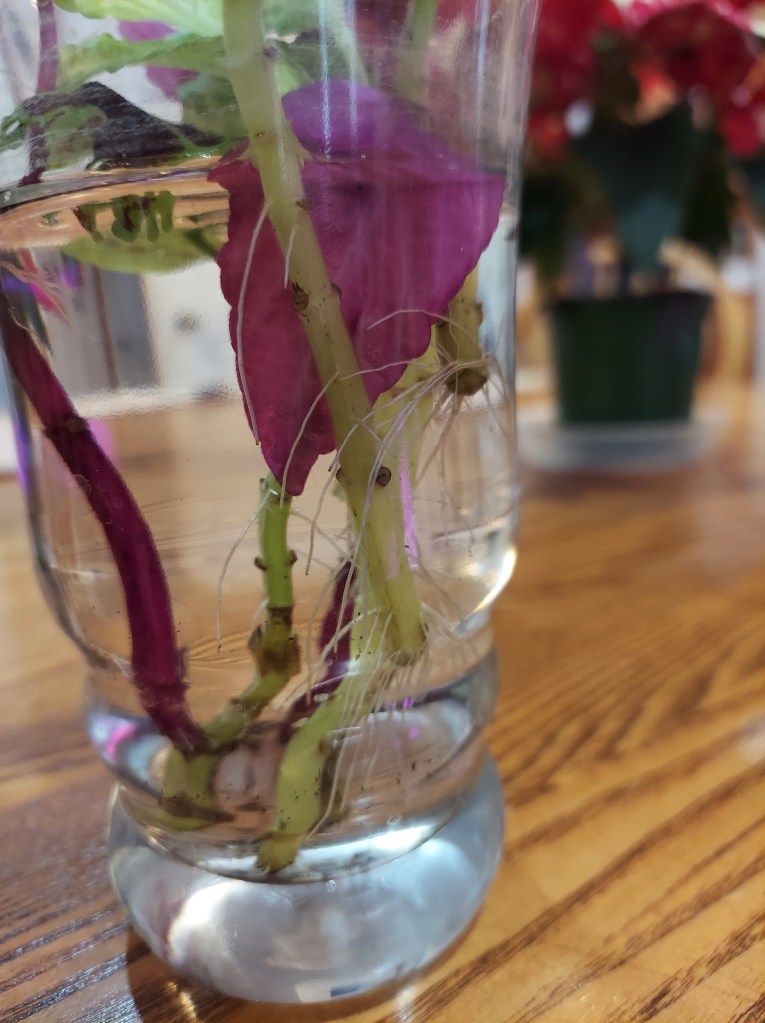
    I took a bunch of coleus cuttings in the fall before the frost killed the plants, and they rooted very well.  I had them in small pots for a couple months and have now re-cut them to propagate again in cups of water.  I want to refresh the roots and provide them with new potting mix in a couple months without needing to repot them again before they can be transplanted outside.

    Coleus cuttings well rooted in water. I have now transplanted them to 3-inch seed cells to keep growing.

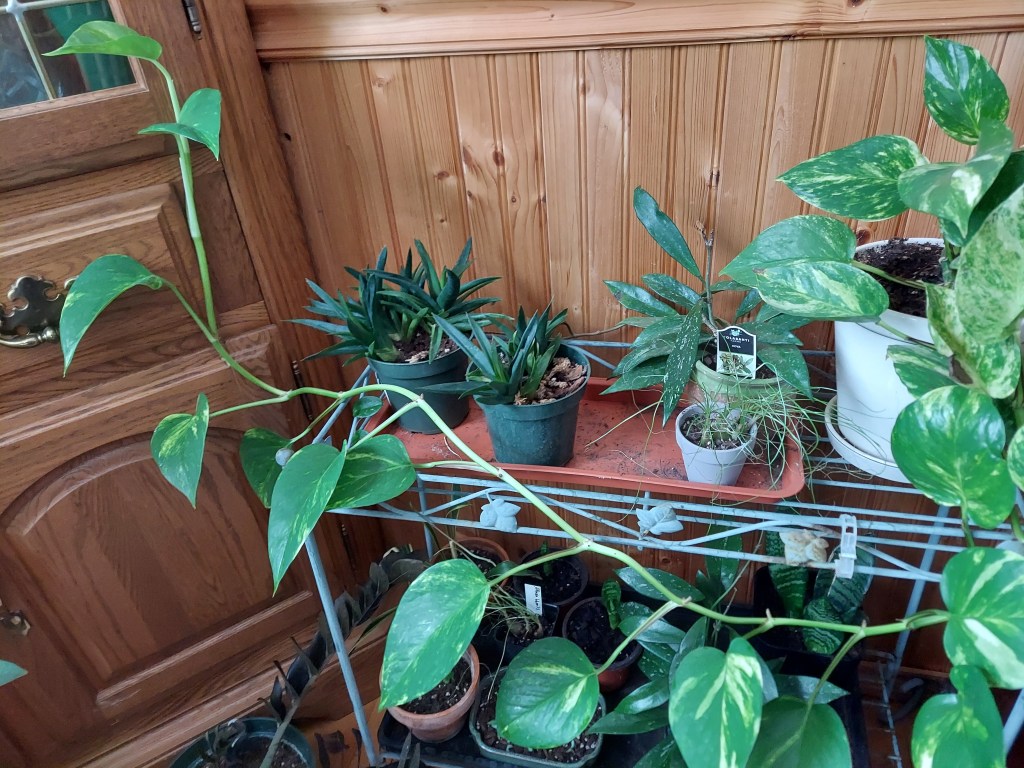
    My variegated pothos is doing quite well and has run out of room along the shelf to grow, it’s trying to grow up the corner cabinet. Rather than risk it falling off and breaking the single vine, I have decided to cut it back and propagate it.

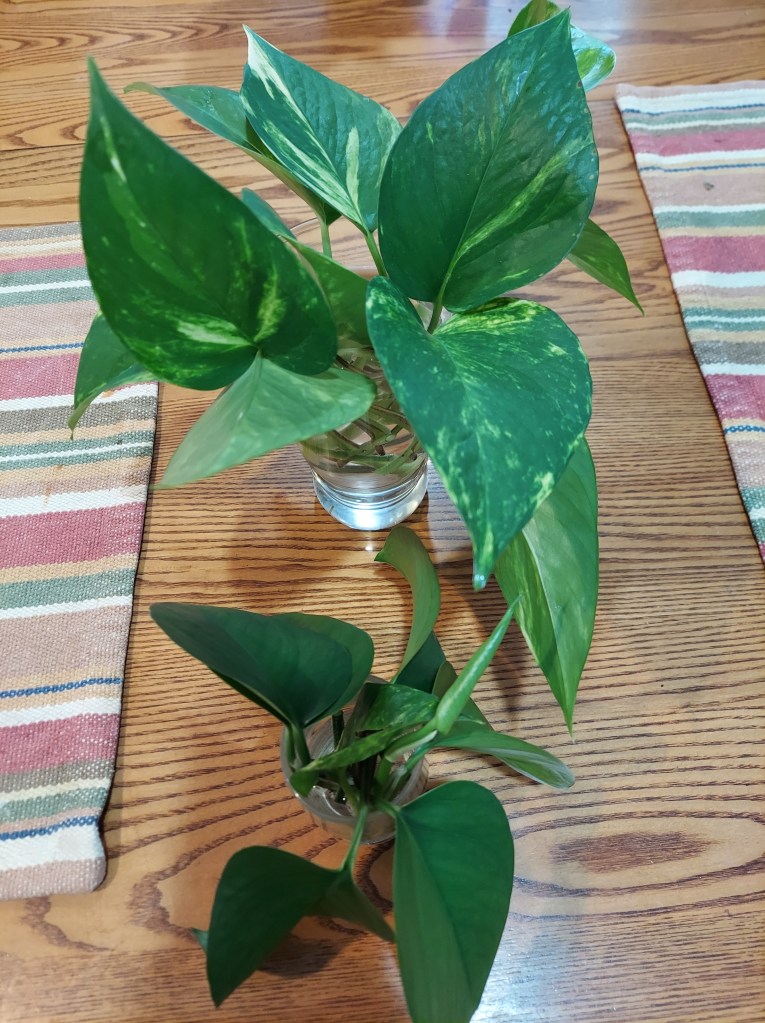
    I took about a dozen single node cuttings the first week of Feb and most of them rooted in water over the past few weeks. I have now planted them in pots and hope to have a nice full hanging basket come summertime.

    I’m also trying to reset some of my succulents by trying to root the leaves. Two were especially long and straggly looking, so I have cut them off and am hoping they will re-root from their stems.

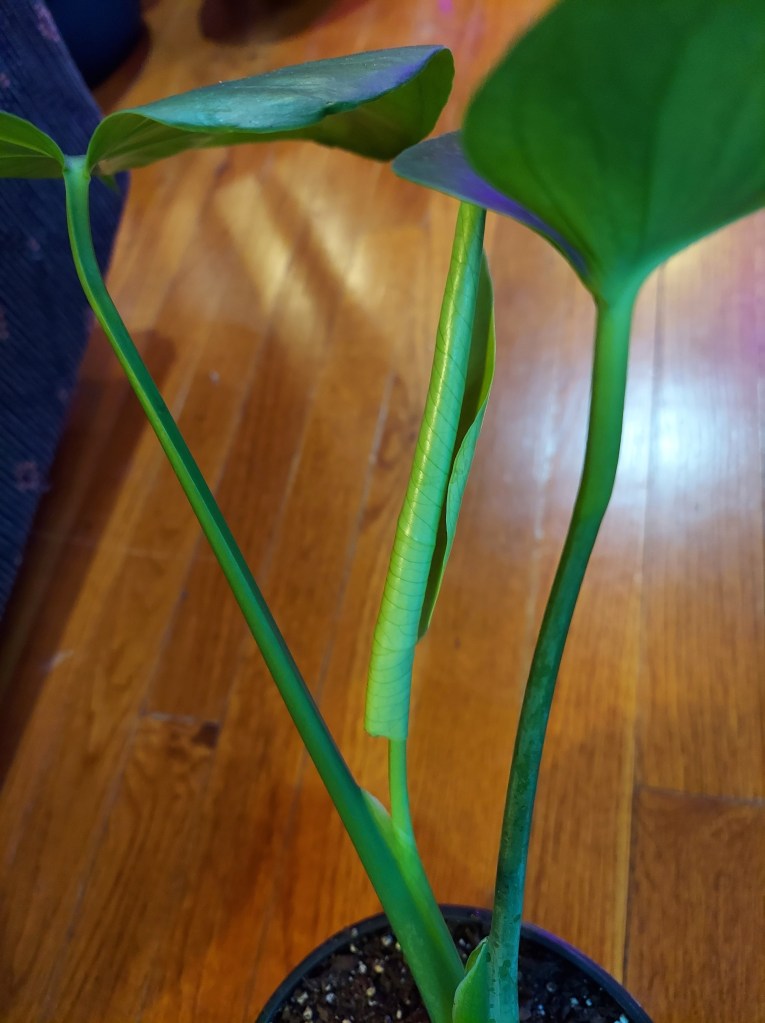
    My new split leaf monstera is putting out a new leaf, and I’m excited to see what it looks like once it unravels in a few days.

    No comments on Houseplant Propagation
  • Spring Cleaning in the Garden

    March 15, 2025
    Overview

    On March 10, we had a very nice spring day so I took advantage to tidy up out in the garden and greenhouse. I removed dead plants, trimmed back the herbs, pruned the fruit trees slightly, and weeded in the greenhouse. I filled several buckets with material for the compost pile. I enjoyed being able to spend time outside without wearing a jacket since the greenhouse was about 80 degrees.

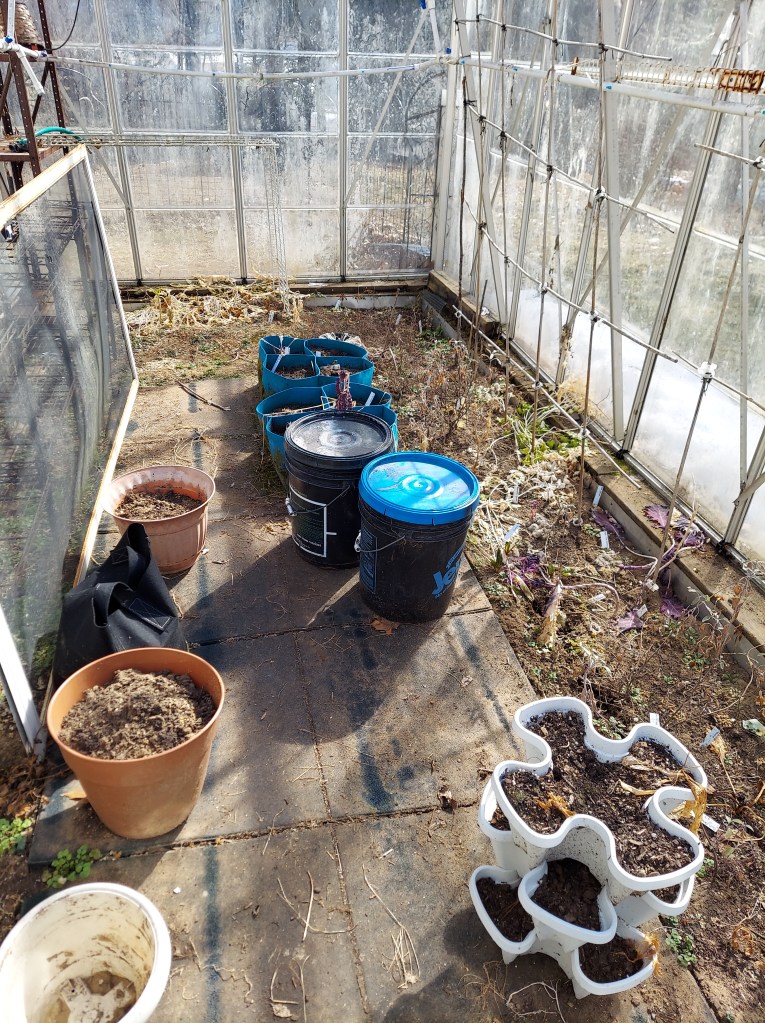
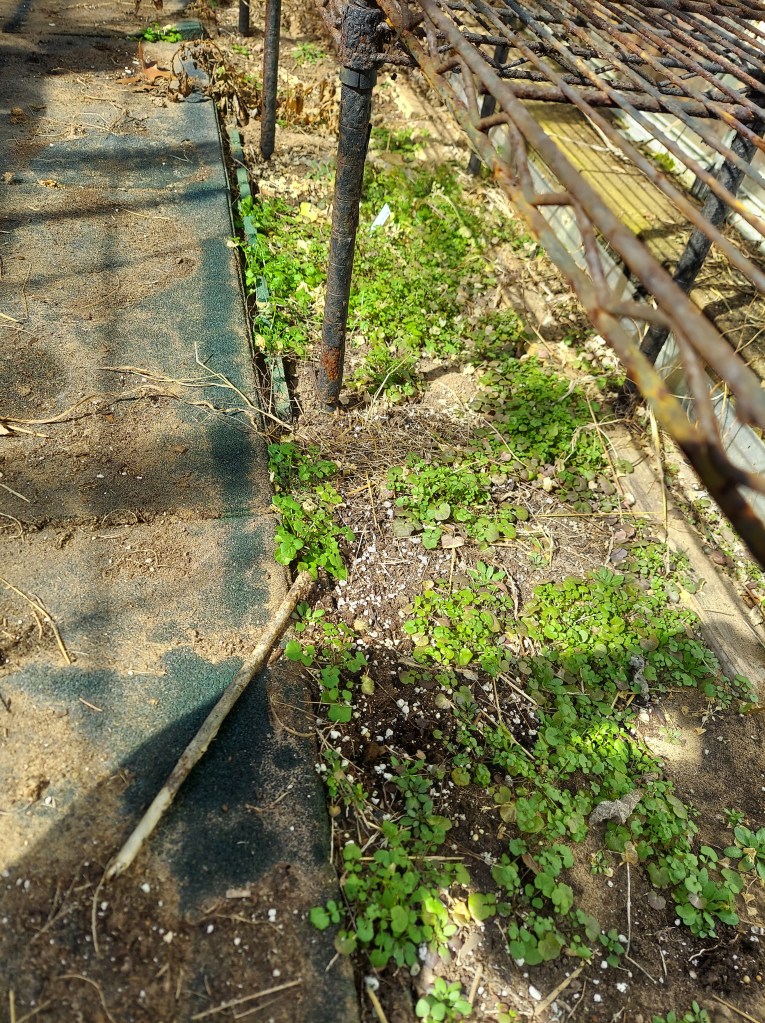
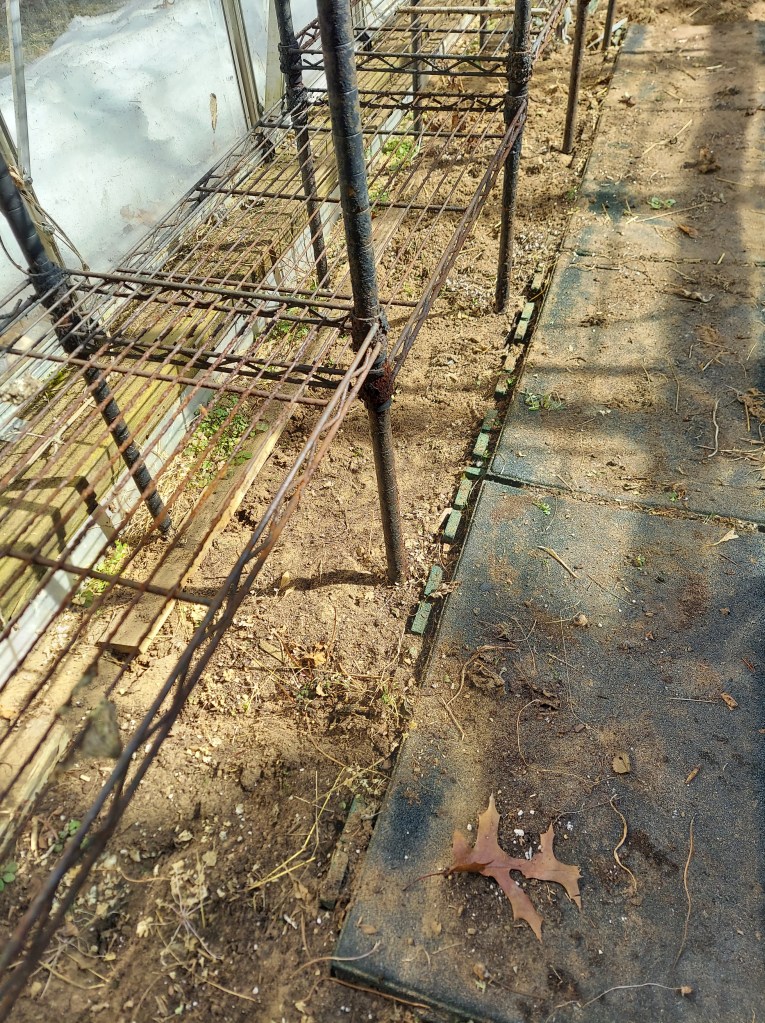
    The greenhouse growing spaces needed a good clean up, lots of dead plants and weed. The actual walls and roof will probably need to be power washed this spring to clear off some algae and allow better sun exposure.

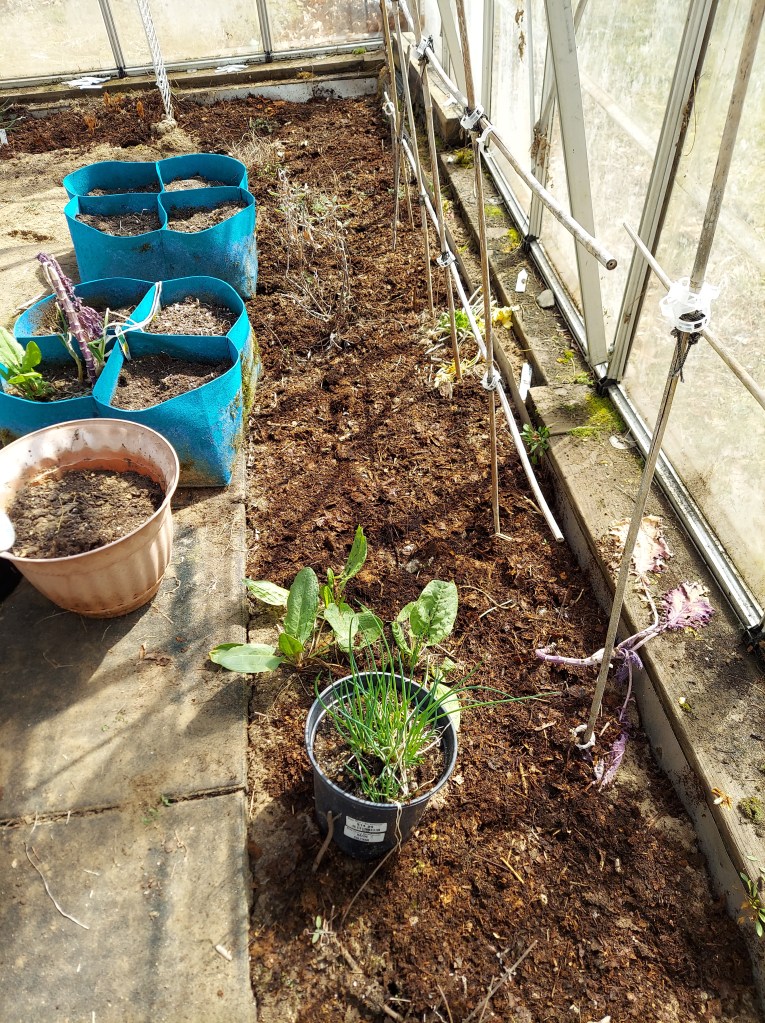
    After I had cleared out the right hand side, I left a couple of kale plants along with the sage and parsley. The thyme plant was massively overgrown down near the end, so it got a significant trim. Chives are starting to regrow in the pot.

    Fresh growth on the in-ground chives too.

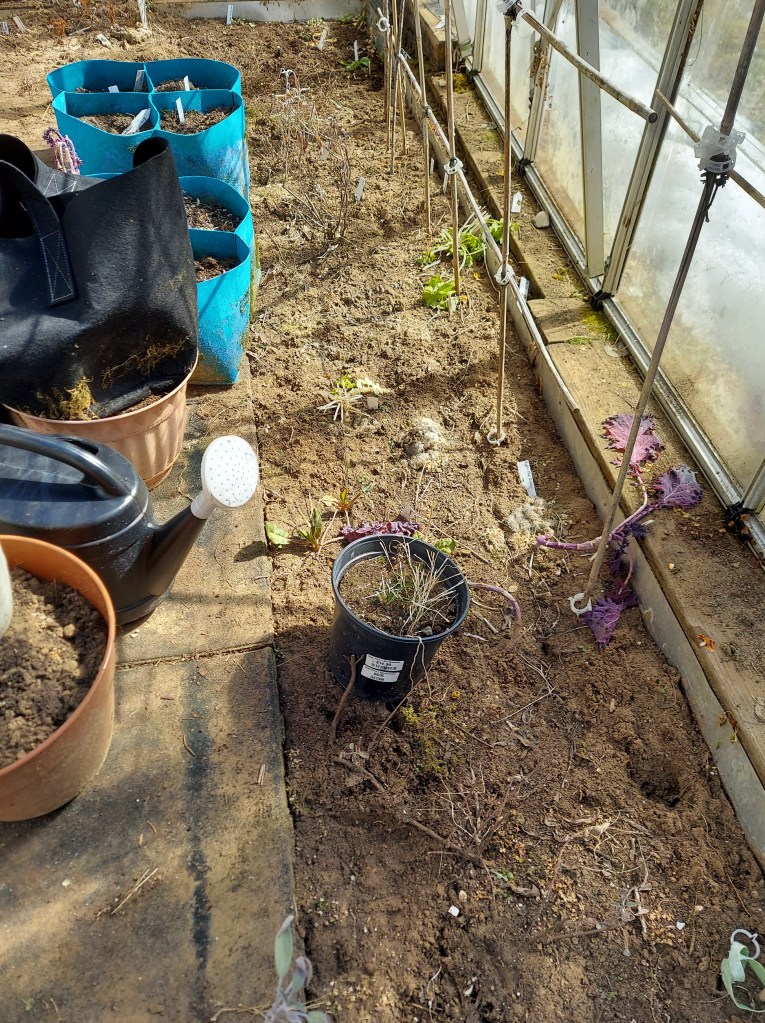
    The lefthand side of the greenhouse floor, which is under shelves, was full of weeds. Took a while to clear it out, I also had to trim back a messy oregano plant that had gone to seed last fall.

    Much better! Will probably need another round of weeding before I plant anything, but at least this cut down on the weeds significantly.

    I also checked on the garden and spotted a few garlic shoots coming through the mulch, two of the poppies I planted in the fall have fresh leaves, and a couple of the herb plants have tiny new shoots. I think the rose bushes survived. I removed some dead plants from the raised beds and pruned the lavender, sage, coreopsis, and lemon balm. I spotted some chamomile seedlings too. The apple and pear trees are looking good, still partially wrapped in bubble wrap and burlap. I pruned the tips off of the tallest two, to encourage them to put out more branches and fill in better. Spring is on the way.

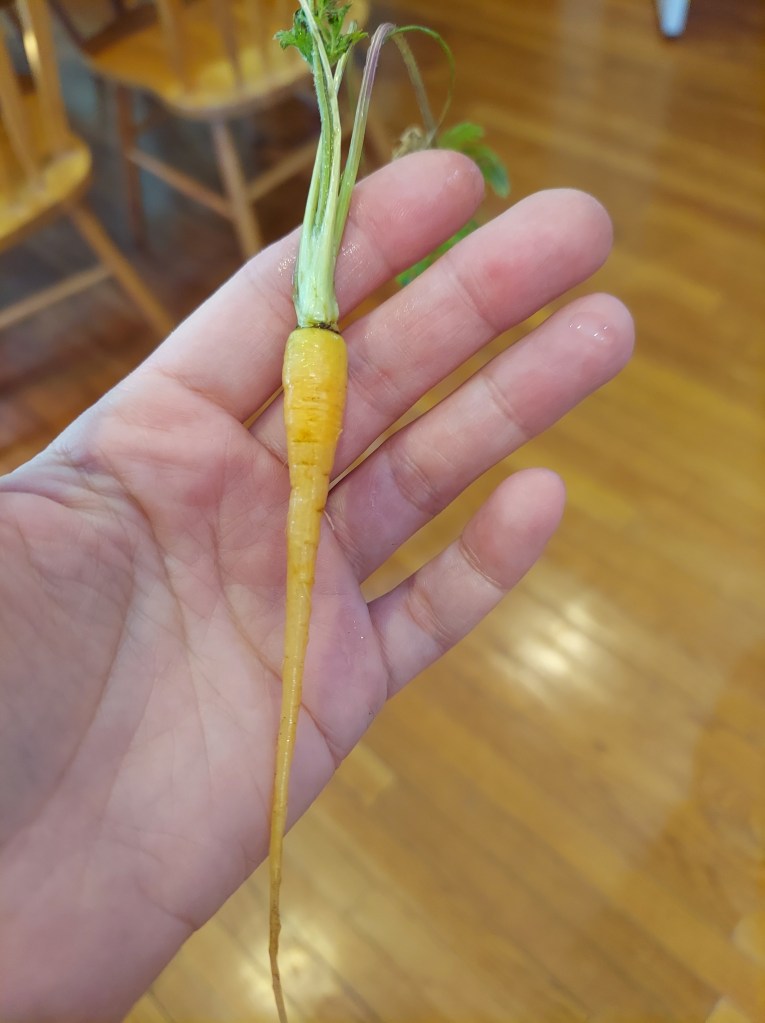
    I found a baby carrot among all the weeds in the greenhouse!

    No comments on Spring Cleaning in the Garden
  • Seed Starting Guide

    March 9, 2025
    Overview

    This year I will attempt to better record and outline the steps I take when I garden. Here is my process for starting seeds indoors in late winter. This is the process I followed when I started peppers, leeks, and kale in late January. Now that it is approaching spring, I wanted to share it with those who may be new to seed starting.

    Materials: necessary: seeds, containers, soil, labels, bottom trays optional: grow lights, heat mat, tray covers

    Seeds: I typically purchase from Botanical Interest, Hudson Valley Seed Co, Fruition Seeds, and a couple of Etsy shops.  It’s great to have a local seed company if you can find one near you, that way you know the plants will grow in your climate.   I’ve also been saving some of my own seeds (mostly flowers) over the seasons, so I will be starting some of them as well.

    Home saved yellow and orange sulphur cosmos seeds

    Make sure to read all the details on the seed packet before planting, such as when to sow and the proper depth to plant the seeds.  There are certain seeds that need special attention, such as cold stratification (typically fall sown in my region), soaking overnight, surface sown if they need light, or scarification (scraped or cut to aid the seed in breaking the hard seed coat).   I’ve grown canna lilies from home saved seeds and the seed coat was so hard they needed to be cut open with a saw before planting. When dropped on the ground they bounced. Please be aware that some plants are harder to grow from seeds than others.

    Sample seed packet with planting instructions

    Direct sow versus transplant: There are many seeds that can be directly sown into the garden, which don’t require any extra treatment. I personally sow almost all of my seeds indoors, since this allows me better control over the environment, and allows for a jump start on the season. The main seeds I do direct sow are root crops such as carrots, radish, and a few quick growing leafy greens like arugula and spinach. Warm loving, long season crops like peppers, tomatoes, and eggplant need to be started indoors in my climate because they would not be able to reach full size if direct sown in May.

    Containers: I use a combination of methods for starting seeds.  The most readily available in stores tend to be 6 cell plug trays or peat/compost pots. I use 6 cell seed trays for multisowing things like flowers or herbs.  Large seeds like squash or beans get started in 4 cell (3 or 4 inch tall) seed trays. 

    I purchased my trays from Epic Gardening, they are plastic, but really durable and will last a lifetime.  They have drainage slits down the sides and large holes in the bottom to make it easy to pop seedlings out for planting.  You can also easily monitor the root growth.  

    Healthy pepper roots, growing out of the side slits. These are ready to be transplanted to larger pots.

    For tiny seeds or things I want a lot of I will typically sow them densely in either a 3 inch pot or rows in a short square pot then prick them out once they have sprouted.  This is what I did with my peppers.  I sowed 3 or 4 seed types per container, then divided them once the first set of leaves had pushed free of the seed coat.  For peppers I do this so that I can fit more seeds together on the heat mat and under the humidity dome for maximum use of space.  I also did this for my kale and onion seeds, which did not require heat.

    Three types of peppers sown in one shallow tray; they were pricked out to individual cells about a week after sprouting.

    Note: I’ve seen folks who recommend egg carton, peat pots, or jiffy pods for seed starting.  I have used all three methods and found them unsuccessful.  Egg cartons are too shallow and dry out too easily, peat pots are ok, and I have used them in the past for squash seeds.  They tend to stay wet and I have had some mold and fall apart on me.  The jiffy pods say that the little mesh wraps are biodegradable but not over the course of a single season.  I’ve had pepper seedlings really stunted by not being able to grow through the mesh edges.  Newspaper pots or toilet paper tubes work better since they are easier to break down out in the soil.  Personally, I have not tried soil blocking or other plastic free methods, I don’t mind having sturdy plastic seed trays.

    Holes poked, ready for seeds

    Soil: I tend to make my own blend of seed starting mix, rather than buying it from the store.  Store bought mixes are fine, as long as they have perlite for drainage and small particles.  Chunky regular potting mix is not ideal, small seeds can get lost and not have good soil contact for moisture.  My preferred mix is made from coconut coir, worm castings, perlite, and old potting mix from the previous year.  I have a lot of old soil in pots and a good way to reuse it is to mix it with fresh compost. If the seeds are going to be in the cells for a long time, I will often add a bit of 3-3-3 granular fertilizer as well.  If seeds need to be surface sown I will often sprinkle a fine layer of vermiculite over top, this still allows light through but helps with retaining moisture on the top of the seeds.  I will also use a spray bottle for watering such seeds so as to not blast them from the tray.

    Recent batch of potting mix, all blended together and ready to go

    Labels: Make sure you have or make some sort of labels so you remember what you’ve sown.  I typically use plastic labels, but I have some bamboo ones too.  A sharpie or other weatherproof marker is ideal for seeds going outdoors otherwise the ink or pencil will probably wash off during the course of the season.  I’ve learned this the hard way.  

    Grow lights: Grow lights are only necessary if you are starting seeds indoors in late winter when sunlight is at a weak point.  There is a vast range of lights out there, both in terms of light strength, cost, and mounting methods.  I personally use cheap, clip-on lights from Amazon.  For folks starting seeds in April or May lights are not needed, especially if you have a south facing window.

    Many tiny flower seeds need light to germinate, so I sprinkled them on the surface of the soil and covered them over with vermiculite (right half of the tray).

    Bottom trays: These are solid trays which will hold your seed cells or small pots of seedlings.  These are necessary to catch any extra water that drains through the potting mix.  Many gardeners recommend “bottom watering” which means pouring water into the bottom of the tray so that it can be whisked up by the potting mix.  It encourages the roots to search for water and avoids any potential of disturbing the top of the soil or dislodging small seedlings with too strong a gush of water.

    I use two styles of 10×20 bottom trays, one tall with ridges and the other short and smooth.  They both work quite well, though the shorter ones are made of sturdier plastic.  I purchased the shorter ones from Epic Gardening. I also own lots of the round ones that go under individual pots for my houseplants, both terra cotta and plastic. On occasion, I have also used old plastic tubs and food containers.

    2 types of bottom trays, you can see the height difference between them, and the ridged one on the right versus the flat style on the left

    Heat mat: I really only use the heat mat for peppers, tomatoes, and ginger.  Most other seeds will sprout fine with regular room temperatures.   Again, I got the cheap ones from Amazon.  They plug in to the wall and run constantly.  I don’t bother with timers or temperature control for seeds, but I did with the fig cuttings.

    Tomato seeds on the heat mat

    Tray covers/humidity domes: These mini greenhouses with covers are ideal for starting heat loving crops. They help to keep in the moisture and humidity and speed up germination. Just be aware that they need to come off once the seeds have sprouted. Healthy seeds need good airflow, and too much humidity can lead to mold/algae issues on your soil.

    Growing Zone: It is very important to know your first and last frost dates before sowing seeds.  Growing zones are less important, since your microclimate might vary greatly from the generic zone. If you do not know your frost dates this can easily be found by checking the farmers’ almanac.  You can do an online search, and once you enter your zip code it will provide your first and last frost, which is your average growing season.  Warm loving crops cannot go outside before the spring frost date, and will be killed off by the first fall frost.  My frost free days are typically from mid May-early October.  Seed packets will state when they should be sown, often stated as weeks before or after your spring frost date.  Please pay attention to these details.

    Steps:

    1. Gather all supplies
    2. Decide how many seeds you want to start from each packet.  I find it’s best to have a few spare plants than to not have enough to fill your space.  Seed packets will state their planting distances for ideal growth, this is based on straight row planting.  I like to stagger rows and cram things closer than recommended.
    3. Moisten your potting mix and fill your containers, press down slightly to make sure everything is snug.
    4. Use your finger or a pencil/chopstick to make a small hole in the potting mix, you typically want this to be twice the depth of the seed size.  Most seed packets will tell you how deep to sow the seeds.  Most seeds will sprout fine if planted up to 1 inch deep.
    5. Carefully place a few seeds in the hole.  For really tiny seeds I like to carefully tap on the edge of the seed packet and let them drop out.  Sprinkle more potting mix over top to cover the seeds.  Fill out your label while you still have the seed packet out and put it in the pot.
    6. Place the pots or cells in a tray near a south facing window or under the grow lights.  Check every couple of days to make sure the soil is damp but not soaking wet.  Many seeds will germinate within 7-14 days, some take longer. 
    7. If you planted a lot of seeds per cell you will probably need to thin them after sprouting.  Some crops do just fine when multi-sown and do not need to be thinned.  Good candidates include onions, beets, some herbs and flowers.  If however you intentionally multi-sowed in a small pot in order to prick out the seedlings, the best time to do that is about a week after the seed sprouted.  This way you can separate them without difficulty.  Carefully tease them from the pot, I like to use a chopstick for this, then poke a hole in your 6 cell and carefully guide the roots down.  Do not hold the seedlings by the stem, they are very delicate.  Snapping them will kill the seedling.  Hold them by the leaves, they are sturdier and a plant can survive if one leaf is damaged.

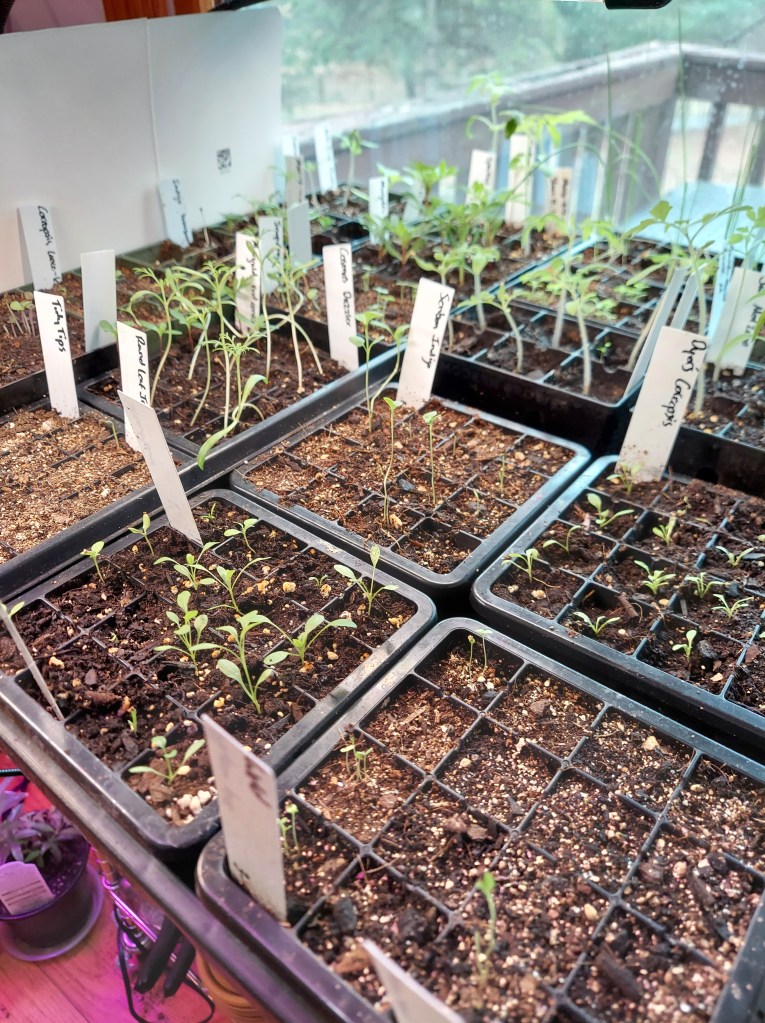
    Trays of happy seedlings growing in early March.

    One of the most important steps is proper watering, small 6 cells dry out much faster than 3 or 4 inch tall pots. Small seedlings can get waterlogged and die from “damping off,” so it is better to error on the drier side. If the top of the soil is dark chocolate in color they are probably fine, once it gets to milk chocolate you will want to check. I normally lift up the trays and check the bottom of the cells once the top looks dry.

    Seedling size also makes a difference. Once seedlings roots fill up the cell they will need more frequent watering, and often benefit from being transplanted into a larger pot if it is still too early to put them outside. This is one of the main reasons why I have both 6 cell trays and the taller 4-inch seed cells. Once seedlings outgrow the 4-inch cells, I generally transplant to a 6-inch pot. Sometimes there is a bit of a waiting game to see how big the plants will get before the weather cooperates and lets you move them outside.

    When the weather is warm enough for plants to go outside, they need to be hardened off to ensure they are not shocked by the change to their environment. Hardening off involves leaving trays outside in a sheltered spot for increasing amounts of daylight over the course of a week or 10 days. Start with one hour and work your way up to a full day before transplanting them. This will allow the seedlings to gradually adjust to full sun, outdoor conditions. Then you can transplant them and watch them grow all season long.

    Dreaming of summer and a jam-packed greenhouse!

    No comments on Seed Starting Guide
  • 2024 Fig Propagation 2

    March 3, 2025
    Figs

    Fun project over the winter months

    The most advanced Chicago cutting as of the end of January

    This winter I decided it was time to refresh my container fig trees.  They are all in 3-5 gallon pots which I know is not ideal, most of them had roots growing out the drainage holes as they sought for more space and nutrients.  Figs are heavy feeders, and put on explosive new growth each year so I knew they were rootbound and lacking in nutrients. In the fall I planted one of the medium sized Chicago hardy figs in the yard to see if it would survive the winter temperatures.  Rather than transplanting all the rest into larger pots, which would have made them even harder to move, I decided on a different tactic.  I did some research and decided to prune the roots of the trees while they were dormant.  This involves removing them from their pots, cutting off approximately ¼ to ⅓ of the roots, and adding fresh compost to the bottom of each pot for new growth.

    About half of the cuttings from my own trees

    We had an unusually warm day at the end of December so I slowly worked my way through over half of the fig trees.  Since it was warm I was able to take them out onto the back patio, instead of spreading a tarp in the basement in order to contain the mess.  The 50 degree weather was perfect.  I had a bag of lobster compost and some old soil to mix in as fill, as well as chicken manure granulated fertilizer.  I hauled the trees outside 3 at a time and managed to get through 12 of them before my back and knees told me to stop.  All of the old soil and tangled roots went on the compost pile.

    Tiny roots were forming as early as two weeks after cutting

    As I pruned the roots, I also pruned the top growth, so the trees wouldn’t be as stressed with losing some root mass. This was recommended by the blogs and videos I viewed. I know that figs need annual pruning anyway to keep the trees short enough to easily harvest. Figs only produce fruit on the current year’s growth, and I didn’t want to need a step stool or ladder to reach. A few of my trees had trunks that were over 6 feet tall, so I wanted to bring them back down to a smaller size anyways.

    This led to another 30 cuttings which I have now started to propagate.  I have cuttings from both my varieties, Chicago hardy and Green Ischia.  I started the rooting process this time around by putting them all in plastic bags with the sticks wrapped in a damp paper towel to keep them hydrated and humid.  I have been checking them weekly to water when needed, but it will probably take a couple of months before roots start to appear. 

    As of January 10, 8 of these cuttings were already starting to root in the paper towel.  I hydrated a coco-coir brick and mixed it with pine bark shavings for a sterile initial growing medium.  These cuttings are now in plastic cups, in a tub which is sitting on a heat mat.  The lid is cracked, so that there is some airflow, but also high humidity.

    Green Ischia fig cutting, with new growth

    The first handful of cuttings have started to leaf out and have good root development, so they have been moved down to my shelving units that have grow lights. Looking forward to watching them grow over the next couple of months.

    No comments on 2024 Fig Propagation 2
  • Recent House Plant Additions

    February 22, 2025
    houseplant, Overview

    Since I started working at a local farm almost a year ago, I have vastly increased my houseplant collection. Prior to that I really had a minimal selection of houseplants: ivy, spider plant, aloe, jade, a few succulents, a free pothos from a coworker, and a couple of snake plants. I have learned a lot about houseplants: identification, care, and how to help customers deal with pests.

    I was able to take home a few free cuttings (inch plant, variegated spider, pothos) and succulent leaves over the course of the season. I even got several free plants, either from coworkers, or store plants that needed extra attention. One such freebie was a ZZ plant, that was partially dying. I dug it up, chopped off the roots that were rotting, and repotted it. Not sure if it will survive, but I think I improved its chances. It appears to be in a holding pattern for now, so I’m taking that as a good sign. I have also made several purchases and can now say that I own the following: ficus, pepperomia, goldfish plant, anthurium, hoya, and albuca humilis.

    Overcrowded aloe that had fallen out the pot at the store, I was able to take it home for free. All these plants had been in one pot.

    I’m not an expert at houseplants, but I am learning through experience. I enjoy having more greenery inside the house. It especially helps to brighten things up in winter. Right before Christmas I purchased my first ever orchids, split leaf monstera, and white princess philodendron.

    Split Leaf Monstera, which needed to be repotted right away. It has since grown a new leaf.

    White Princess Philodendron unfurling its first leaf

    Then in early February after the farm got its first big houseplant delivery of the year, I purchased a couple of small plants. After careful deliberation I purchased my first ever Rhaphidophera decursiva, an air plant, and lucky bamboo.

    My new Rhaphidophera decursiva has already put out a new leaf.

    My new air plant is bright red.

    Lucky bamboo, repotted to a green bonsai style pot. It has 5 shoots coming off of 3 stems so I’m hoping it will fill out nicely soon.

    My houseplants have taken over three shelves of the 6-shelf rack in the family room, which I normally use for seed starting. Think I am going to be tighter on space this year, since I also have all the fig cuttings. Might need to shuffle trays around and reorganize, to fit in as much as possible near the south facing windows.

    No comments on Recent House Plant Additions
Previous Page
1 2 3
Next Page

Blog at WordPress.com.

Greenhouse Haven

Growing Veg, Figs, and Flowers

    • About
 

Loading Comments...
 

    • Subscribe Subscribed
      • Greenhouse Haven
      • Already have a WordPress.com account? Log in now.
      • Greenhouse Haven
      • Subscribe Subscribed
      • Sign up
      • Log in
      • Report this content
      • View site in Reader
      • Manage subscriptions
      • Collapse this bar