Towards the end of April we had a hard frost, which unfortunately came after several days of unusually warm weather. A few of my fruit trees had buds that were starting to open, and the cold weather would have frozen them off. We spent several hours wrapping and covering them using frost cover, garbage bags and bubble wrap. Thankfully they pulled through just fine, lost a few branch tips that were touching the edges, but right now three of the trees are covered in flowers. I might get a few apples and pears this fall!
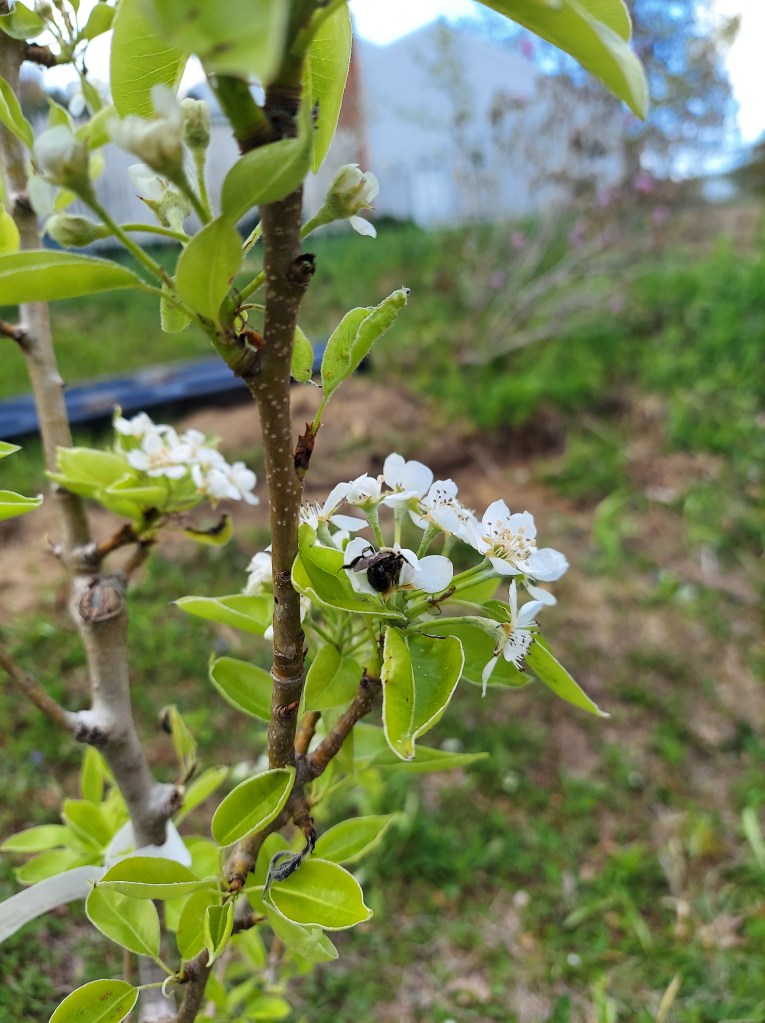
Pear tree covered in flowers, with a bumble bee
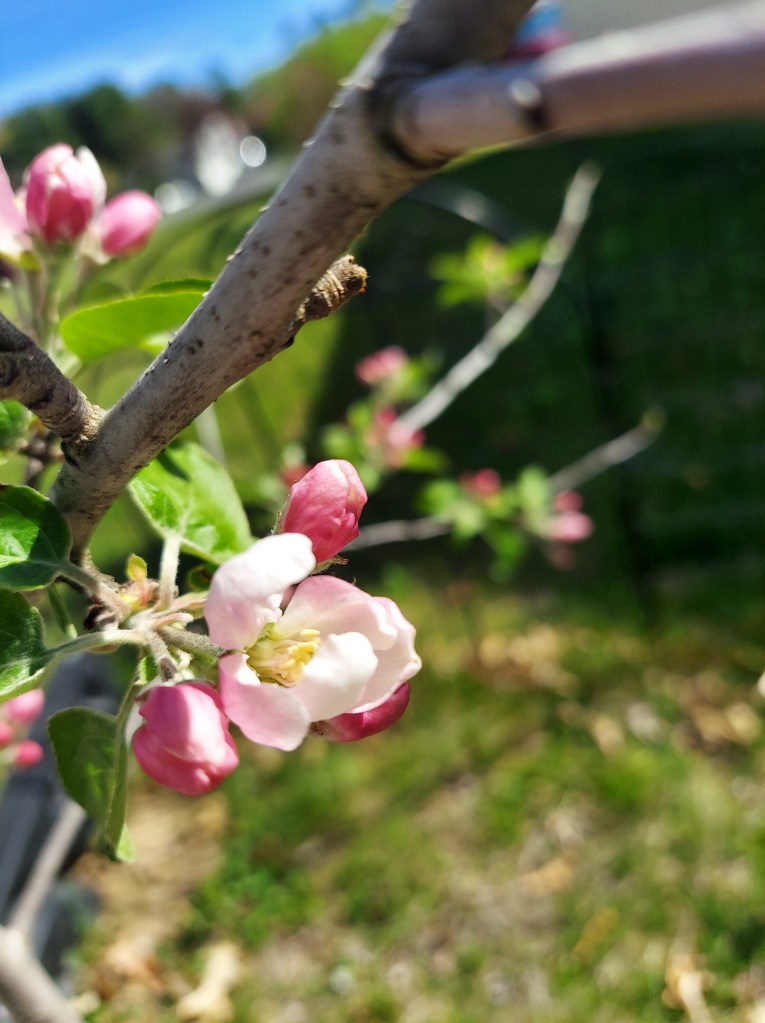
apple blossoms
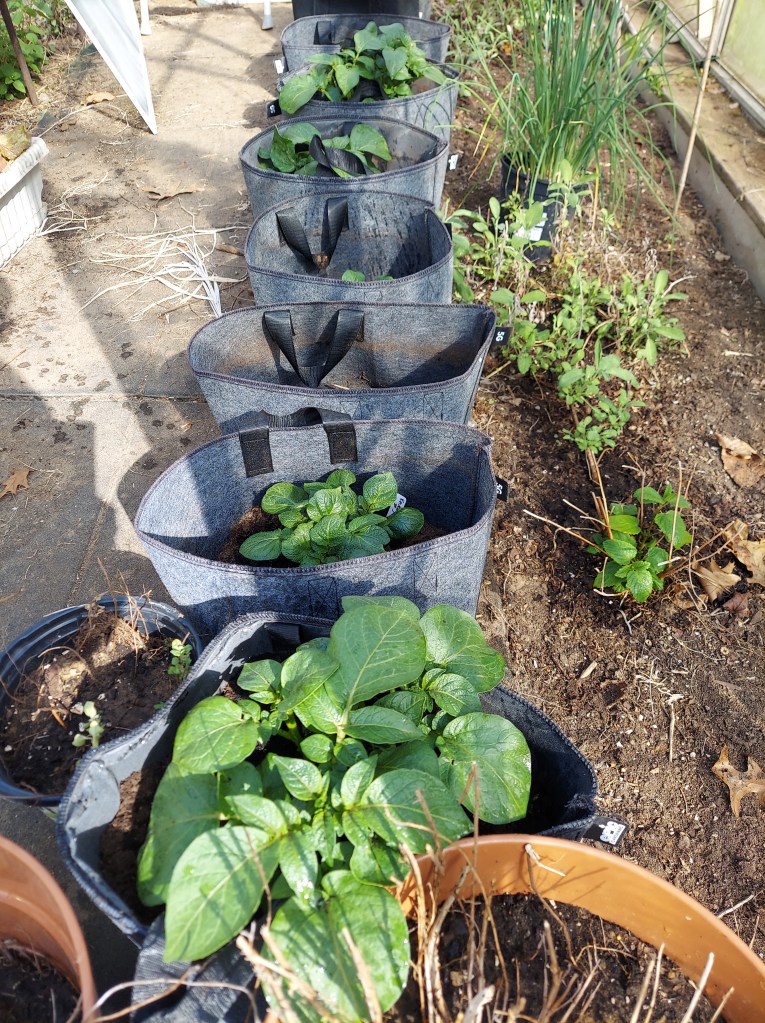
The potato grow bags are all looking good out in the greenhouse. As the stems have grown taller I have been backfilling the bags with soil to keep them covered over. This will provide a bigger harvest in a few months. Once the soil level reaches the top I will mulch with straw.
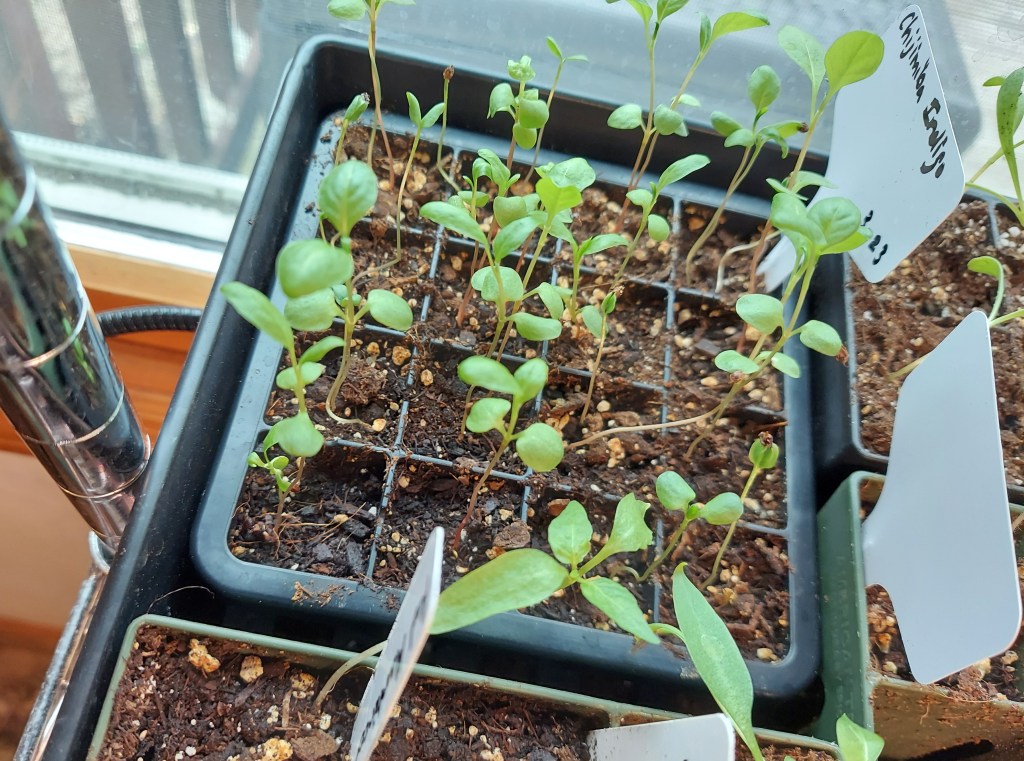
I managed to do very well with the fresh indigo seeds I bought this winter. Very high germination rate. I have since potted them up into 6-1 trays, most have two plants per cell. I started a second set to have as backup, and they have all sprouted as well.
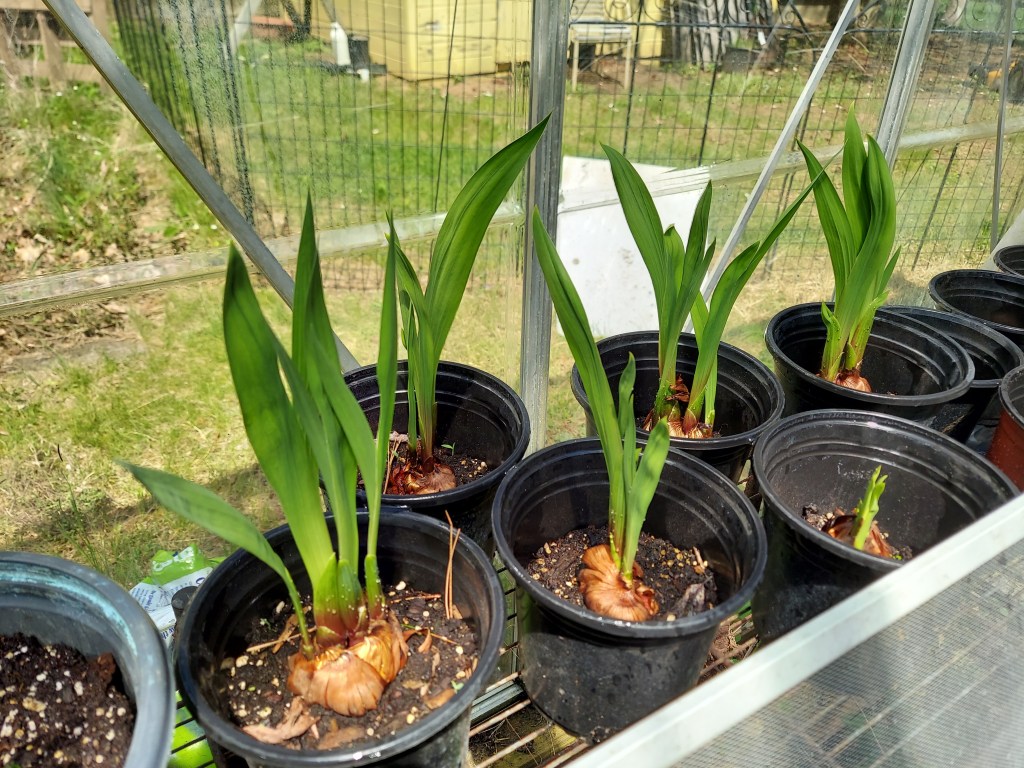
I got a bunch of free gladiola bulbs and started a few of them in 6 inch pots. They all sprouted and are now out in the greenhouse until the fear of frost has passed. I’ve never grown them before but I’m going to try. I just started a second round too.
gladiolus
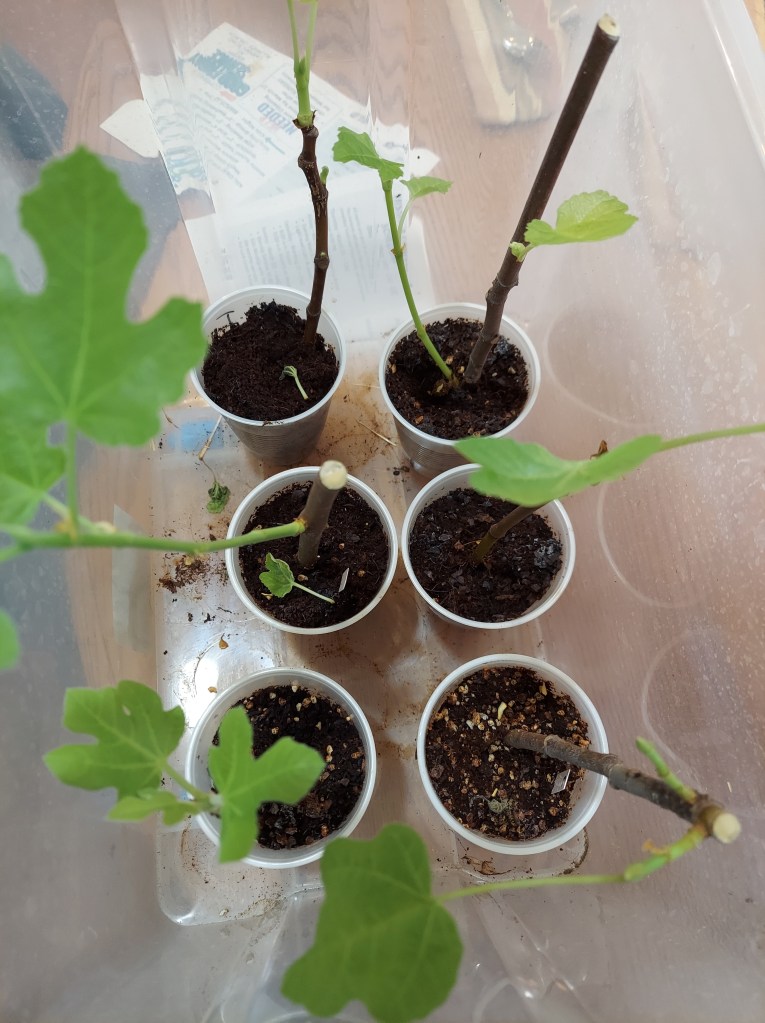
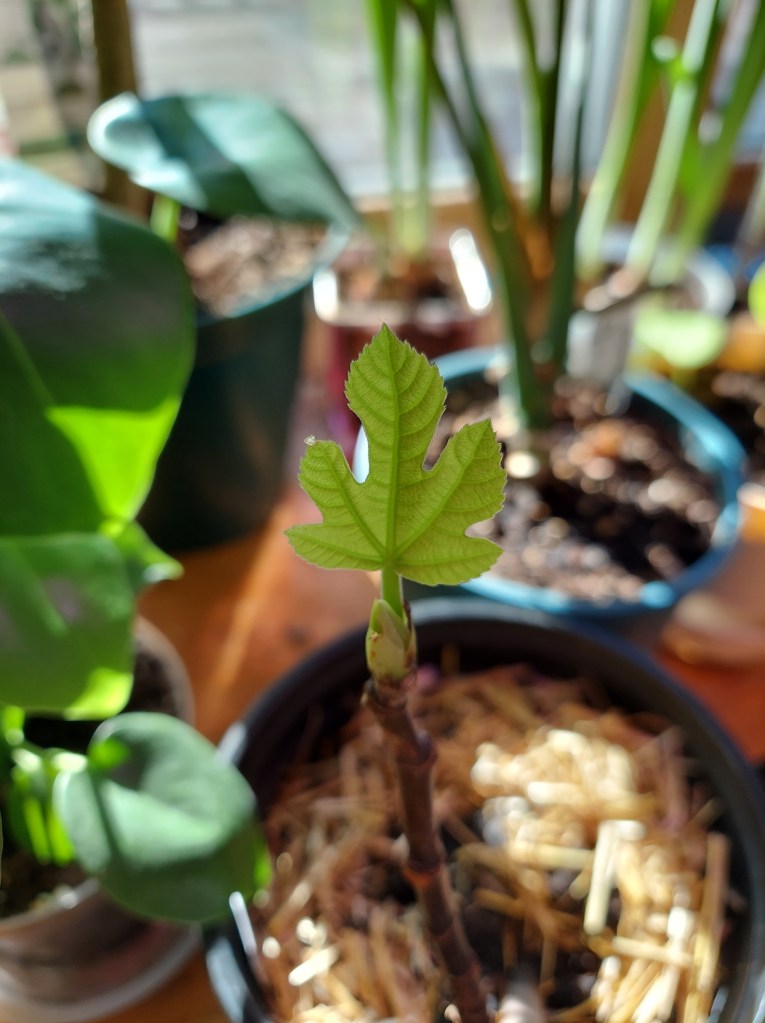
The fig trees are all awake in the basement and waiting to be moved outside. A couple have tiny figs started as well. Should be able to get them outside in about a week. Most of the cuttings I took over the winter have also survived, and I now have way more than I need.
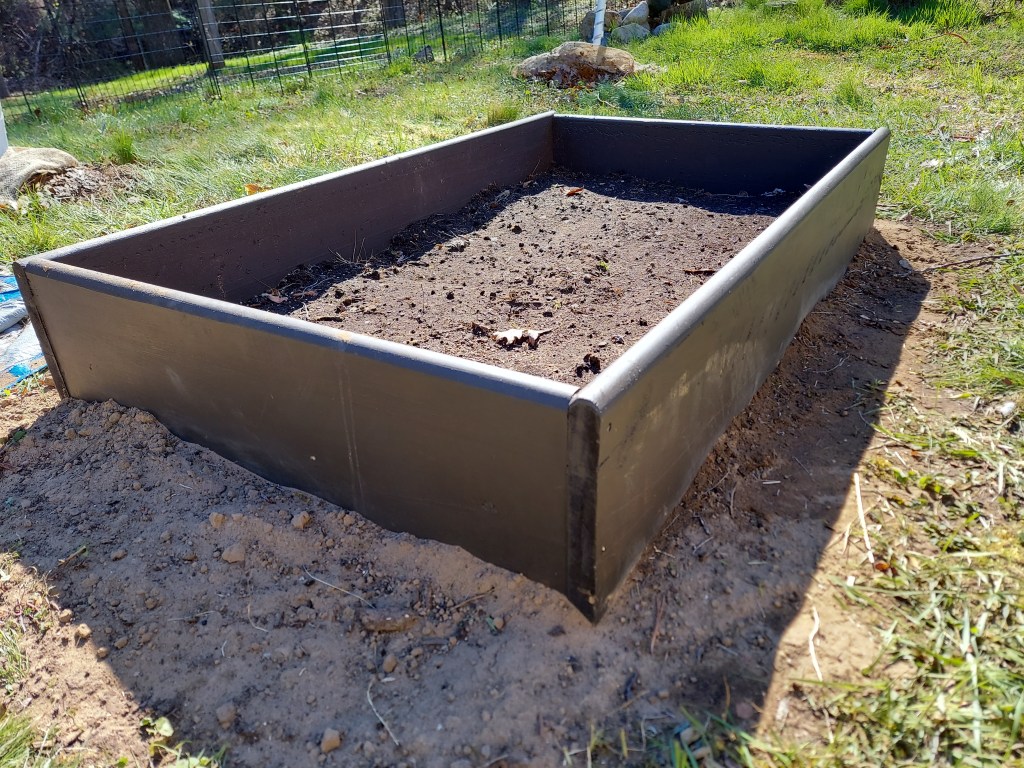
This month we replaced an old rotten wood raised bed with a new, larger one. It has hardware cloth on the bottom to keep out the voles, and I recently planted out a couple of kale plants, and a row of onion starts.
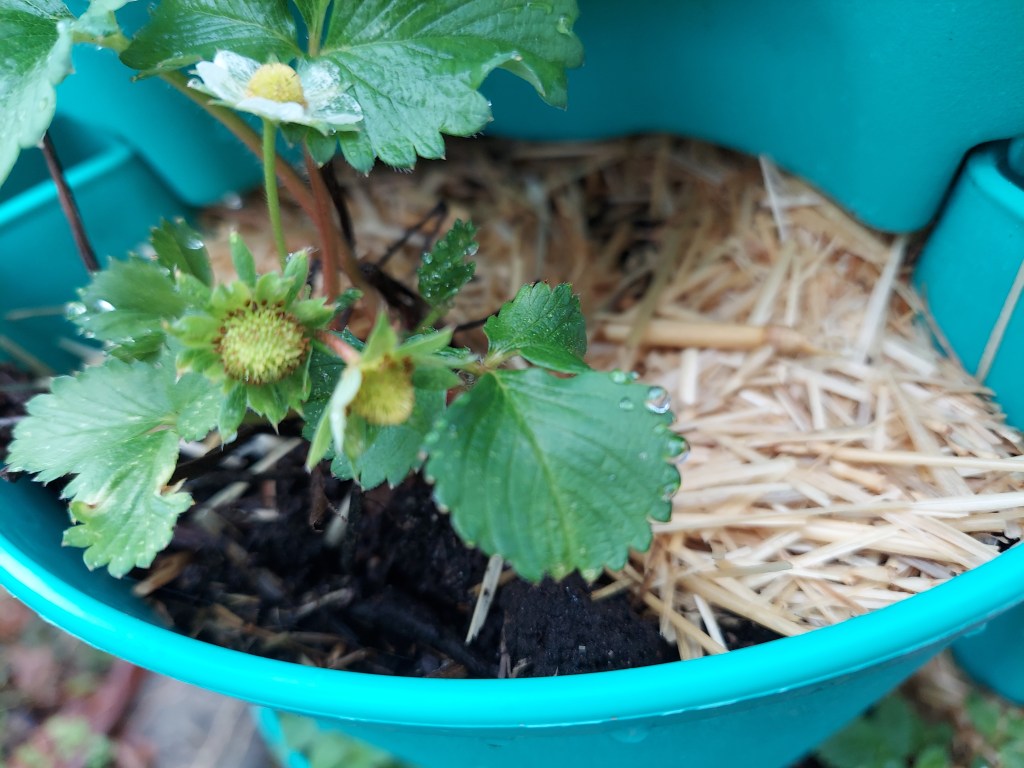
I reset the strawberry vertical tower. Several of the plants did not survive the winter in the basement, probably due to lack of light on the side facing away from the door. I bought a set of 25 bare root plants and replanted all the empty spaces. I added a bit of compost on top and then mulched all the layers with straw before restacking the tower.
The first couple of strawberries are already growing
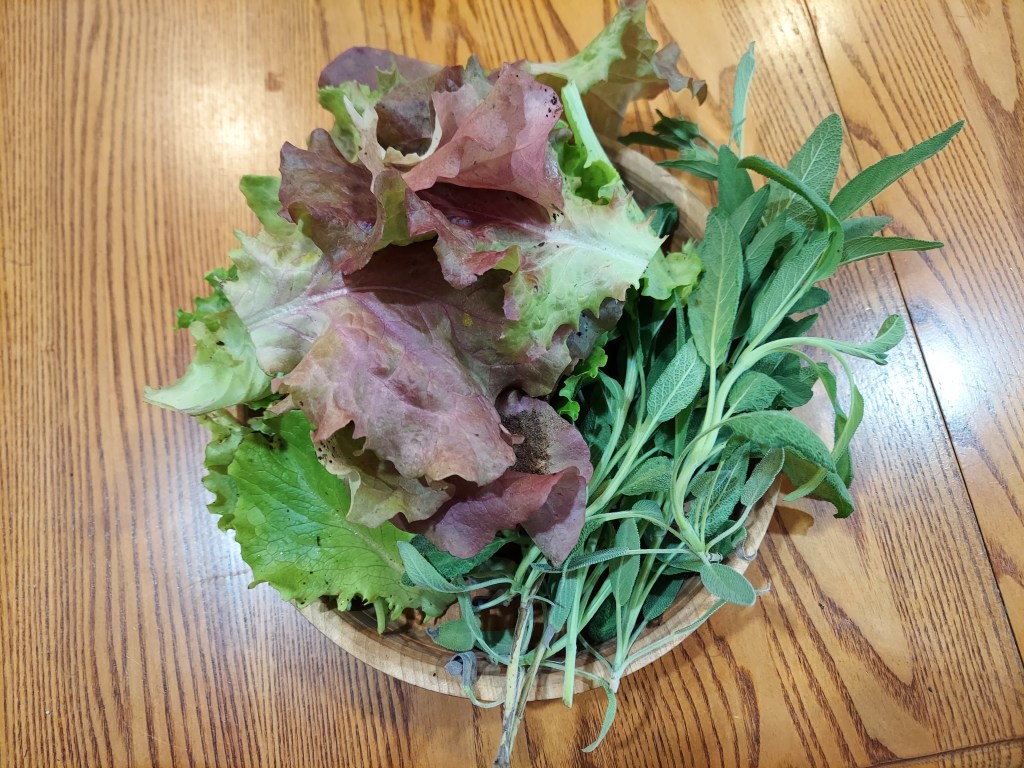
I took my first harvest from the garden! Mixed lettuce and several sprigs of sage from the greenhouse.
It’s now mid-March, and false spring has come and gone. The weather had been lovely for a few days in a row and most of the snow melted. I was even able to go on a walk without wearing a coat. I know the thaw would only be temporary, but I am looking forward to actual spring coming soon.
As the layer of snow retreated, I was able to go outside in the yard and assess the garden. I did a bit of clean up in the beds, mostly removing frozen/eaten plants and pulling up old tags to throw out. I pruned the fruit trees this week, mostly just topped the main stems and removed any crossing branches to ensure they have good airflow. All the trees are still pretty young, so I do want them to put on a good amount of leafy growth this year. I did harvest 3 apples last year so maybe I will get the same amount this year.
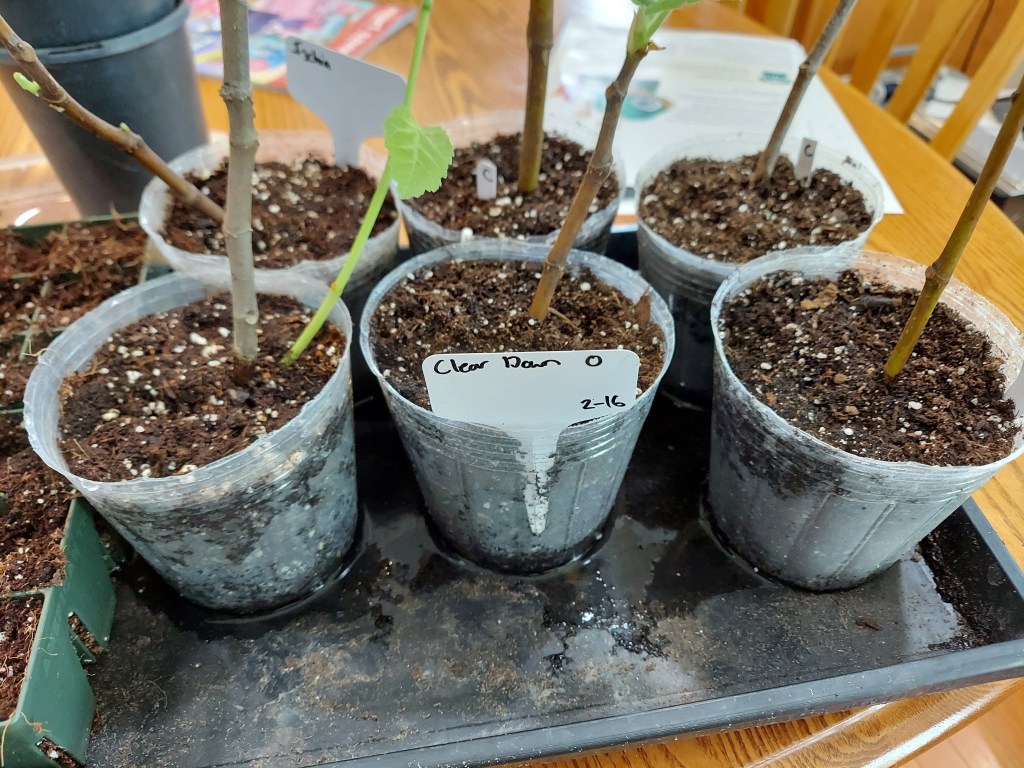
I have been slowly potting up the fig cuttings, I don’t really have room for them all, but they are doing very well. I potted up 10 of them over the weekend, into 4-6 inch pots with fresh soil. I have been giving all of the figs a diluted liquid fertilizer about once a month to boost their growth, and supplement their limited amount of soil.
Bigger pots will allow the roots to keep growing.
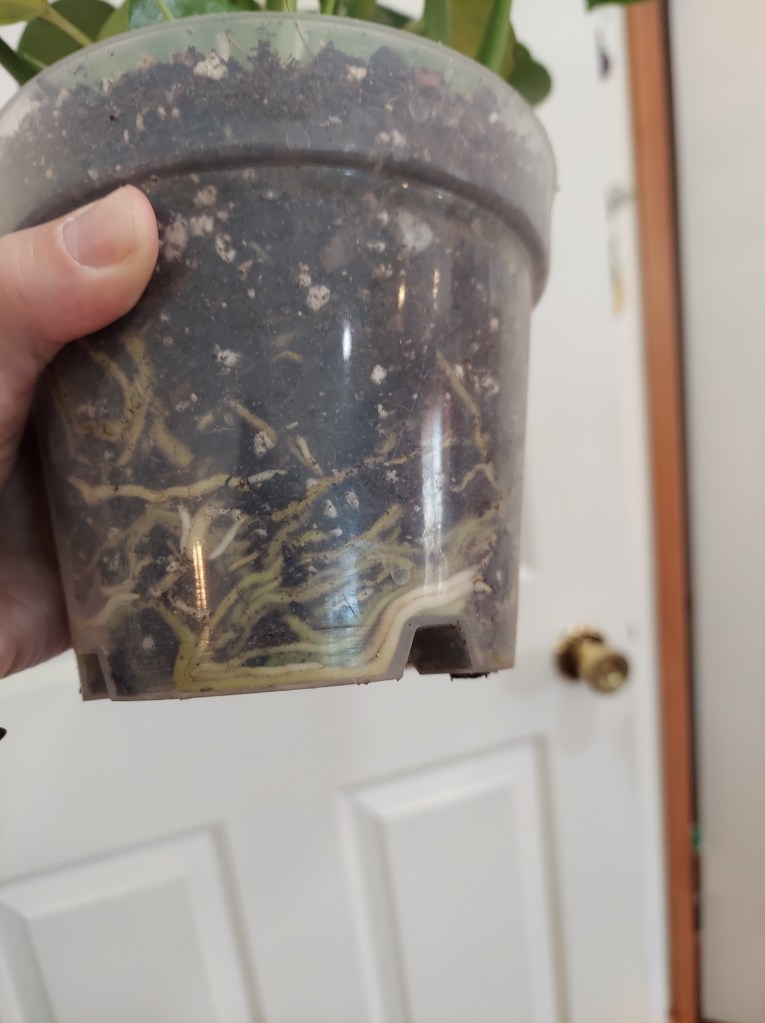
I also repotted a couple of houseplants this weekend. The monstera was completely root bound and circling the bottom of the pot.
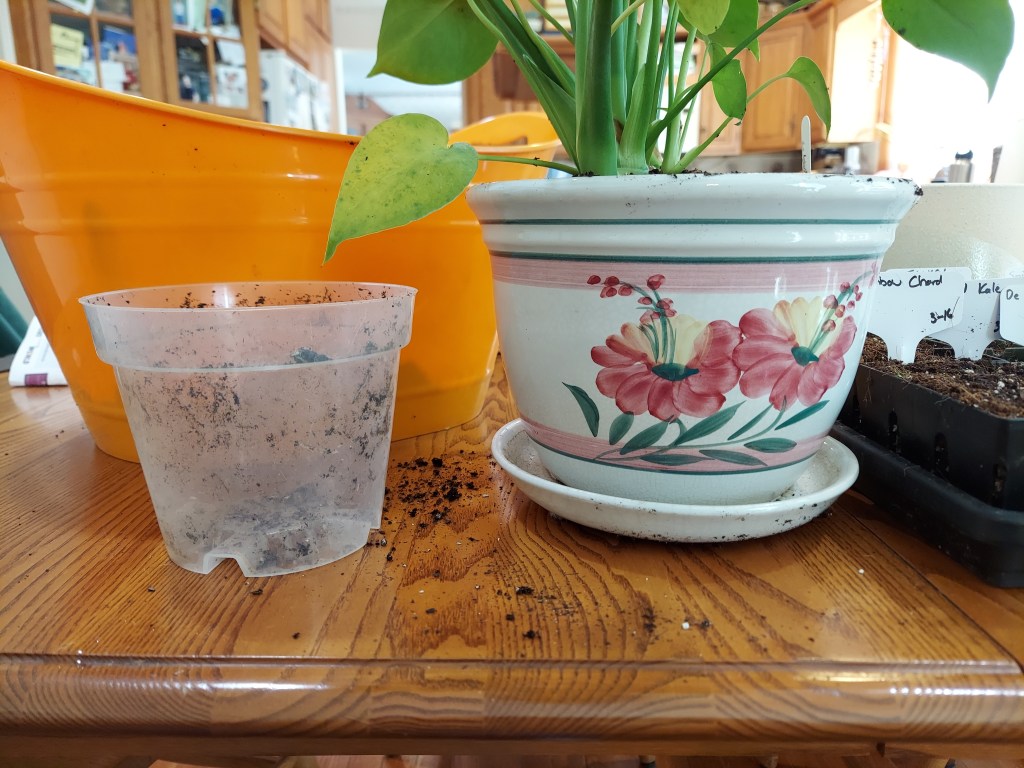
It had been in this pot for about 6 months, since I had purchased and initially repotted it over the summer. Time for some more space. I went looking in the basement and found a good pot which would allow it more room to grow. It’s ceramic with a drainage hole leading to the attached tray.
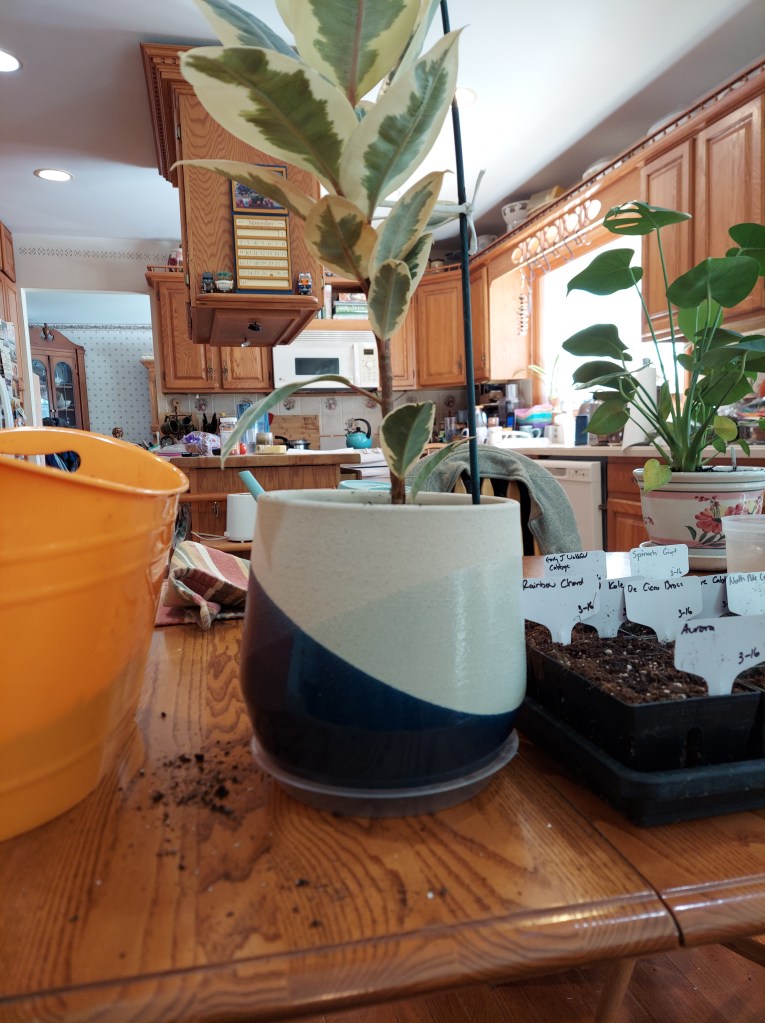
I also repotted my actively growing ficus plant. It has put out several leaves this winter and I wanted it to have more room. I found a cool pot I really liked at work, and bought it with this plant in mind.
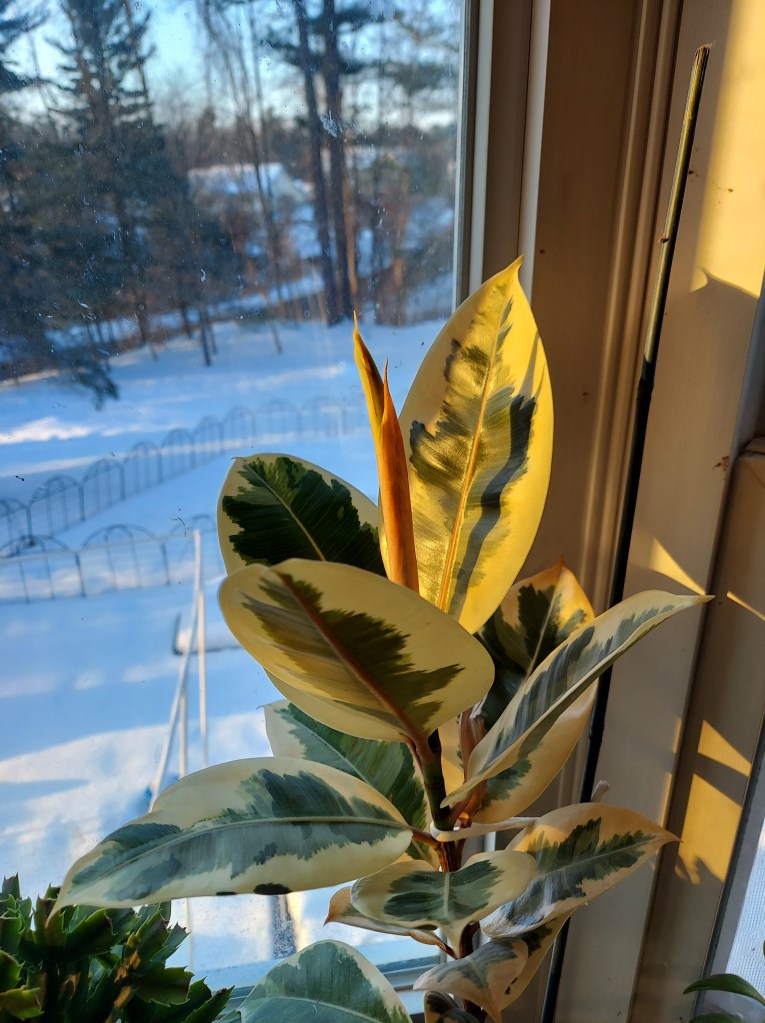
Here it is unfurling its most recent leaf. This photo was from a couple weeks before transplanting, with the early morning sun hitting the kitchen window.
I didn’t take a before photo of the pot, but it was similar in size to the monstera. I also re-staked the Ficus because it is leaning a bit and not growing straight up.
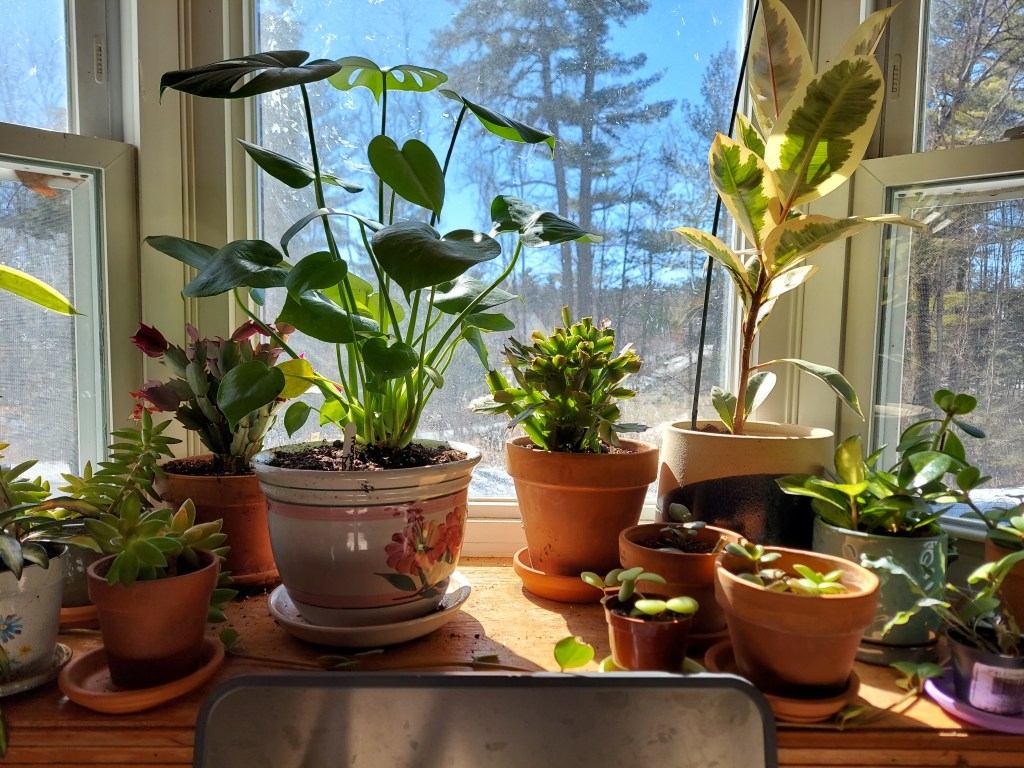
Both plants now on the kitchen windowsill. The monstera had been on the floor in the family room but I wanted to add some more height to balance out the Ficus. Hopefully it will adjust to its new placement and put out more growth this spring.
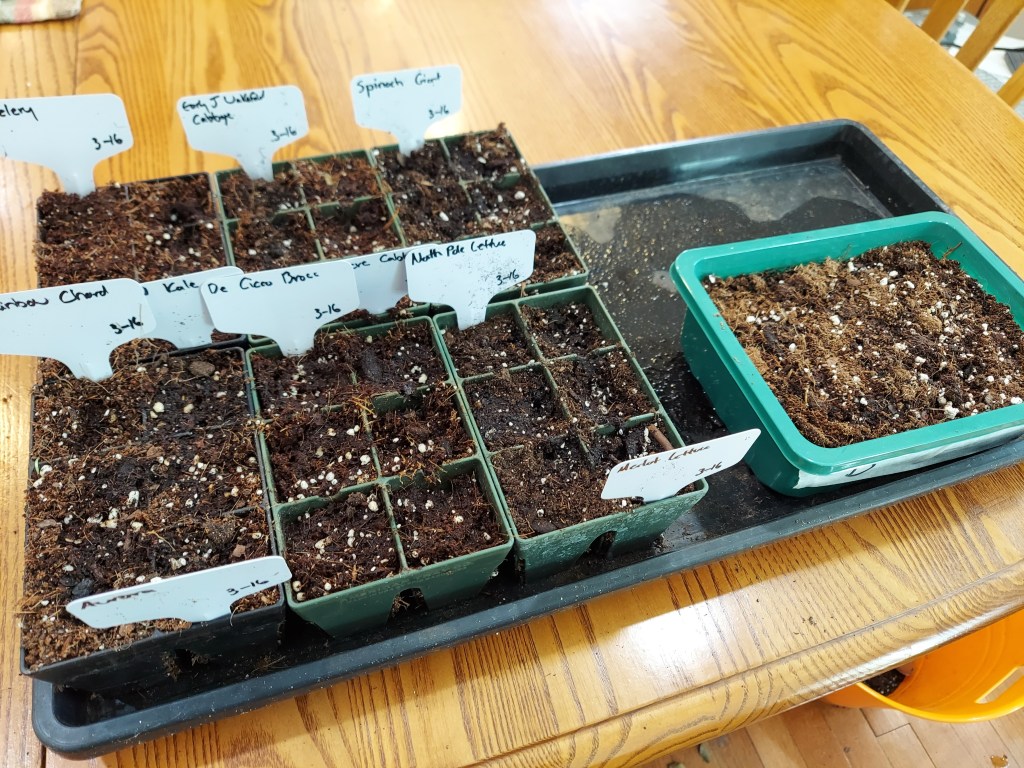
I also started a bunch of cold weather crops, mostly leafy greens and brassicas. Celery, broccoli, kale, chard, spinach, cabbage. A mini-tray of pea shoots as well, because I really like them on sandwiches and salads this time of year. They provide a nice crunch and very nice pea flavor when its too early to get fresh peas from the garden. It may be too early to garden outside, but I am preparing for the season and enjoying all my houseplants.
Winter has arrived in New York, and I find that this quiet season is a good time to reflect on the previous gardening year. Snow is blanketing the ground, and all the perennials are hibernating during the cold. A few of the fig trees have started to wake up in the basement, but most of the plants are resting. It’s too early to start seeds but it is a good time to plan for the year ahead.
The first fig tree has awakened from hibernation. A second tree joined it a week later and they are now with some houseplants beneath a grow light by the back door.
Last year was a gardening challenge. The spring weather was very difficult, and we had a slow start to the year. Early spring was cold and cloudy with tons of rain followed by near drought conditions. Glad we use sprinklers to water, otherwise a lot of the plants would not have made it. I did have a very good lettuce crop in the greenhouse during the wet, cool spring. We were self-sufficient for salads for the first time which was nice. I did enjoy growing a leafy green mix, all the different leaves made for pretty combinations in the salads. I managed to grow spinach that was large enough to harvest too.
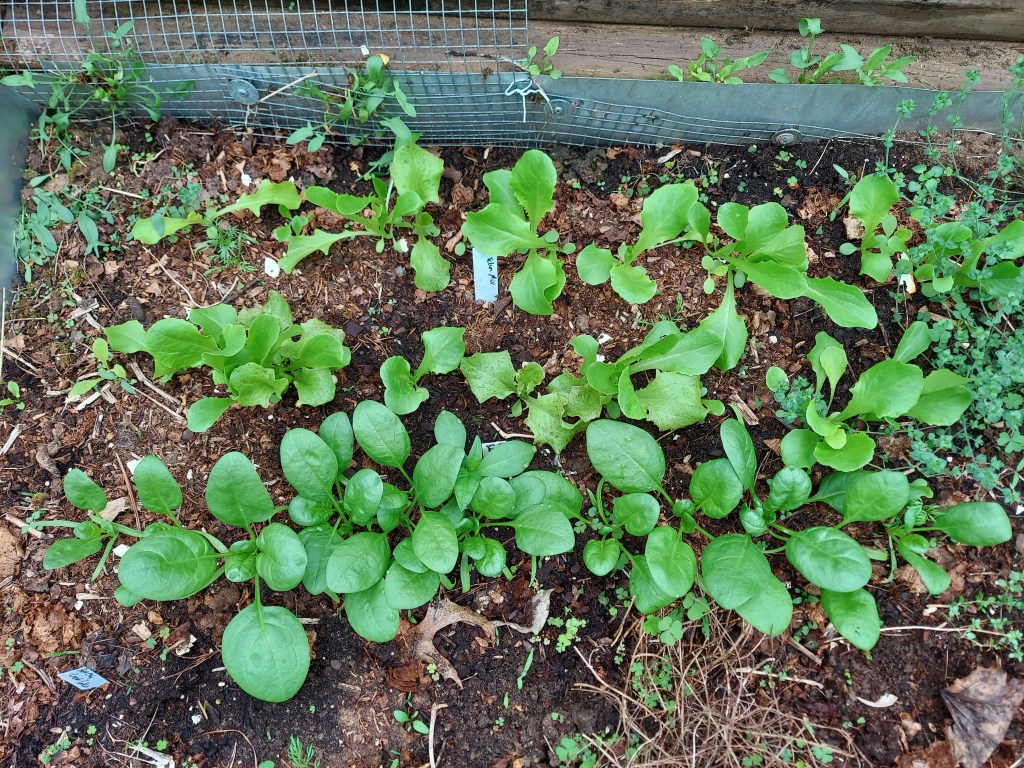
2 rows of baby salad leaves and 1 row of spinach. I direct sowed these in one corner of the greenhouse, and left them until late May when I transplanted out the cucumbers.
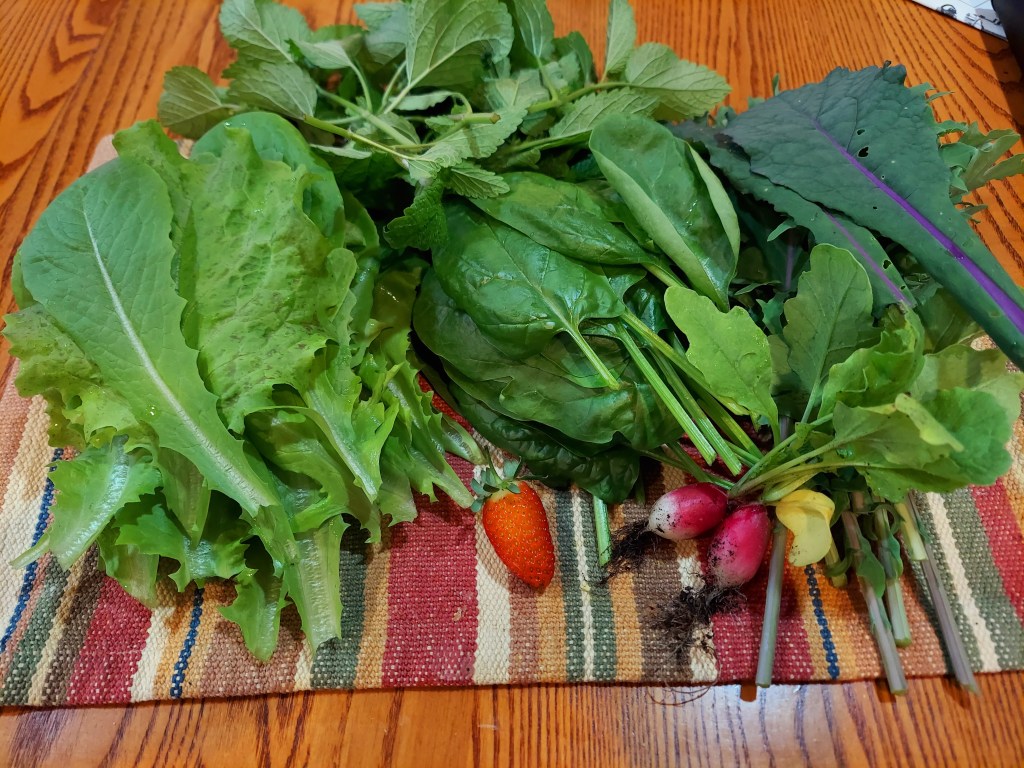
Nice late May harvest, from both inside and outside of the greenhouse.
The summer plants did pretty well overall, but we had a major pest problem when the woodchuck moved in under our deck. It took a full month to catch it, and it destroyed my squash, lettuce, and most of the kale plants. The voles also continued to be a nuisance. They didn’t eat whole plants like the woodchuck but did do damage to flower and leafy greens. I had a particularly hard time trying to get pole beans started off at the base of the deck.
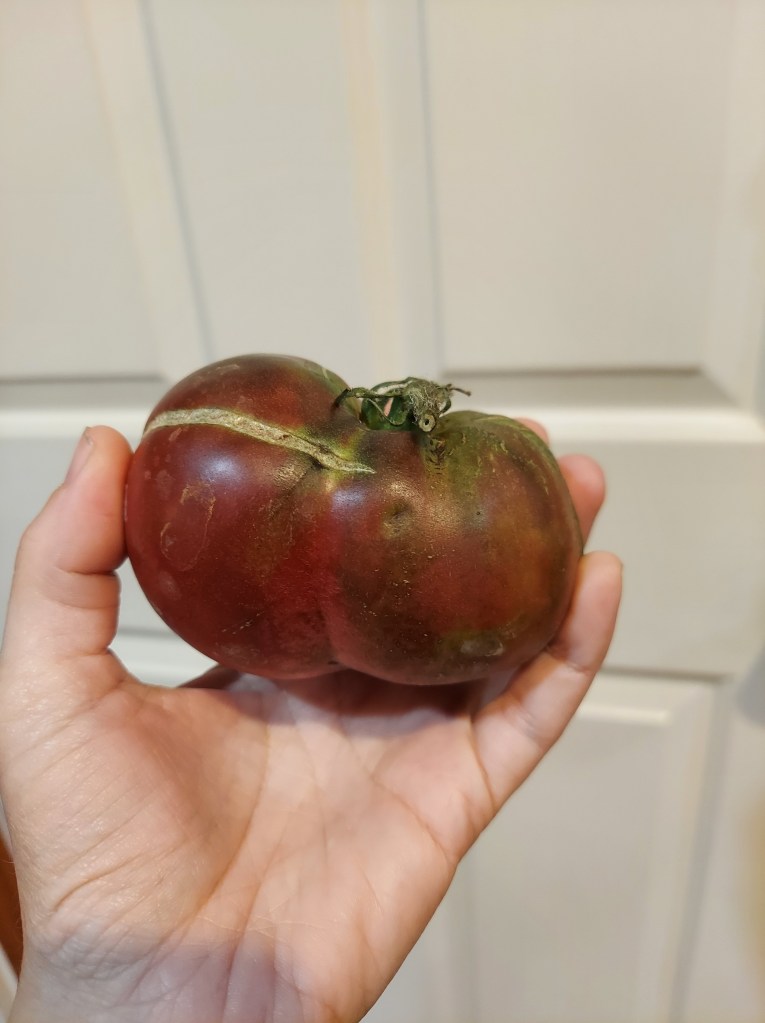
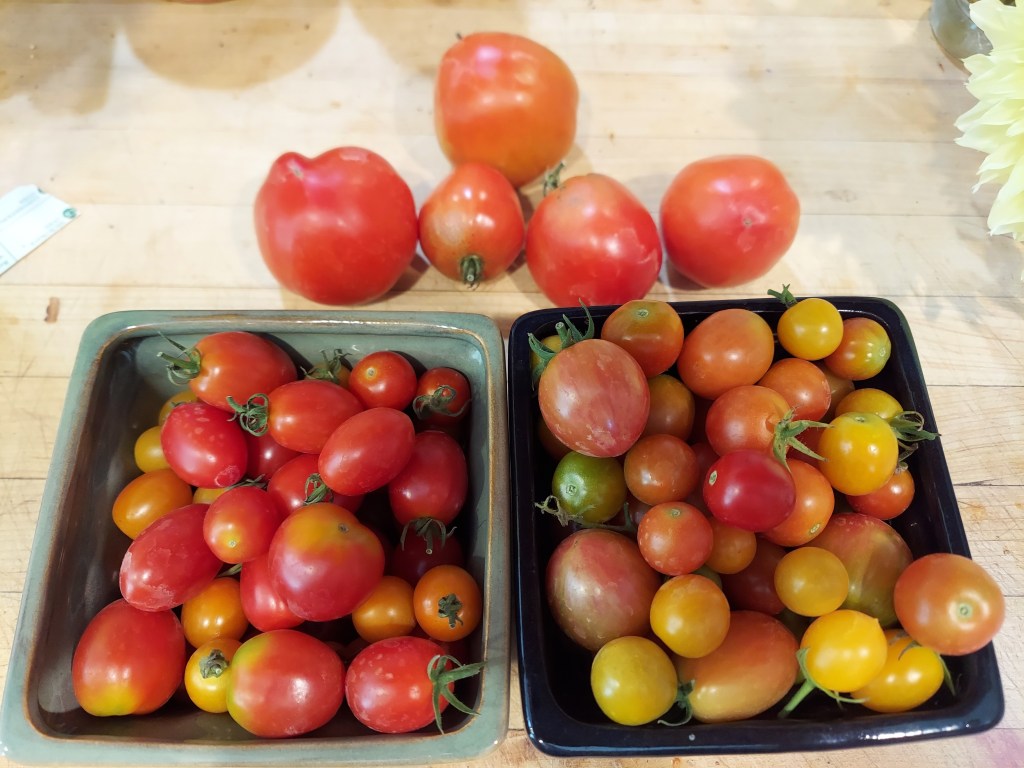
Biggest harvests: compost pumpkins, total weight was 68 pounds! Tomatoes also grew like crazy, tons of “weed” plants from last year’s compost that I allowed to grow. I also successfully grew the heirloom variety Cherokee purple for the first time, so that was cool. In total I grew 73 pounds of tomatoes. I made tons of pasta sauce and also gave away a bunch of tomatoes to family and friends.
First Cherokee purple, harvested in late July
Typical single day harvest, late in summer
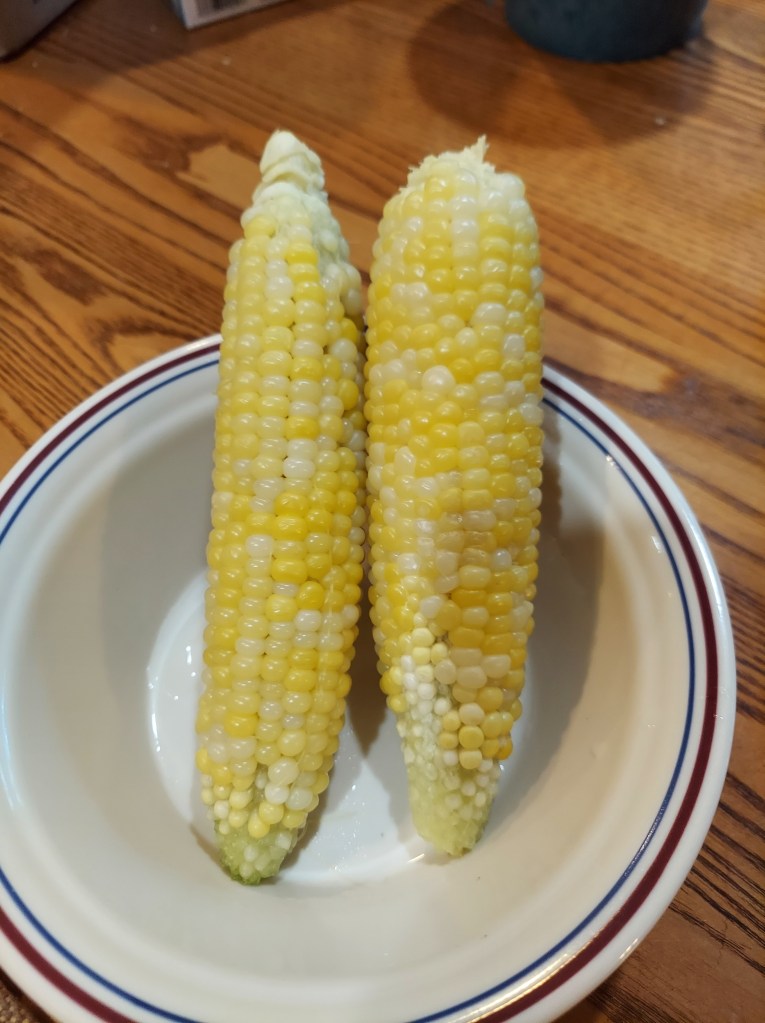
We successfully grew about a dozen small ears of corn this year, and I definitely want to try again this season. They tasted really good, and we were able to use the stalks for fall decorating.
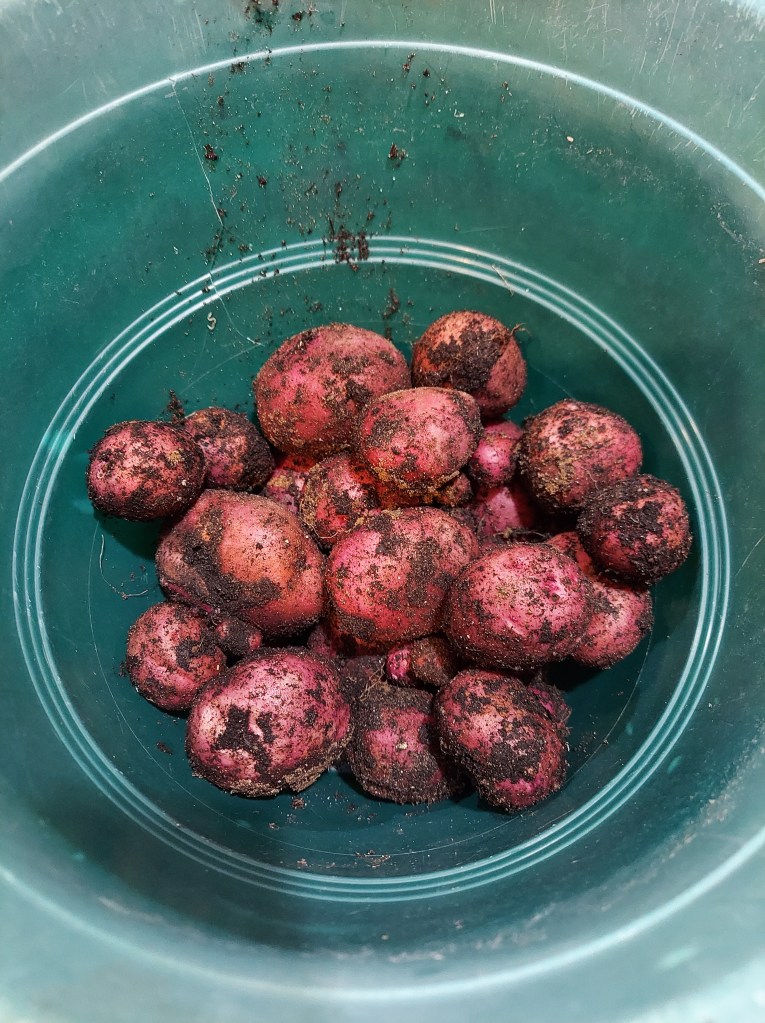
I bought seed potatoes and had my best harvest ever from 5 grow bags, 8.5 pounds and several were regular sized. My first attempt a couple years ago was underwhelming, so I was happy it worked out this time around. The two types of potatoes provided enough for multiple meals for my family.
I grew onion from sets and was not impressed with the final size when I harvested them. They may have needed more fertilizer throughout the season. Will try again next year.
I grew a bunch of pepper plants from seed as is my usual. This year they really struggled to produce and it took until late August to get a decent harvest. Most of the bell peppers remained pretty small. I think in terms of individual production one of the jalapenos won.
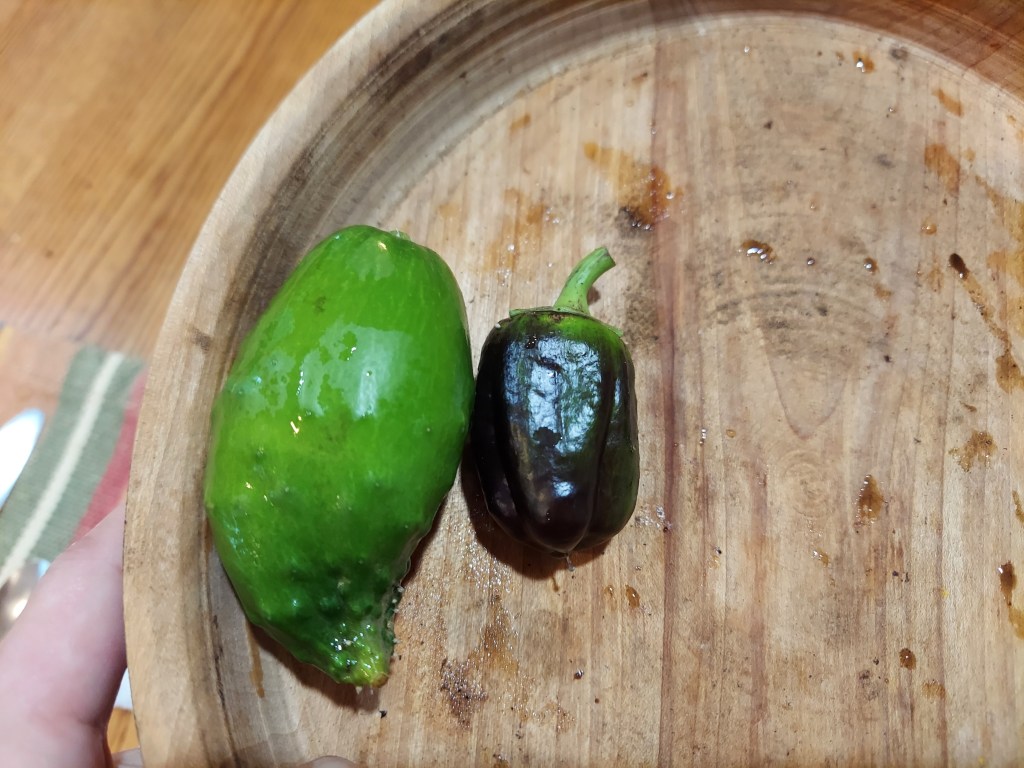
Oddball produce: a short and fat cucumber next to a tiny but ripe purple bell pepper. Sometimes homegrown produce can surprise you with it’s unusual shape or size.
The blueberries were mostly a miss this year, but we just transplanted the small bushes last year. The strawberry tower did quite well all year long, I was harvesting them from late April-October. I grew over 9 pounds of garlic, the bulbs weren’t huge, but I still had a good harvest from the bed.
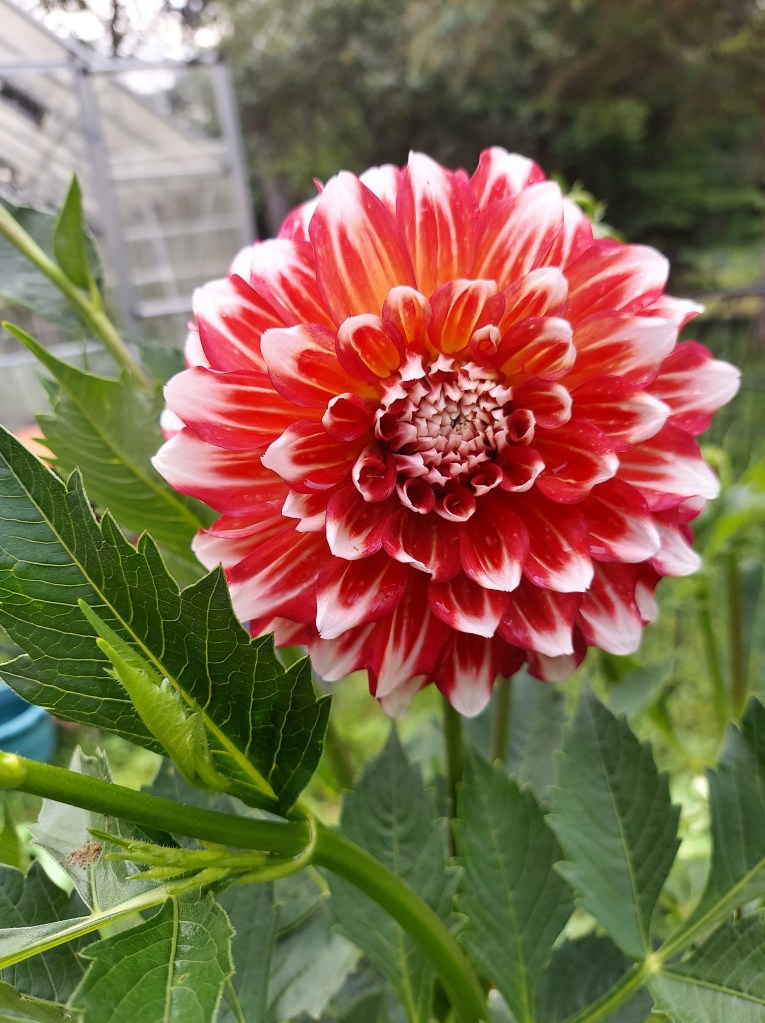
I added more flowers this year, both purchased starter plants and from seed. First time growing snapdragons; they were surprisingly pretty hanging over the edges of the beds. The dedicated dahlia bed performed far better than I imagined, and I loved cutting all the flowers for vases on the kitchen table. I also harvested my first couple of small apples off of the trees we planted last year.
In total I grew 215 pounds of produce last year from my backyard garden.
Goals for 2026:
replacing a decaying wood raised bed with a metal Birdie’s bed
better corn harvest, larger and more ears
more variety of winter squash
sunflowers, got a couple dinner plate sized Arikara two years ago, and will try again
better productivity from pepper plants
more reliably fertilize the potted fig trees for increased harvest
try other types of “cloning” plants, air layering, cuttings, and collecting seeds for the next season
staying on top of current houseplants, potting up when needed, maybe move a few out into the greenhouse in late spring
better utilize frost cover/row covers to protect early plantings
succession sowing, to keep roots in the ground as long as possible
productivity is good but so is taking time to enjoy the garden and the combination of colors and plants
This year I struggled to get my indigo seeds to survive past the sprout stage. I started seeds indoors to get a head start on the season, but my first two attempts died before they were large enough to divide and pot up. I finally managed to have a few seedlings that survived to be planted outdoors in early June. I had 3 clumps of plants, but they did produce a few stems and some leaves. I put them in different locations in the garden, and they slowly grew over the course of the summer.
By mid-September I knew I had to harvest and use them before the plants were killed off by the frost. Since there were not a lot of leaves I decided to hammer the individual leaves onto fabric. I had a couple of plain cotton tea towels and used them as my canvas. There are many different types of leaves that can produce prints like this, I experimented last year with carrot, fig, sage, cosmos, and marigold leaves.
This type of project is pretty simple and doesn’t require any special equipment. I cut the stems and placed them in a cup of water to keep them from curling. I then grabbed a small metal hammer and a large piece of carboard to use as a backing to protect the fabric from my concrete porch.
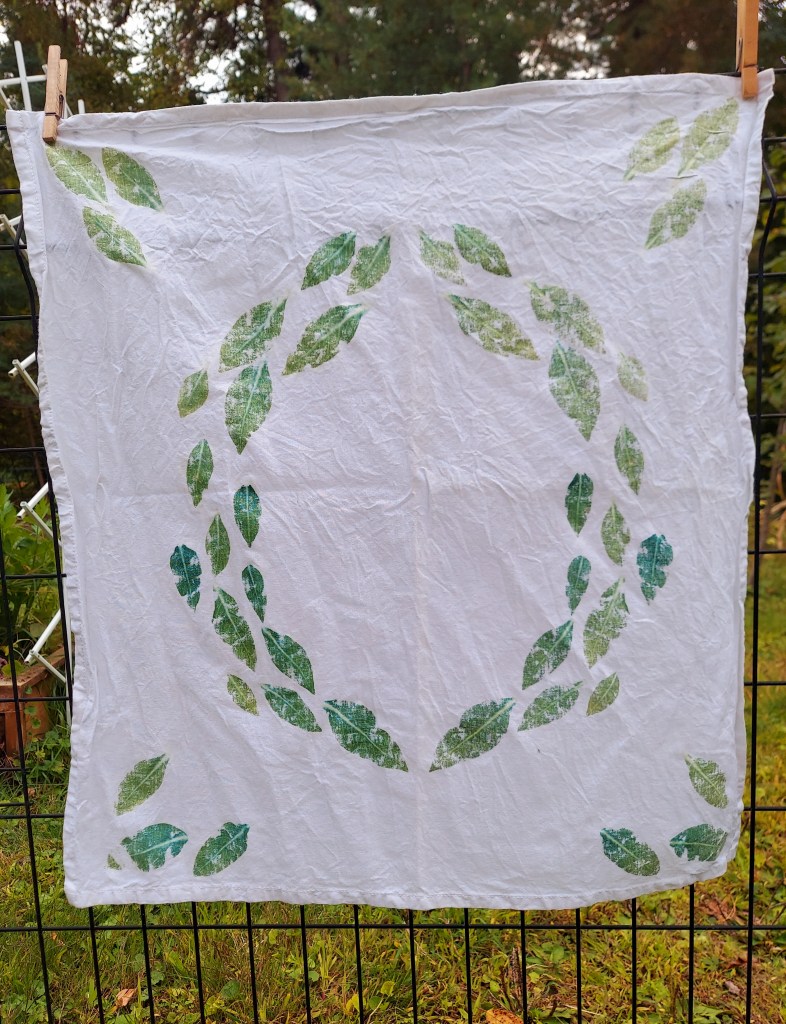
Once I was ready to begin, I carefully cut the leaves off of the stems so as to not rip and break them. I arranged them in the pattern that I wanted on the tea towel, the first towel has a mirror image, so I laid the leaves on half the towel and folded it over. You do need two pieces of fabric to hammer the leaves between, so you will get 2 prints from each leaf. You can either use the same fabric or use scrap of some sort.
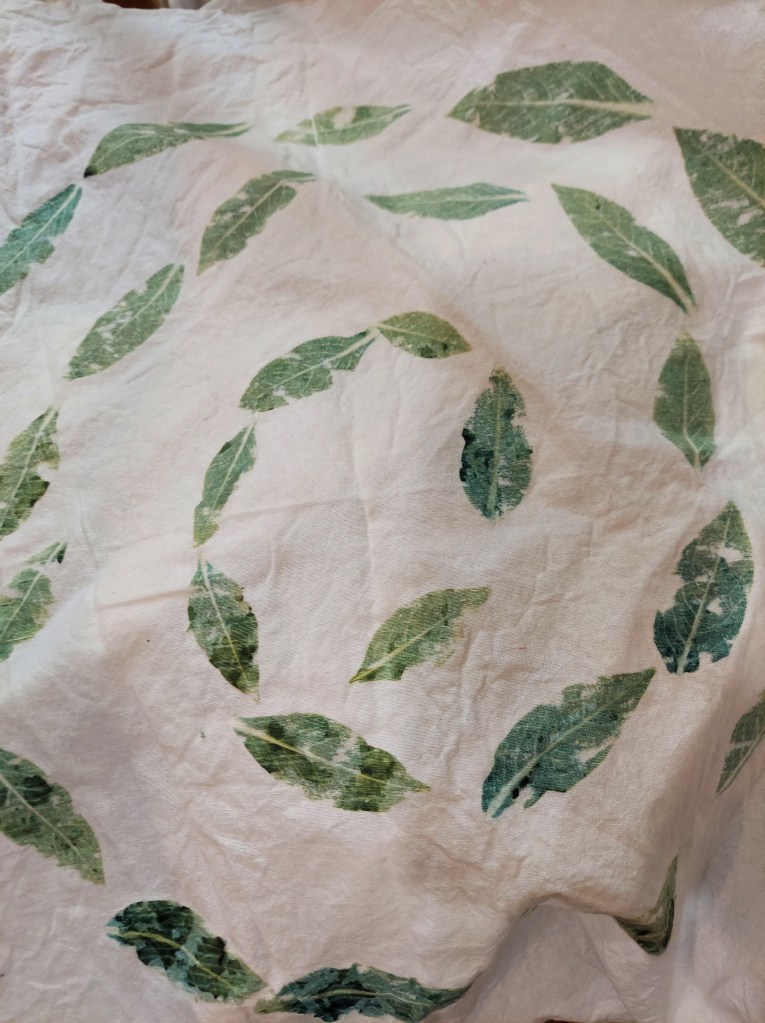
Once I had everything laid out in the way that I wanted, I very carefully folded over the other half of the towel and made sure there weren’t any huge creases. I then very carefully hammered each leaf, the image began to appear immediately. You want to make sure you get the whole outline. The veins are quite visible in some of the prints. Once I finished the whole towel I unfolded it and hung it up to dry. Hammering leaves or flowers is very different from immersion dye in that it does not need to soak or sit for the image or color to transfer. There’s no excess dye to wring out.
This was the result of the mirror image print. One side will always be darker than the other, the one you are hitting directly. The side that rests on the cardboard will be a little less crisp. Some folks use wood as the hitting surface but I’m not sure how that might change the print.
Each leaf print is unique, and I hit some of them better than others. But that’s all part of the fun.
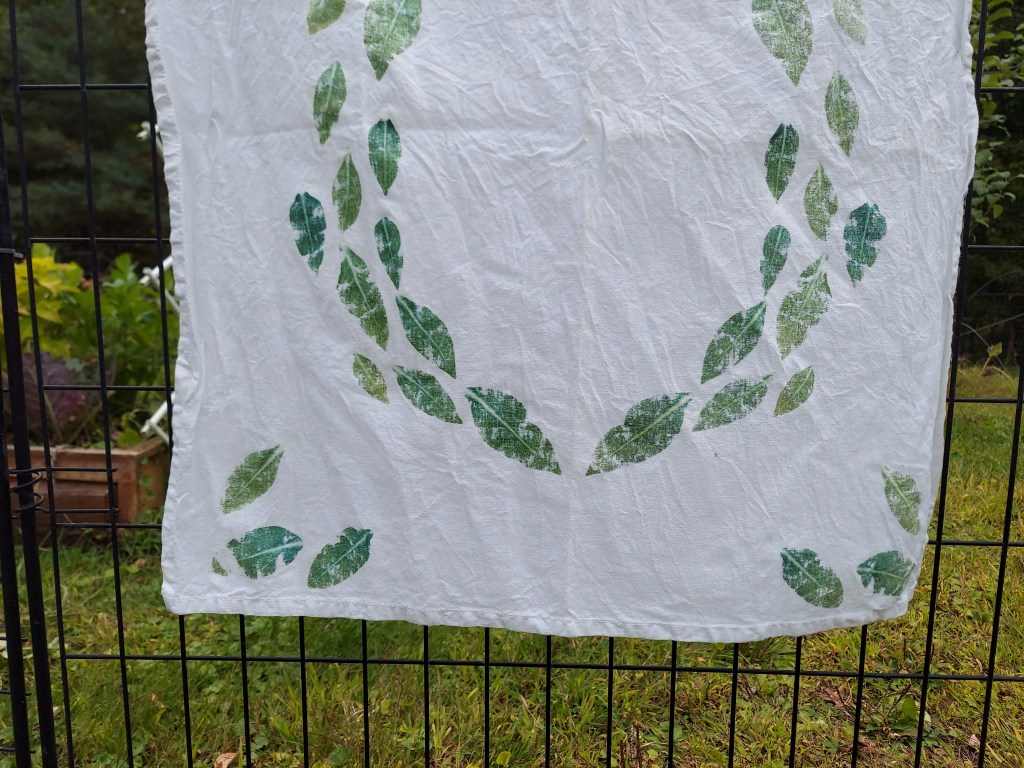
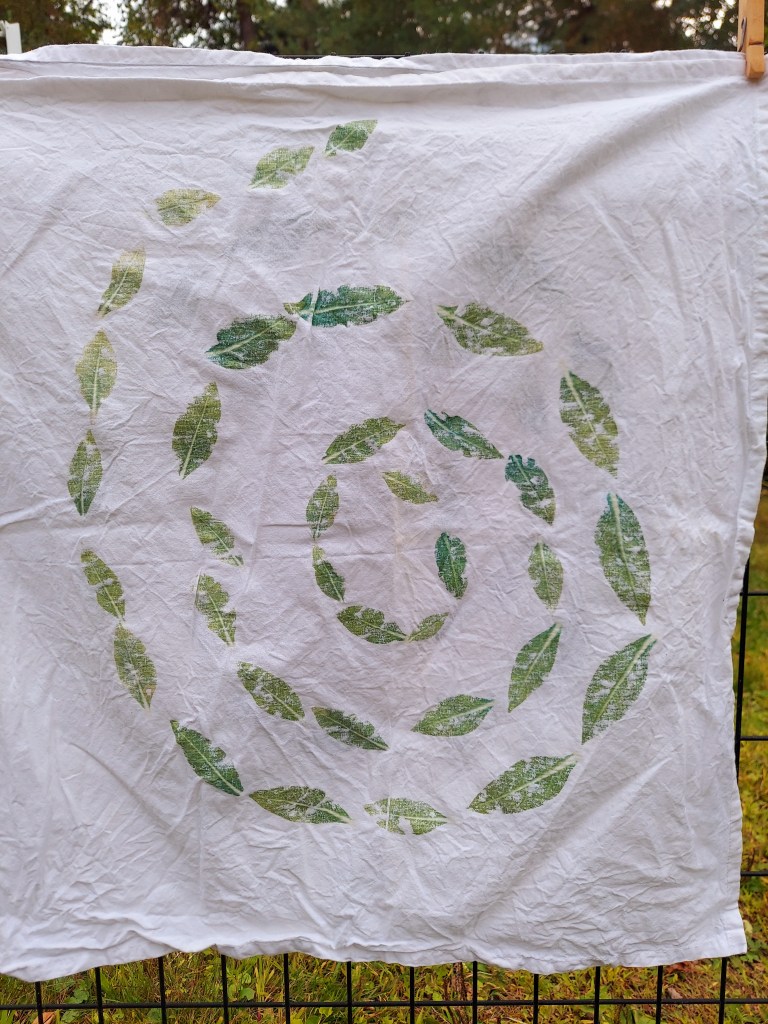
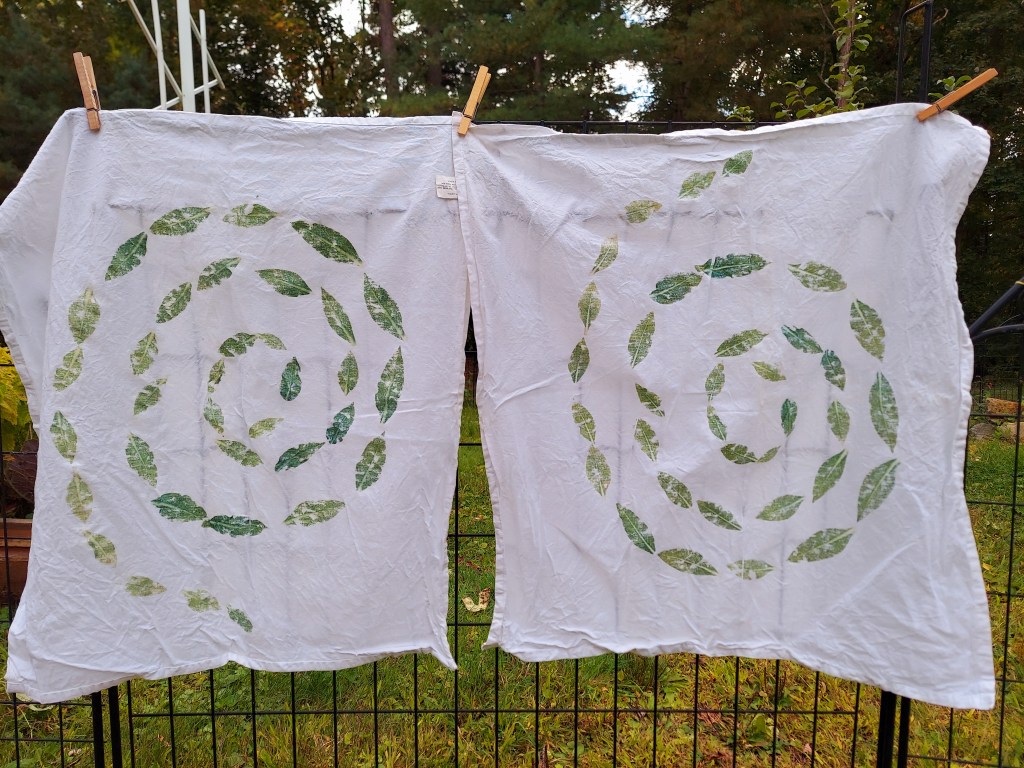
For the remainder of the leaves, I decided to do a spiral shape. I used two towels, instead of mirroring half the image. Here are the finished products hanging up to dry. Once they were dry, I then removed the leafy bits by shaking out the towels.
In total I ended up printing 3 towels from a small harvest of only about 75 useable leaves. Made for a fun afternoon project before the cold weather set in.
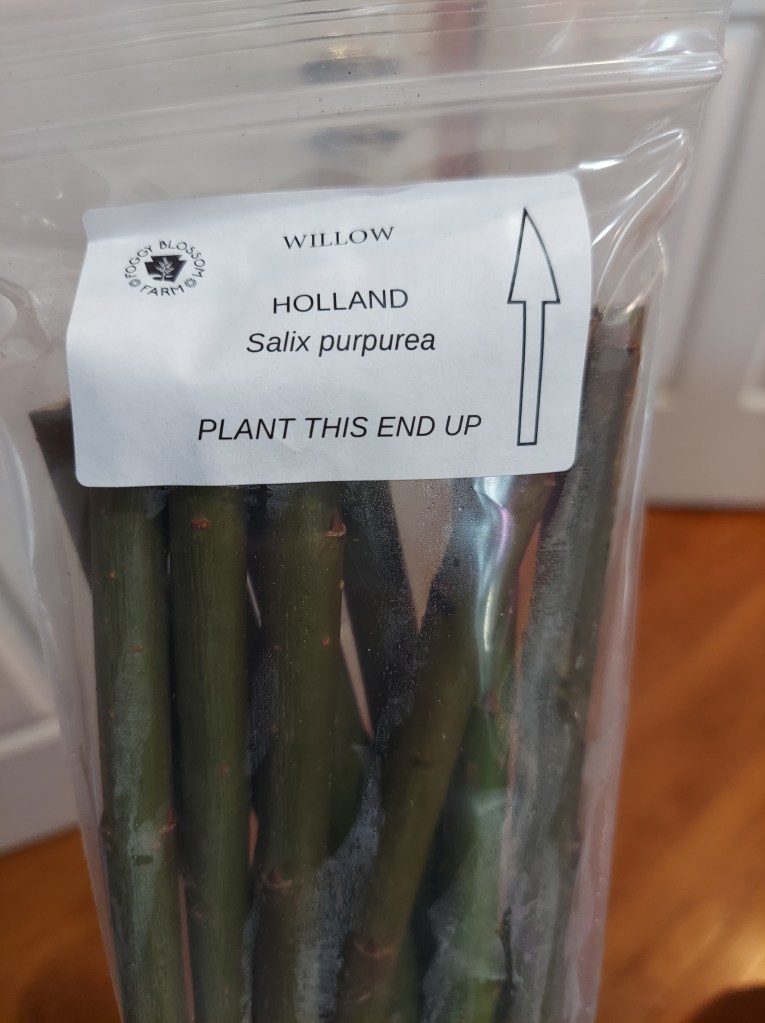
At the beginning of March I ordered willow cuttings from a farm in PA. They had a small stock of their own cuttings available for sale, and I decided to go for it. I ordered 10 cuttings, and they arrived a few days later in the mail. I enjoy weaving with willow and have attended two classes, and want to make more items with willow. However, classes and materials (willow) are expensive, and not locally offered. I’m going to try to grow my own this year.
The cuttings arrived quickly, and each cutting was about 1 foot long. I left them in the fridge overnight, while I rehydrated a brick of coco-coir to use as the base of my growing medium for the cuttings.
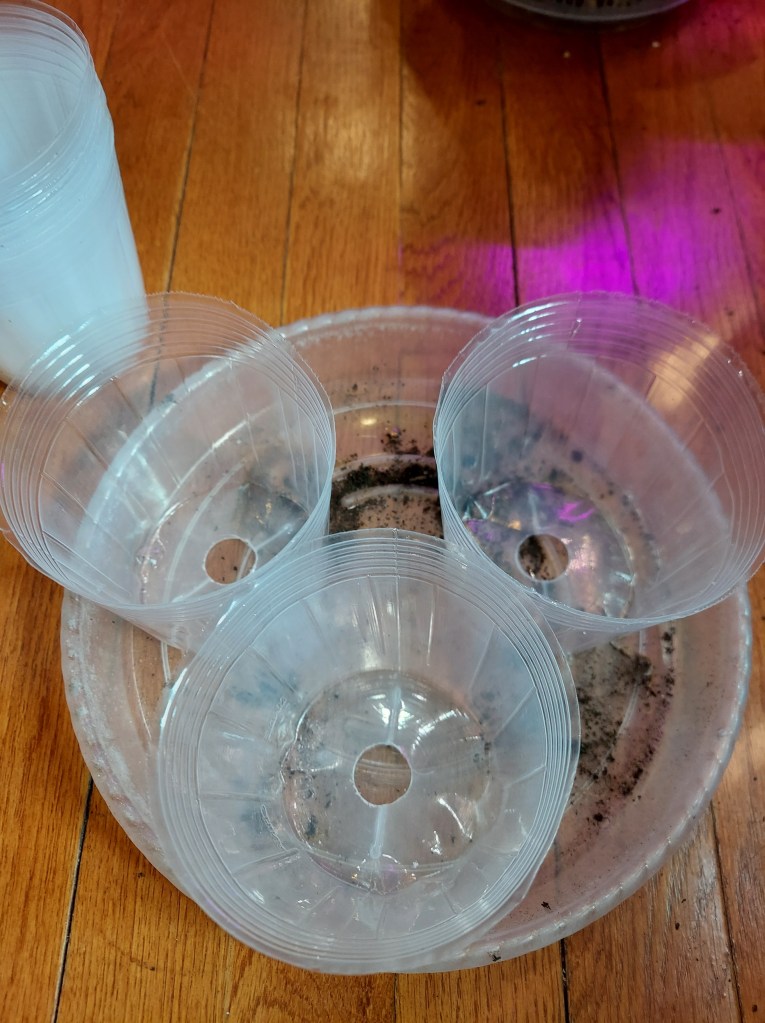
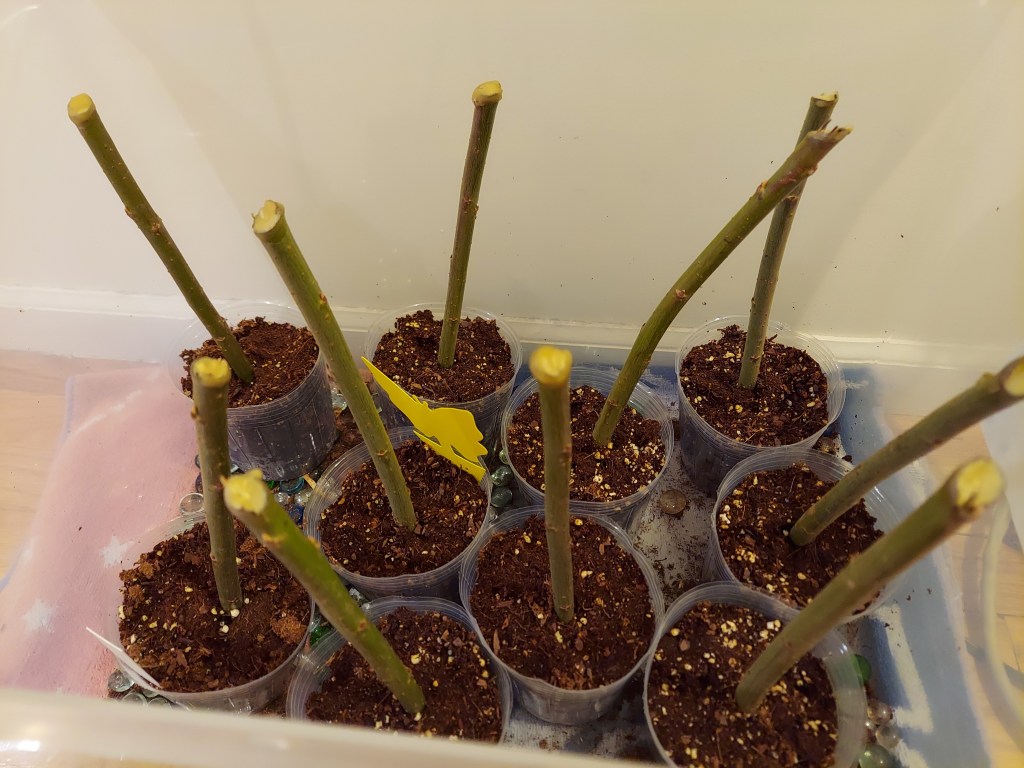
Once again, I used clear plastic containers to plant in, this time I used 6 inch pots, instead of the small cups. These cuttings were quite a bit thicker and longer than my fig cuttings, and I wanted to be able to plant a couple of the growth points to help with the rooting process.
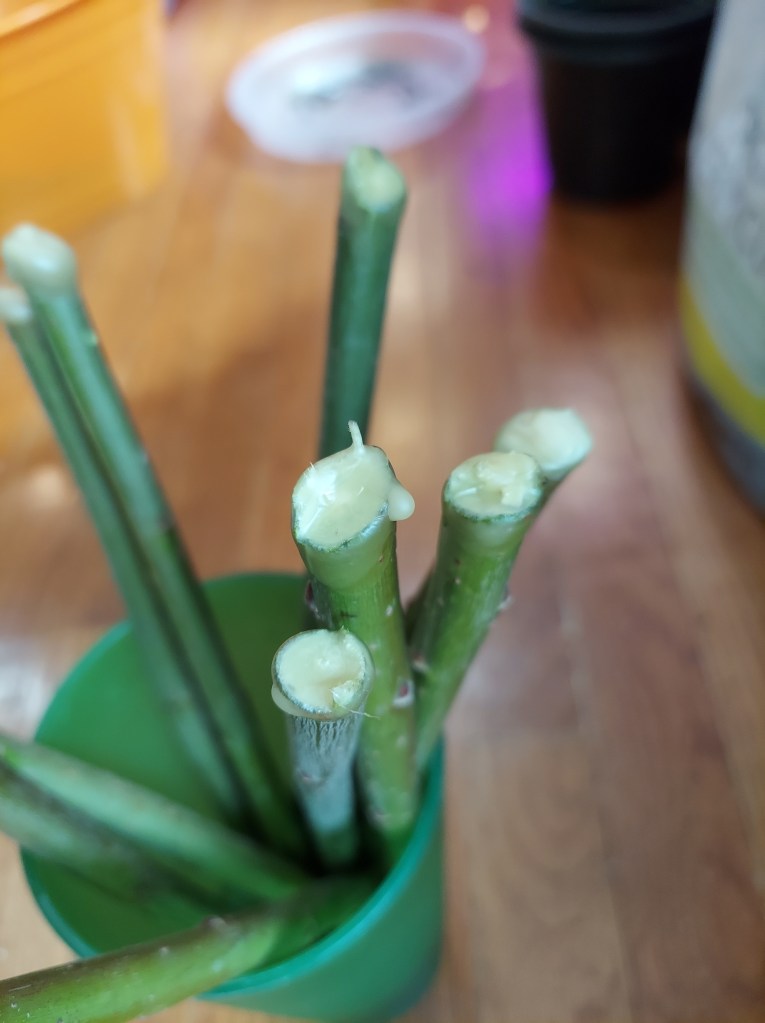
I’m trying something different this time around. I dipped the top ends of the cuttings in wax before planting. This is supposed to help them better retain moisture and protect them from disease. Not sure yet if it will work, but I had wax, so I decided to give it a go. I did not dip these cuttings in rooting hormone like I did for the figs, willow naturally produce rooting hormone and are supposed to root quickly from cuttings.
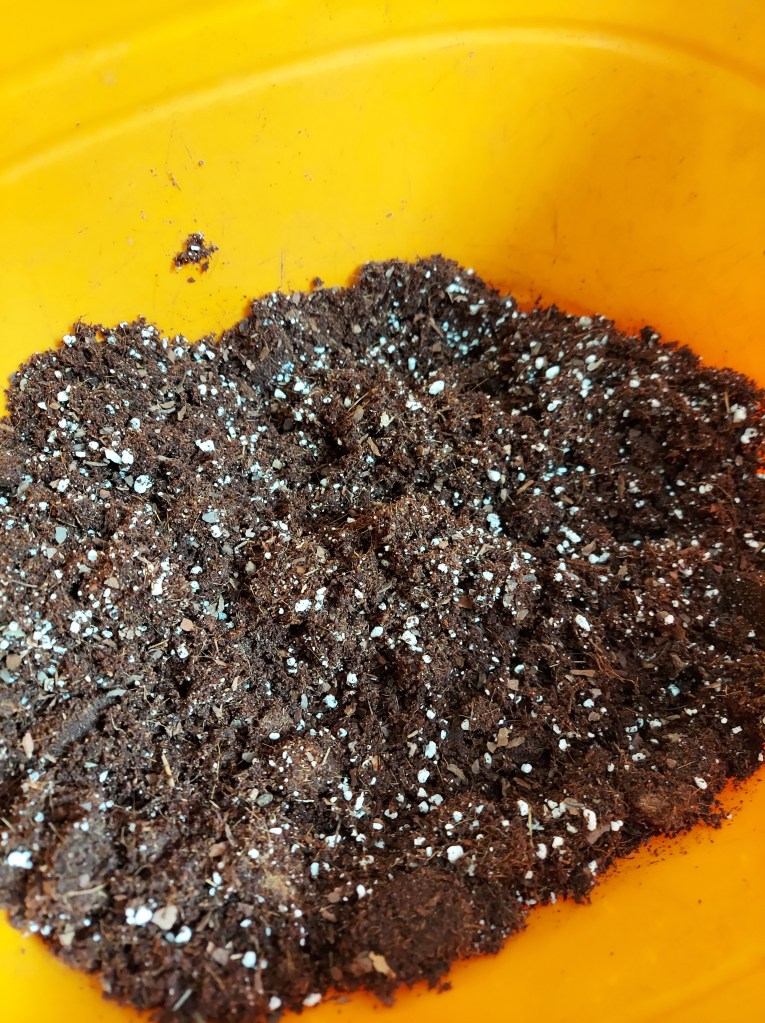
My light and airy homemade potting mix, which I use for all my cuttings. Coco-coir, pine bark fines, and a small amount of perlite. It retains moisture but doesn’t get soggy. Once all the cuttings were planted, I put them in a tote on a heat mat to make a miniature greenhouse. They were in an area with minimal light, so I was hoping the plants would focus on root growth.
The cuttings were planted on March 12, and left in the tote with the lid just cracked for the first few days. I misted them with water once to make sure the top of the soil wasn’t drying out. In less than a week there was visible bud growth as they broke dormancy and started growing. I did spot tiny roots around the edge of a couple of the containers, so I think they are going to all make it and do just fine.
By early April they all had shoots of new growth and some roots were quite visible around the bottom of the clear cups. A couple of them actually started to wilt and go brown, I think this was because the initial growing mix did not contain many nutrients for these fast growing plants. I potted them up into 6 inch pots and gave them fresh potting mix with a bit of compost.
They are all now in the basement under grow lights and a few are putting out fresh, healthy shoots. I plan to keep them in pots on the back patio so as to not have them become invasive in the yard. Don’t know what kind of a harvest I will get from potted, first year willow, but I’m looking forward to the experiment.