October marks the end of the growing season for the Northeastern US. The sunlight fades, frost sets in, and everything begins to brace for winter. In the first couple of weeks of October we had nice weather and I made my final harvests while also starting to clear some of the plants. The leaves have been changing and falling, and make for a crunchy layer on the street. Some impressively large piles have been created by neighbors out near the road for the town pickup, but I like to put all of mine to use for the garden.
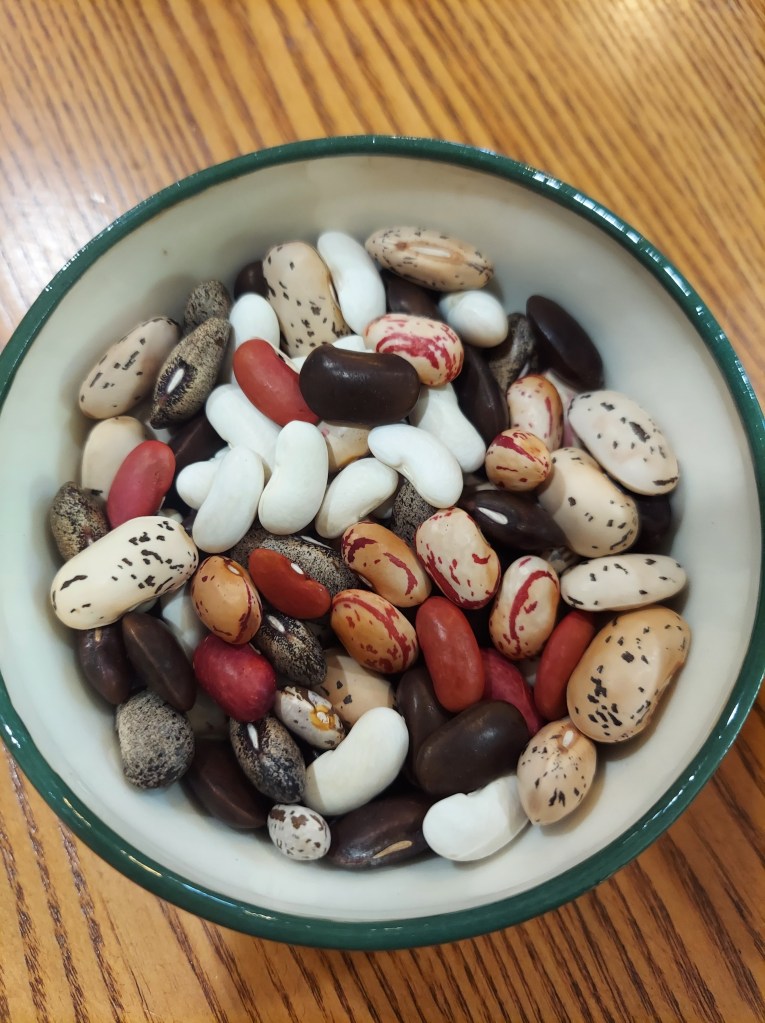
I love all the colors in this bowl! I managed to grow 6 different types of beans this year. The most prolific of which were the green pole beans. Think I had about 25 pounds off a handful of plants. But I also grew a few varieties of dry beans including chocolate runner, kidney, cannellini, and Dragon Tongue wax. I managed to save a decent number of dry bean pods off the plants at the end of the season, and also when I cleared the dying plants to the compost pile. I managed to save two small bowls worth of beans.
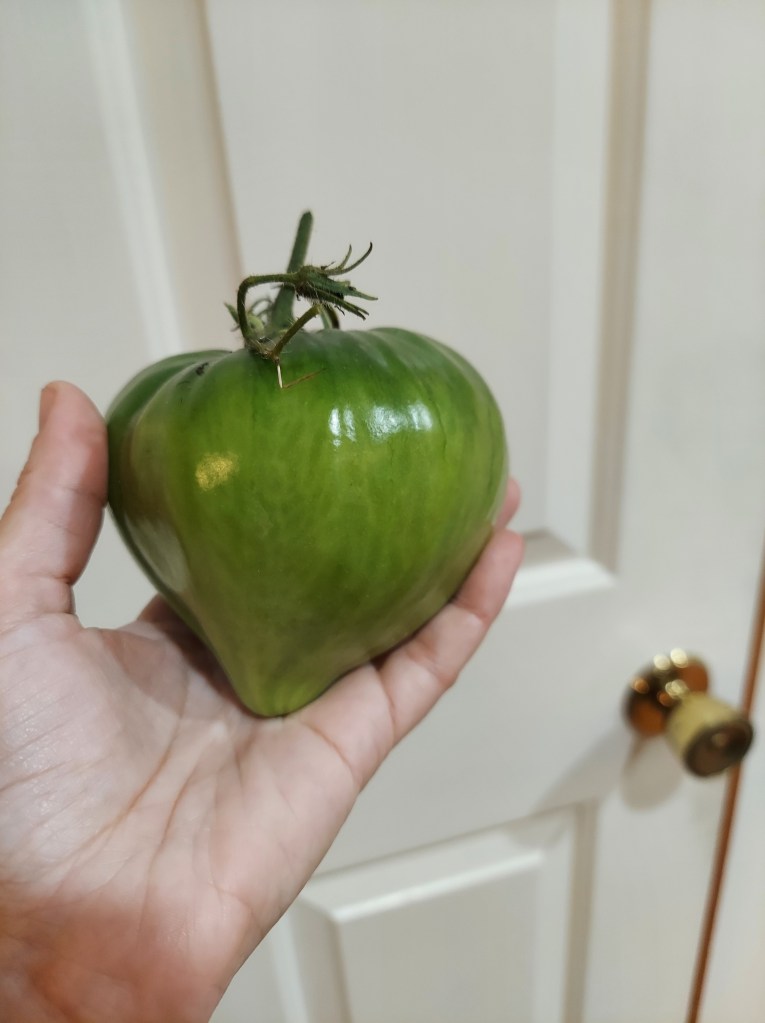
As the warm weather chilled and the first frost loomed, I picked a whole bunch of unripe tomatoes. This Oxheart was one of the biggest I grew this year, and has been slowly ripening on the counter for weeks along with the other late season tomatoes.
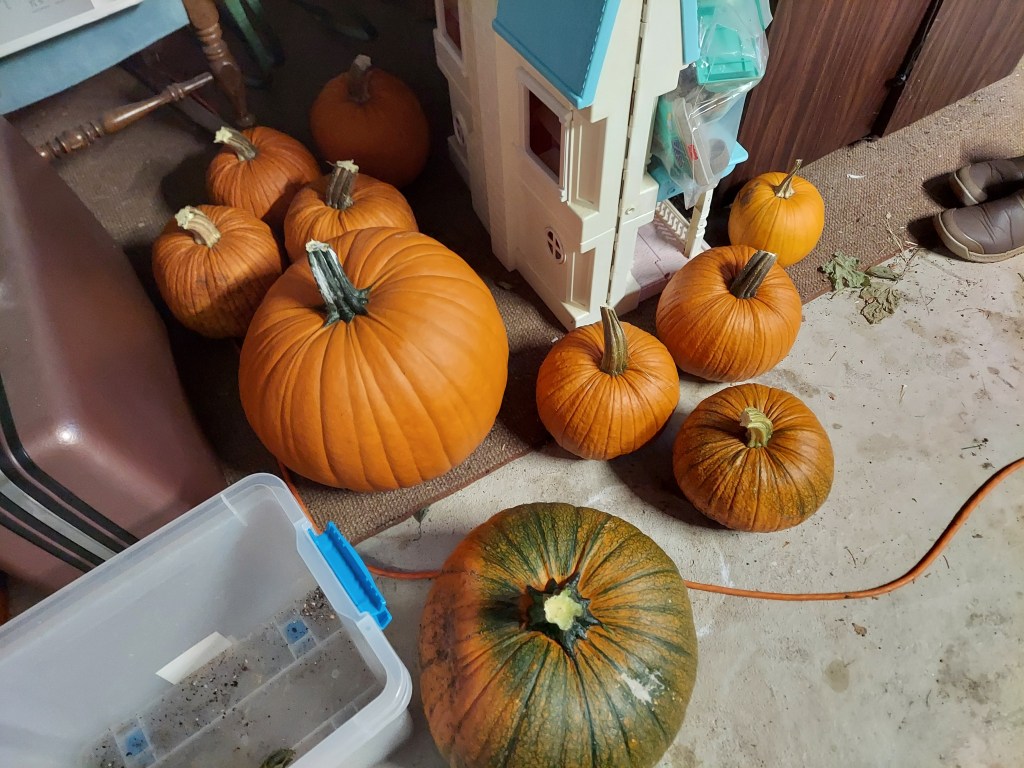
This ended up being my best pumpkin year yet! All total I had 9 small, 1 tiny, and two large pumpkins. 105 pounds. Most of them are currently decorating my front porch, and I gave a couple away.
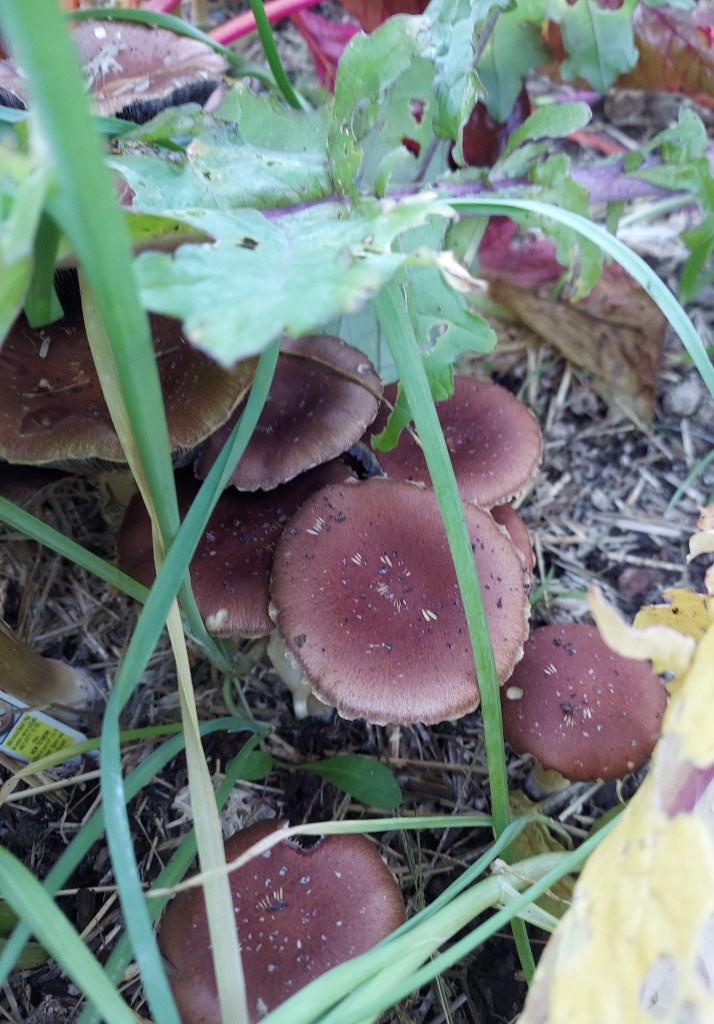
I tried growing something new this year: mushrooms.
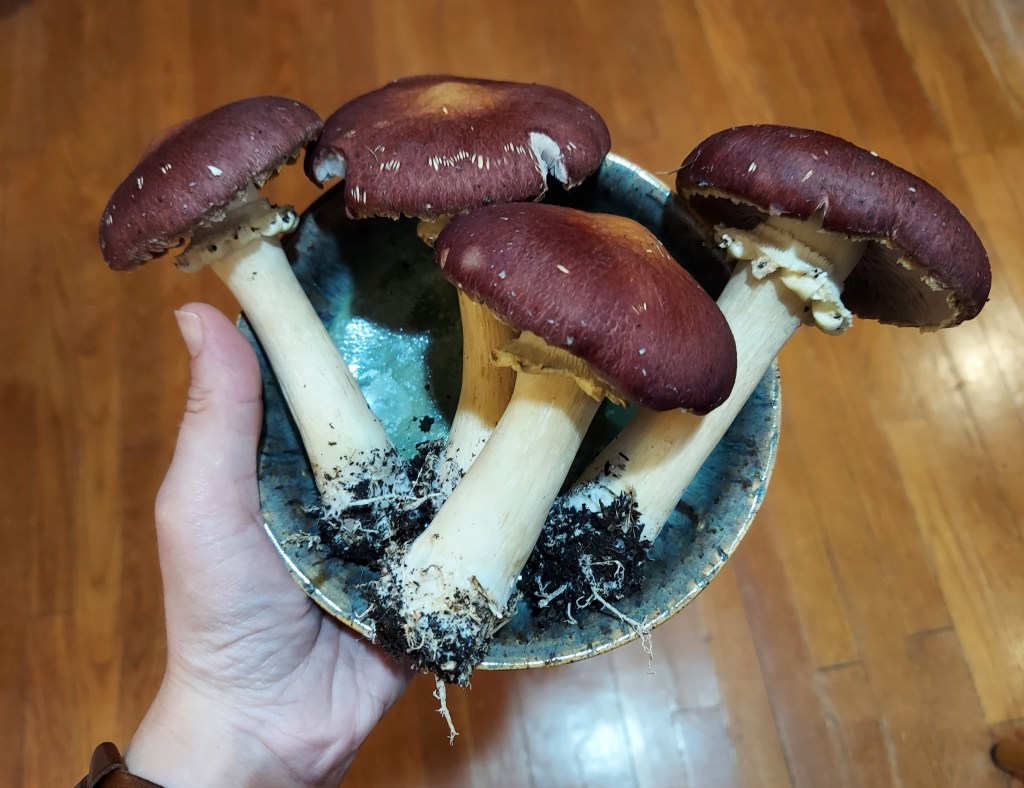
I purchased outdoor grow kits for Wine Cap and Chestnut mushrooms. The wine caps were very productive in one of my beds, but did not fruit in the other. The Chestnut block was purchased and planted much later, but did produce two nice clusters of fruit in late September.
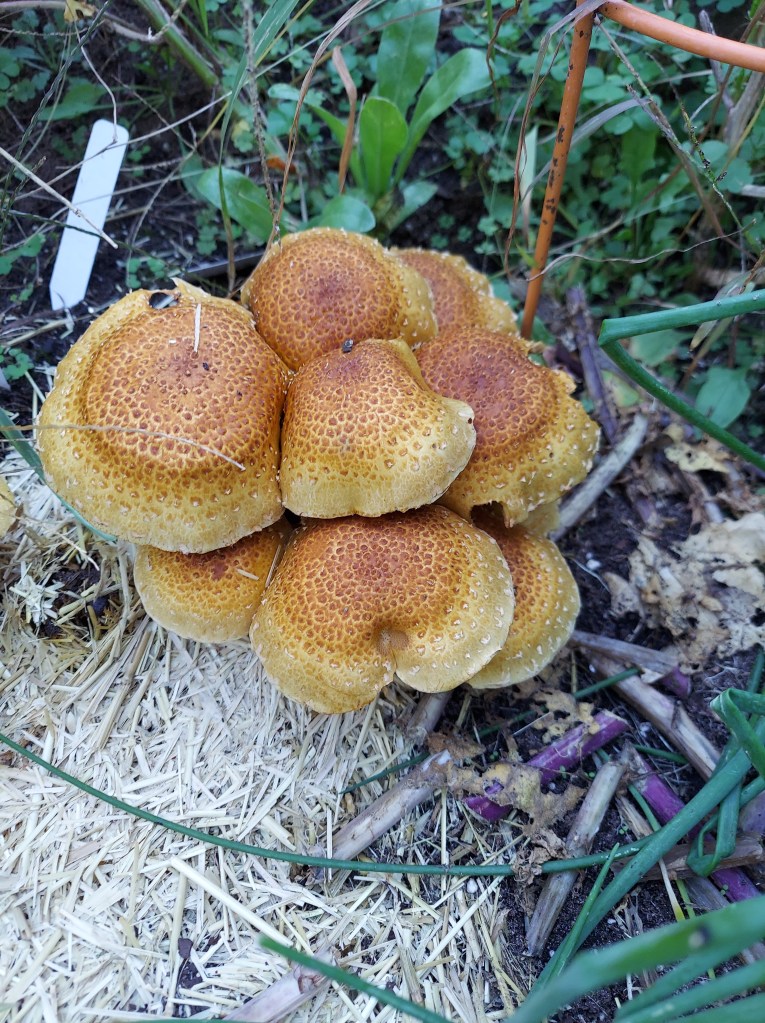
Chestnut mushrooms, growing on the edge of the block which was planted under straw mulch.
I wasn’t necessarily growing them for food, more to improve the soil health and for their cozy cottage appearance. I did get a couple pounds of the wine caps, they got quite big.
During the second week of October I planted my garlic. I still have broccoli growing in the same bed, so I was careful and worked around the stalks. Each head of garlic was divided, the biggest ones were then chosen for planting. Into each hole I put a handful of homemade compost, and then scattered some new soil over the top.
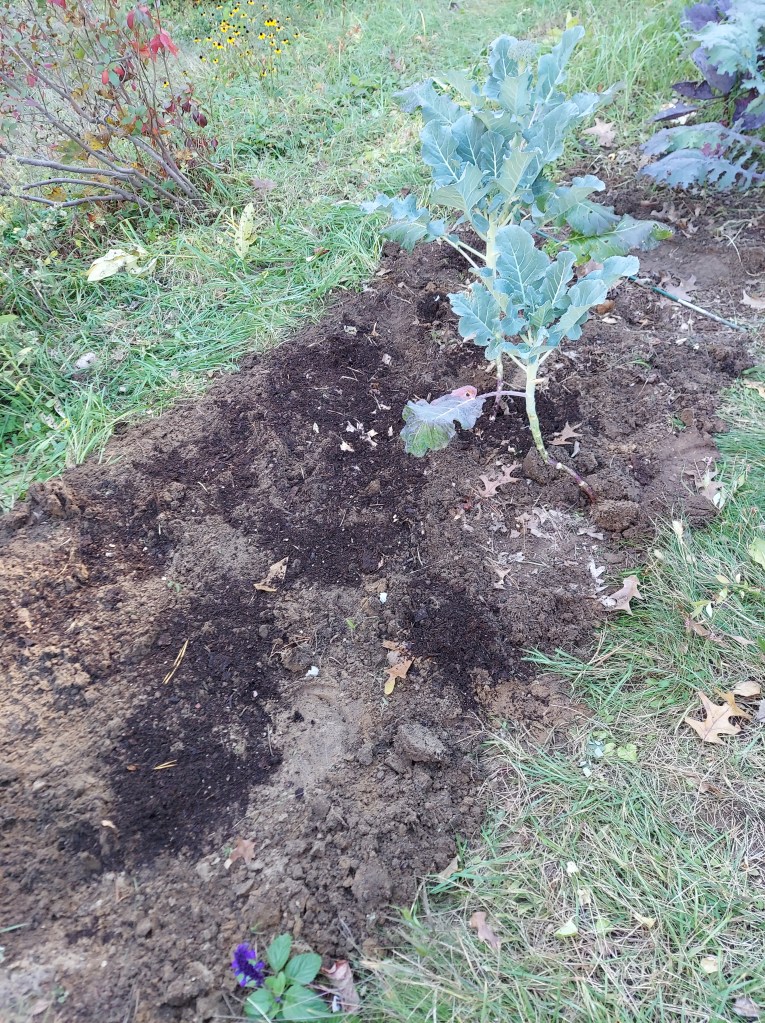
Half the garlic bed. Once we got up the first batch of fall leaves, I added a thick layer as a mulch for winter.
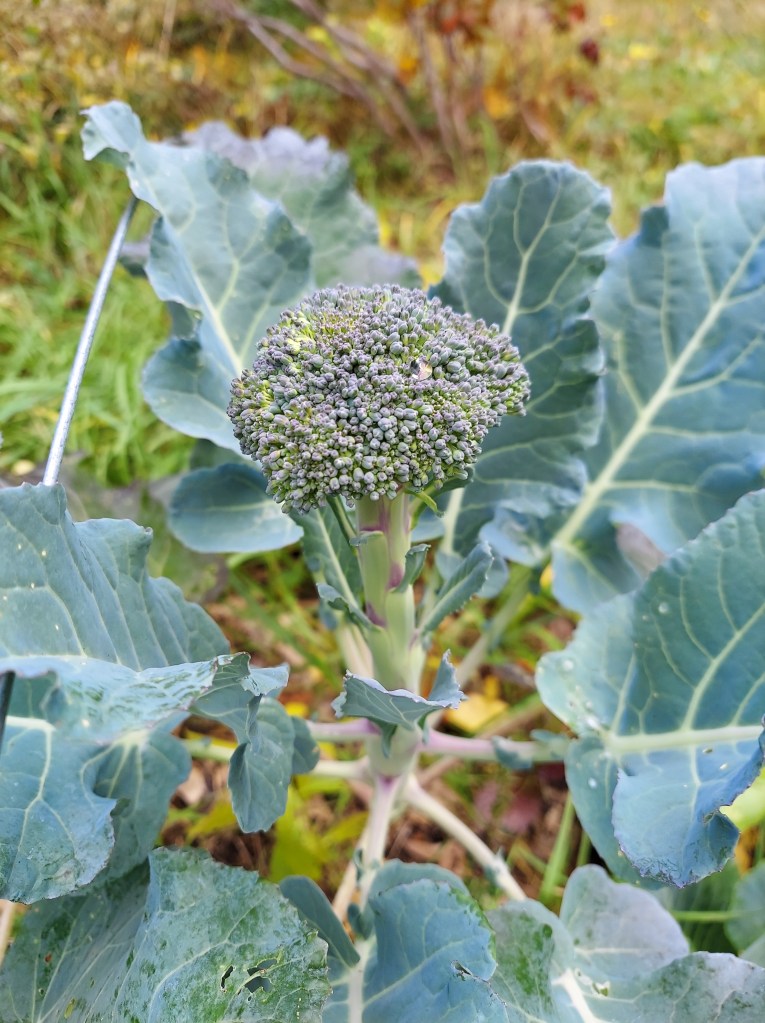
This was the first season I tried broccoli in the fall, planted in late July. I covered the bed with frost cover to deter the cabbage moths, and the plants were well enough protected to actually head up. I’ve harvested a few small heads and am waiting for the others to finish developing now.
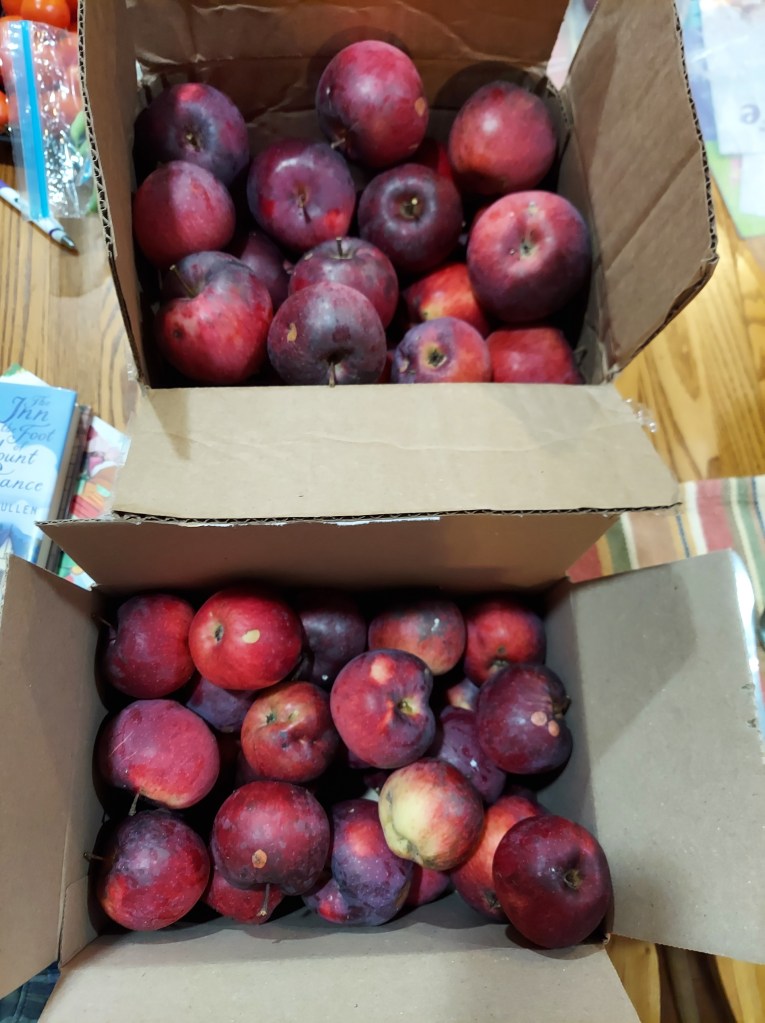
2026 was the year of the apple for me. Our old tree was extremely productive, and I was giving away apples by the box. From mid-September to mid-October we harvested 108 pounds of ripe apples, not counting the ones the deer ate or that fell rotten. We’ve never seen that happen before, but believe it has to do with the neighbor’s cutting down some trees last fall and increasing the amount of light that our tree now gets.
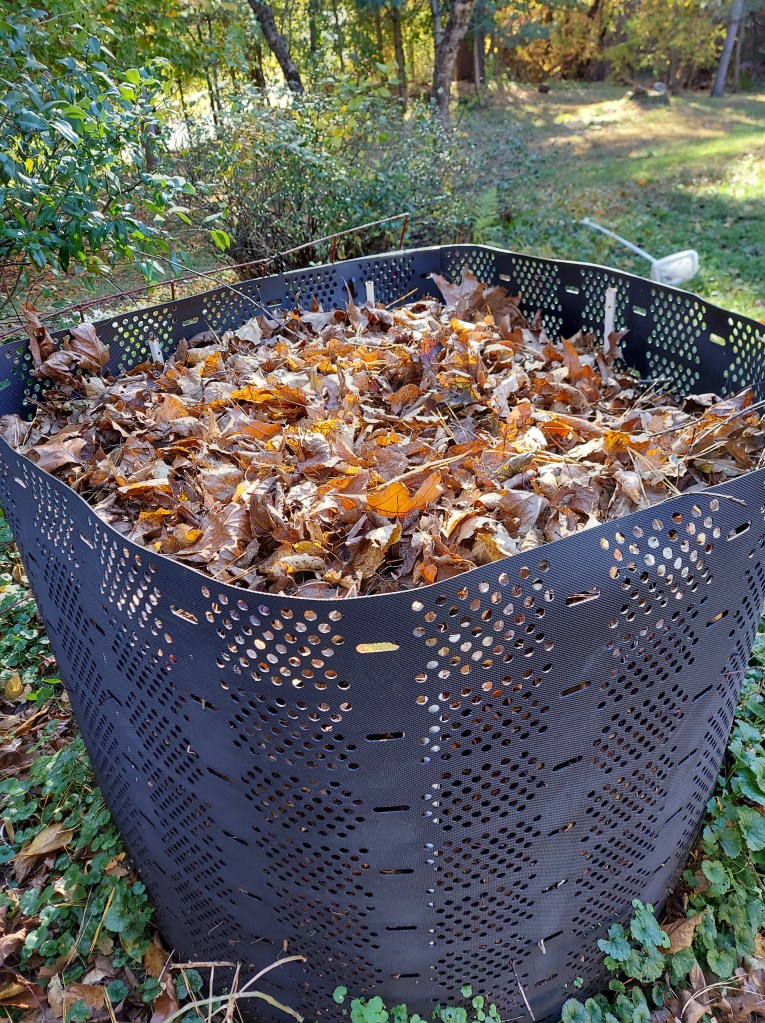
Late fall is the time for collecting leaves, putting the beds to sleep, and tidying everything up. This bin is last year’s compost which grew all the pumpkins. It’s about half full of broken-down compost, which I will be using next year in the garden. But since half the bin was empty I filled it the rest of the way with leaves. It’s good to save up brown material for the compost, and they will start to break down as well as providing a buffer for the compost during the winter.
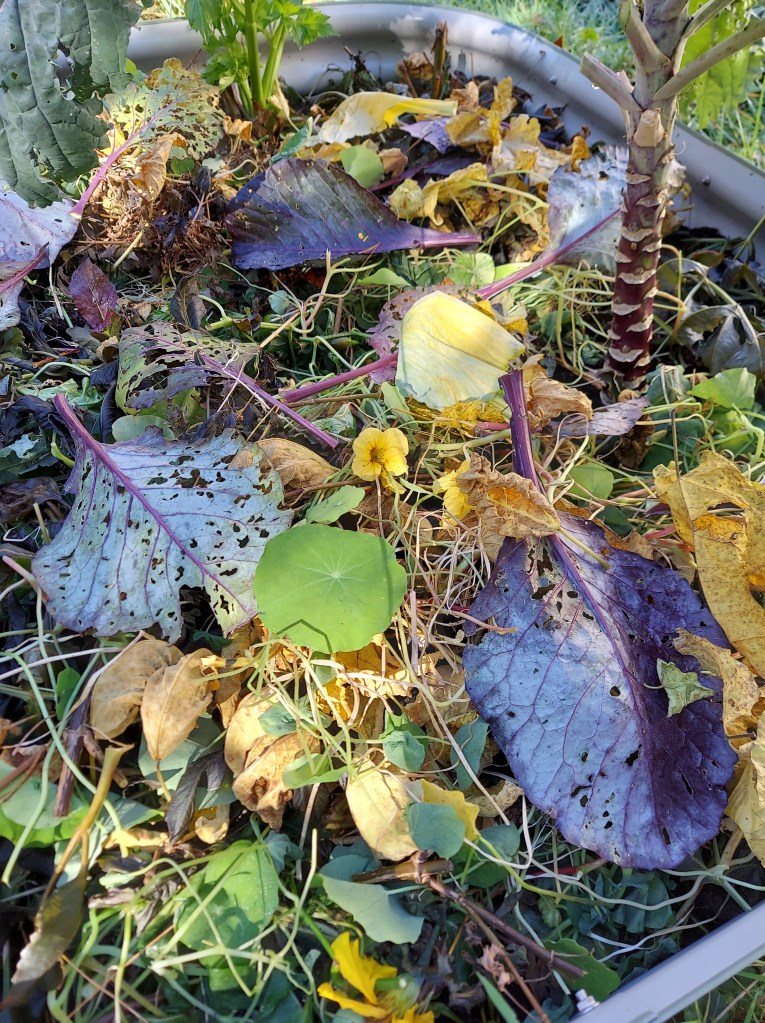
This year I’m trying a new method of composting in one of my raised beds called ‘chop-and-drop.’ All the plant material that would normally go in the compost pile is simply cut up in place and left on the bed as a mulch. The nutrients then stay put, it acts as a buffer instead of having exposed soil over winter, and allows the worms and other soil microbes to stay more active because there is raw material for them to access. And potentially I won’t have to add any compost at all in spring. This bed has two large kale plants still growing, so I chopped and dropped a bunch of other plant matter and spread it all around the base of the stalks. I also added a few handfuls of fall leaves on top as well.
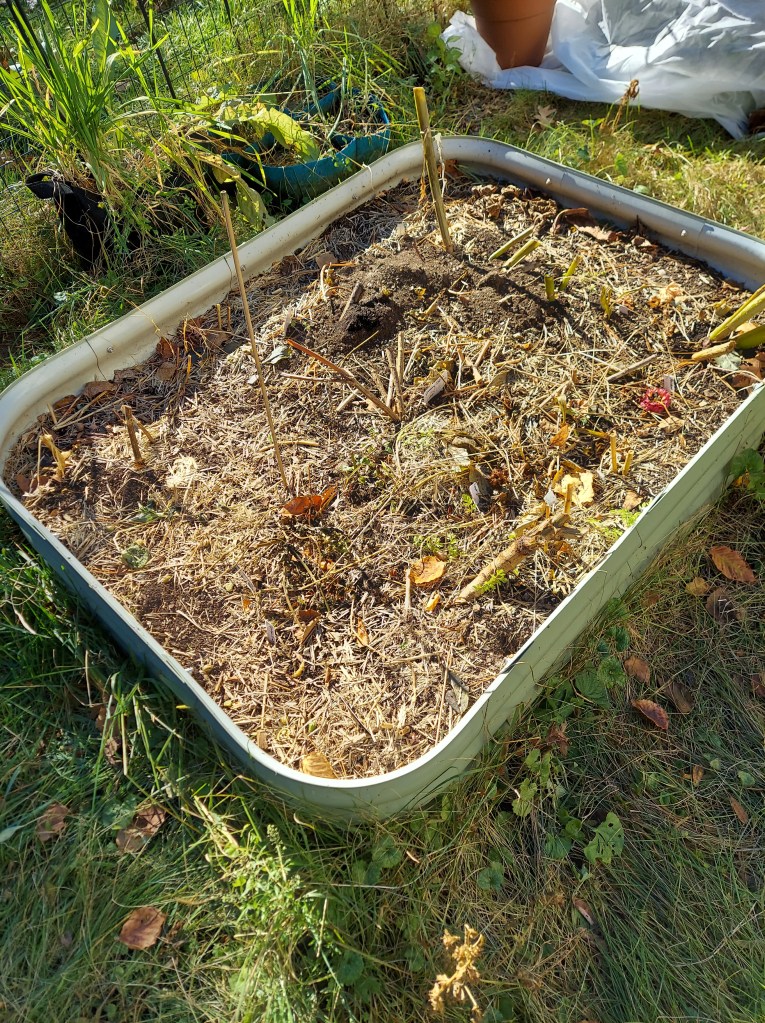
After the first frost hit, I trimmed the dahlias back to just bare stems above the soil. All of the dead leafy material and thick stalks were then cut down and added to the compost pile. I dug them all up earlier this week and ended up with 8 clumps of tubers. After letting them sit and dry for a couple of days, I put them in cardboard boxes stuffed with straw to store them over winter.
I have also weeded and mulched all the apple and pear trees. I had mulched them with straw over summer but that had mostly broken down by this point. Once I weeded, I put down a bucket of homemade compost around each tree, and then a thick layer of leaves and grass clippings. Again, these should partially break down over winter and add to the compost, providing nutrients for the tree.


Leave a Reply