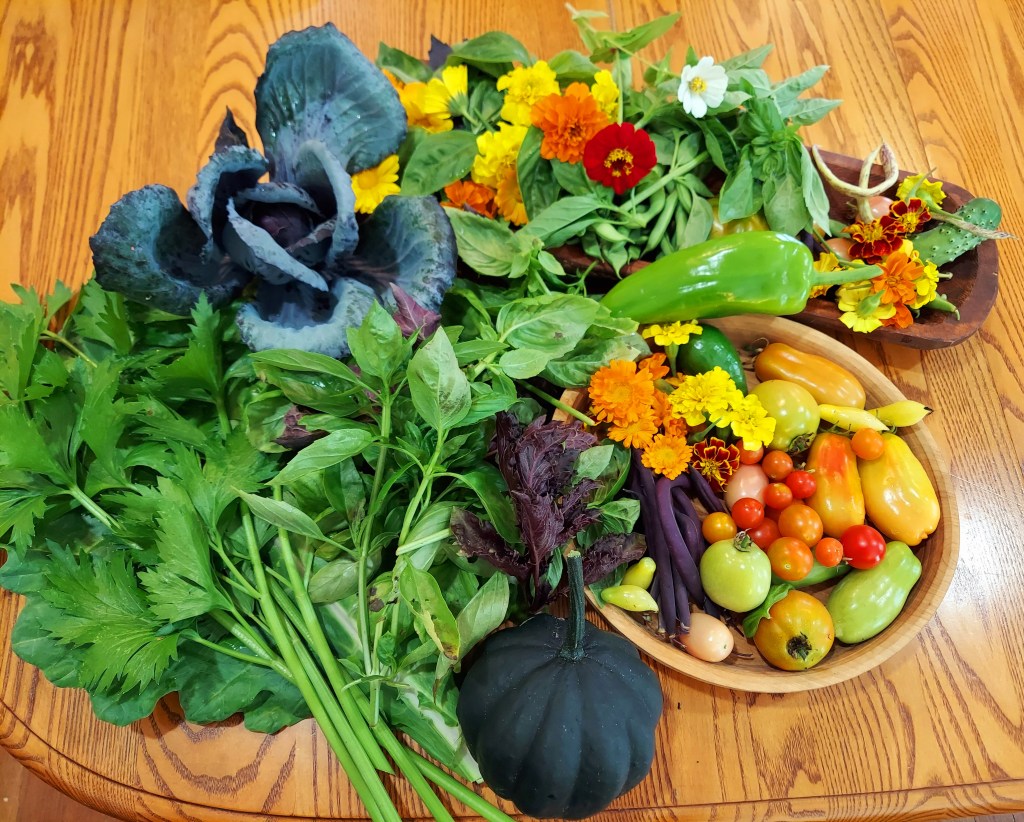
• Seed Starting 2025

    February 16, 2025
    Overview

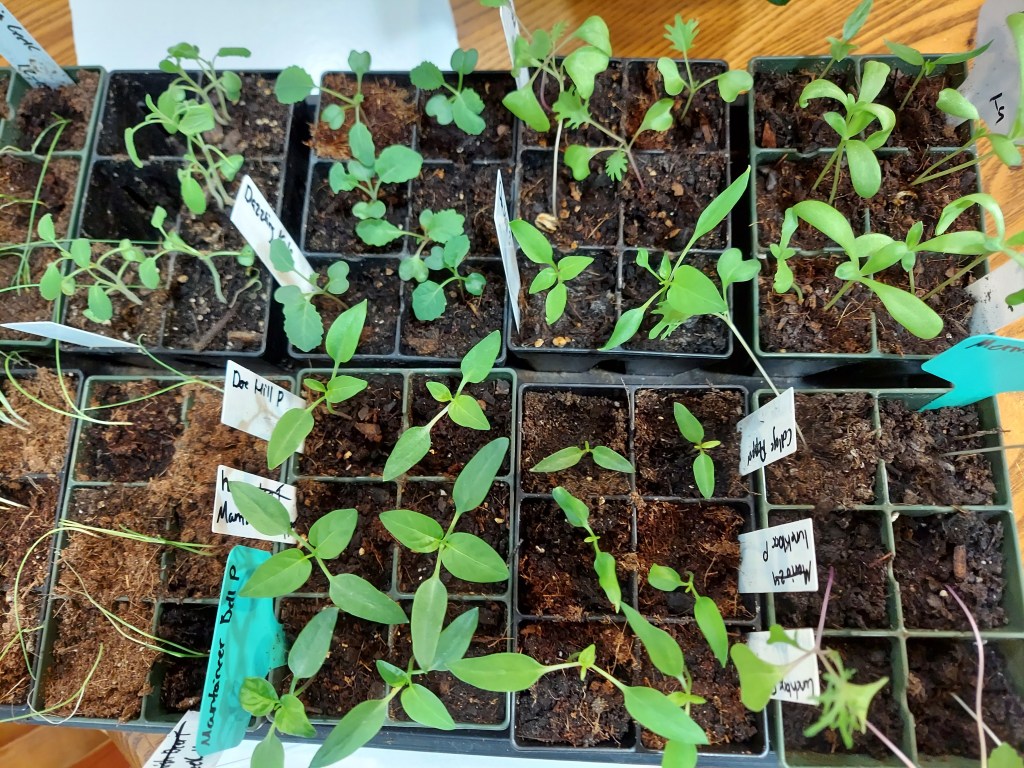
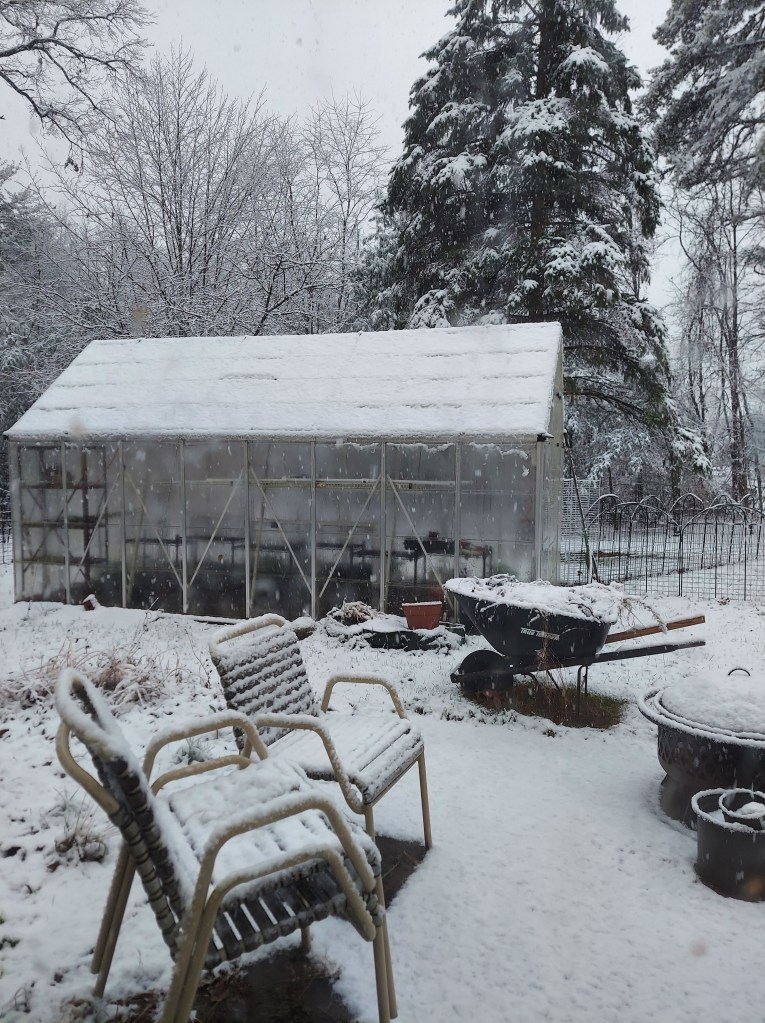
    On this snowy day in February, I think it would be a good time to look forward to spring and post about seed starting for the 2025 garden. It is winter outside, but I am growing tiny plants inside. In the first week of January, I sowed: leeks, red and white onions, shallots, celery, peppers, and dazzling blue kale.  Alliums are slow growers, so the longer head start I can give them the better.  I managed to grow a few onions last year, but they were very small bulbs at harvest time.  I want to improve this year. I have learned from experience that celery takes a very long time to germinate, often taking 4 weeks before the tiny sprouts make an appearance. Then the tiny seedlings take forever to start to size up. 

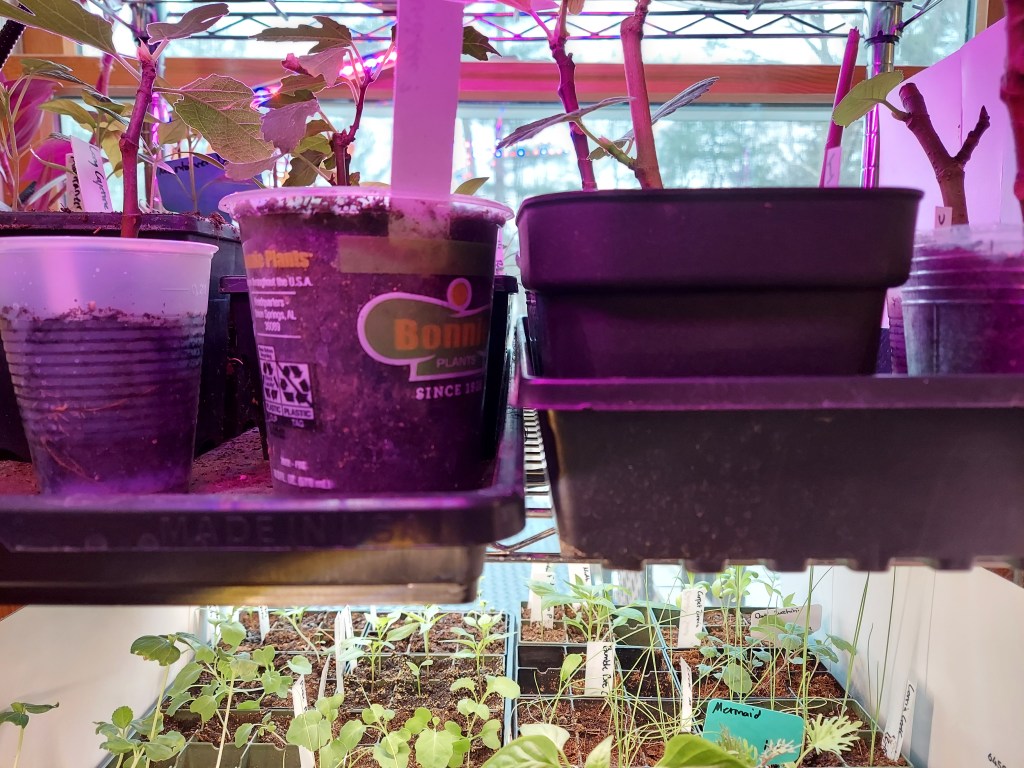
    Seedlings after about one month of growth: leeks, sage, kale, peppers, cabbage, and calendula.

    Last year I failed at my first attempts at sowing peppers, so I’m giving myself plenty of time for follow up sowings.  I’m starting kale earlier than I have in the past because it is a year-round producer, and cold hardy. I am hoping for better slug resistance if I can plant out stronger, larger plants with thicker stems.  I use grow lights on all my seedlings and the shelves are in south facing windows.  I have heat mats which I use for pepper and tomato seeds to help improve germination. Once it gets close to spring the greenhouse will also give me a season extension and some cold hardy plants can be moved out there before the last frost date.

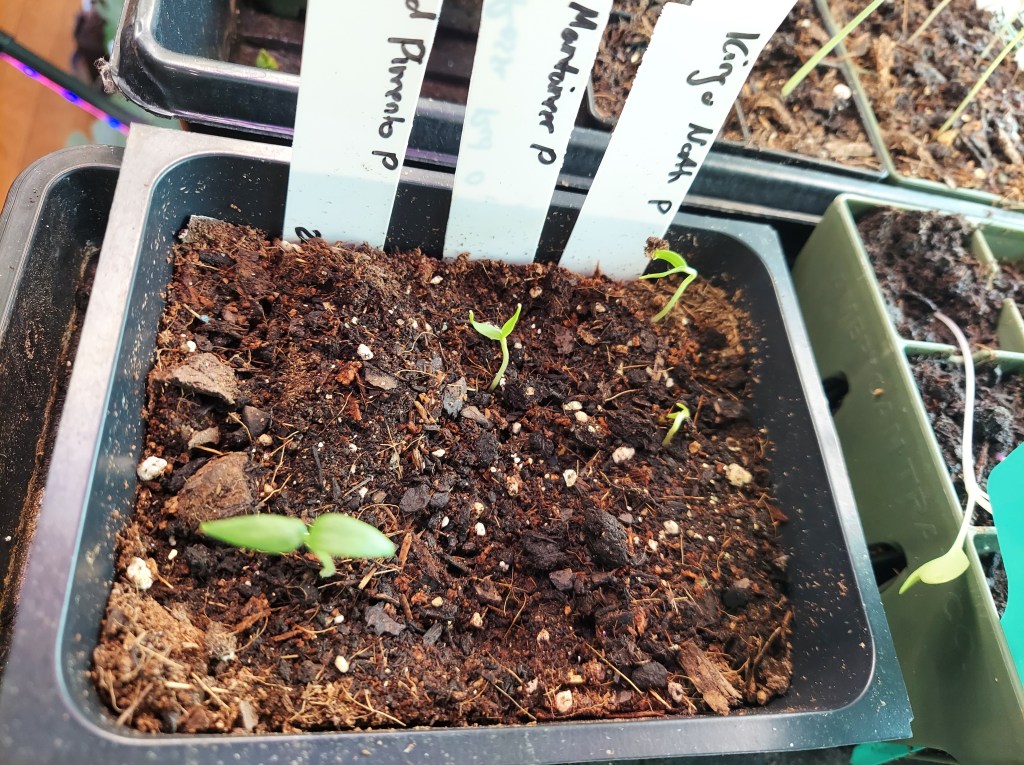
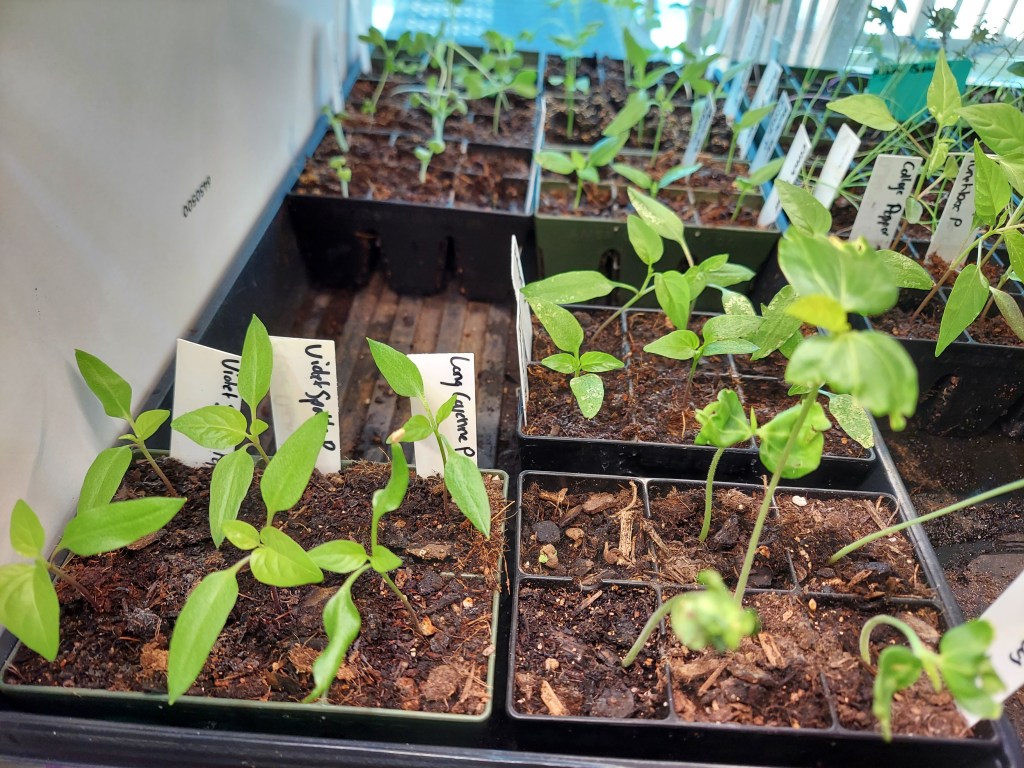
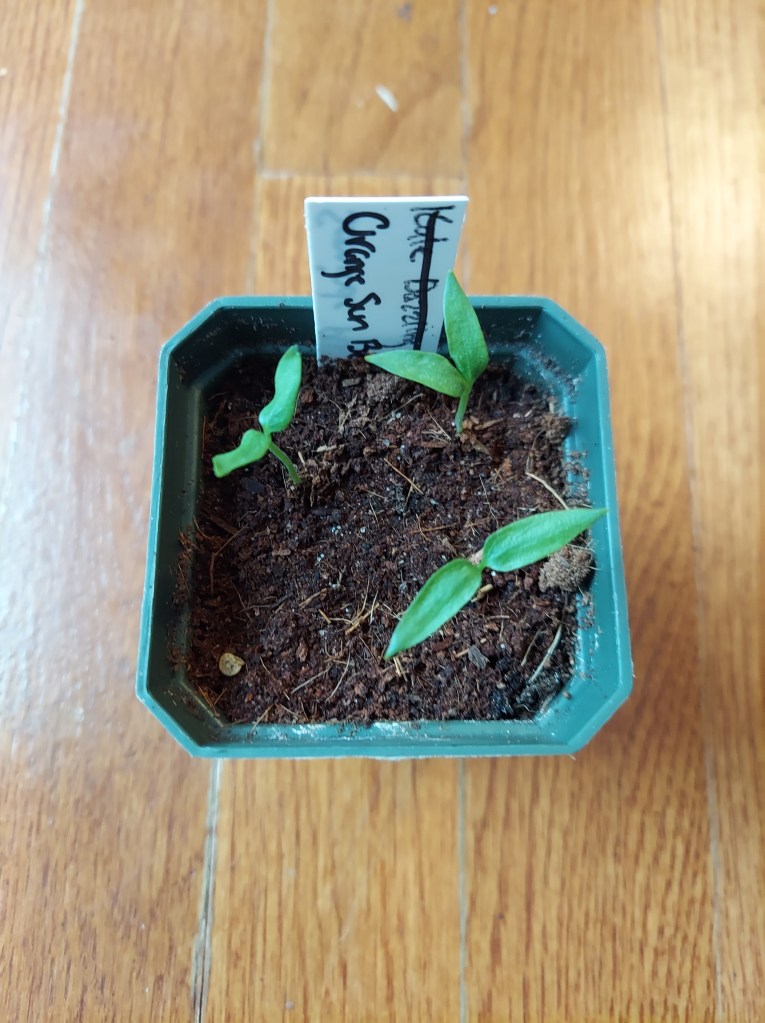
    In the first week of February, I started my second round of pepper seeds. I have about a dozen seedlings from my first round of seeds. I started 4 different varieties of peppers, but want to have backups in case anything happens to them. This second round includes different varieties than from the first sowing. I tend to grow small and medium sized peppers, as I have found they provide more harvests per plant than with bell peppers. No one in my family likes really spicy food, so I don’t have to worry about any of the hot peppers. The varieties Violet Sparkle and Circus are both new to me, they are small brightly colored snacking peppers.

    Second round of pepper seeds

    I checked on my dahlia tubers in the garage last month and they were still dormant. I will keep checking and if they haven’t sprouted by April, I will bring them inside and pot them up to wake them up. I also ordered a couple of new varieties from Hudson Valley Seed Company, so I am looking forward to growing a couple new colors.

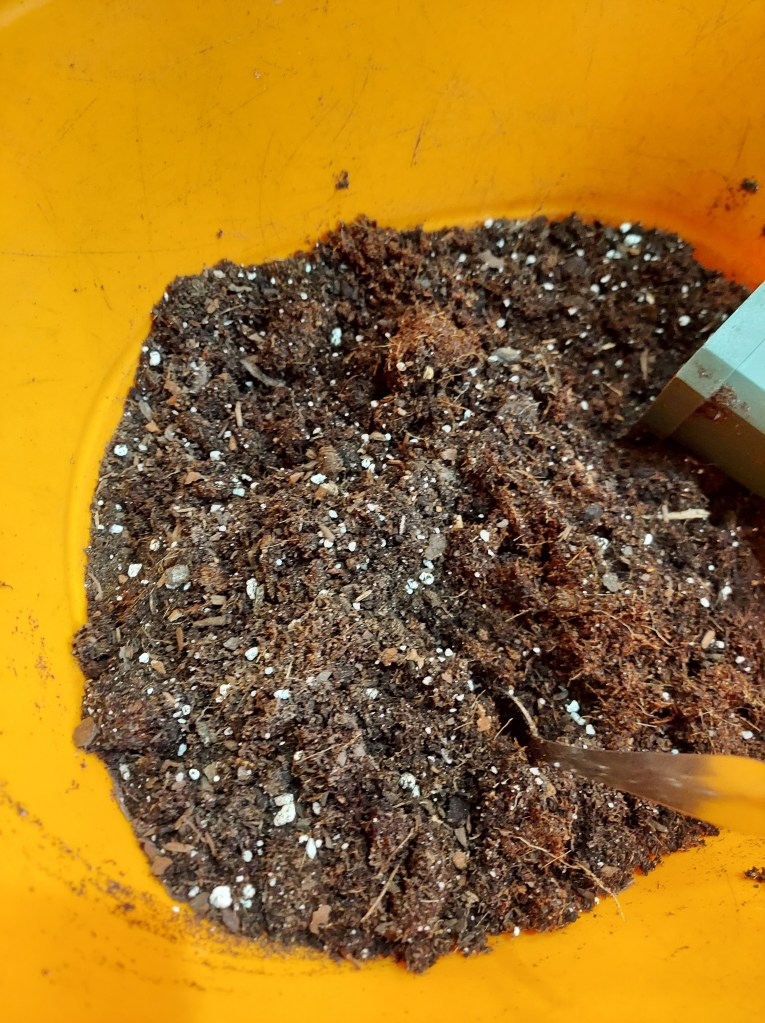
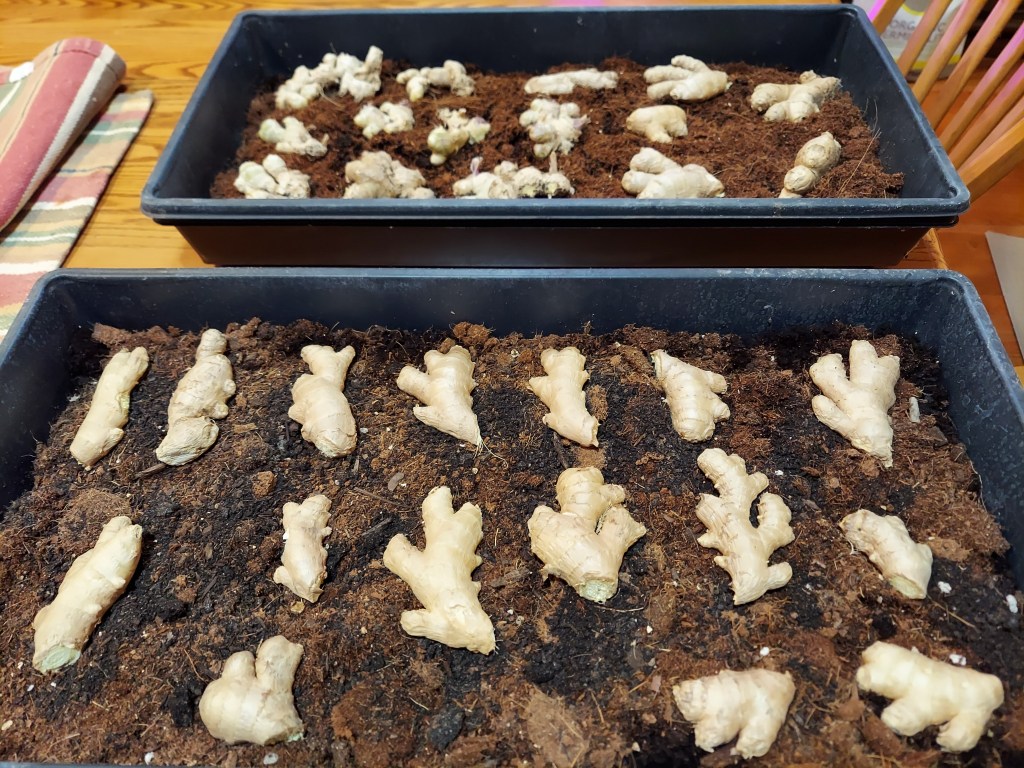
    I’ve also started two trays of ginger pieces to pre-sprout them before planting. Much like potatoes ginger has eyes, certain spots that will regrow. However, it can take a very long time to get started and is a nutrient hungry, tropical plant, and it also requires a long growing season (10 months!). These two shallow trays are filled with half lobster compost and half coco-coir with some worm castings and balanced light fertilizer added.

    They will now go on heat mats for the next couple of months. As the pieces sprout and put out their first green growth I will carefully lift them from the trays and plant into deeper pots, with lots of compost. Doing them in trays allows me to fit 30 pieces into a small area and ensures that I’m not wasting valuable growing space on pieces that might fail to germinate. After a couple of months, I will check any remaining pieces and then compost the ones that don’t show any signs of growth.

    When the warmer weather arrives, I will probably plant a few of the ginger the greenhouse under the shelves since they don’t take up a lot of vertical space. The rest will go in planters, which I typically put outside the greenhouse, but right up against the wall so they get some extra heat. I haven’t managed a bumper crop yet, but I also don’t have the ideal climate for ginger. I have grown a decent amount of small ginger pieces which are perfect for tea and baking purposes.

    Tiny bell pepper seedlings

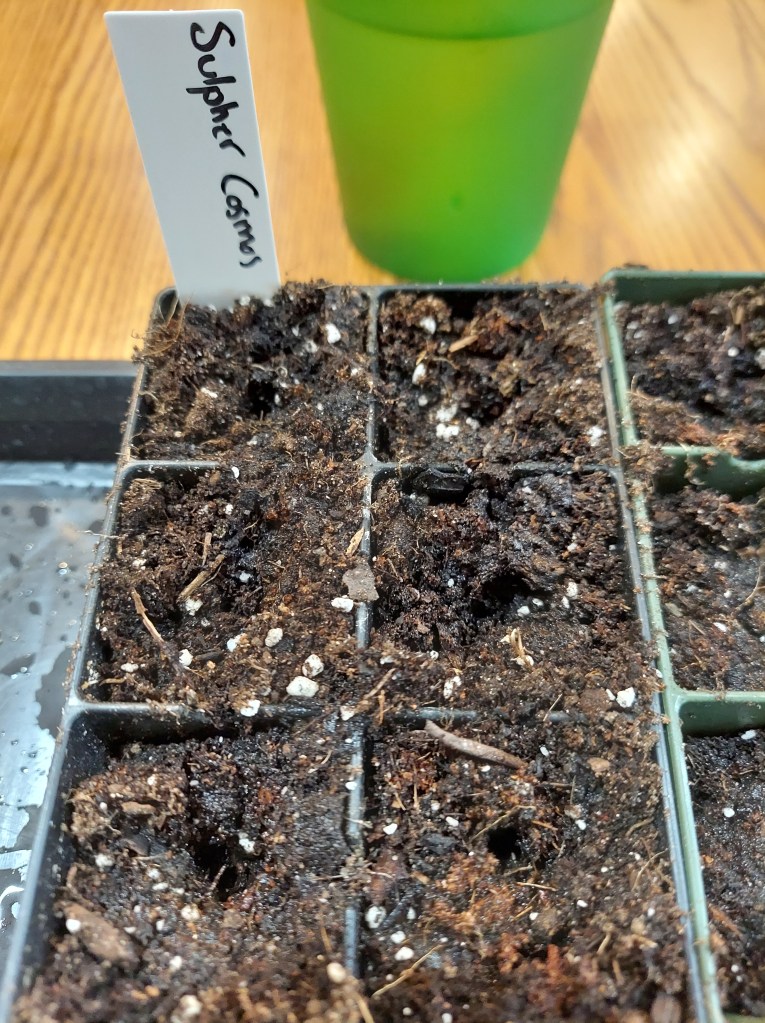
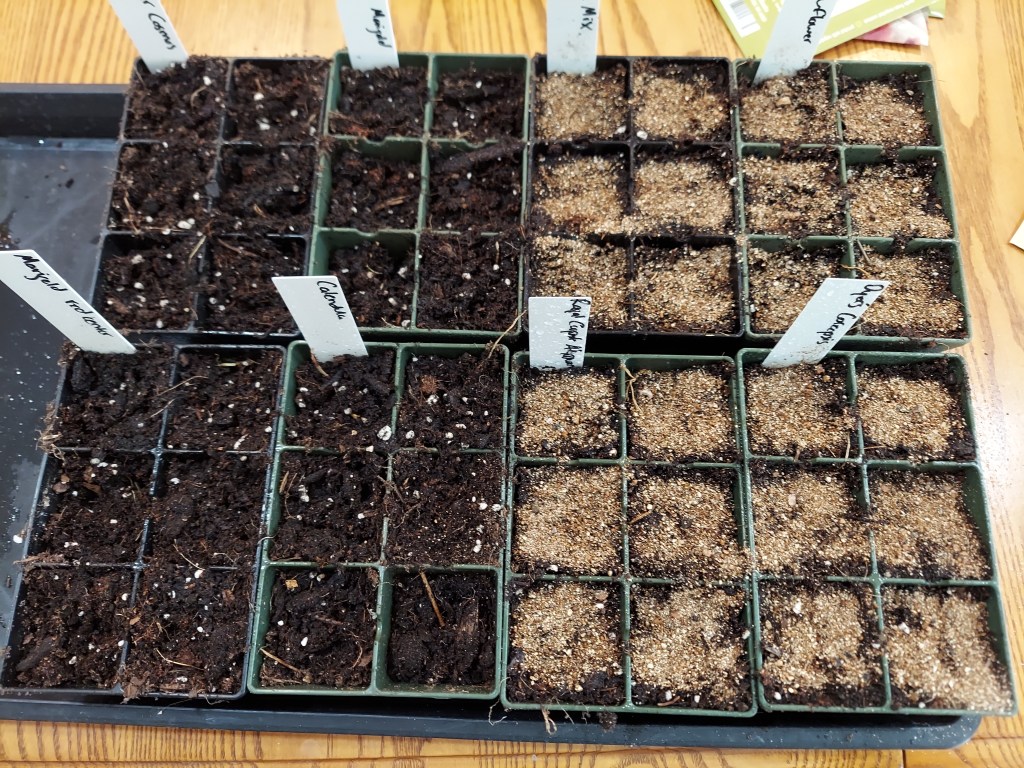
    I will probably start tomato seeds in early-mid March, since they grow relatively quickly. After that I will start dye flowers such as marigold, indigo, madder, and cosmos. I typically direct sow sunflowers, and hopefully the chamomile self-seeded and will come up all over the place like it did last year. Most root veggies will be direct sown after our last frost. Squash and cucumbers get started inside at the beginning of May because they grow very quickly but are not frost tolerant. I like to get a head start by sowing in plug trays, which also means better protection for the vulnerable seedlings.

    This year I am going to try to have extra seedlings ready to go in case of loses along the way. I also want to practice at succession sowing this season, by having plants ready at different points of the season for continual harvests, and keeping the soil used and covered. All the garlic I planted in the fall is currently under a nice layer of snow. I look forward to it poking through and starting to grow green shoots in spring.

    No comments on Seed Starting 2025
  • 2024 Fig Propagation 1

    February 10, 2025
    Figs

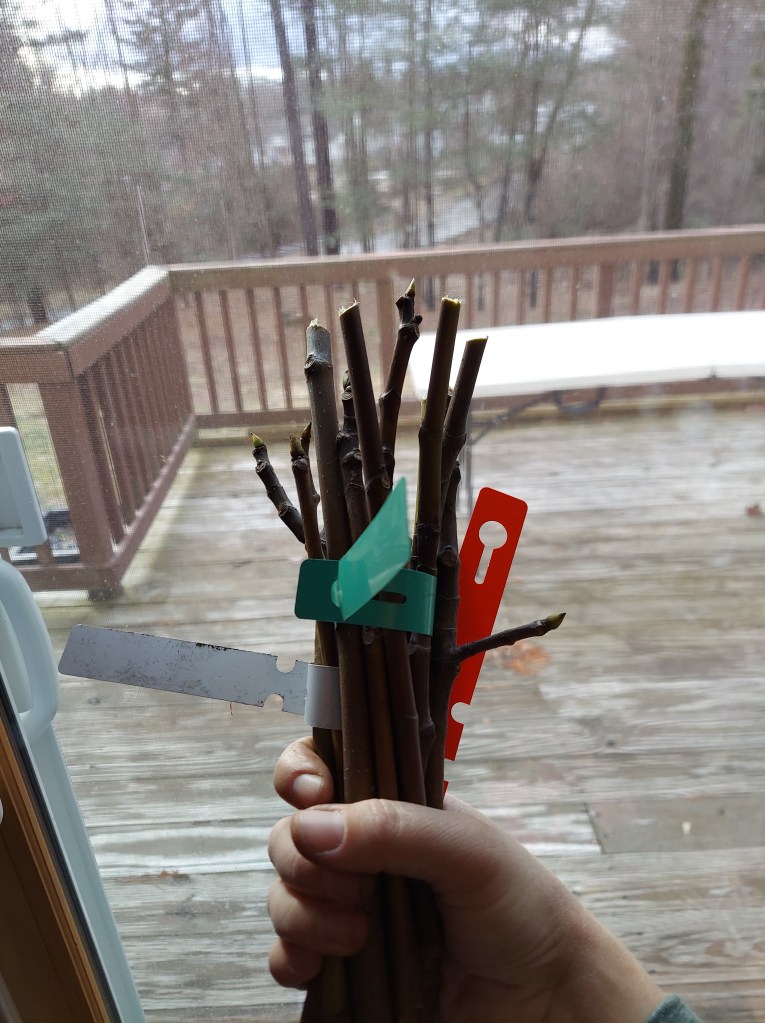
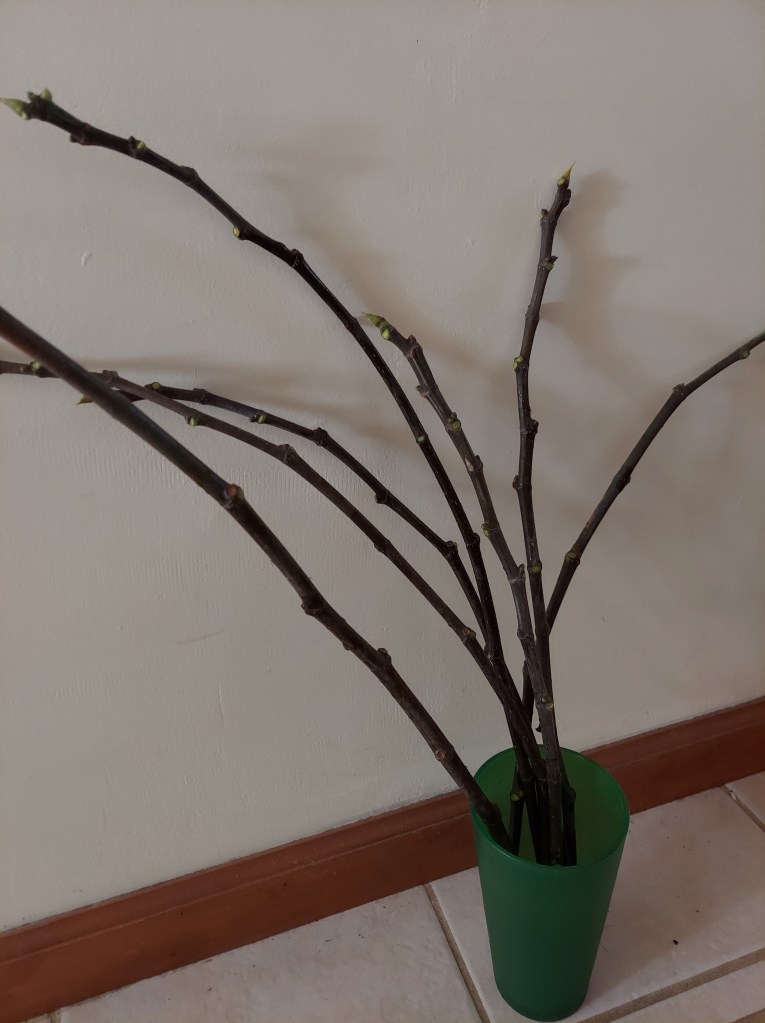
    In October of 2024 I was graciously allowed to take a bunch of free fig cuttings from a local gardener’s trees.  The only downside was that he did not remember what kind they were; but he knew that he owned two different varieties.  He had 4 large trees and told me I could take as many cuttings as I wanted. His only request was for a couple of the cuttings come springtime, if I am successful.

    I went over one afternoon and cut down about 20 branches with his help. We stripped the leaves, and I put them in my trunk. Once I got home, I put them in 2 tall cups of water to keep them hydrated while I processed them.

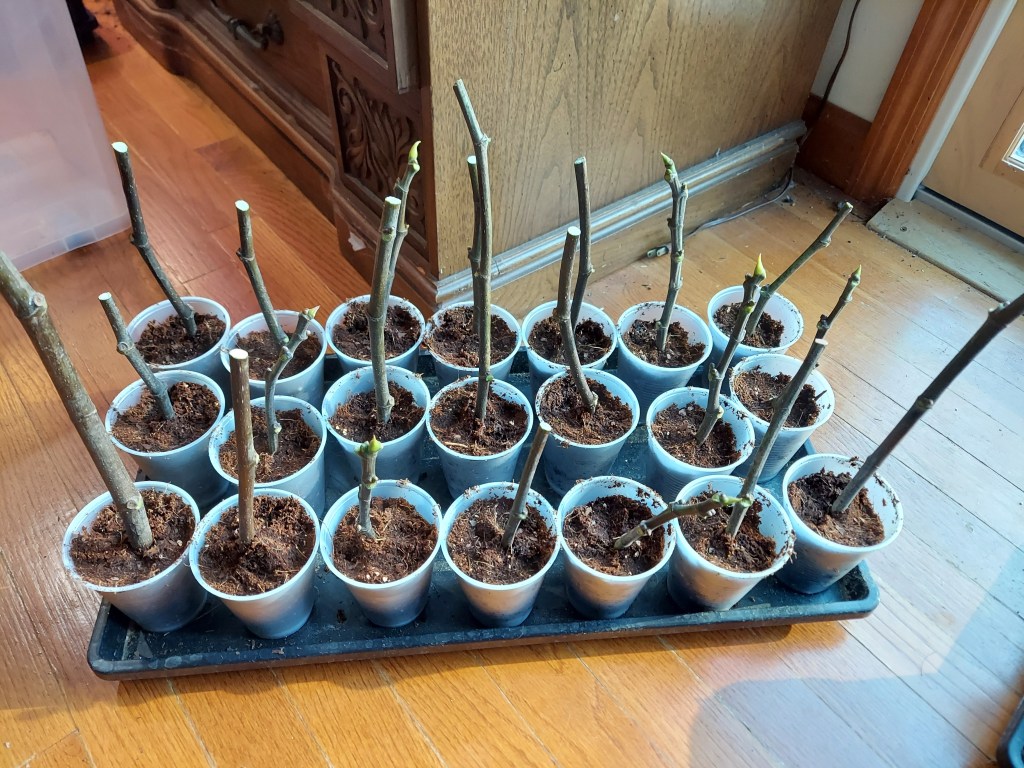
    I trimmed the long branches down into smaller pieces, each roughly 6-8 inches long and containing 2 or more growth nodes. Each branch provided several useable cuttings. I ended up with 60 sticks to attempt to propagate.  I have had very good success this time around. 

    Full tray of cuttings stuck in soil.

    I’m curious if freshness and vigor were factors in the success, since these came off of trees that were still awake and producing figs.  All my previous attempts were from dormant trees over winter. Once each cutting was trimmed to a useable size, I put them in cups of coco coir mixed with pine bark fines. This combination will have good water retention and also drainage. These were sterile medium, no active microbial growth or fertilizer added. I wanted the sticks to focus on only root growth.

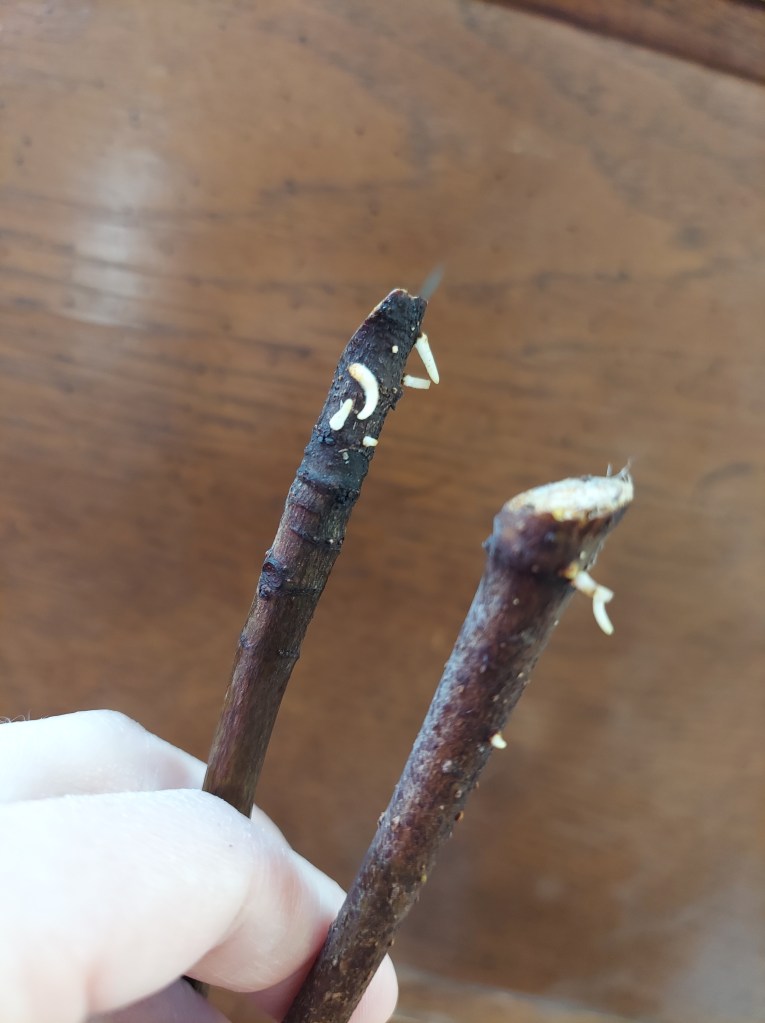
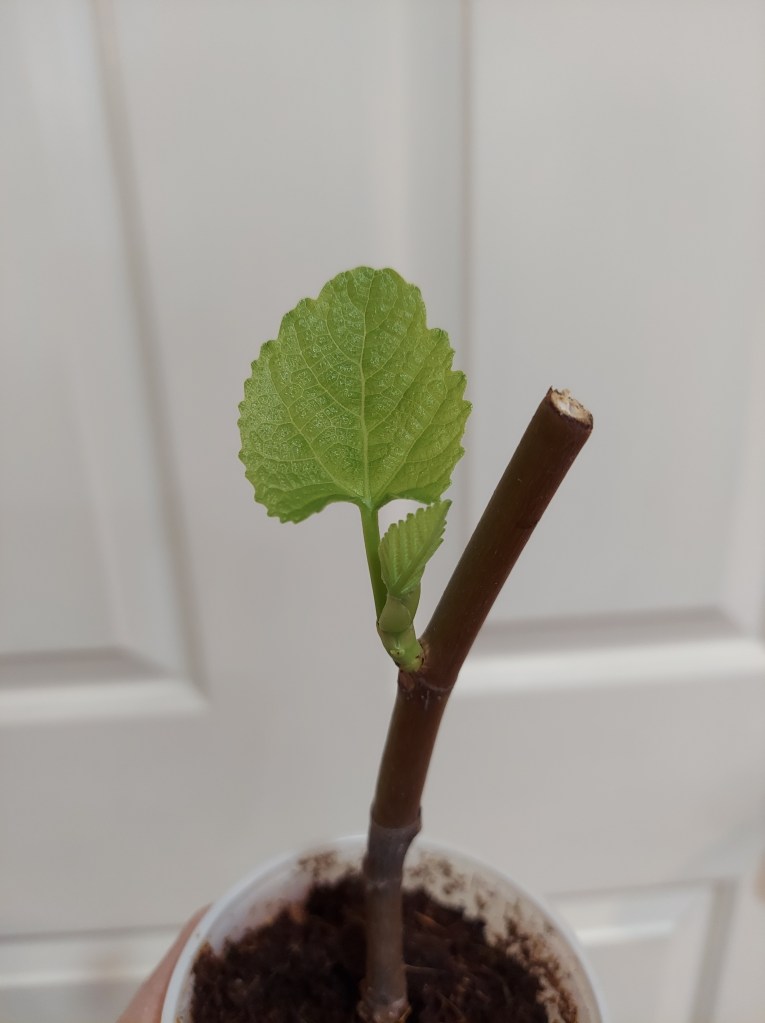
    Since I had so many free cuttings I decided to do an experiment. I put half of the cuttings in a tote with a lid to make a mini-greenhouse. The other half were left open to the air, but all the cuttings went on heat mats. About 20% more of the cuttings from the tote greenhouse rooted than those left in the open air, so perhaps the added humidity helped. Over half of the total cuttings rooted, 25 have roots and leafy growth and about 10 more have solid root development but no new green growth yet.

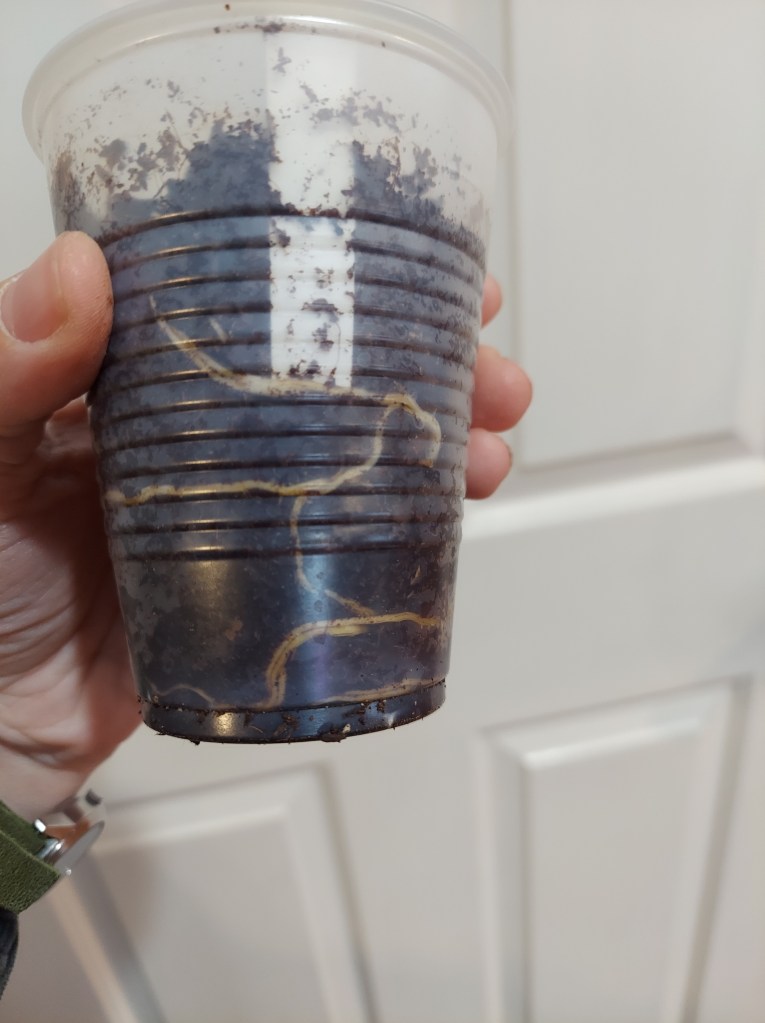
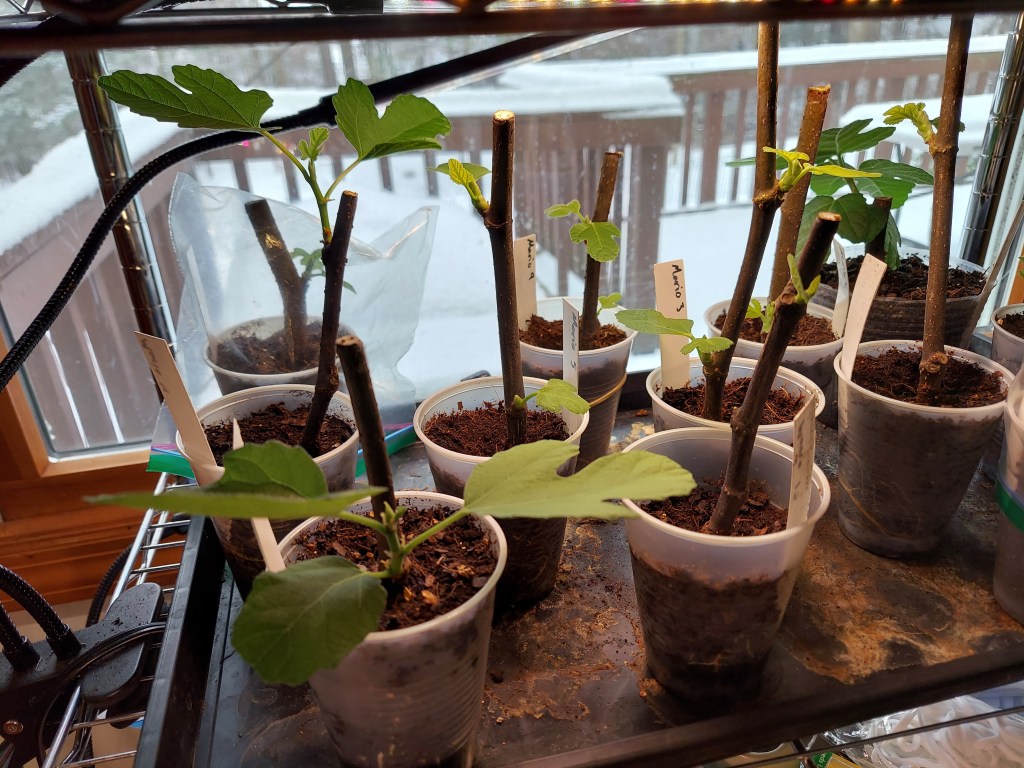
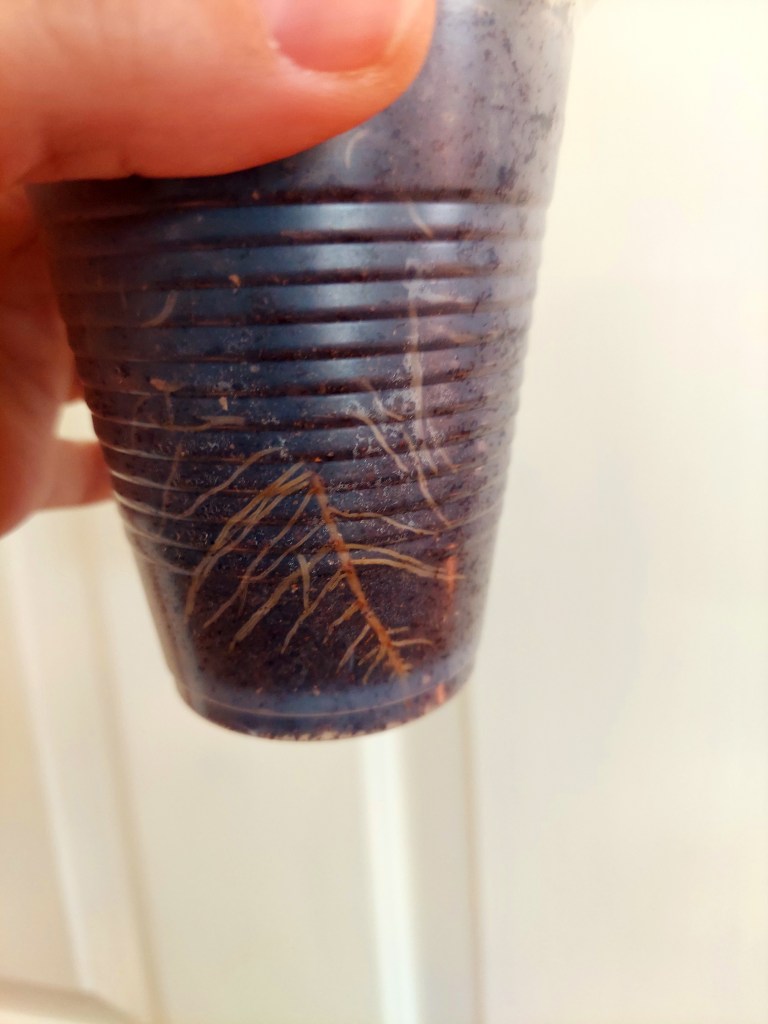
    I use clear plastic cups specifically so that I can see the roots developing. Sometimes fig cuttings start leafy growth before roots. If they wake up in this manner they often don’t survive, because they have no way to access water and nutrients. Sticks that do this end up pulling nutrients from the stem itself and then die when the leafy growth becomes unsustainable. I initially kept the totes in an upstairs hallway with very low light in an attempt to force the cuttings to focus on root growth.

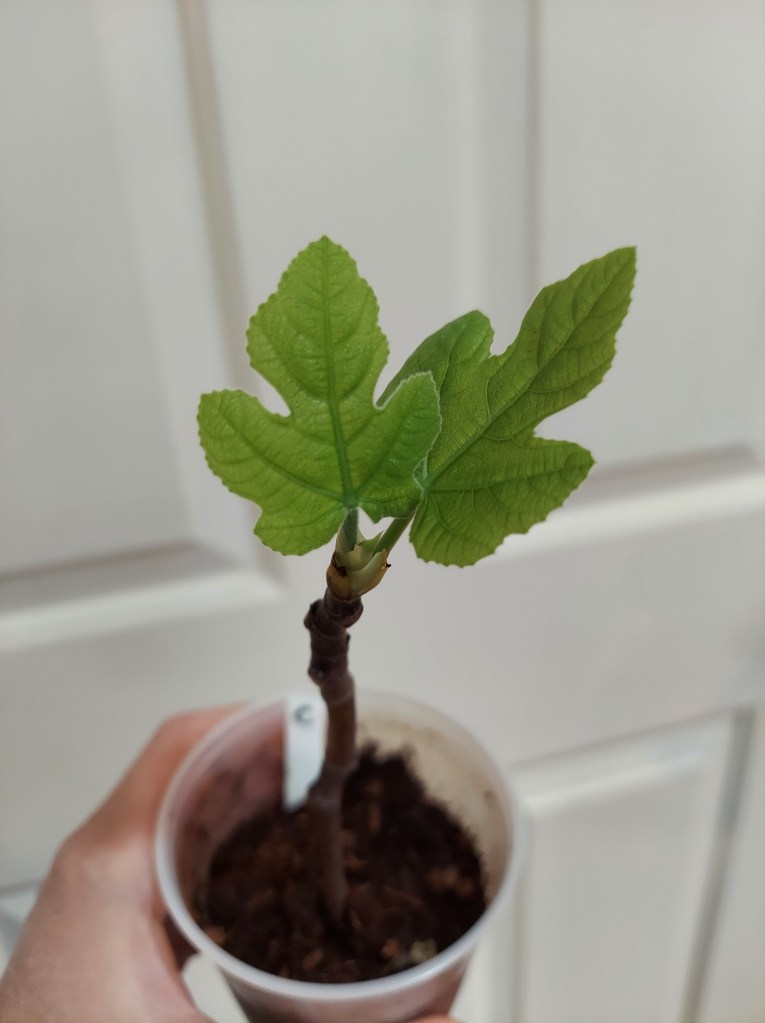
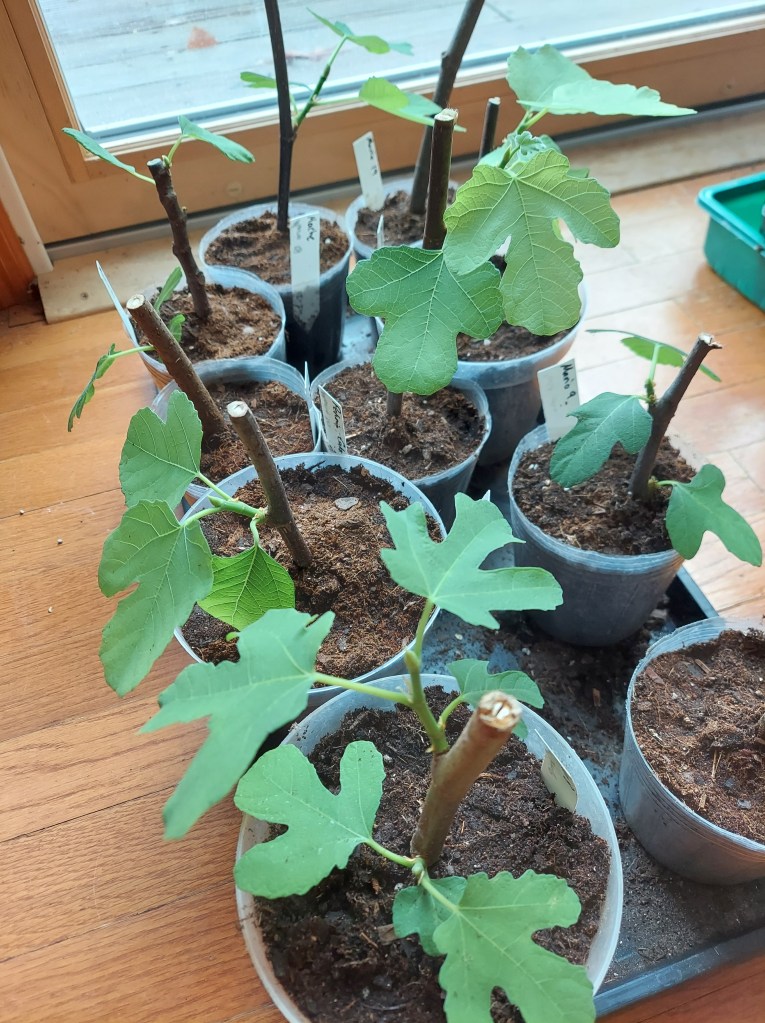
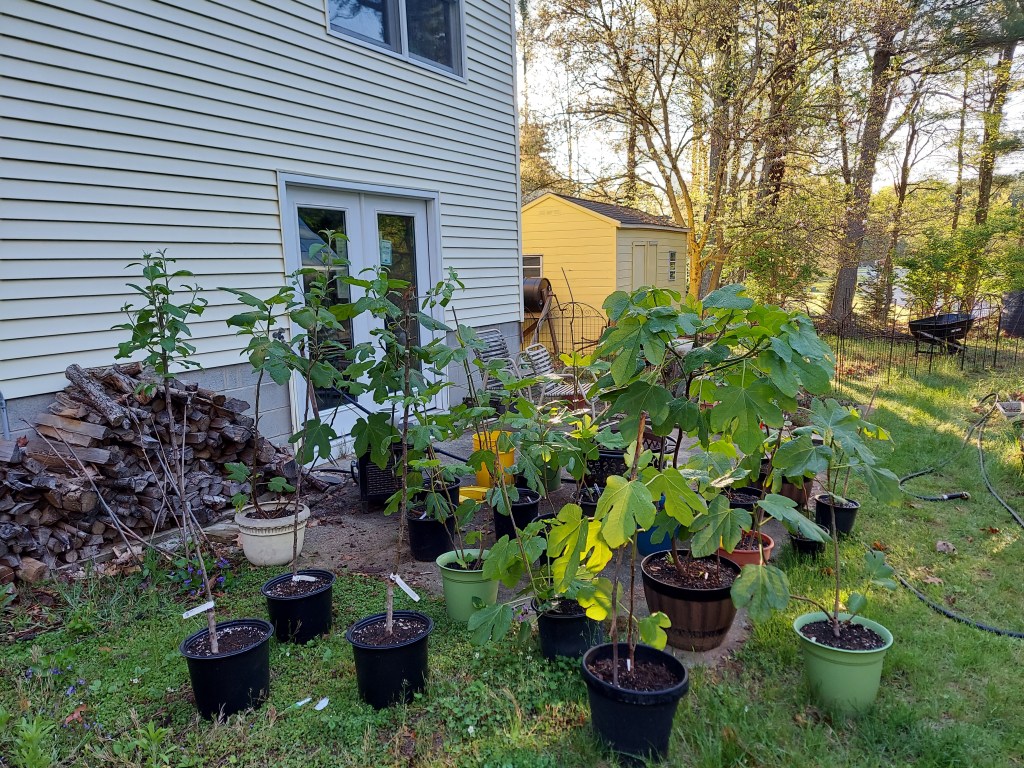
    Healthy cuttings, after being transplanted to slightly larger pots with actual nutrients. Old potting soil mixed with vermiculite, worm castings, and an all-purpose 3-3-3 veg fertilizer. The fun now is to balance keeping them alive while limiting growth. I don’t want to re-pot them too many times since it is winter, and I have limited indoor space. I currently have two trays full of happy, growing baby trees.

    No comments on 2024 Fig Propagation 1
  • Goals and Plans for 2025

    February 6, 2025
    Overview

    Looking ahead to the new gardening season, here are some of my hopes and ideas.

    1. Adding another raised bed to the garden, mostly likely to be used to protect my dahlias from the voles. I plan to put hardware cloth down on the bottom before filling the bed.
    2. I am currently propagating figs via cuttings and will be looking to sell them come spring. I have over 20 that successfully rooted so far, and have a second round in the works now. There may be three varieties available.
    3. I received a few free elderberry and black currant cuttings from a coworker in the fall. I planted them outside, and am hoping that they survived our strange winter. It has been mostly mild weather, but we had a streak of 4 days of non-stop wind and a few quite cold days. Not much snow overall.
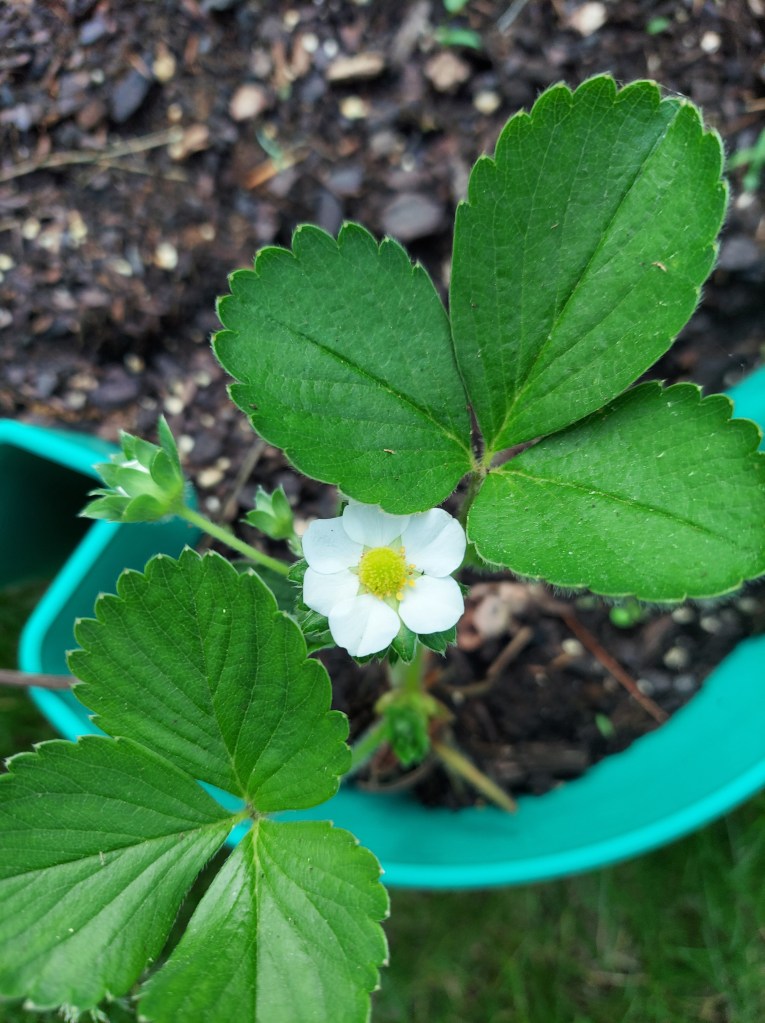
    4. I planted a bunch of strawberry runners from last year’s plants. This should allow me to increase my total number of plants (by up to 30%) and provide more berries for this season. I am currently battling spider mites on the plants.
    5. I purchased a Meyer’s lemon tree in the fall and it has spent the winter in the basement. Looking forward to potting it up and moving it to the greenhouse for the summer.
    6. My dahlia tubers are out in the garage in small boxes of coco coir. I will bring them inside in a couple months to re-pot them and wake them up from winter dormancy. Starting them indoors will give them a head start for the season.
    7. I plan to start pepper seeds earlier this year than last year. My plants were very slow to produce and I only got a few ripe peppers before frost. The plants were covered in tiny peppers and flowers in October.
    8. I plan to spread my small batch of homemade compost over the beds in late April/early May.
    9. I managed to grow a few small onions and leeks last year but want to improve my allium game. I do very well with garlic, but not any other types.
    10. I received a new dehydrator for Christmas with temperature and timing controls. I plan to put it to good use this season to preserve my harvests, especially herbs and dye flowers.

    Strawberry plant in the vertical tower from last season.

    No comments on Goals and Plans for 2025
  • Garden Musings for 2025

    February 3, 2025
    Overview

    Questions suggested by Huw Richards a UK gardener, (whom I support on Substack) during his end-of-the-year livestream chat

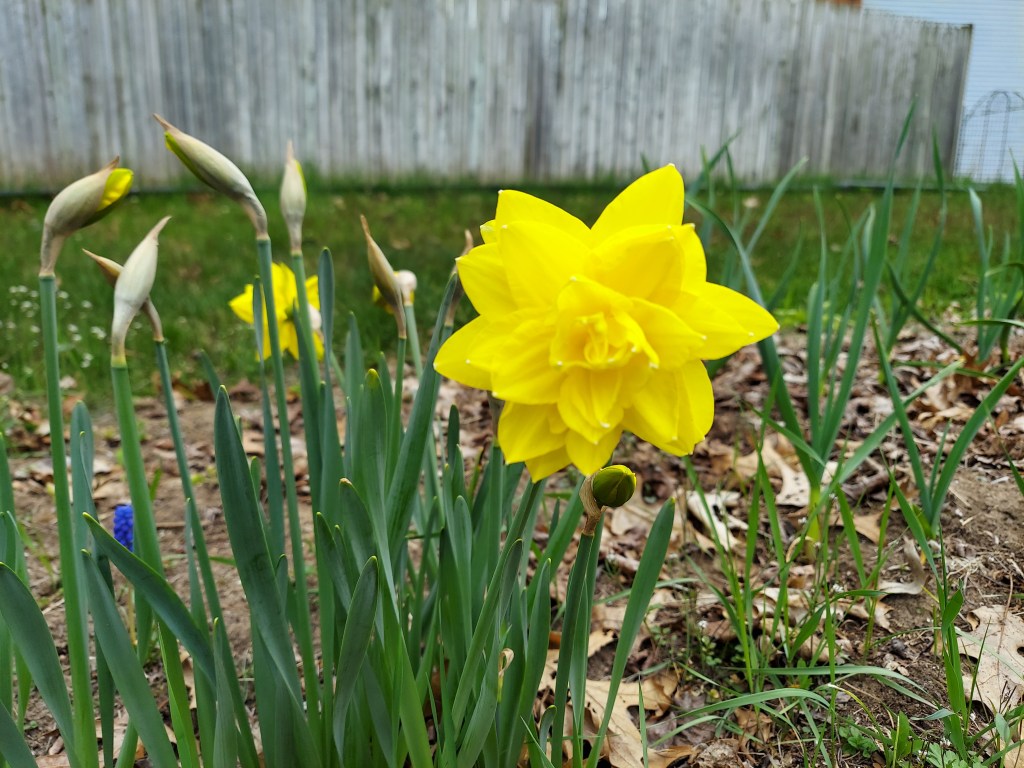
    Early daffodils from last spring, with garlic shoots off to the right

    1. What is one emotion you want to feel in the garden this year?
      • Curiosity/Enjoyment
    2. Define the primary yields you want to see from your garden.
      • Self-sufficient in salads
      • Dye flowers
    3. What is your greatest limiting factor?
      • Poor native soil, lack of compost
    4. What is one thing you wish you had grown last year?
      • Spinach
    5. What is something new you want to grow this year?
      • Corn
    6. What is something you do every year in your garden that you would rather not do? A habit that is not helpful?
      • Using plastic weed mesh along the neighbor’s fence line. It never works well enough to stop weeds, and just gets matted as the weeds grow through it.
    7. What are your 10 absolute must grow annuals for next year?
      • tomatoes
      • peppers
      • sunflowers
      • cosmos
      • calendula
      • squash
      • basil
      • leafy greens
      • beans
      • cucumbers
    8. What is one gardening book that you could read between now and March?
      • The Five Minute Gardener by Nicole Burke
      • Epic Homesteading by Kevin Espiritu
      • The Permaculture Garden by Huw Richards
        • I read a lot, can’t pick just one!
    9. What is one gardening skill you would like to master in 2025?
      • Mulching the beds with grass clippings/straw for moisture retention and to help with weeds
    10. What is a pledge that you can make to share with your community?
      • blog about my experience
      • share extra produce with family and friends

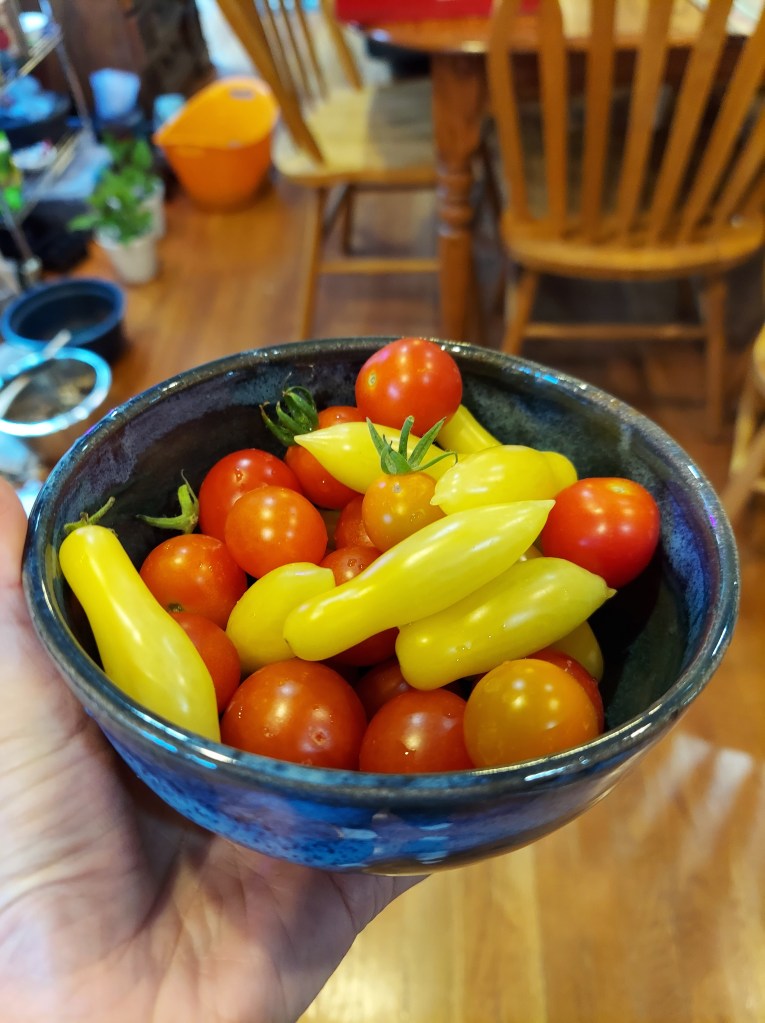
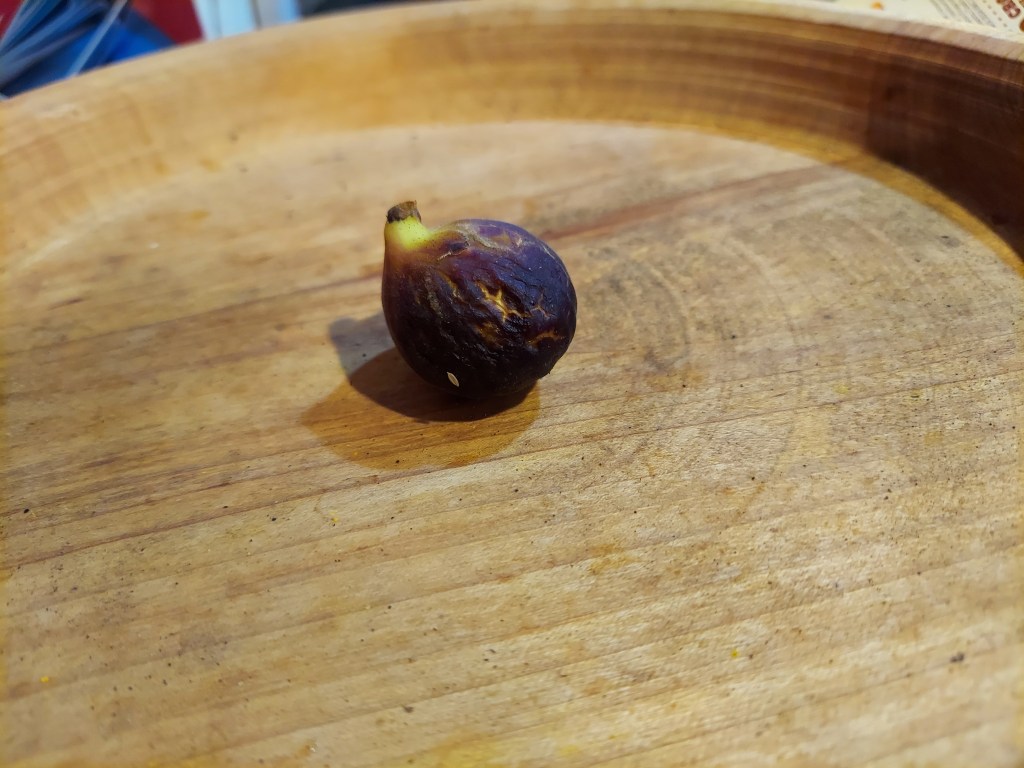
    A nice variety of cherry tomatoes from the greenhouse last year

    No comments on Garden Musings for 2025
  • Accidental Fig Orchard

    February 1, 2025
    Figs

    I didn’t set out to have a fig orchard when I first started gardening, and don’t even know if I had ever had a fresh fig before growing my own. Now, 4 years later I’m obsessed with them, and I own 7 different varieties.

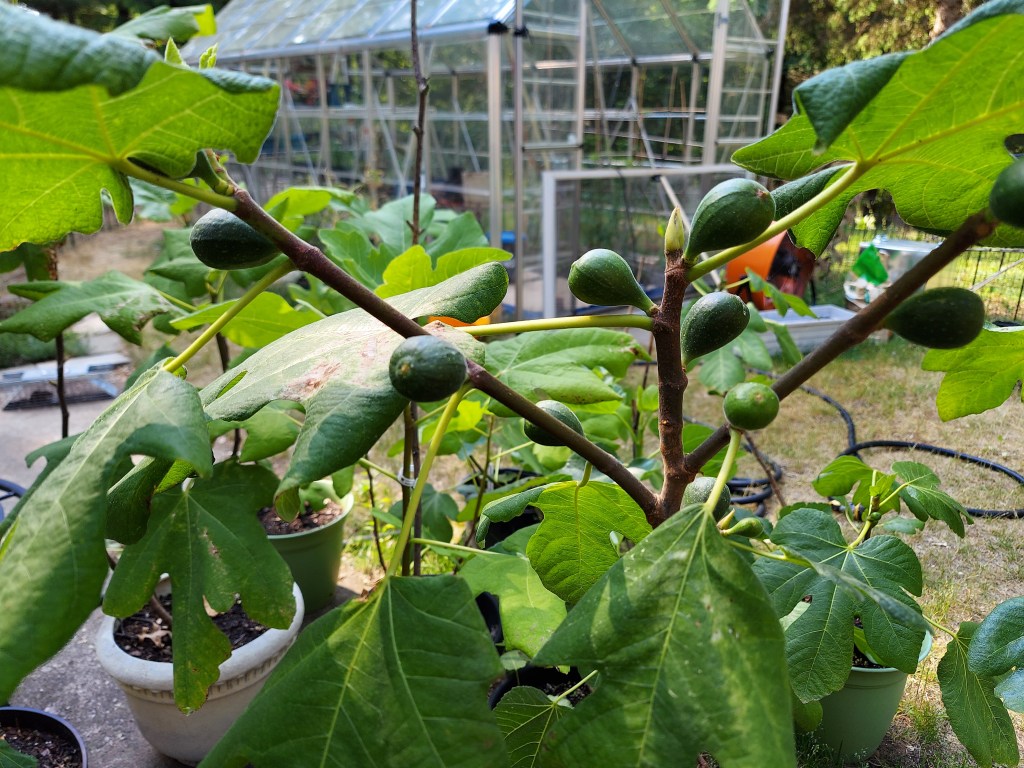
    I received my first two small fig trees in 2021, they were free gifts from friends who had more than they could fit into their orchard.  This became my introduction to the world of fruit trees and discovering that I love fig trees.  I transplanted those two trees into larger pots, and I still have them today, in half whisky style planters. 

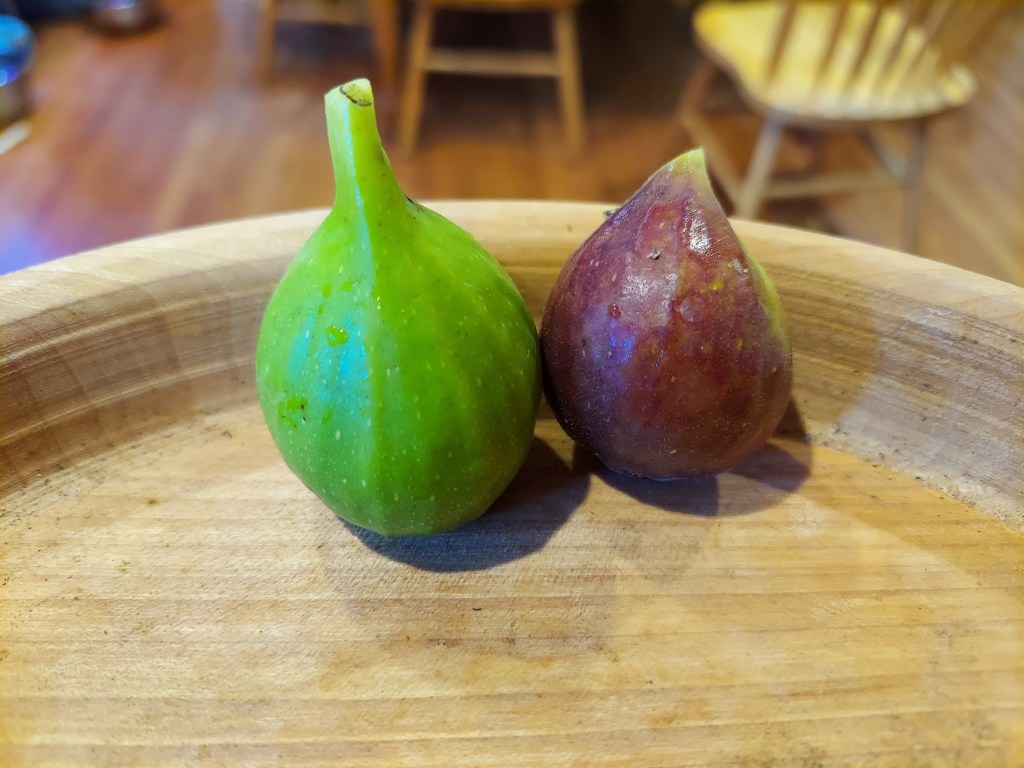
    I purchased my first fig cuttings in 2022 after doing some research both via youtube and gardening blogs.  Figs appeared to be easy to propagate via cuttings (sticks).  That spring I purchased 30 cuttings of two varieties (Green Ischia and Chicago hardy) from an online seller.  When they arrived I had 40 total cuttings and I got lucky with how well the rooting process went.  I ended up with over 50% success rate, and all of a sudden I had a lot of fig trees.  Once they had established roots I potted them into a variety of mismatched pots so they could keep growing.  My first fig harvest came in November of that year, after I had moved the young trees into the basement for the winter.  The first figs to ripen were Green Ischia, which taste like strawberries, very sweet and light.

    First ripe fruit: green Ischia on the left, Chicago on the right

    Thus began my obsession with fig trees. The leaves are gorgeous and can get to be quite massive. I’ve also recently learned that they make nice prints when hammered onto fabric, so I definitely want to try that out later this year. When the trees awaken from dormancy or new cuttings start to grow, the first tiny leaves are so amazing to watch unfurl. Figs put on a lot of growth in one year and can get quite large if planted in the ground.

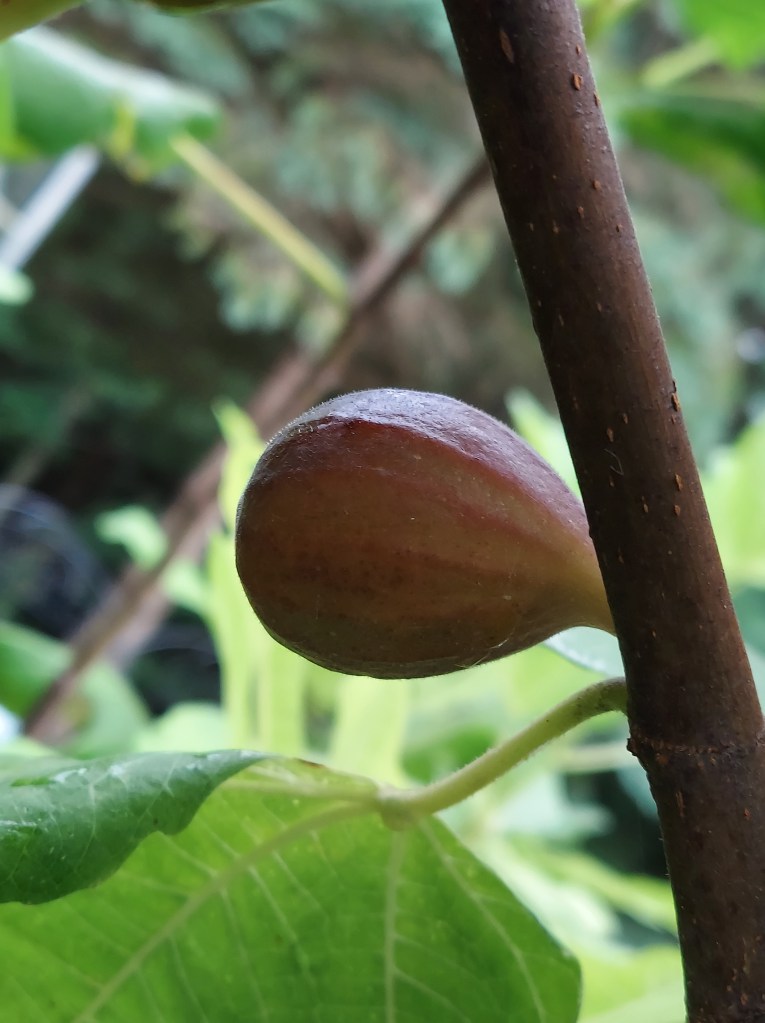
    The original Chicago trees were very productive in their second year.

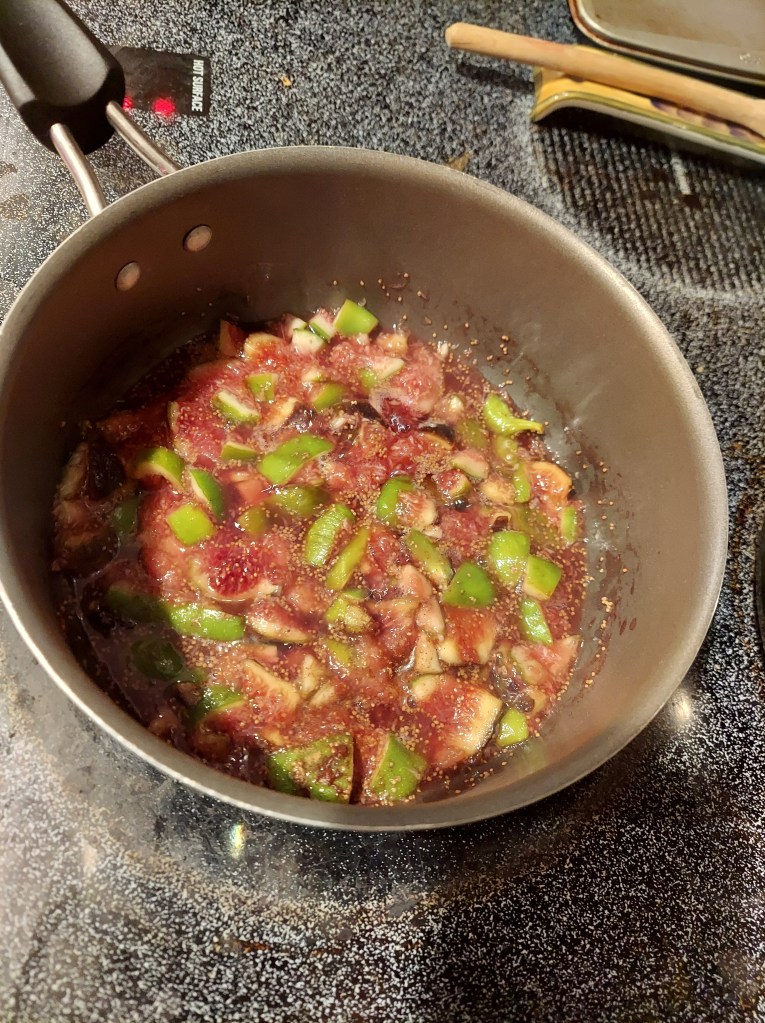
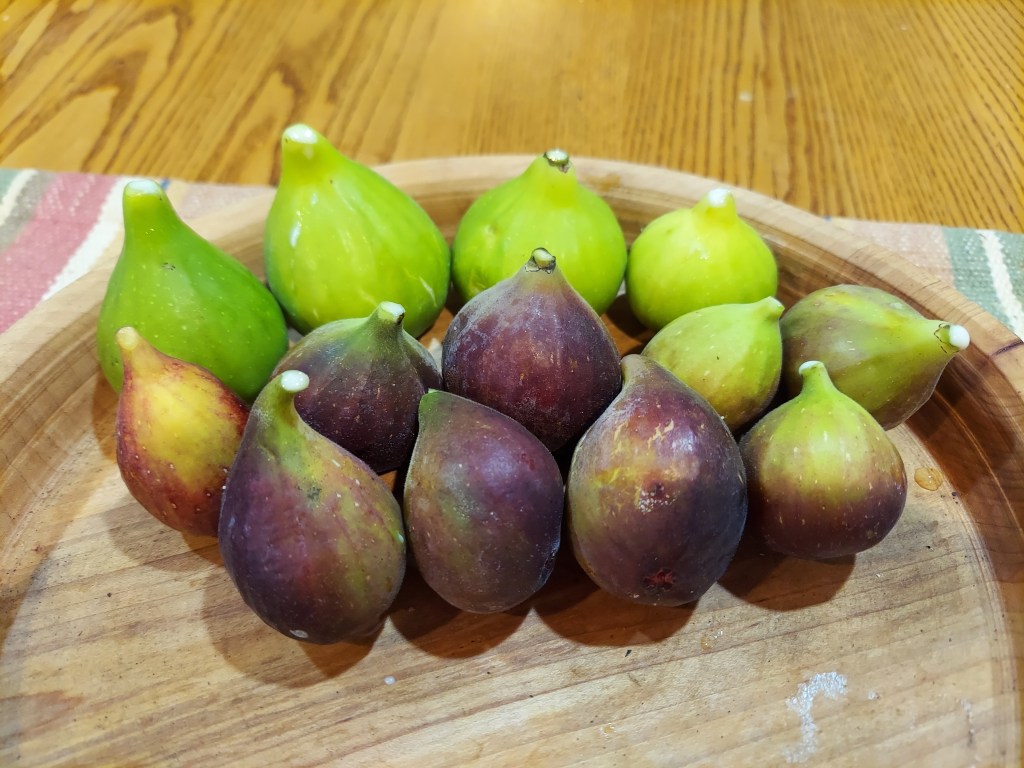
    In 2023 the one-year-old trees came into their own and I harvested 103 figs off of my 20 container figs.  Several of the trees did not produce that season, either from lack of nutrients or just taking too long in the year to reach maturity.  I made a couple of batches of fig jam. I used half of it on homemade English muffin bread toast and turned the other half into homemade fig newton bars.  I ate many of them fresh, since they mostly ripened just a few at one time.  I also shared some with friends.

    Cooking both types of figs down to make jam.

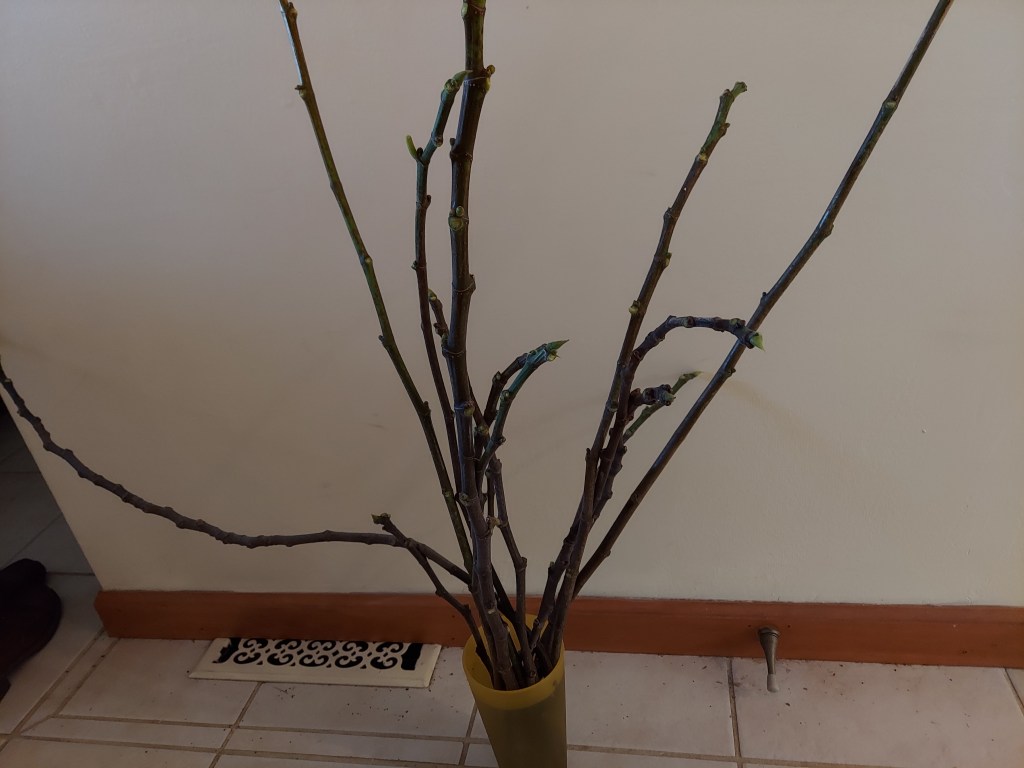
    2024 was a tougher year for figs for two reasons. Firstly, my two attempts at propagation from cuttings completely failed.  I had meant to take some of my own cuttings but the trees started waking up in the basement in February, far earlier than I expected.  I had missed my window for taking cuttings since all the tips were leafing out.  So I moved them down towards the back door and the grow lights.  I did purchase some cuttings online, 2 different varieties from the ones I owned, and only 1 of 15 successfully rooted. 

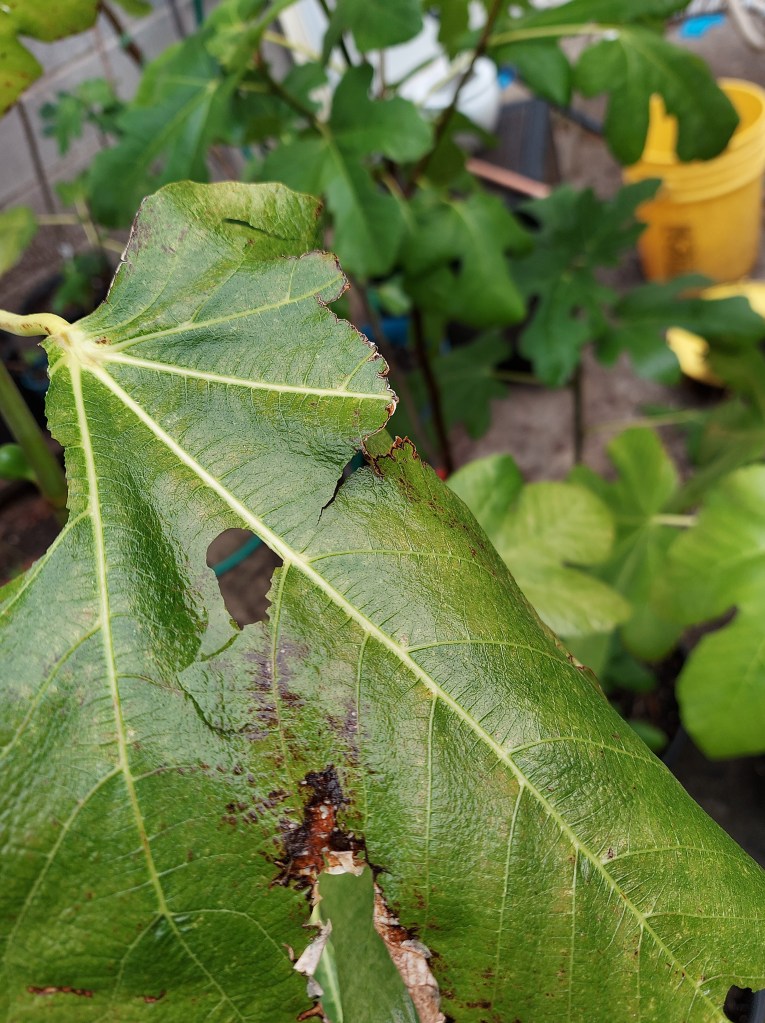
    The second reason happened when we moved them outside.  The trees had put on significant growth by early spring, so my dad and I moved the trees out of the basement on a warm day in early May.  However, we did not harden them off and they suffered when we had an unusually hot sunny stretch.  The new leaves were all sunburned and started to drop, then to add insult to injury we had a freak brief hail storm and the remaining leaves got punctured and pounded.  About 90% of the new growth died and the trees were down to just bare stems and branches.  All of the trees survived, and put on more leafy growth, but I lost out on an entire growing season.  I only got 2 ripe figs, one of each variety. 

    Damaged fig leaf, showing both sunburn and hail damage

    I have learned from my mistakes and will be implementing some changes to better protect the trees from the sun and to provide more nutrients to the roots, by setting up a fertilizing schedule. Since they are in pots they have very limited soil, but are heavy feeders because they put on large amounts of growth over each season. I will be more intentional about providing them with the nutrients they need in order to hope for better fruit production.

    My largest single day harvests from 2023.

    No comments on Accidental Fig Orchard
  • 2024 Garden in Review

    January 29, 2025
    Overview

    2024 was a challenging year for gardeners worldwide, and since I had some time off at the end of the year I decided to reflect on the successes and failures. Here in NY the toughest environmental challenges were pests and lack of rainfall.  Last winter was very mild, with barely any snow, and I think that led to an increase in pest pressure.  I had to water a lot more than in previous years, and my sandy soil was a detriment to moisture retention. Some plants thrived and were very productive but many struggled.

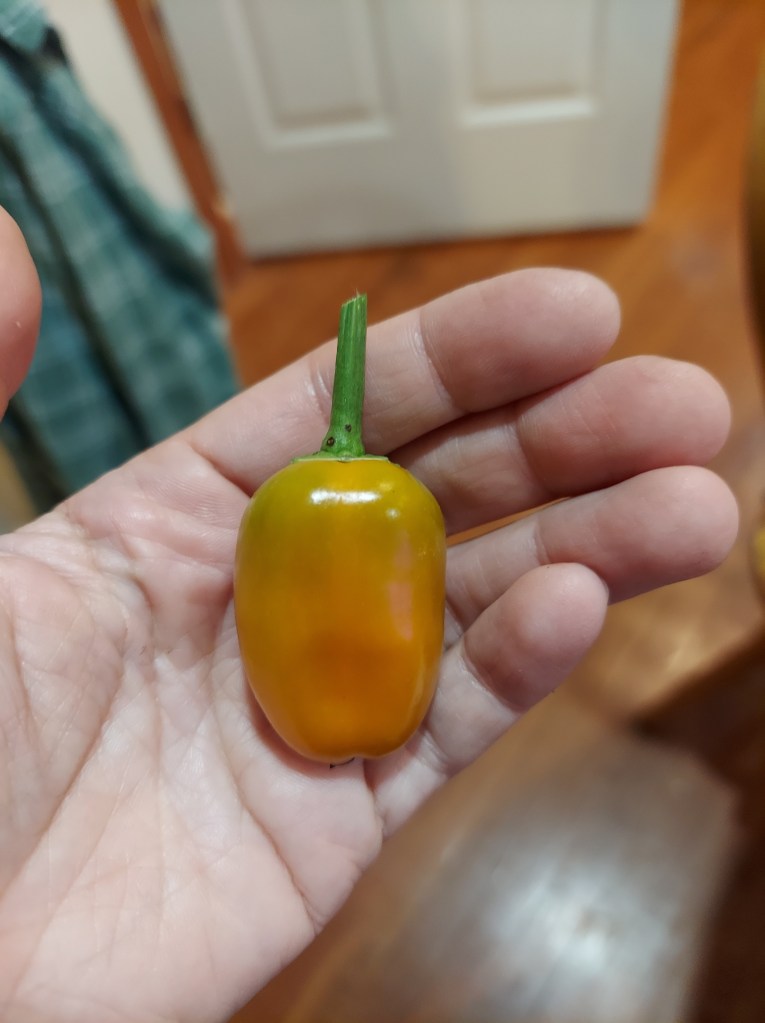
    My only ripe snacking sized pepper of the season

    Pests 

    Problems: 

    1. I saw slugs and snails everywhere, and I tried several different deterrent methods which were only partially successful.  
    2. Voles ate a couple of my dahlia tubers and tunneled under and killed my butterfly bush.  They also burrowed under and killed about a dozen heads of garlic.  
    3. We caught and released many chipmunks, but they ate some of my tomatoes.  
    4. Rabbits and slugs ate two rounds of climbing bean sprouts, so that delayed harvests.  
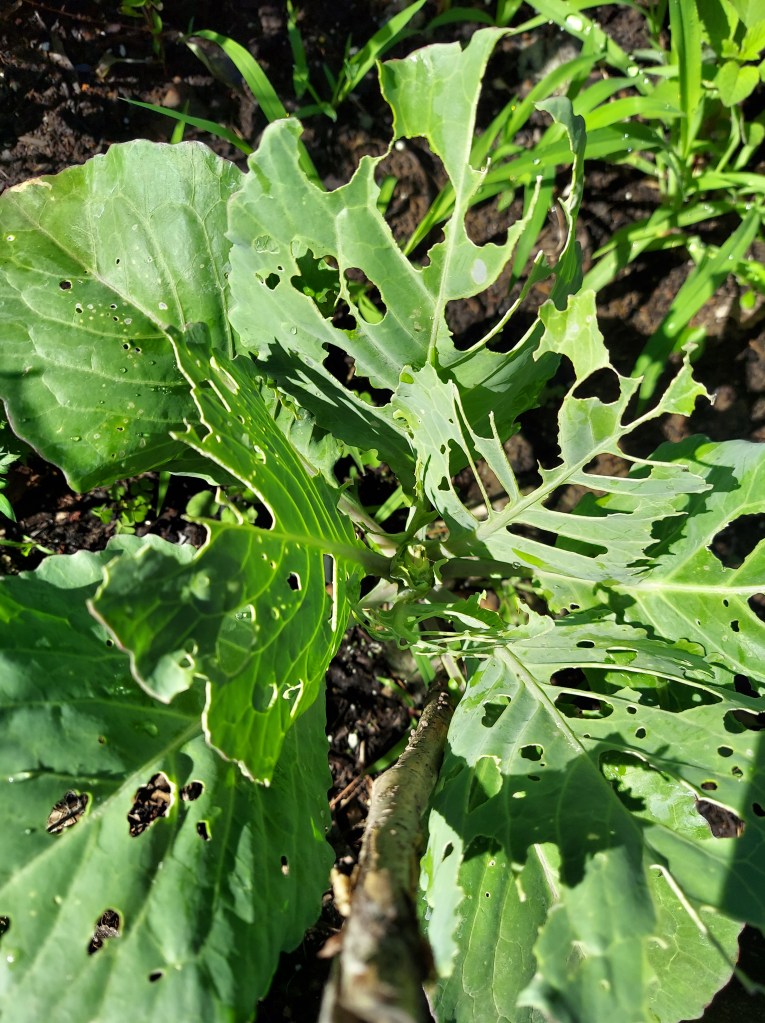
    5. Caterpillars on brassica plants and apple trees cause significant damage.

    Lessons learned:

    1. Beer traps for slugs are more trouble than they are worth in my opinion.  Wool wrapped around plant stems worked better for me.  I also used plant covers/domes to protect young plants from the critters.  Whenever I saw snails and slugs I killed them.
    2. Dahlias will produce when grown in pots.  This was my first year growing them so I wasn’t sure.  I dug them out of the ground as an emergency measure (one of which was almost blooming) to save the remainder from being eaten.  I got a few very pretty flowers once I moved the pots to the greenhouse.
    3. I started using mesh bags to cover the clusters of tomatoes while they were still green. This helped protect from chipmunks and slugs.
    4. I purchased a mole sonic spike in the hopes that it will protect my garlic crop from the voles, especially over winter.
    5. We chased a bunch of baby rabbits out of the garden, since they were small enough to fit through the chain link fence.  One remained inside, and moved in beneath our deck, where we couldn’t reach it.  It became a nuisance once it was too big to get itself out of the garden.
    6. I need to be more active in preventing pest infestations.  Next season I plan to check the apple trees and brassicas more often for pests.  One apple tree had severe caterpillar damage before we noticed it and sprayed it.  Hopefully the tree survives, but it will be set back because 80% of its leaves were eaten.  I lost a few brassica plants entirely to cabbage white caterpillars when I was away camping for a week.

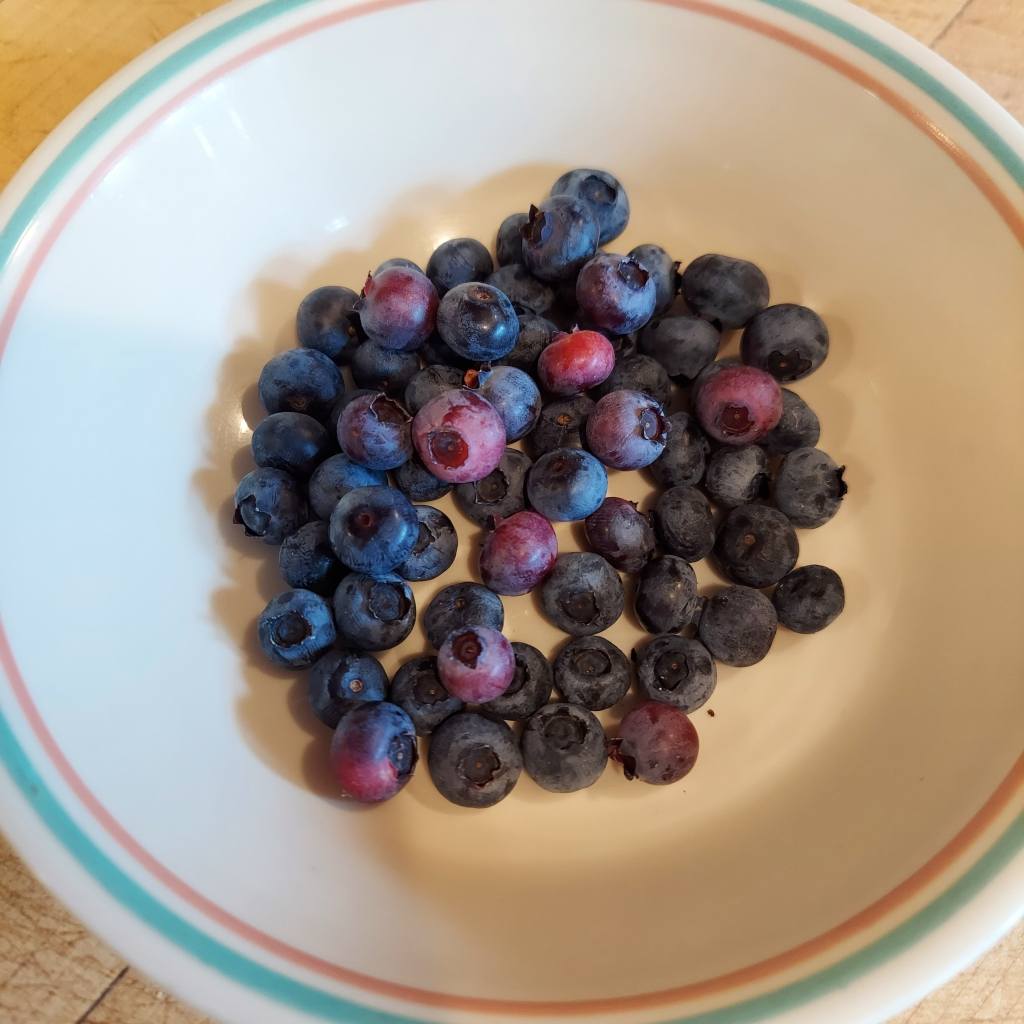
    A blueberry harvest from the potted plants

    Productivity

    Problems

    1. My squash plants barely produced anything before dying off.  The only winter squash I harvested grew itself from the compost pile.
    2. I sunburned my container figs and cost myself an entire growing season.
    3. I did not weed the herb bed and it was completely overrun by grass and chocolate mint. 
    4. I only had a couple of very small indigo plants, which did not provide very many leaves for dye.  I did manage a couple of hammered leaf towels from the handful of leaves that I got from each plant.

    One of only 2 figs I harvested last year

    Lessons learned: 

    1. The compost pile grew a ton of tomato plants, which I allowed to grow.  Free produce from an out of the way corner.
    2. Next season I will harden off the fig trees and provide shade cloth once they are ready to be moved outdoors in order to combat the chance of sunburning the leaves.
    3. I want to start more seeds than I have space for so that I can fill gaps or have succession crops ready to go after I harvest.  I have homesaved indigo seeds from 2 years ago that I will be using to see if it grows better than freshly purchased seeds.
    4. I need to stay on top of weeds, in the late fall I started to fix up the herb bed and planted a few more perennials to fill in some of the gaps.  Coreopsis, sage, lavender, chives, delphinium, and thyme were all added.

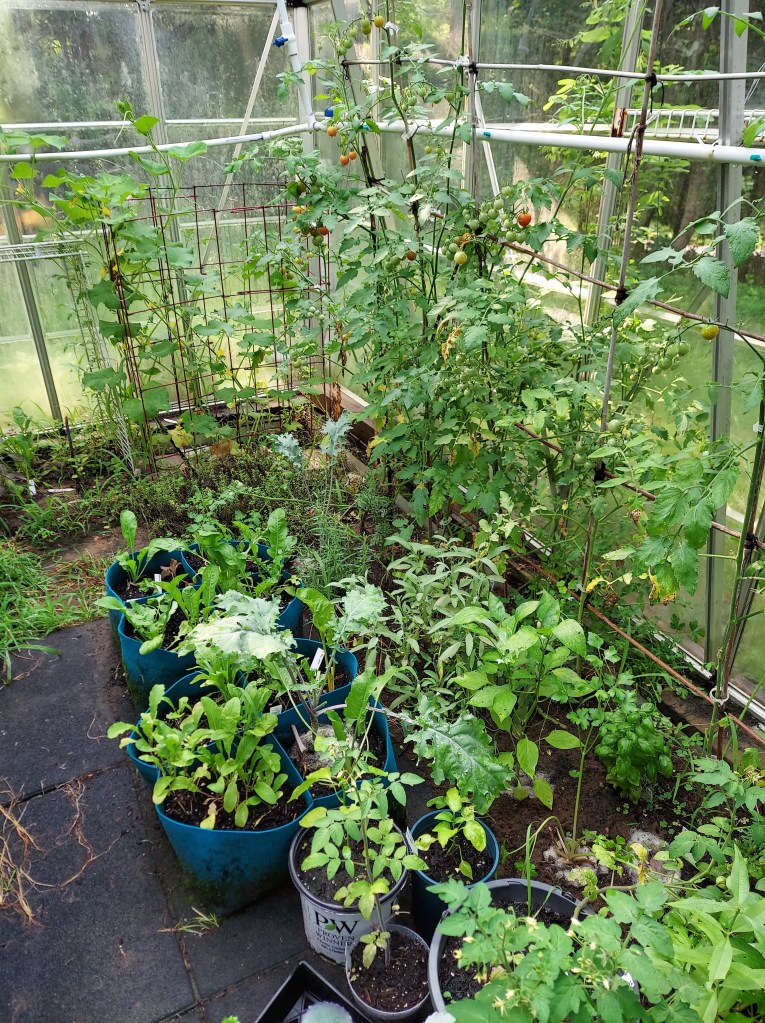
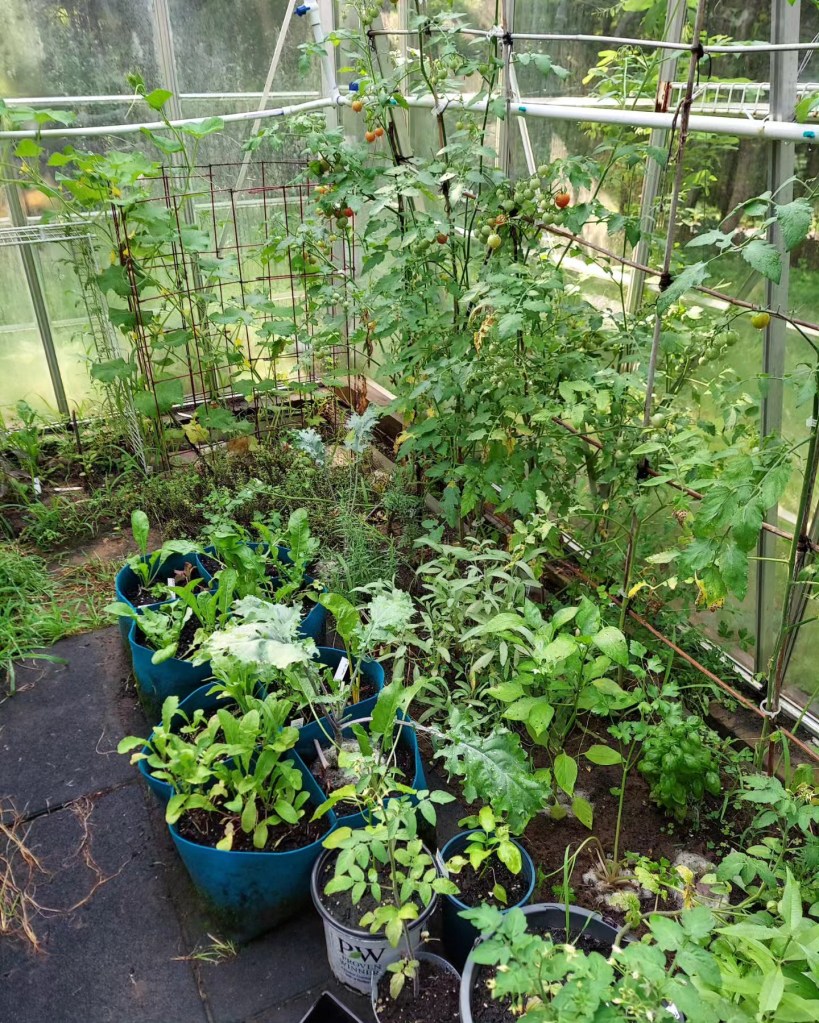
    Greenhouse jungle, in the height of summer

    Garden Successes

    1. Tomatoes and pole beans were prolific last year.  I grew multiple varieties and once they got going they did really well.  I made tons of pasta sauce and blanched and froze a lot of beans.
    2. Herbs: I was successful with herbs such as oregano, thyme, basil, chamomile, lavender, sage, and lemon balm.  The lemon verbena and rosemary were less productive, but I still got a few harvests.
    3. I added a very large gardening bed in May which allowed for a lot more growing space. I threw a lot of plants in it but didn’t necessarily put them with the best spacing in mind.
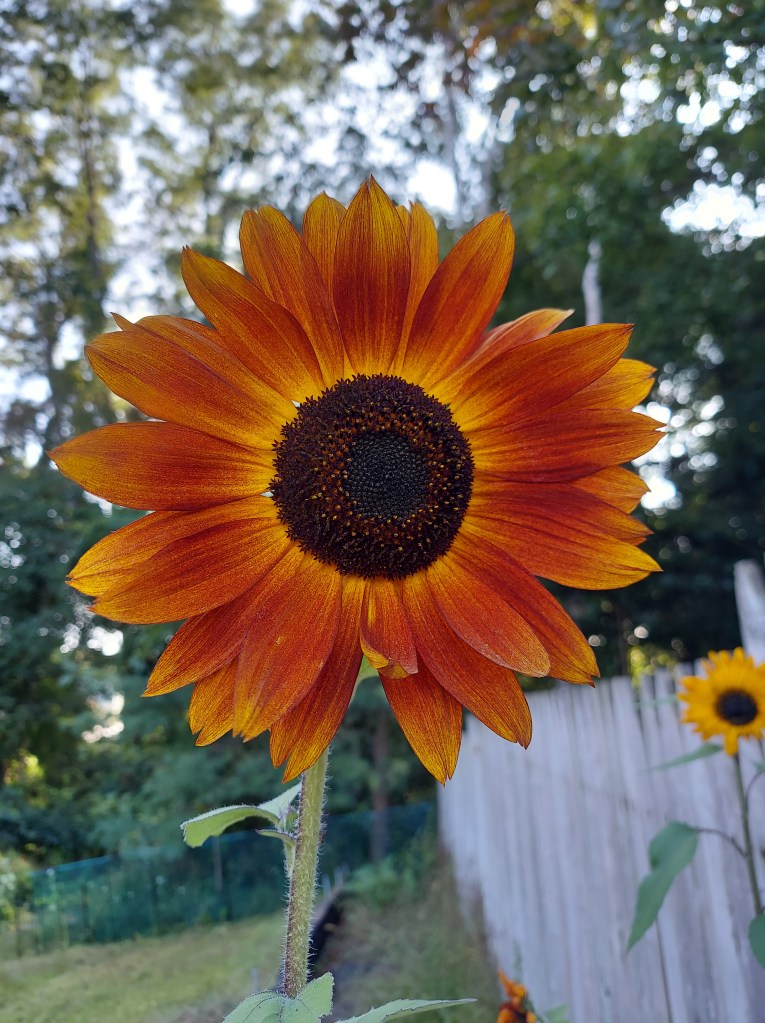
    4. The sunflowers were gorgeous and a couple of them were huge.  Very satisfying to look out and see them towering over the garden.
    5. The blueberry plants are finally in the ground, so I’m looking forward to better growth and productivity going forward.
    6. Straw mulch on one raised bed helped preserve some of the moisture in our sandy soil, and also in the potted figs.  Helped to keep down weeds as well.
    7. Grew strawberries for the first time in a vertical tower planter.  They were a fun success.
    8. Carrots finally worked out for me.  I grew both orange and yellow and got some nice big ones.
    9. Grew a ton of marigolds, harvested and dried several different colors for future dye projects.  Moderately successful with growing and harvesting cosmos flowers.
    10. Even with the voles, my garlic patch was a success, and the new batch went in the ground in mid-October.
    11. Self-sown chamomile allowed me to get a huge harvest, enough to make a couple of different tea blends. I’ve learned that sometimes it’s a good idea to leave “free” plants to get in some bonus harvests.
    12. Grew my first ever watermelon, and 2 tiny cantaloupe melons.
    13. Saved a nice variety of seeds from the garden, mostly beans and flowers.  About half of the garlic I planted was from homegrown heads.
    14. Purchased 3 pear trees and planted them in the garden.
    15. I made my second ever batch of slow compost, and have a very large pile going for next year.  I do a combination of bokashi fermentation for the kitchen scraps and a throw everything else in a pile and forget it for a year method.  Garden waste, grass clippings, small branches, and fall leaves mostly, with a tote of chicken manure from my sister’s chickens.
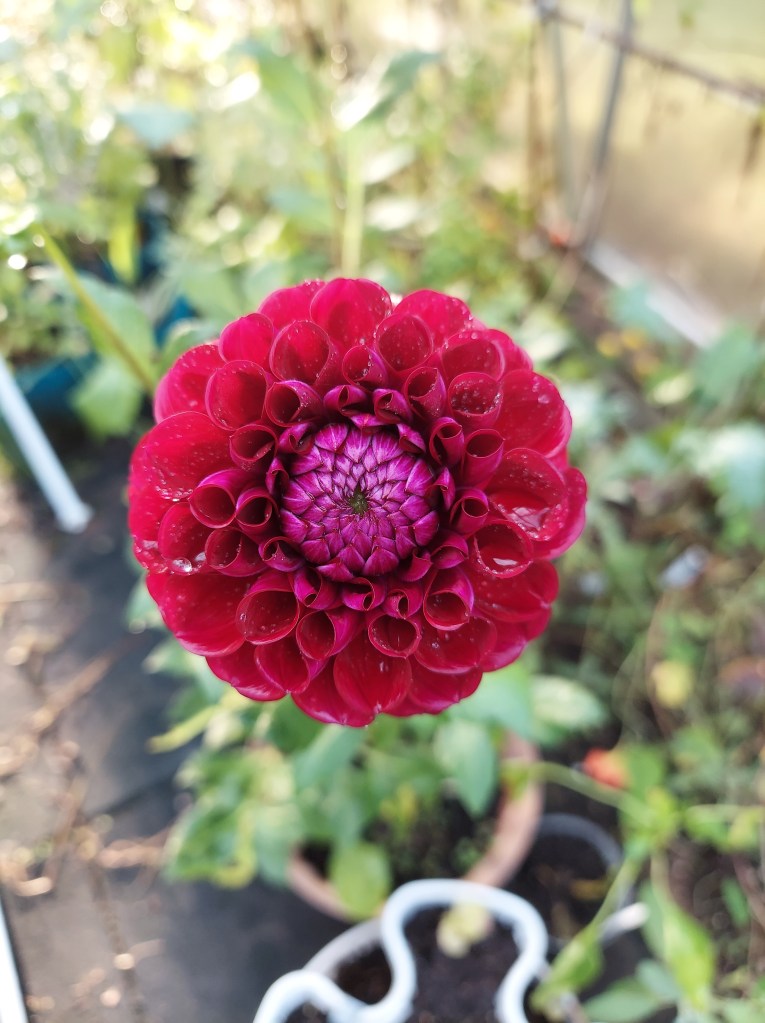
    16. Dahlia flowers are gorgeous.  This was the first year I’ve ever had cut flowers on the kitchen table as a decoration.  Sunflower, zinnia, and nasturtiums were also included.
    17. We dug up and divided the canna lilies to overwinter in the basement, and ended up with 19 pots, some with multiple bulbs.
    18. I grew enough calendula to collect and infuse in oil for herbal salves and balms.
    19. I planted one Chicago Fig in the ground to see if it survives the winter.
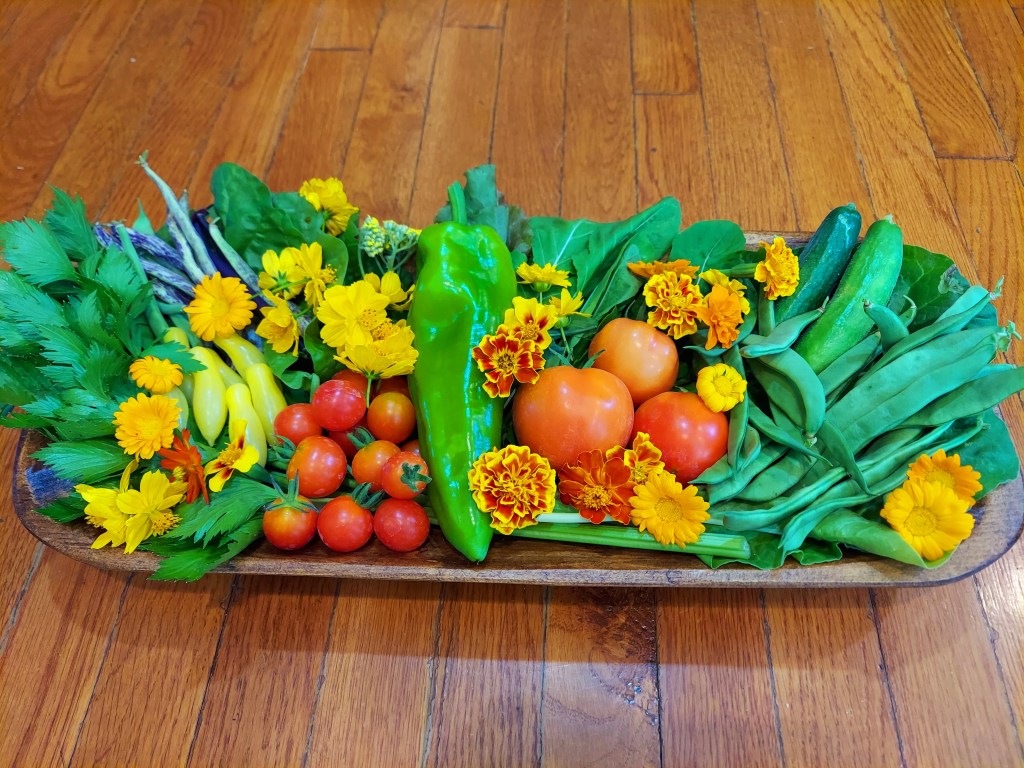
    20. I grew a total of 139 pounds of produce last year. 50 pounds of that was tomatoes!
    Looking forward to more of these types of harvests!

    No comments on 2024 Garden in Review
  • Introduction

    January 27, 2025
    Overview

    As I enter my 6th season of gardening, I thought it might be fun to track the growing season through more than just random Instagram photos.  I have been a hobby gardener since the pandemic lockdown of 2020.  I live in upstate New York and my native soil is straight up sand from a former glacial river valley.  This provides benefits and challenges: it drains well but dries out quickly and it does not contain enough nutrients for annual plants.  I have an 8×20 foot greenhouse and use a combination of in-ground, raised bed, and container gardening spread across my backyard.  I also make extensive use of my basement for overwintering frost tender plants like fig and citrus trees, and canna lilies.  I have grow lights, heat mats, and shelving units for seed starting indoors. 

    Over the years I have converted more and more of the backyard from grass into garden beds.  We had a few trees removed from the backline of the property last spring and this has increased the sun exposure for the garden.  I have a container fig tree orchard; they live on the back patio during the summer months.  Two years ago, I planted 3 apple trees, and this past year I added 3 pear trees. I enjoy propagating figs and houseplants by cuttings, so those projects will be shared as well. I grow many herbs for homemade teas and herbal infused oils, and I also grow flowers for use as natural dye and printing on fabric.

    Greenhouse

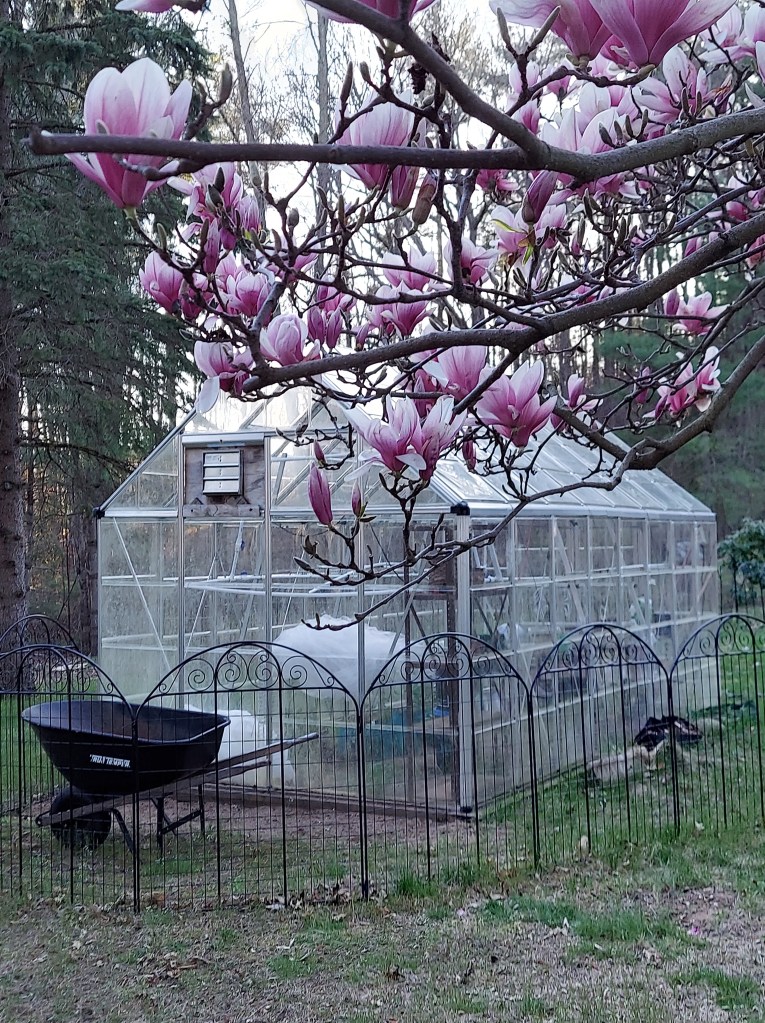
    We may be in the depths of winter right now, but I am looking forward to this year’s growing season and am already taking steps to start off the season. I can’t wait to fill up the greenhouse with seedlings in the spring, and each year I look forward to seeing the magnolia tree in full bloom.

    I see my garden as a place to grow food as well as flowers. I like to use it as a way to slow down and enjoy being outside; as a space to walk, observe the plants, and see what pollinators might be around. I want my garden to be both productive and relaxing.

    I will be utilizing this space to showcase garden successes and failures, plant propagation, natural dye projects, dehydrating/processing harvests, and home made herbal remedies.

    No comments on Introduction
Previous Page
1 2 3

Blog at WordPress.com.

Greenhouse Haven

Growing Veg, Figs, and Flowers

    • About
 

Loading Comments...
 

    • Subscribe Subscribed
      • Greenhouse Haven
      • Already have a WordPress.com account? Log in now.
      • Greenhouse Haven
      • Subscribe Subscribed
      • Sign up
      • Log in
      • Report this content
      • View site in Reader
      • Manage subscriptions
      • Collapse this bar