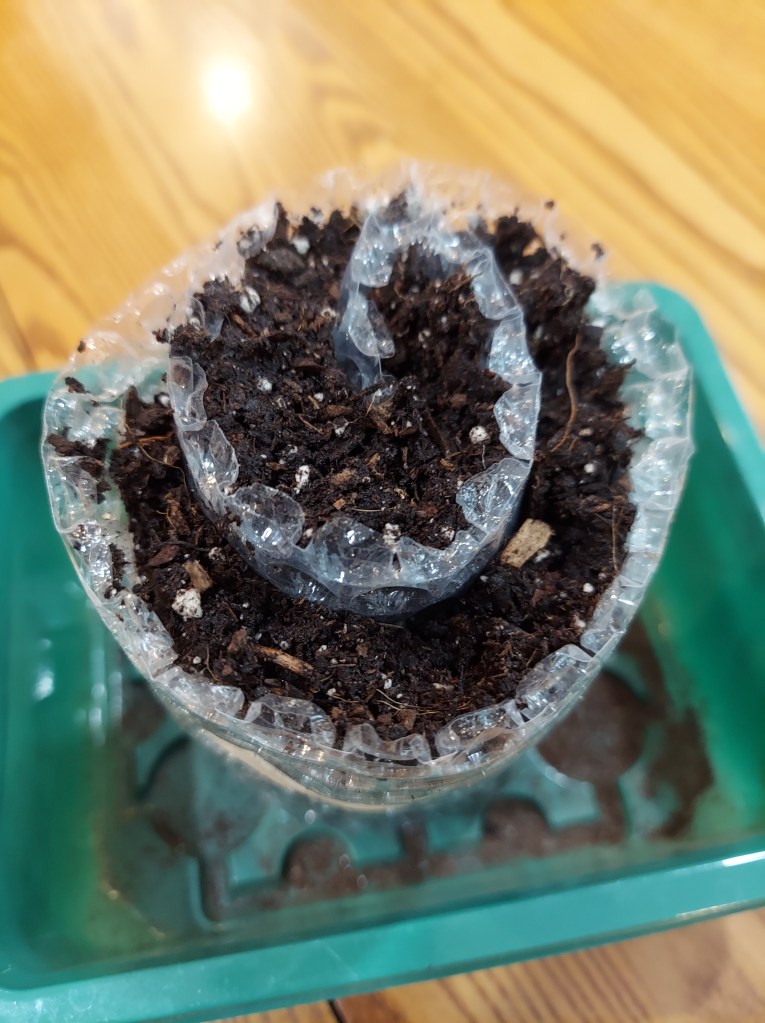
In mid-February I decided to try a new method of seed starting that I had seen on the internet. The new method is called a “seed snail” and is basically a rolled up bundle of potting mix with seeds. It is supposed to save on space when starting seeds, and also be beneficial for root development because it has a long, narrow section of potting mix held between two non-porous layers.
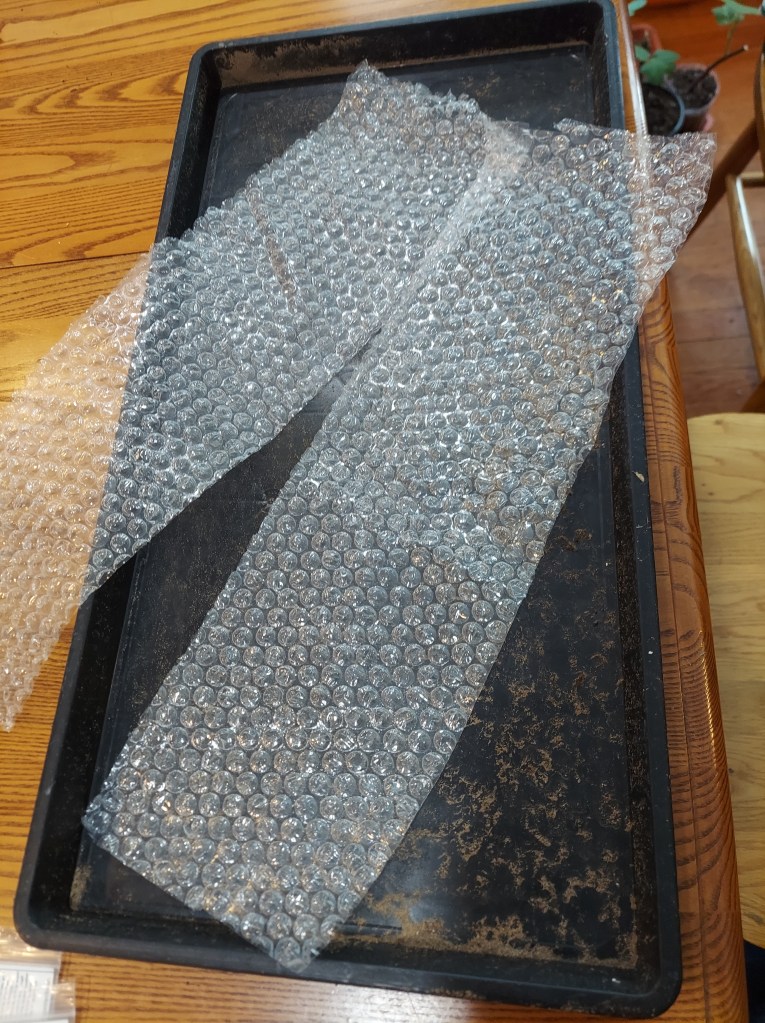
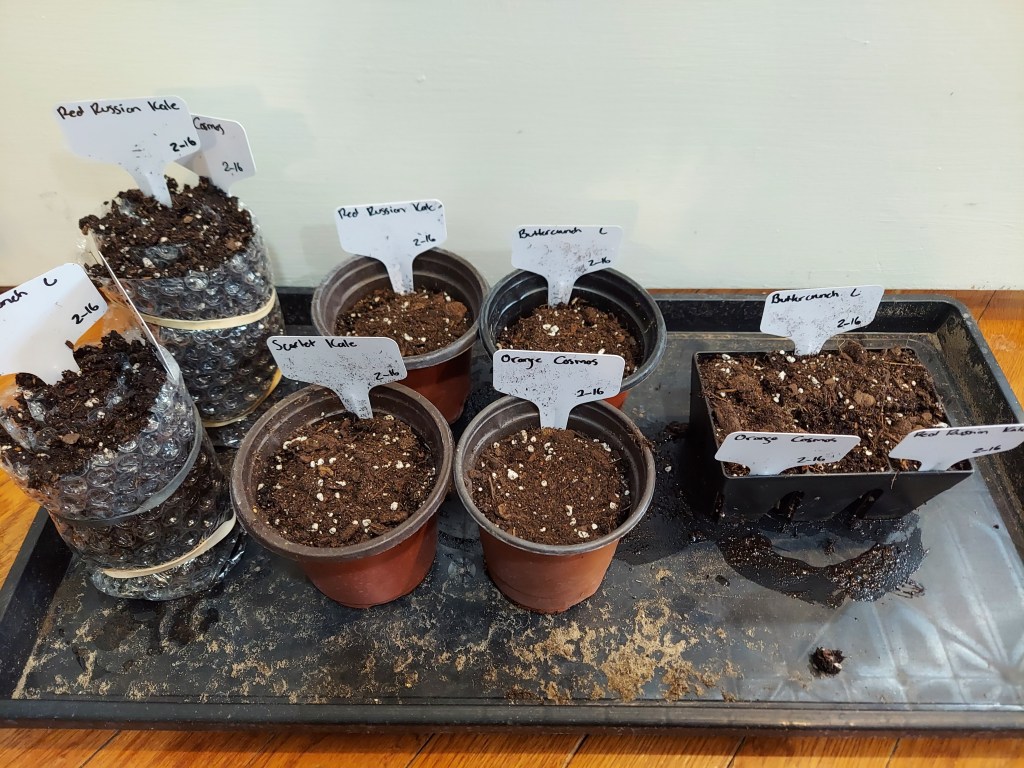
To start out, I cut up some bubble wrap into two sections, roughly 5×15 inches in size. I then got some potting mix nice and damp and picked out what seeds I wanted to try. I went with three different types of seeds, and in order to test out the seed snail I also started the same seeds in normal 3 inch pots and in an Epic 6 cell (standard seed starting pack).
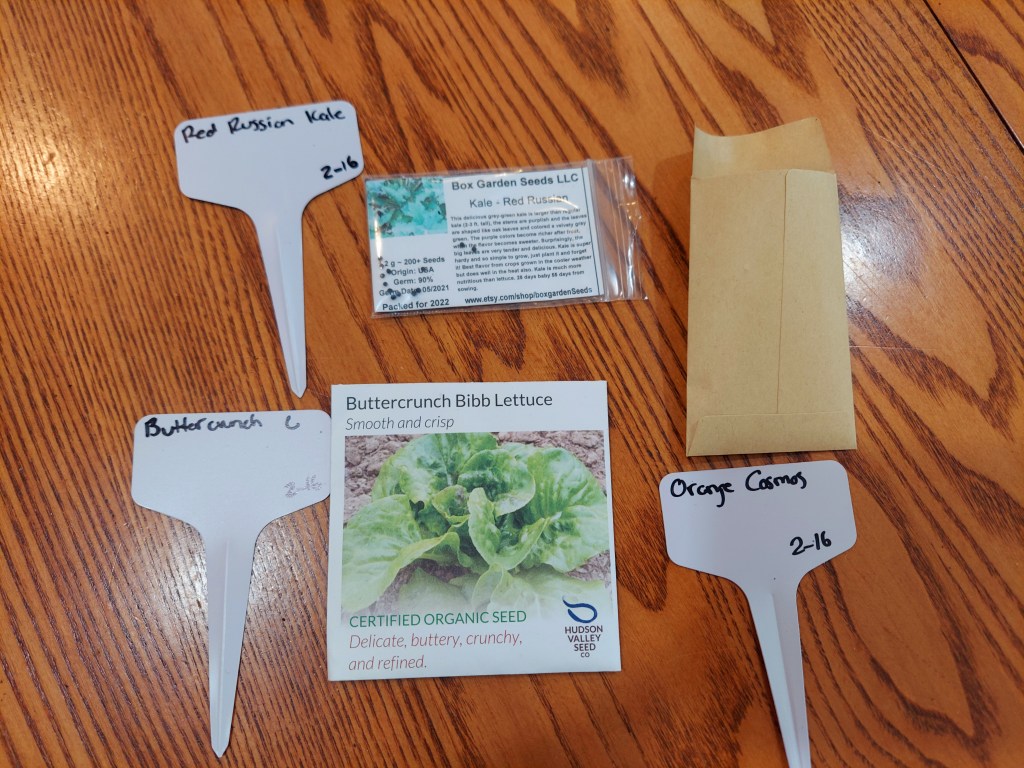
The seeds I started were Red Russian Kale, Buttercruch lettuce, and my own home saved orange cosmos. Each type of seed went into each growing environment.
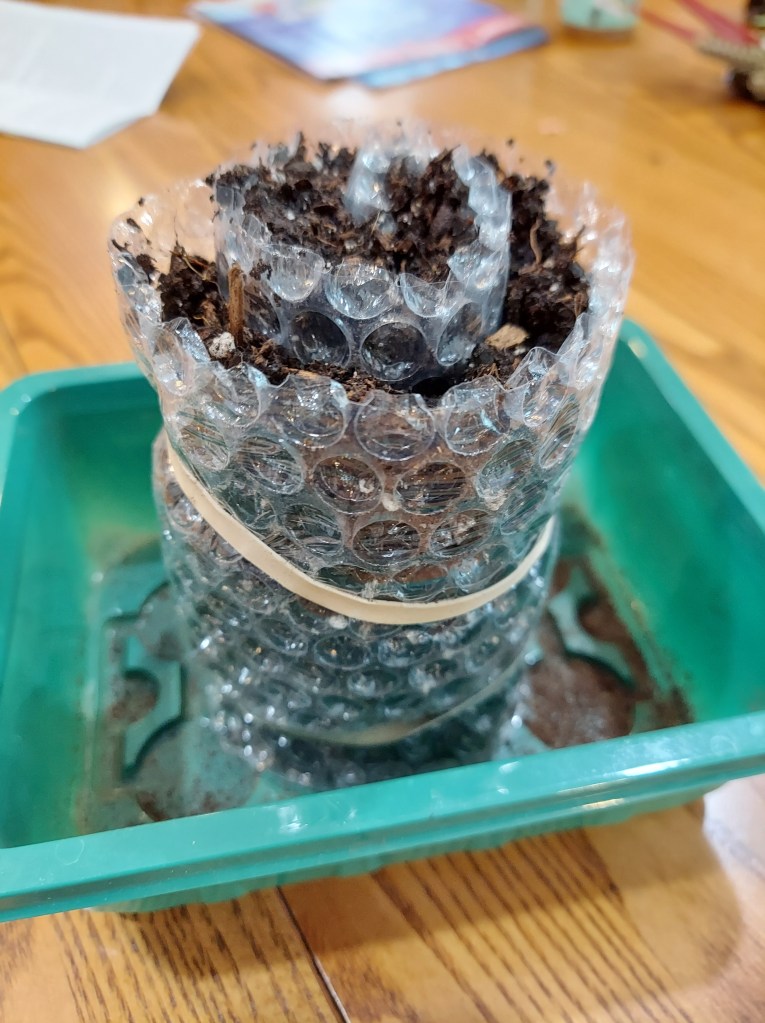
I spread the damp potting soil across the length of the piece of bubble wrap and then carefully rolled it up. I used two rubber bands to hold the end in place. I then carefully placed two of the types of seeds around each swirl and added a pinch of potting mix over top to cover them.
I then stuck in the labels and placed them on the tray with the “control” seeds in the more traditional pots. Everything will be going on a shelf by the window and I will also utilize a grow light so they all have the same environment.
I’m curious to see if this method works. The seed snails are taller than the pots, and since the seedlings will have a narrow space to grow in that should force the roots to head down to search for more soil. It’s reportedly easy to transplant seedlings out of, since you can unroll it and see the roots. Could be less damaging than having to dig up/dump the 3 inch pot and tease seedlings apart. Not sure what the results will be but I’m going to give it a try.
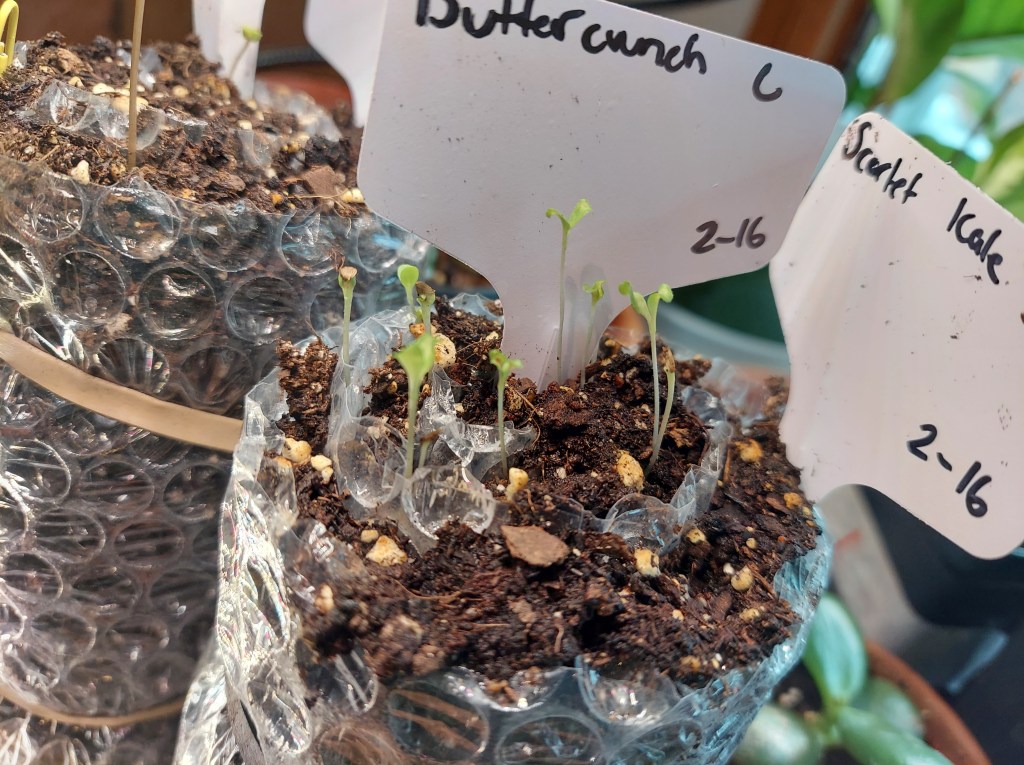
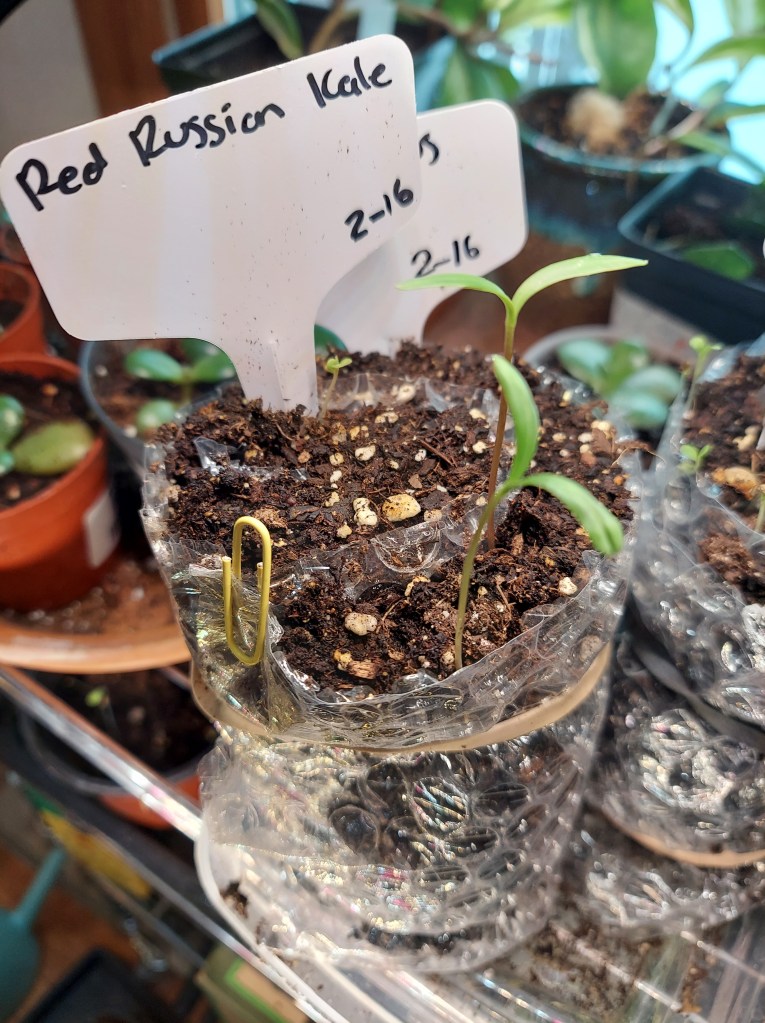
As of Feb 24 some of the seeds have sprouted, the lettuce and cosmos are doing well. The kale is currently lagging behind, not sure if the seeds are too old, but only a couple have come up so far.
Tiny lettuce seedlings
Home saved cosmos seeds are looking nice and healthy.
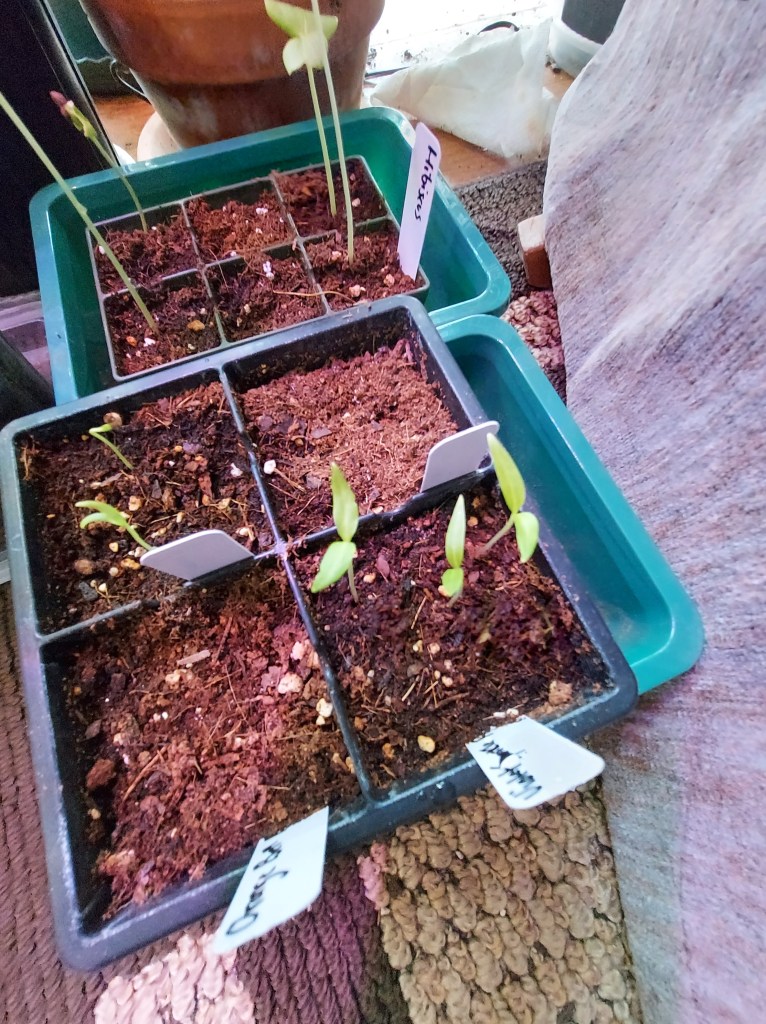
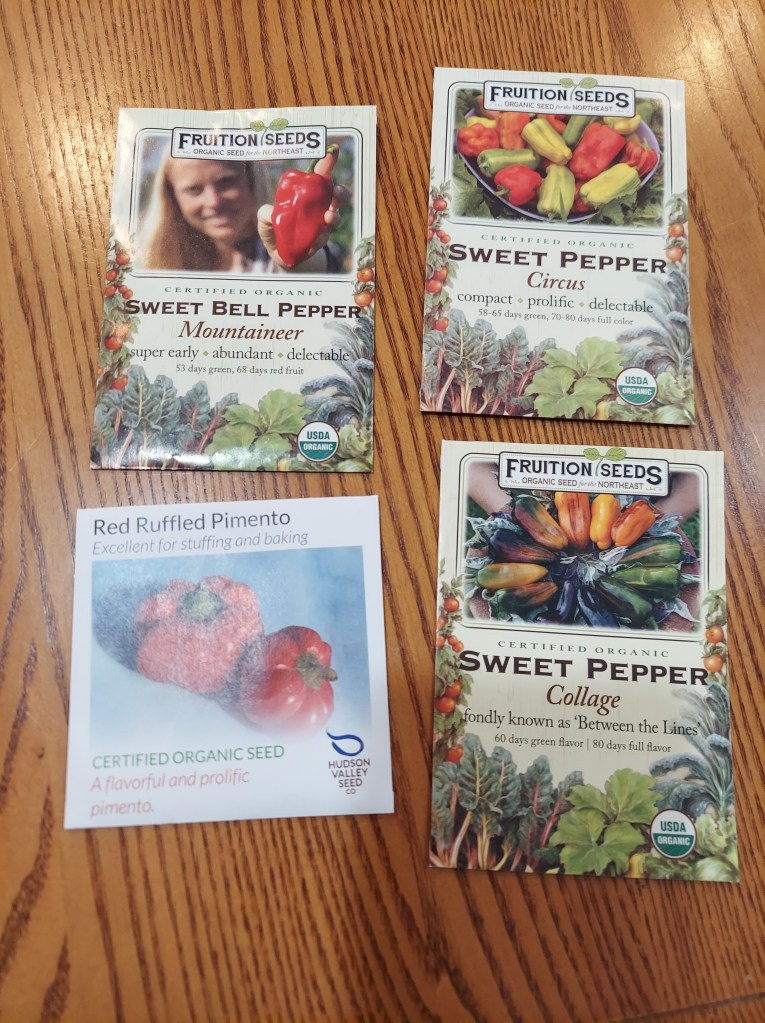
Midwinter is a good time to make plans for the upcoming gardening season, especially to figure out what I want to grow and to purchase seeds. I did a pepper germination test in mid-January to see if a couple of types of older seeds were still viable. I just sowed between 4-6 seeds of each of the 4 varieties in small pots and waited to see what came up. Two of the four types sprouted, so if I want to grow the other two varieties, I will need to purchase new seeds. The good news is I now have a few sprouts that will start my pepper collection for this upcoming season. They are both small sweet pepper varieties. For any seeds that are more than a few years old either doing a germination test, or sowing extras is recommended.
Pepper experiment time!
Pepper seedlings a few weeks later
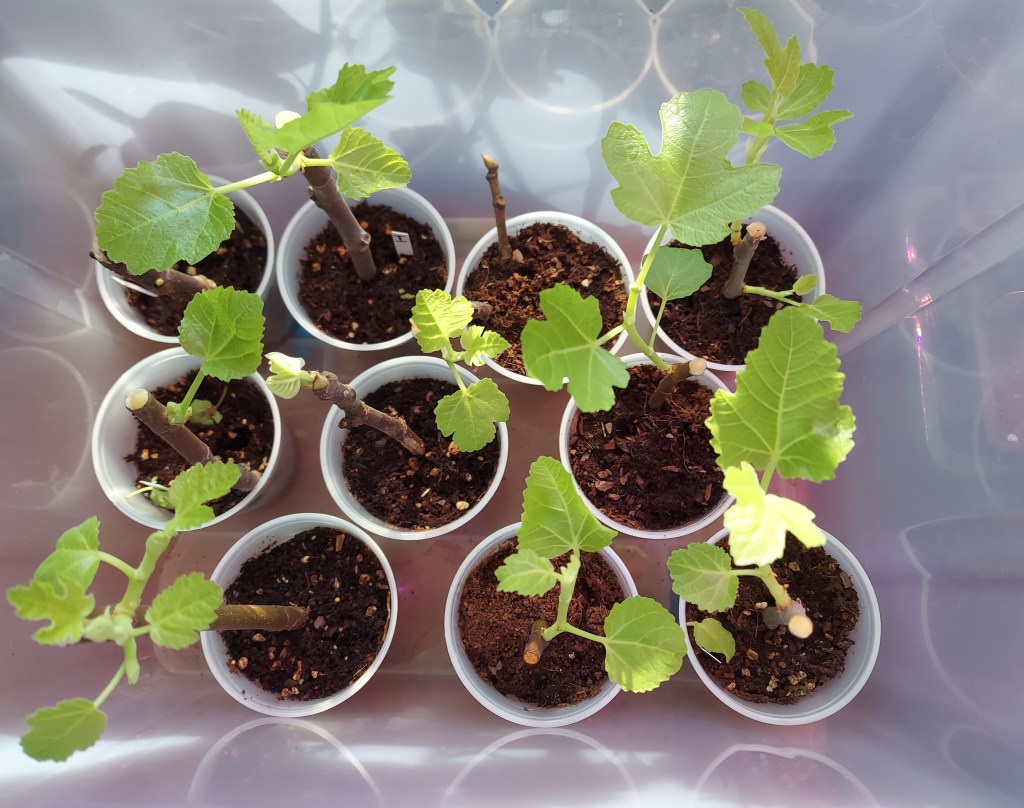
My fig cuttings are doing quite well, I had a high success rate for propagation. I love seeing all the tiny leaves that emerge from sticks that were dormant a month ago. Many of my older fig trees which are in the basement are also waking up and unfurling new leaves. Some of the houseplants are even showing new growth, so that is a sign that they are enjoying the slowly lengthening days. It may be freezing outside, but spring is on the way.
Peppers like a warm environment so I started the seeds inside small greenhouses on a heat mat. This way they were warm and humid. The heat speeds up germination and ensures more of the seeds do sprout. I’ve had pepper seeds poking through in as little as a week using this method.
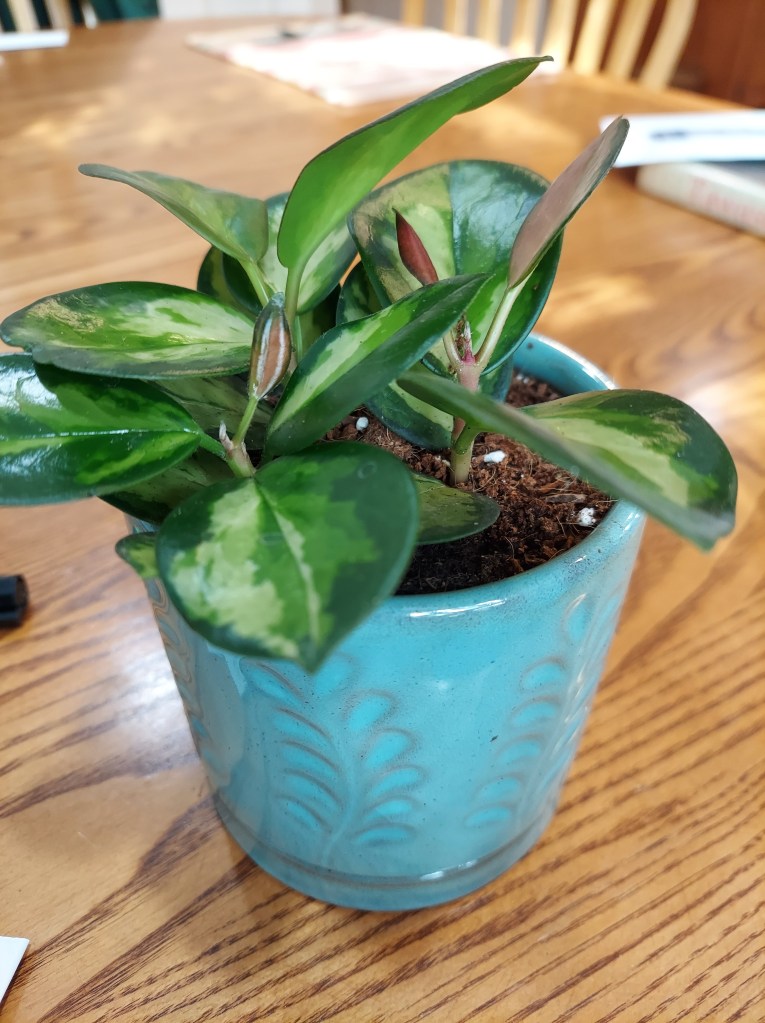
I have also repotted and taken cuttings from a few of my houseplants. Winter time isn’t ideal for this, but the houseplants were putting on new growth, and roots were coming out of the bottom of their pots. I spent a couple hours last week repotting them all, including two hoya and two pothos.
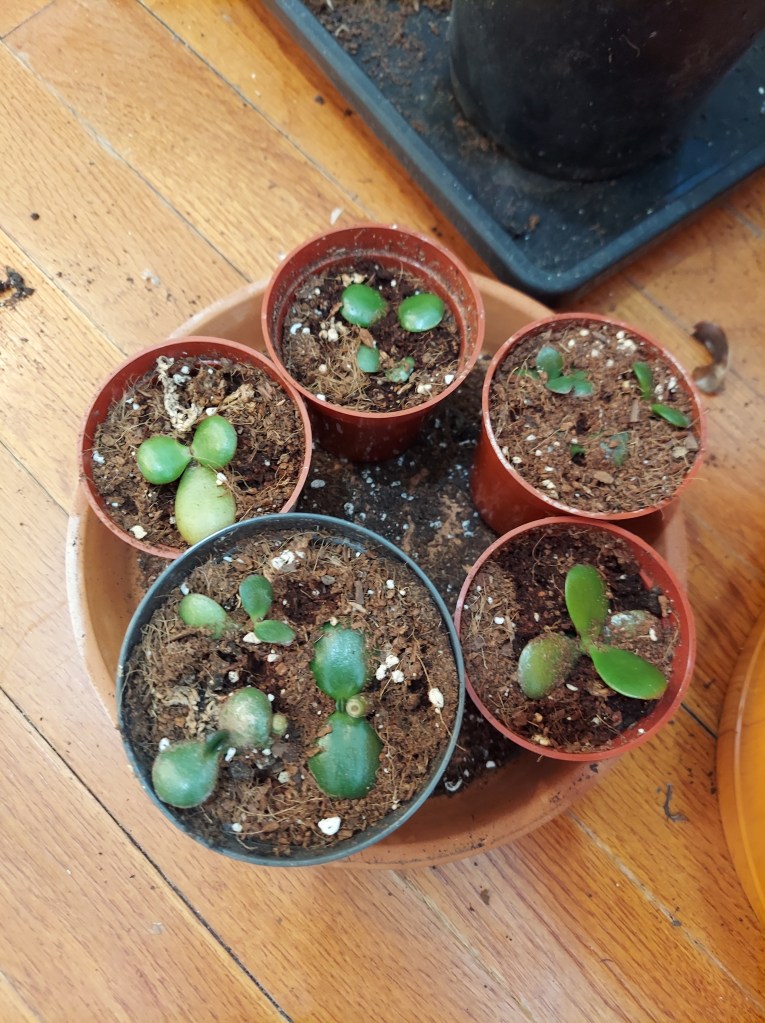
I had successfully taken cuttings from a jade plant and so I planted them in a few small pots to grow on.
I started my first main sowing of pepper seeds last weekend and expect to see sprouts later this week. I sowed the following varieties:
I plan to start a second set of seeds this week, all different varieties. Once these are all up and I see how many potential plants I have growing, I will start any final seeds, to potentially fill in gaps.
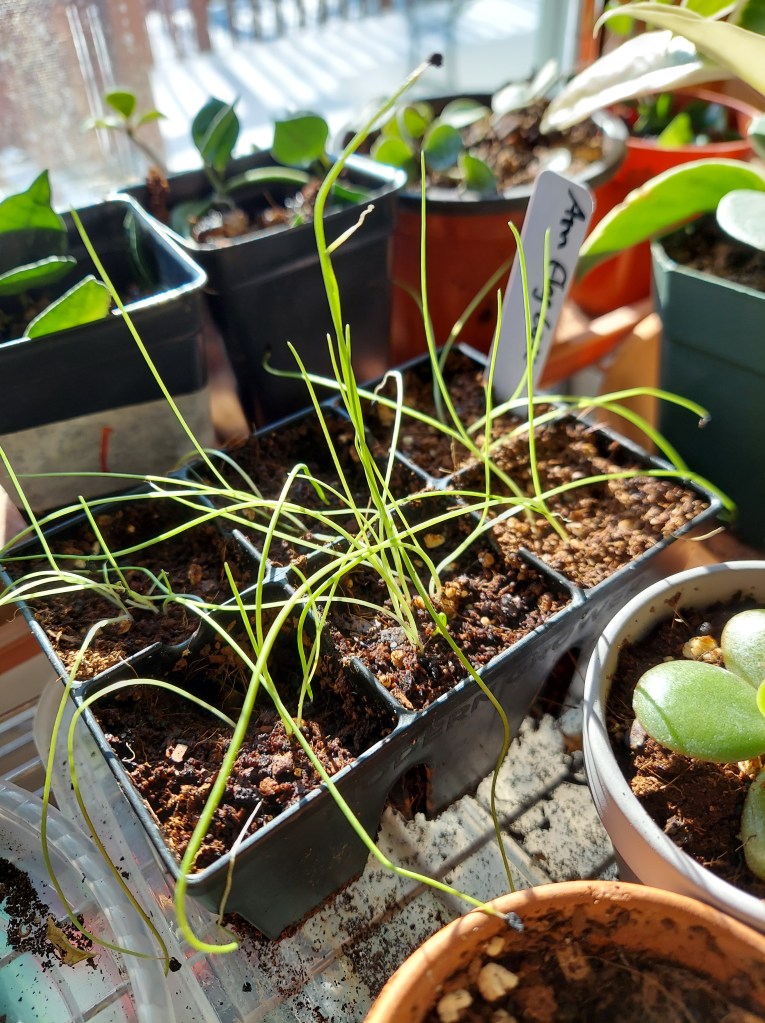
I have already started a set of leek seeds and they have been growing for about a month now. Allium family seeds (leeks, onions, shallots, scallions) are very slow growers. I managed a few small leeks last season, but I want to try again. I bought onion starts last year which worked, but I did not get large onions. This year I am once again going to try from seed. I also plan to start celery seeds soon as they are very slow growing seedlings as well.
Multi-sown leeks living amongst the houseplants for now.
I have purchased my first small bag of potting mix which I used this weekend to pot on my small hibiscus seedlings. My homemade seed starting mix is quite lightweight and well draining, but once seedlings get a little bigger, they can use more nutrients. I plan to start feeding them with a diluted houseplant liquid feed after they are about a month old. I’ve not done this before, but want to see if it helps the seedlings grow stronger and larger.
My grow lights are set up on the bottom shelf by the back glass door. This way the pepper seedlings will get as much light as possible for the time of year. I’m also utilizing white cardboard at the back of the shelf, to try and capture and reflect the light back onto the seedlings. I did this last year and I think it helped them stay a little more balanced with their growth. I’m still rotating the pepper seedlings every couple of days so they don’t grow lopsided.
We just emerged from a lengthy cold snap where I live, and I am very much looking forward to spring and nice warm days.
For the past several years I have made my own compost. I do bokashi compost for kitchen scraps, which then go in a plastic drum to further break down before being used in the garden. I also have a large pile in the backyard where we slowly let the grass clippings, leaves, and garden trimmings break down. I allow this pile to build up over a whole gardening season and then flip it the following spring.
The contents are normally about halfway decomposed when I flip the pile, this adds fresh air to the components and allows the less decomposed items from the top of the pile get moved to the bottom. I break up any big clumps, and sometimes need to add extra leaves if any sections are wet and smelly. Then, the following spring, I spread the compost in a thin layer across the garden beds.
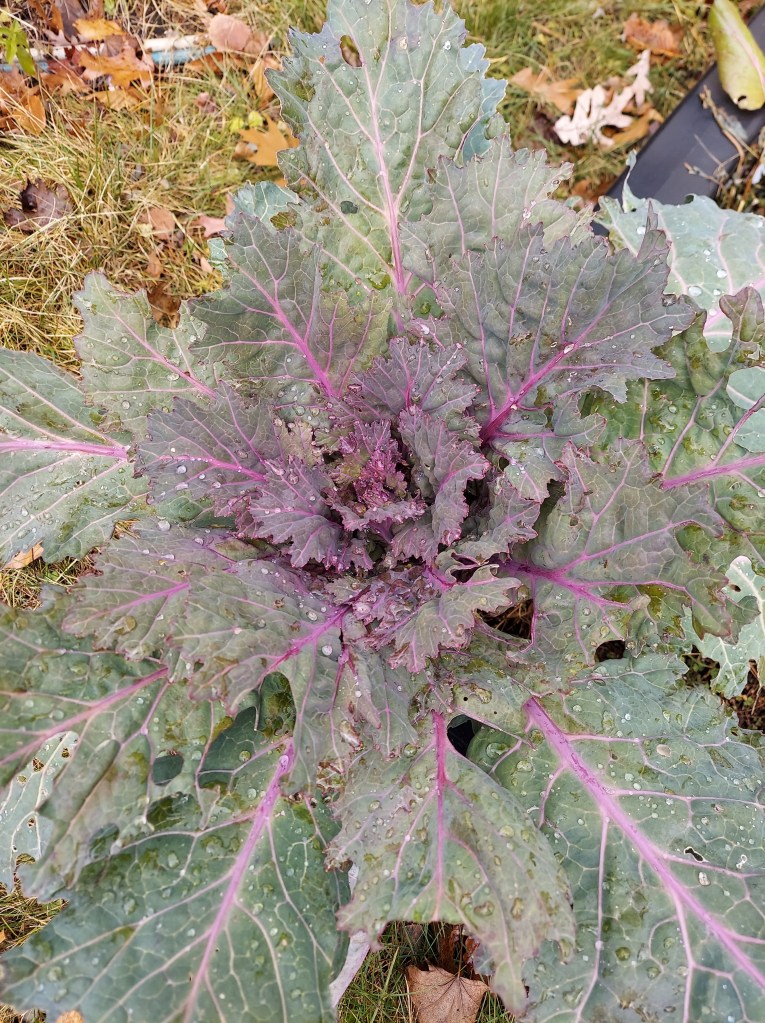
Lovely kale plant still putting out new leaves in mid-November.
A year ago we found some free pallets on the side of the road and set them up as an additional composting station. We put the pallets upright and tied the corners together with rope. I’ve used this space strictly for leaves over the past year. This ensures I have dried leaves accessible if I need to add them to the compost pile throughout the season. It has also allowed me to start making leaf mold, which is a very nice compost for adding to the garden. It only requires dried fall leaves, and there’s no requirement to balance out fresh and dried materials to keep the heap going.
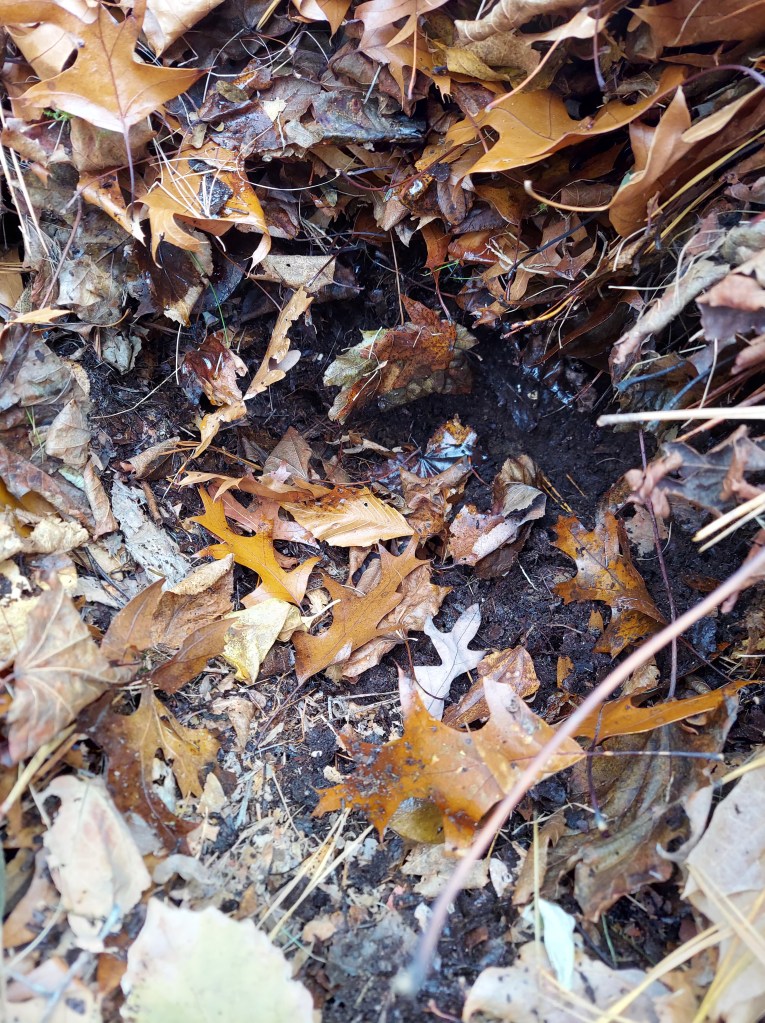
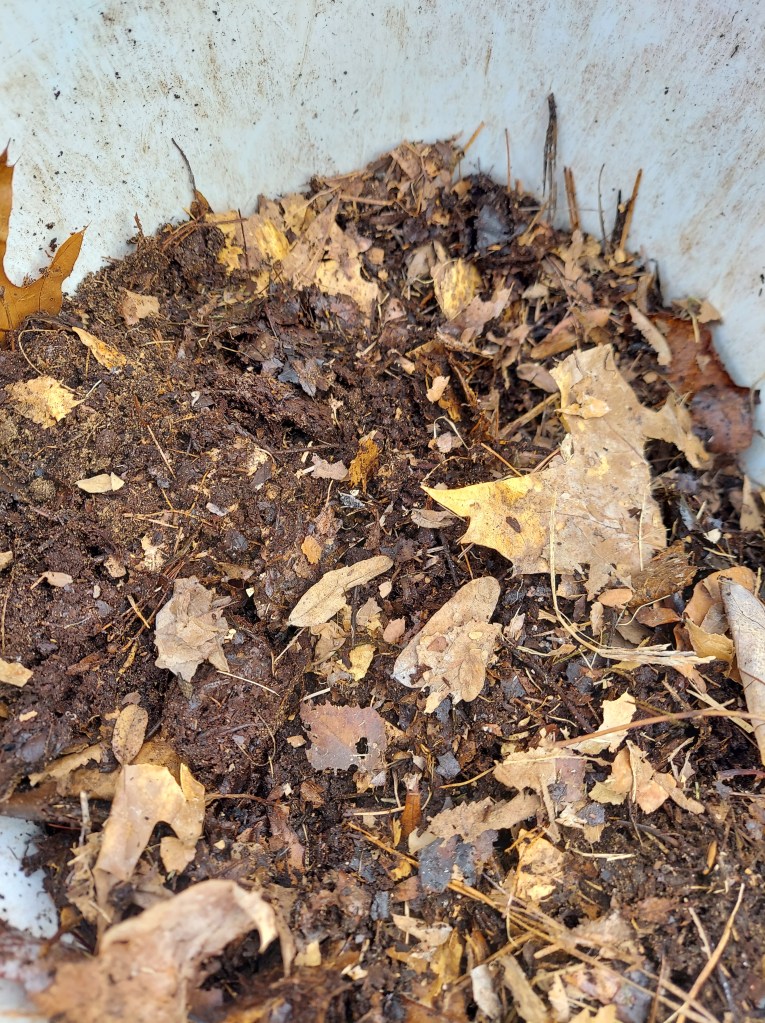
Good cross section view of the pallet compost bin. I untied one of the pallets and pulled it away from the pile. The dark brown material at the very bottom is well broken-down leaf mold. The majority of the bin is currently filled with this year’s gathered fall leaves.
In mid-November I checked the bottom of the current batch and found some nice crumbly compost. I used a shovel to fill a bucket and spread it around all 4 of my raised bed areas. I made several trips and spread a nice layer all around. This provided both a protective mulch around perennial herbs and will allow the worms to continue to break everything down in the spring.
Nice, homemade leaf mold, ready to be spread on the garden beds.
As I worked in the garden, I also removed dead plants and trimmed back some of the herbs. All of this plant matter went on top of the current compost pile, which I will flip in spring.
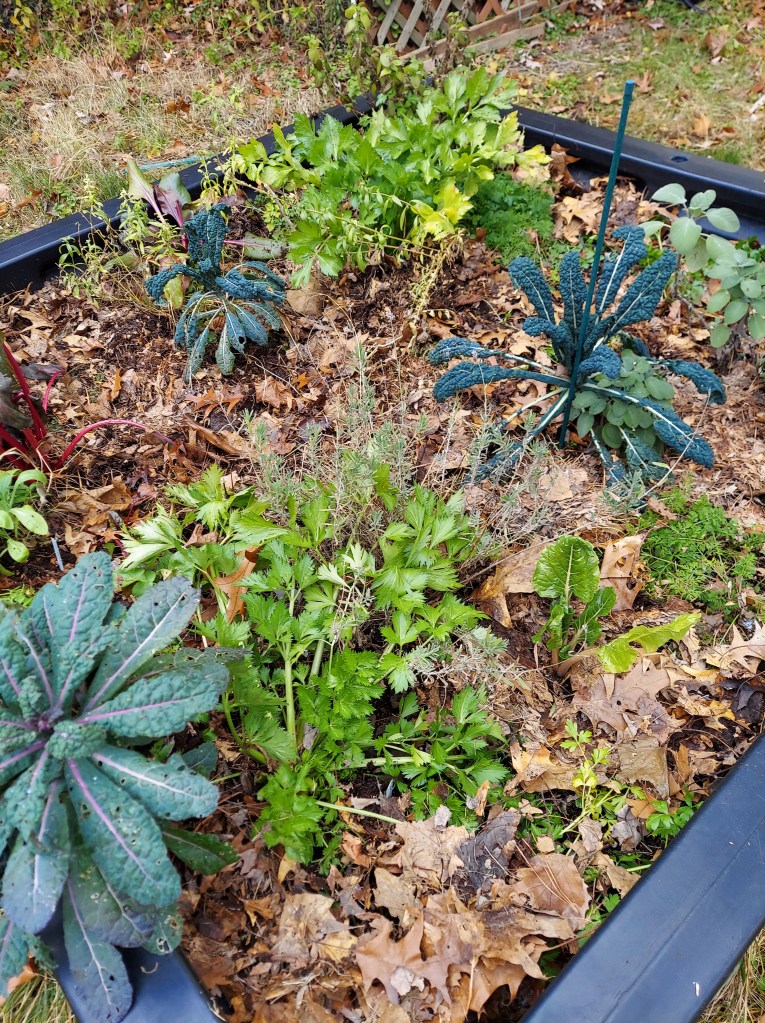
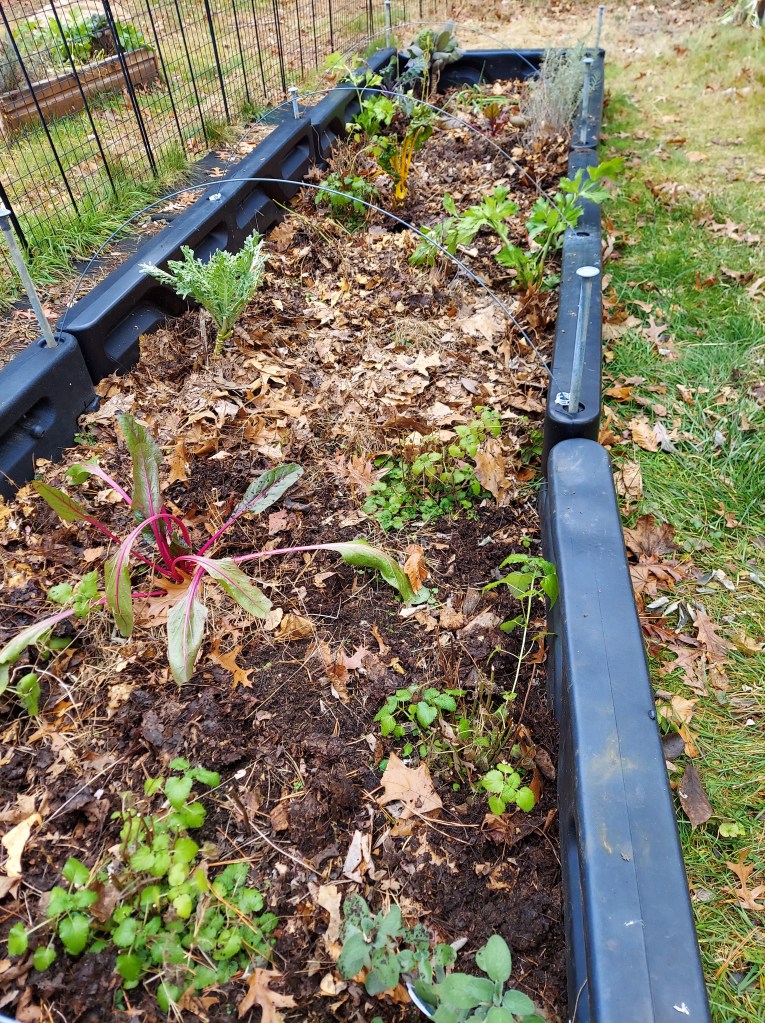
Garden bed all tidied up and mulched for winter. Multiple kale and celery plants were still growing, as were sage and chard. After I spread the leaf mold I added full sized leaves as a cozy mulch for the plants.
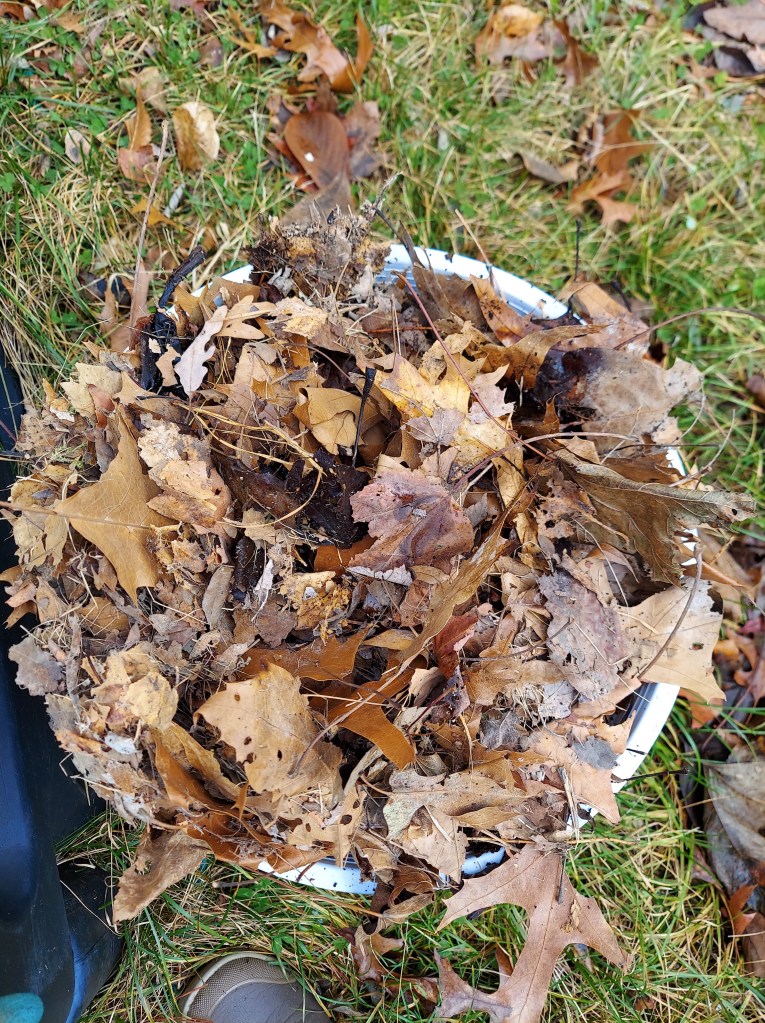
Full bucket of leaf mold along with some full-sized leaves. The larger leaves will work just as well as a mulch and be a bit like a slow-release fertilizer. The smaller particles of the leaf mold will provide easier accessible nutrients and will boost the soil life. Having both sized leaves works in tandem with how nature itself works.
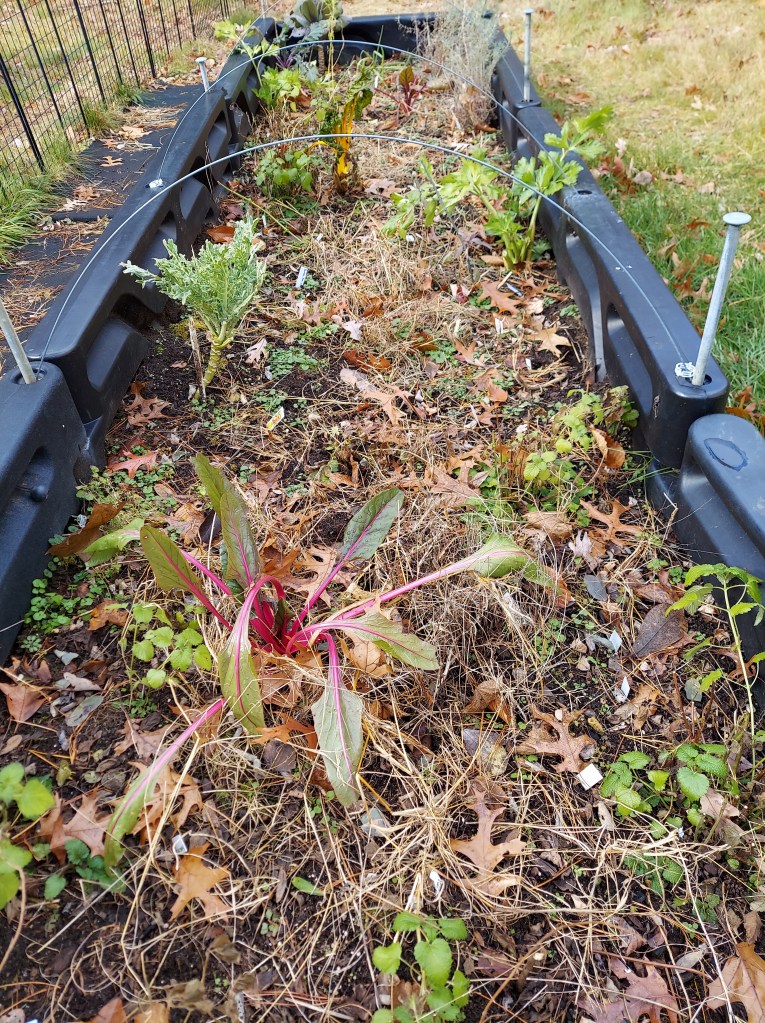
The longest garden bed, before and after I tidied things up. I removed old plant labels and any stakes that were no longer supporting plants. The three lemon balm plants were very thin and had a bunch of dead flower heads, which I removed. I also did some weeding as I went.
I’ve read that well broken-down leaf mold can also be used as a potting mix, so I may try that come spring. For now, I’m leaving the big leaf pile to just sit and do it’s thing. The current compost bin is pretty full and I think the worms and bugs may still be working in the middle of the pile to break everything down. Looking forward to next season in the garden, but I also appreciate winter’s rest. Time to slow down and focus on other hobbies while the ground is covered in a layer of snow.
In the middle of October, I dug up my dahlia tubers to store them for winter. Dahlias are not cold hardy and thus the tubers are susceptible to frost. So once the leafy growth had been killed off by the first light frost in early October, I knew it was time to remove the stems and dig around to find the new tubers.
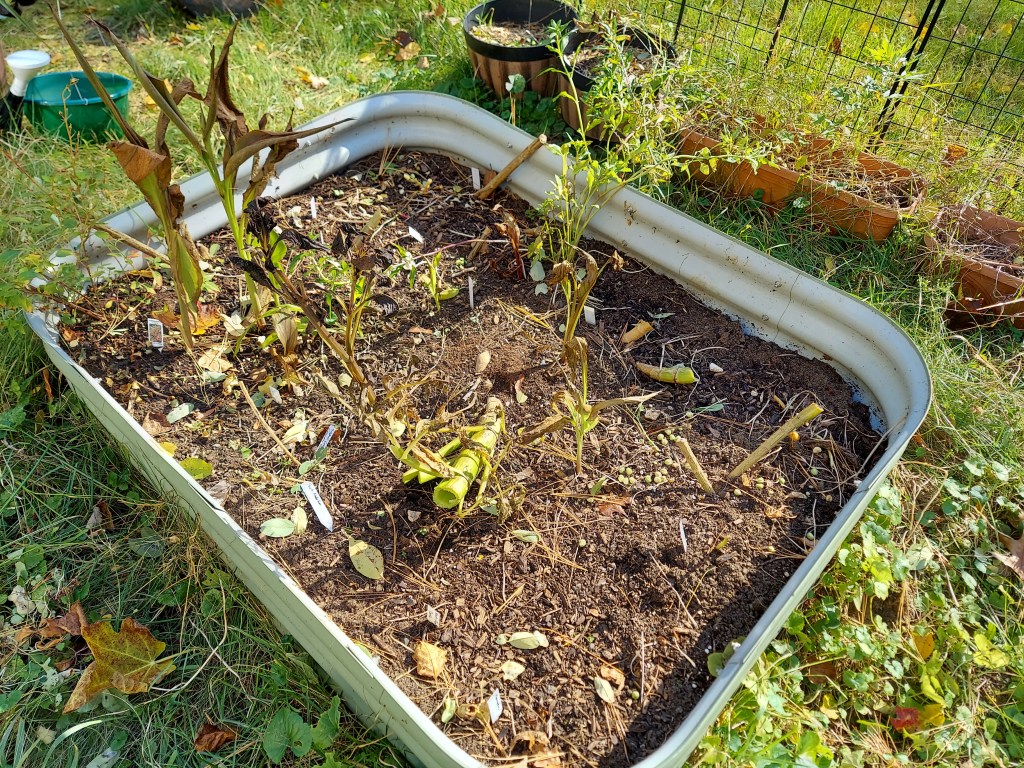
This is what the bed looked like after the bulk of the dead stems and flowers were all removed for the compost bin. You can still see some very thick stalks coming out of the ground, I left them there so I would know where to carefully dig to find the tubers.
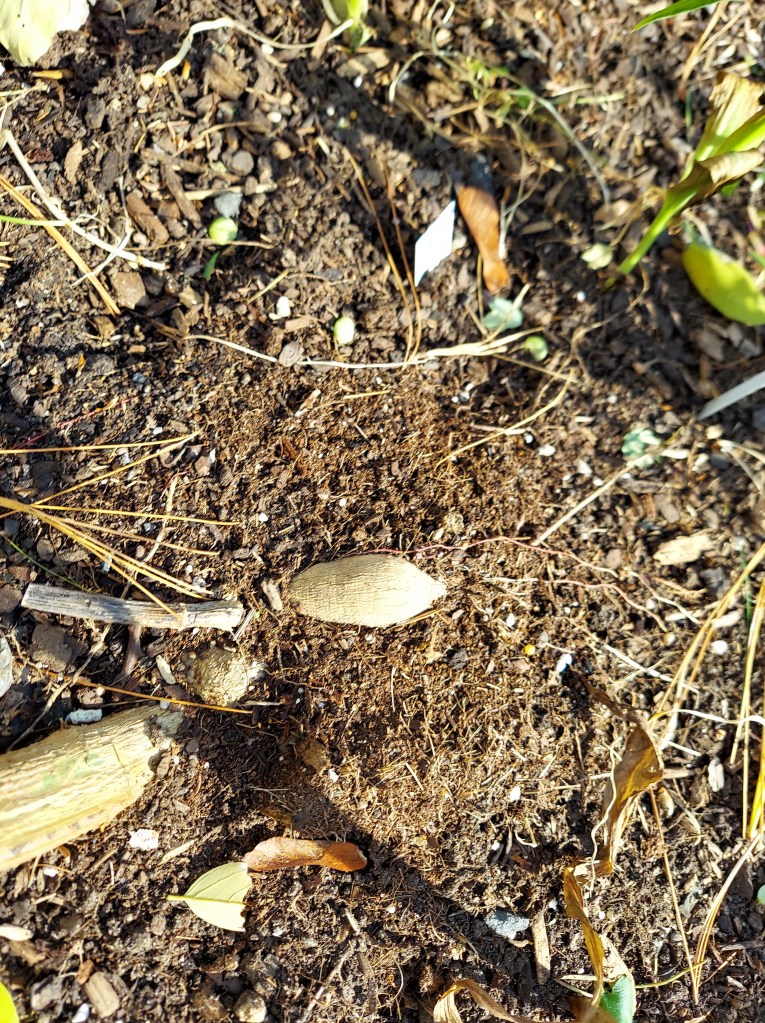
This plant actually grew sideways and started falling over under its own weight, so you can see this one tuber was exposed and above the soil line. I made sure to locate all my plant labels before I started digging so I would be able to keep the different types separated.
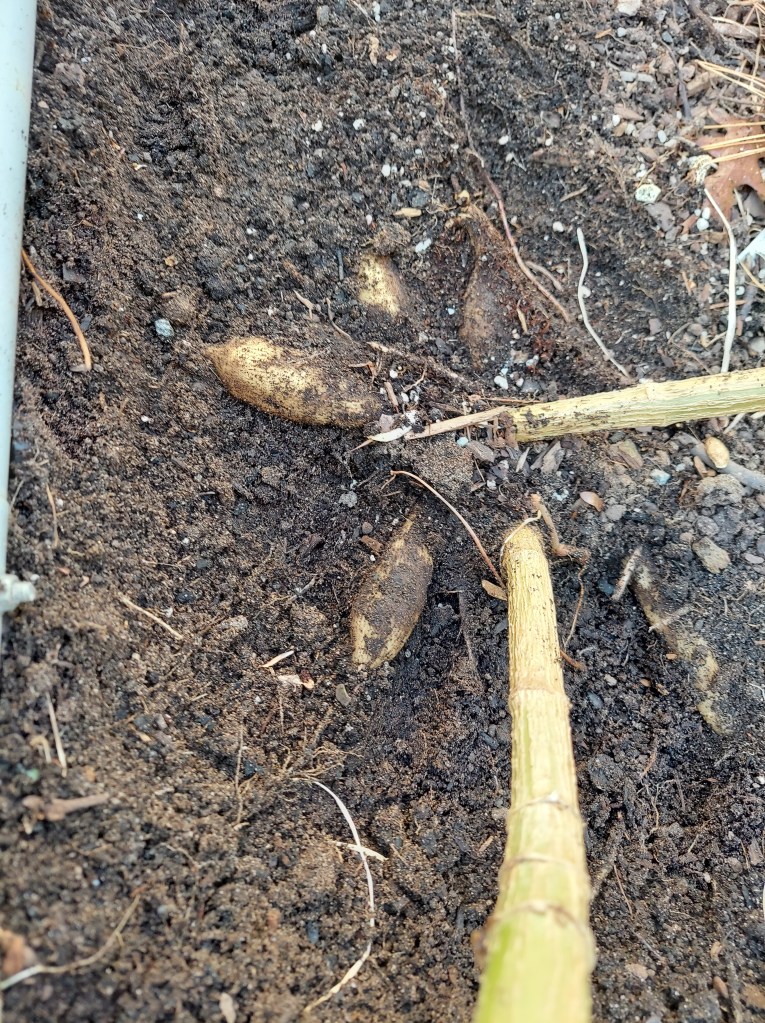
Most of the tubers were very close to the soil level, so I just started clearing dirt with my hands so as to not risk stabbing through and breaking tubers with a shovel. Once I had each clump completely uncovered then I used a small trowel if needed to leverage the roots out and pull them completely free from the bed. I grew the dahlias in a 15-inch-tall bed with hardware cloth across the bottom, so it was easy enough to find the bottom and make sure I had all the tubers.
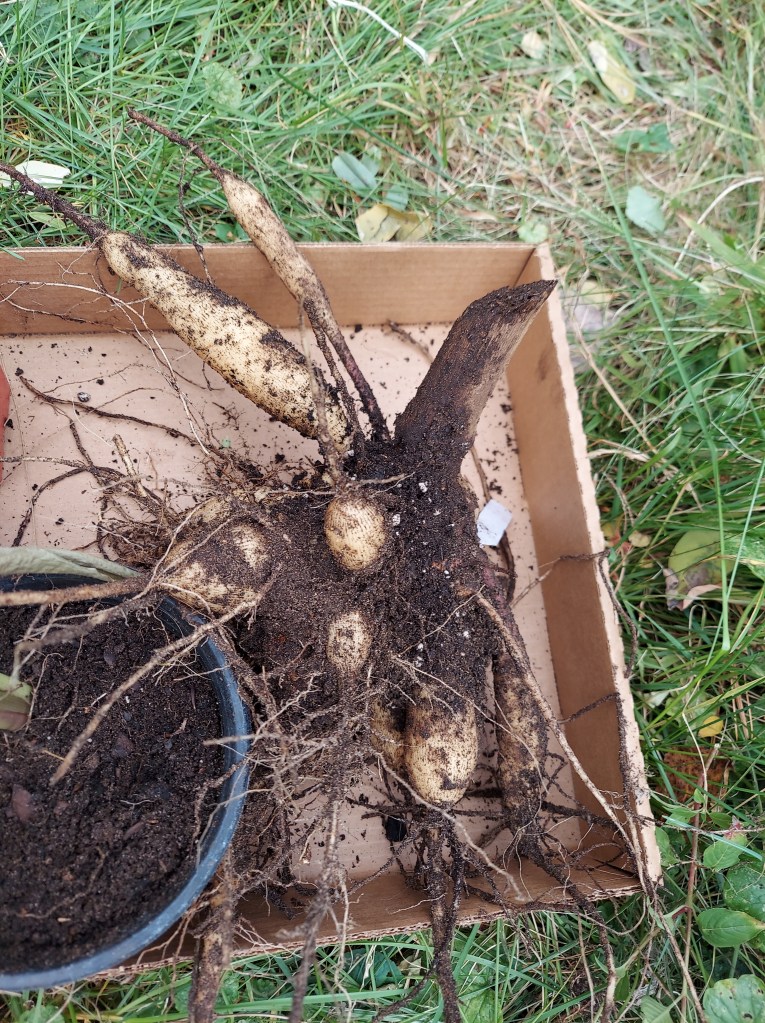
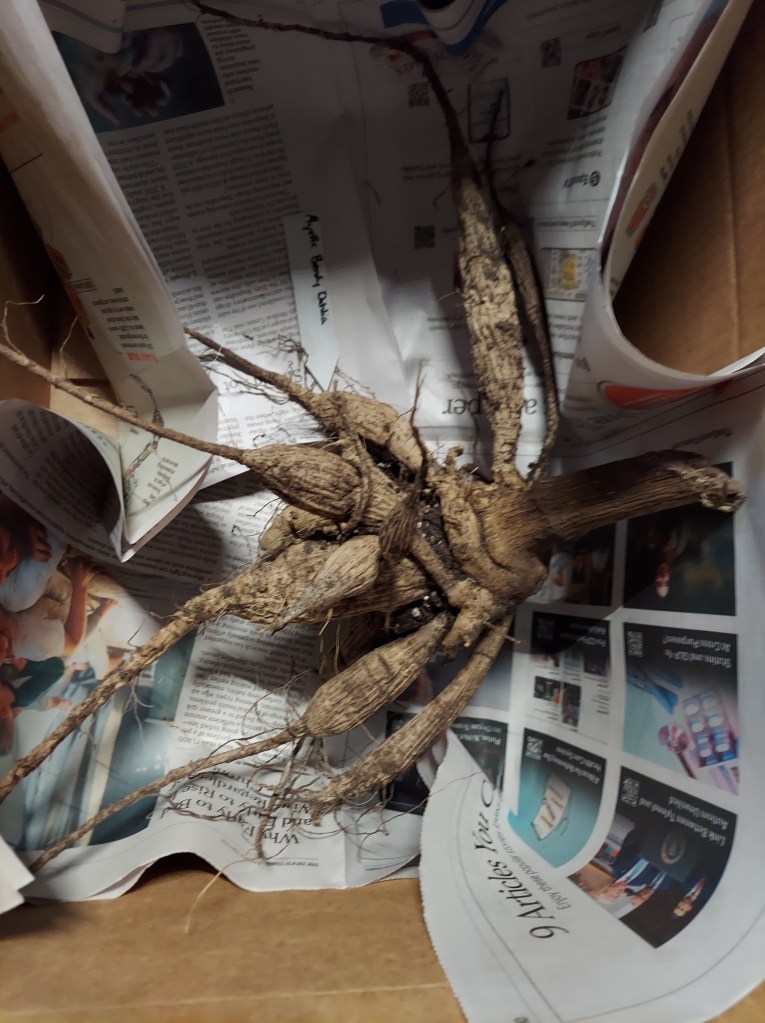
One of the smaller clumps. Each individual tuber that I planted in the spring produced a cluster of tubers around the central stem. Some grew 3 or 4, the largest probably has over a dozen. Once I dug them up from the bed I brushed off some of the dirt and put them on cardboard boxes to dry out and cure for a week in the basement.
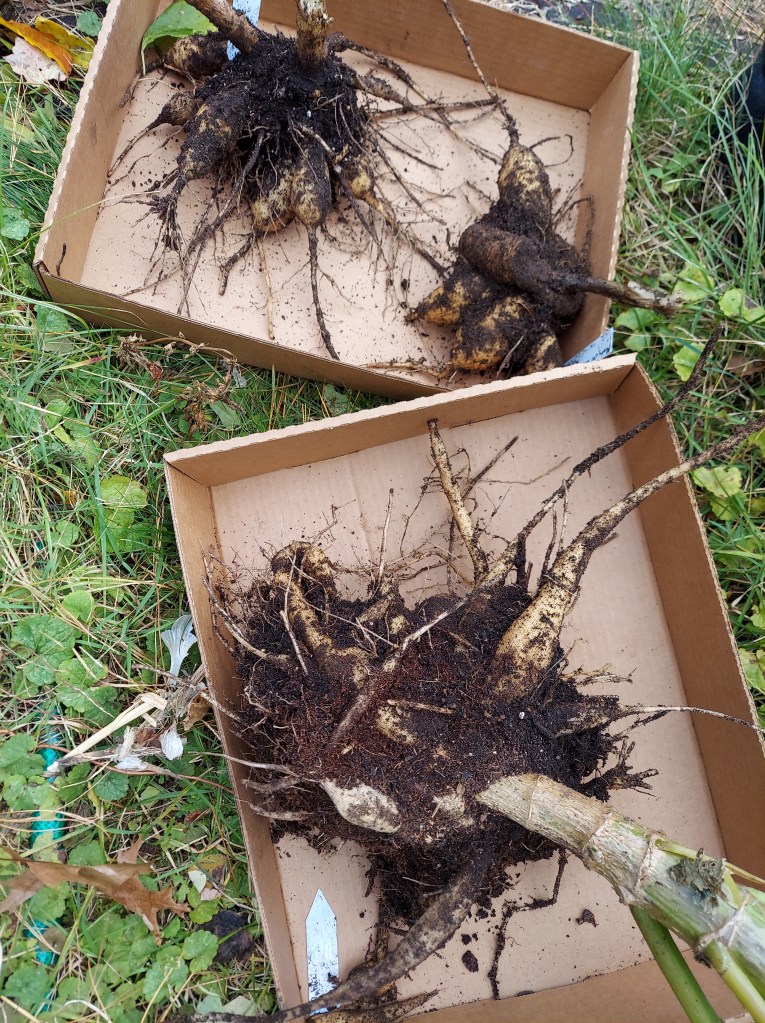
Several more clumps, these were smaller from the extra plants that I grew in pots. I will divide them in the spring and start them off indoors to get a jump on the season.
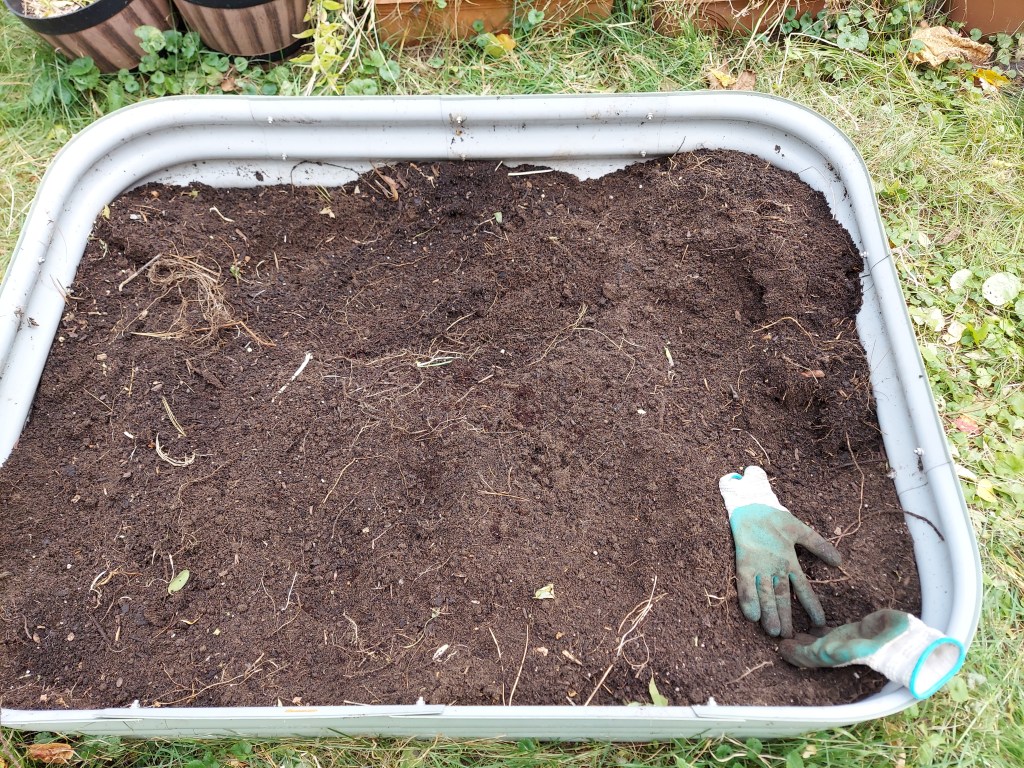
Here’s the dahlia bed after everything was dug up. I leveled it all out and added some homemade compost to provide fresh nutrients for next year.
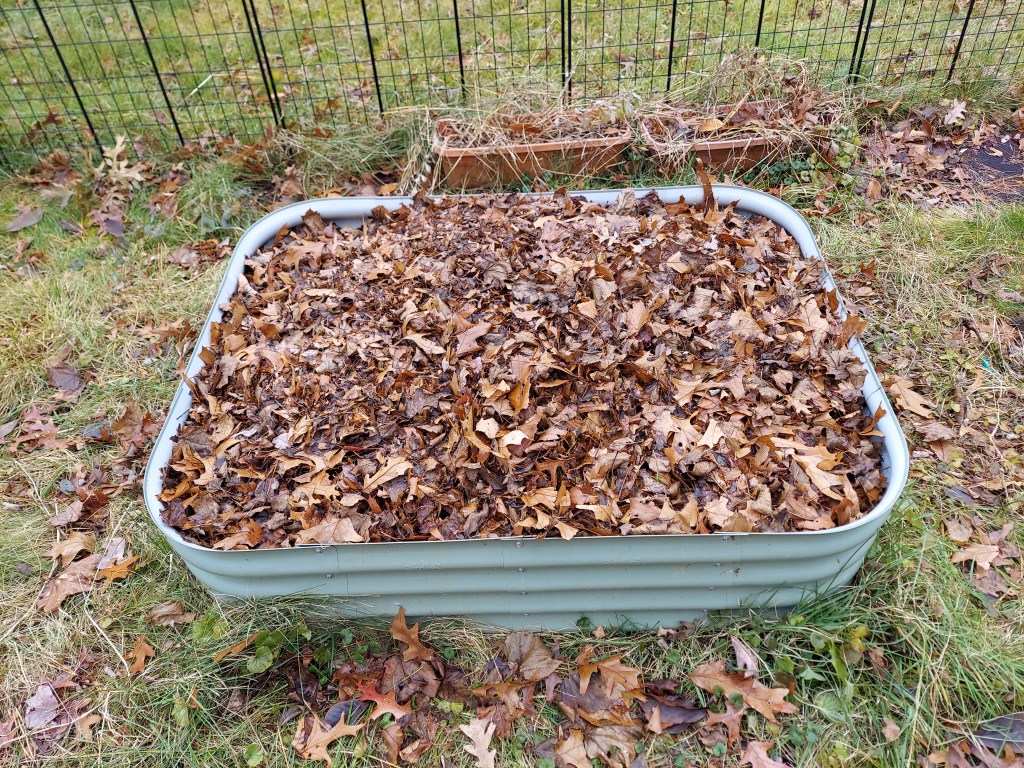
Once that was done I tucked it all in with a nice thick blanket of fall leaves. These will keep the soil insulated and should start to break down a bit before spring arrives. When I’m ready to plant I will remove whatever large bits are left to the compost pile.
After a week or so the tubers were cured and dry enough to store away for winter. I put a layer of bubble wrap in each box, them a couple sheets of newspaper as insulation. The plant labels went into the boxes so that I will be able to identify them come spring.
Once I positioned each clump so that they fit inside the boxes, I added a thick layer of shredded straw and made sure to shake it around to fill in all the nooks and crannies. The boxes were then taped up and put out in the garage, on an interior wall. I will check them in a couple months to make sure they are ok. This method worked well for me last year, so I hope it works again this year.
The second project I had for the end of September and early October was saving seeds from many types of flowers in the garden. I enjoy collecting some of the mature seeds from my garden and then replanting them the following spring. Many types are very easy to save and often involve just snipping off a spent flower head. A single flower can typically provide enough seeds for the following year.
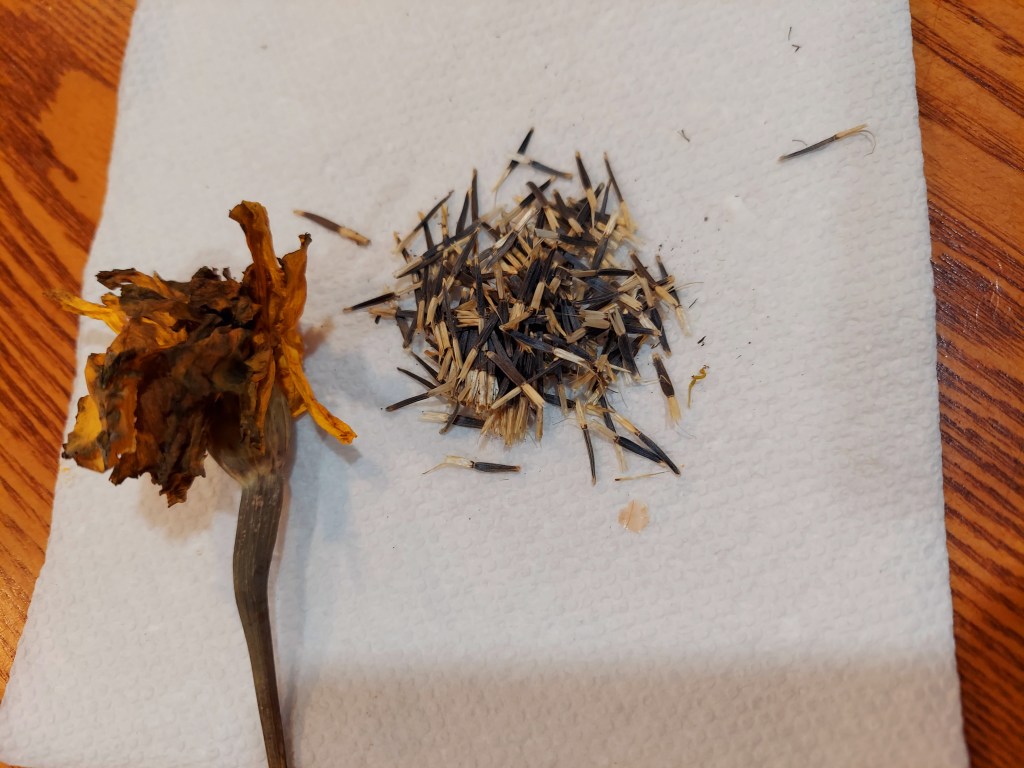
One marigold flower head provided all these seeds. It’s very easy to pull them away from the base, make sure to remove the flower petals too. I let them sit in a single layer for a week to air dry, then store them in little craft envelopes. Make sure to label them so you know which variety/color you saved.
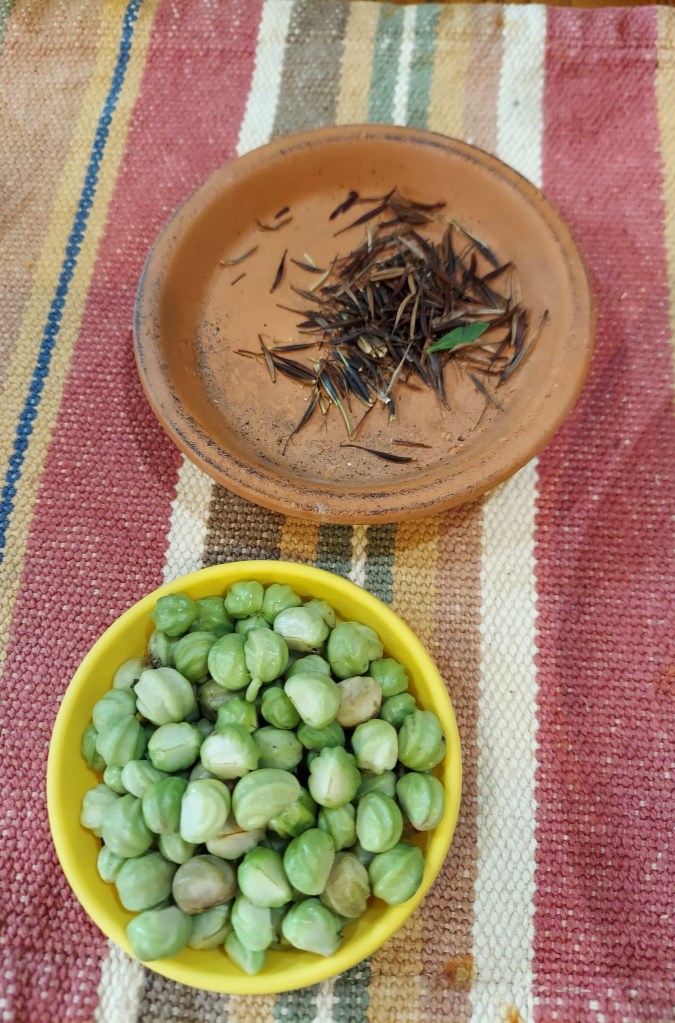
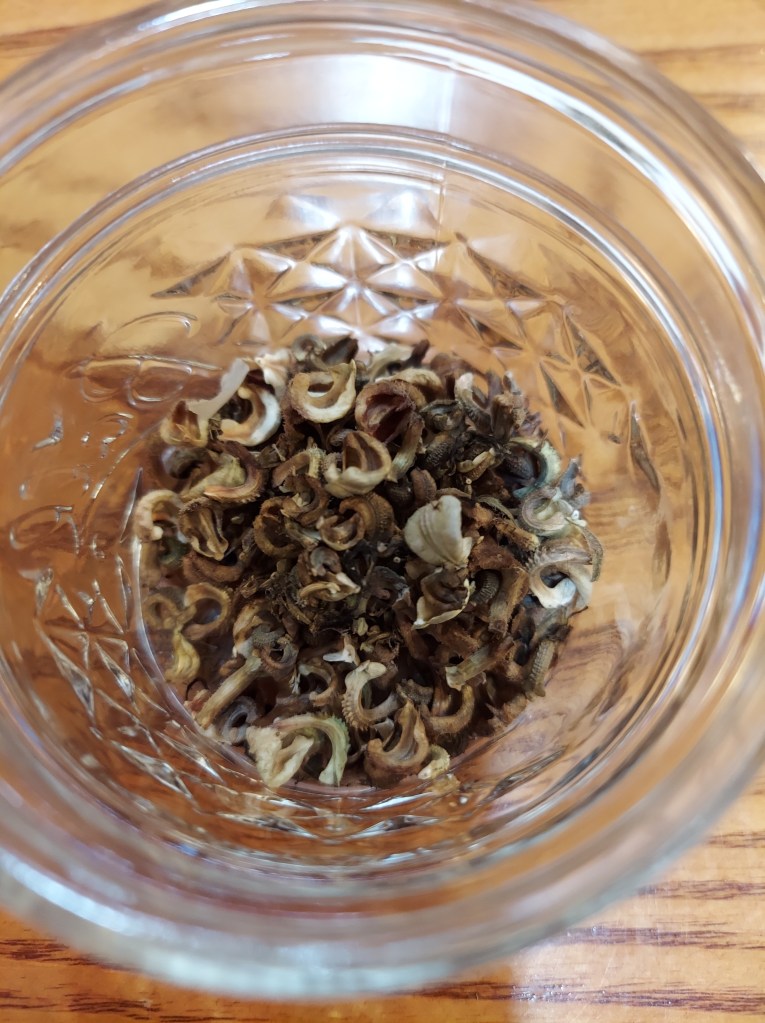
I use whatever bowls or trays I happen to have at hand for seed saving. The top seeds are sulpher cosmos, which make cute little orange or yellow dye flowers. The bottom are nasturtiums; they look like little brains. The nasturtium seeds were collected green because I was going to dig up the bed. They needed to cure and shrink before they could be stored. These were all gathered from the cut flower bed before I cleared it. I’m sure a good number of seeds fell into the bed over the course of the season, so I’m hopeful a few will sprout in the spring without me needing to plant.
Here are some dried nasturtium seeds ready to be stored away til next year, and a few marigolds as well.
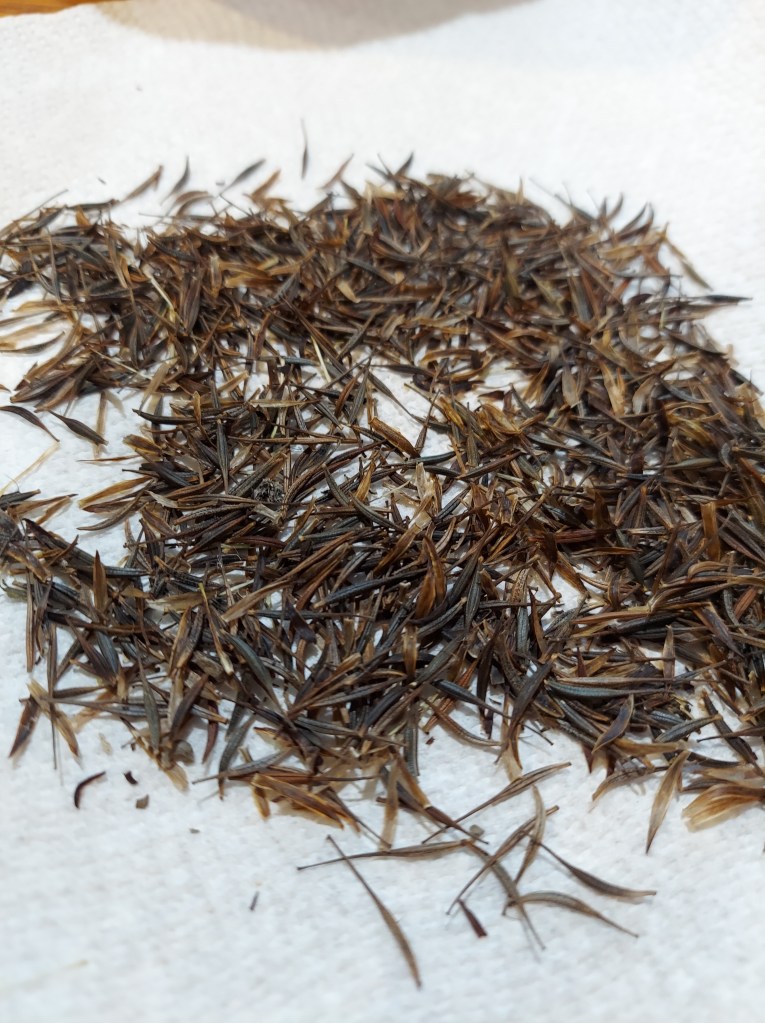
More cosmos seeds than I will ever need! All off of a couple of plants that I grew on the border of the dahlia bed.
I grew multiple types of calendula this year, and had several clumps of plants. They were very productive over the season and I was able to save a bunch of seeds. I also purposefully scattered some of the seeds beneath where the plants grew to see if they come up in the spring. This jar contains seeds from several types including yellow, orange, and pink.
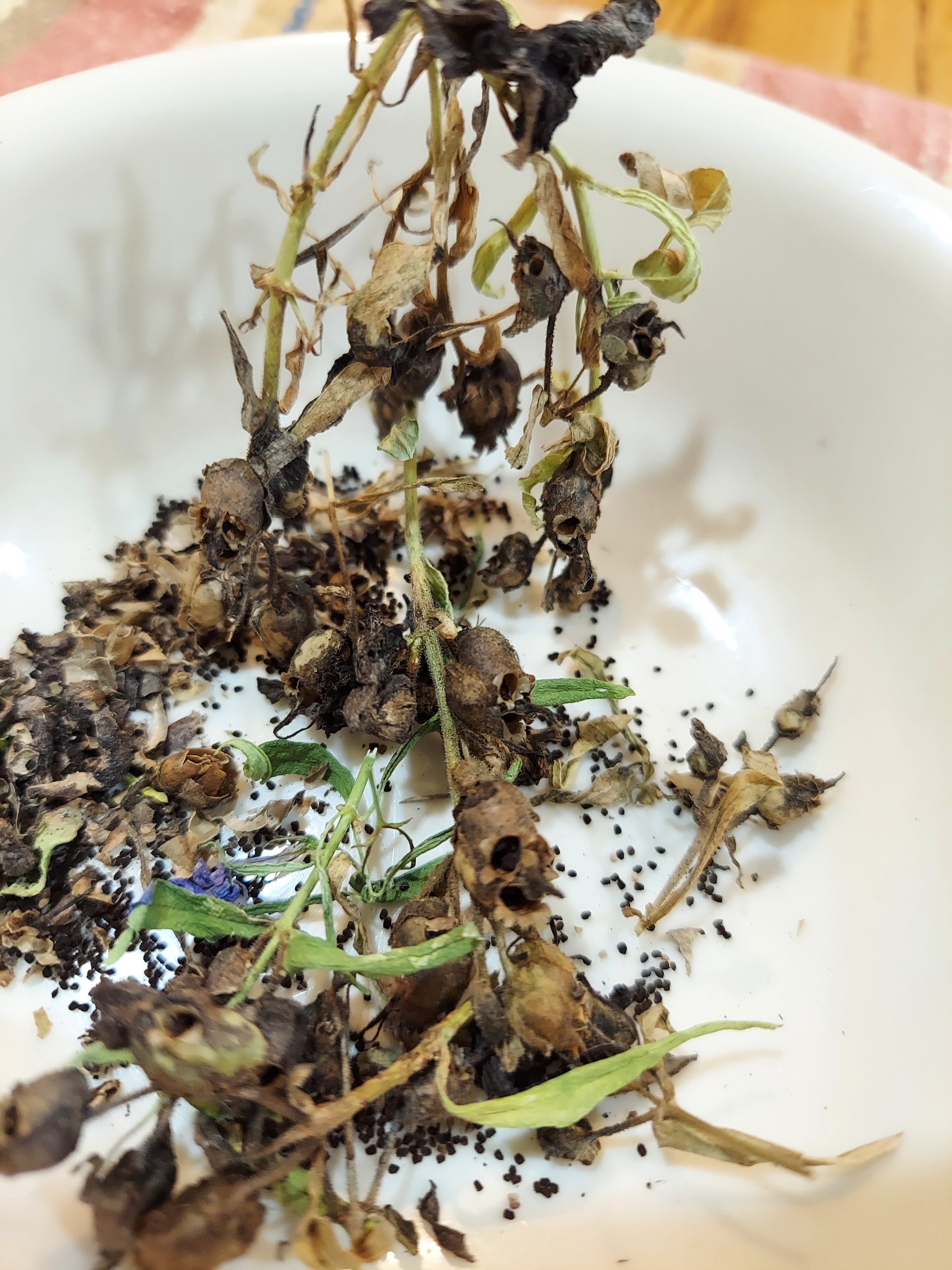
One of the new types of flowers that I grew this year was dwarf snapdragons. I really liked how they looked scattered throughout the garden, and their vertical flower spikes were really pretty. I saved a bunch of the seeds, but these were harder to gather up. First off, they are tiny little specks, you can see them in the bowl. Second, in order to save them, I had to shake or crush the seed pods, which look like skulls! It made for an interesting experience. This is once again a mix of colors all in one bowl; I had red, yellow, white, and pink. They were pretty easy to grow from seeds this year, I had a packet of mixed colors, so I want to do more of them next year. I will probably direct sow and start some off in seed cells.
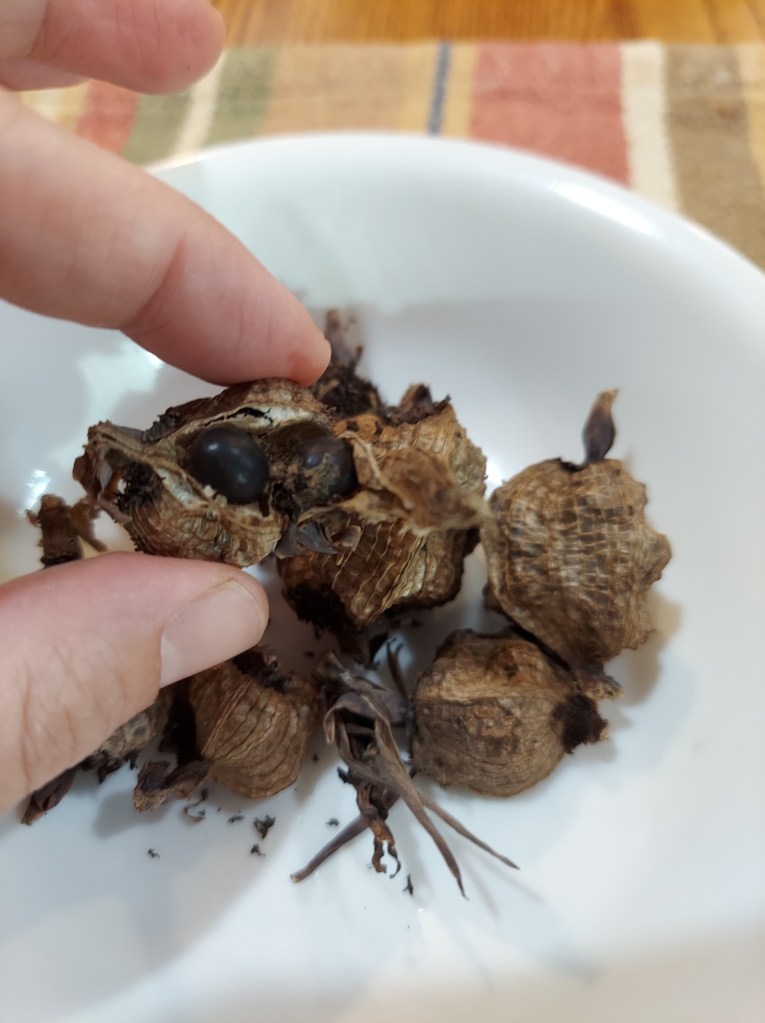
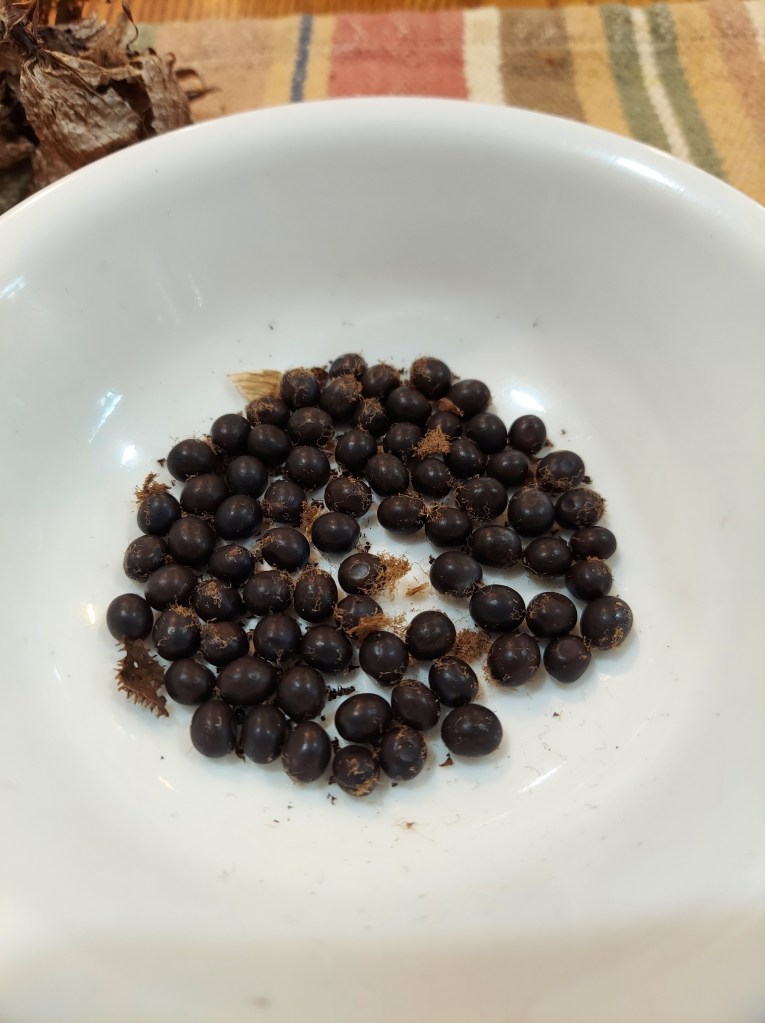
Each year I save a bunch of canna lily seeds, they develop in these large bulky seed pods. They turn from green to brown and when they feel papery thin is when to harvest them. Each pod contains anywhere from 8-20 seeds.
Collecting the seeds is easy, but germinating them in the spring is a bit tricky. They are rock solid and bounce around when dropped. In order to penetrate the seed coat they need to be cut or scarified in some manner. Last year I grew some from seed and my dad had to use a hack saw to slice a thin gap for the water to be able to get in. Canna lilies are pretty easy to propagate via division of the tubers, but if you don’t want to deal with live plants or dried tubers all winter long, then starting from seed is an option. We dug up all of our plants and put them in the basement, so I should have plenty of mature plants to put back out in the spring.
Bean and pea seeds are also easy to save, as are sunflower seeds, as long as you can protect the flower heads, so you get to the seeds before the wildlife. I tend not to save squash or melon seeds because they cross pollinate very easily amongst themselves which can result in strange hybrids. There are ways to do it, but it is more complicated. In past seasons I have saved lettuce and indigo seeds as well. It can be a fun project to try out, and it enables me to be a bit more self-reliant. I know seed packets are pretty cheap, but there’s just something cool about planting seeds I harvested and stored myself. Makes it a more full-circle process.
The gardening season effectively ended here in NY in October. We had our first hard frost early in the month, then had a few more weeks of milder fall weather. Most of my tasks for the month involved clearing spent plants, moving the fig trees into the basement, planting garlic, and building up the compost pile as much as possible before winter arrives.
I harvested the last of the dahlia flowers before the plants were killed off by the fall frost. In total I cut 240 dahlia flowers over the season, from 9 plants. They were more prolific than I expected, and the plants also got way bigger. I will need to utilize a more robust trellising system next year. I grew an assortment of zinnias and large marigolds that I also used as cut flowers for the kitchen table. My newest rose bush produced several lovely flowers and put on a lot of growth. I’m looking forward to seeing how much more it grows next year.
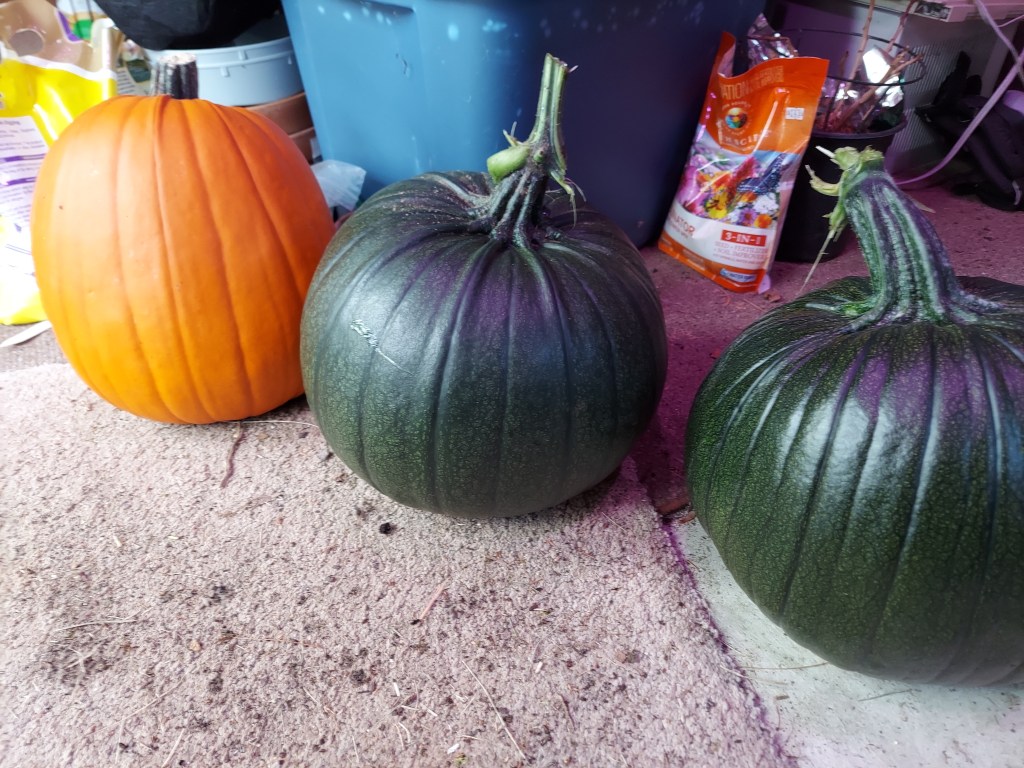
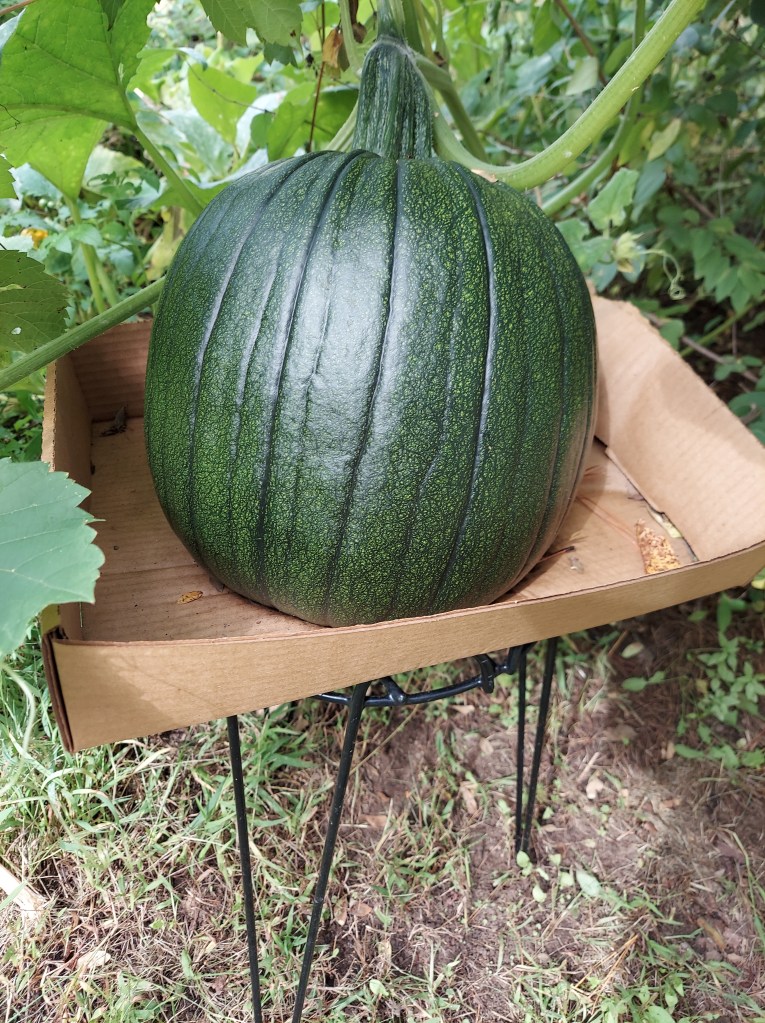
My three homegrown Howden jack-o-lantern pumpkins. We harvested the two green ones right before the frost hit and used them to decorate the front porch. In total I grew 69 pounds of pumpkins! 3 large jack-o-lantern, 2 medium pie sized, and one tiny decorative blaze. We also used the corn stalks along our front porch, I enjoyed having my own homegrown fall decorations.
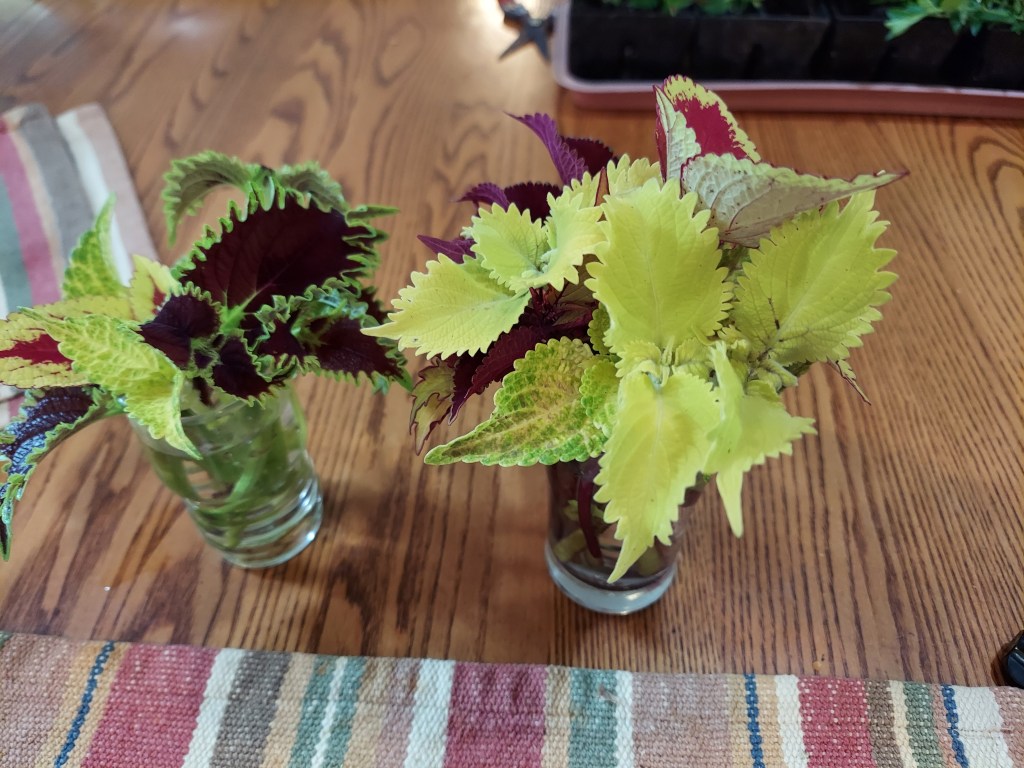
The coleus plants were also killed off by the frost, but I took a bunch of cuttings beforehand. They have been relatively easy for me to root in water, and last year I managed to keep about 10 plants growing over winter. This gave me a jump start on the season and saved me from having to buy seedlings.
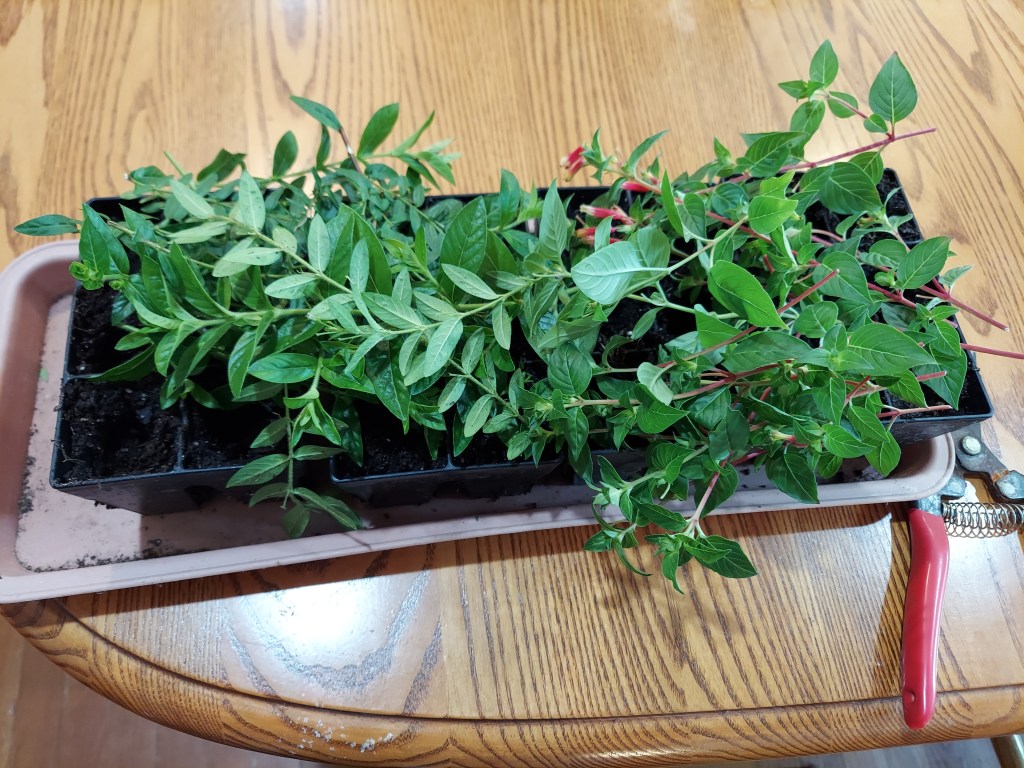
This year I purchased 1 Mexican heather and 1 cuphea plant from work to grow. They both did really well and were great for the pollinators. I saw humming birds quite frequently making use of the long flowers. I read online that these are both fairly easy to propagate via cuttings so I took a bunch before the frost.
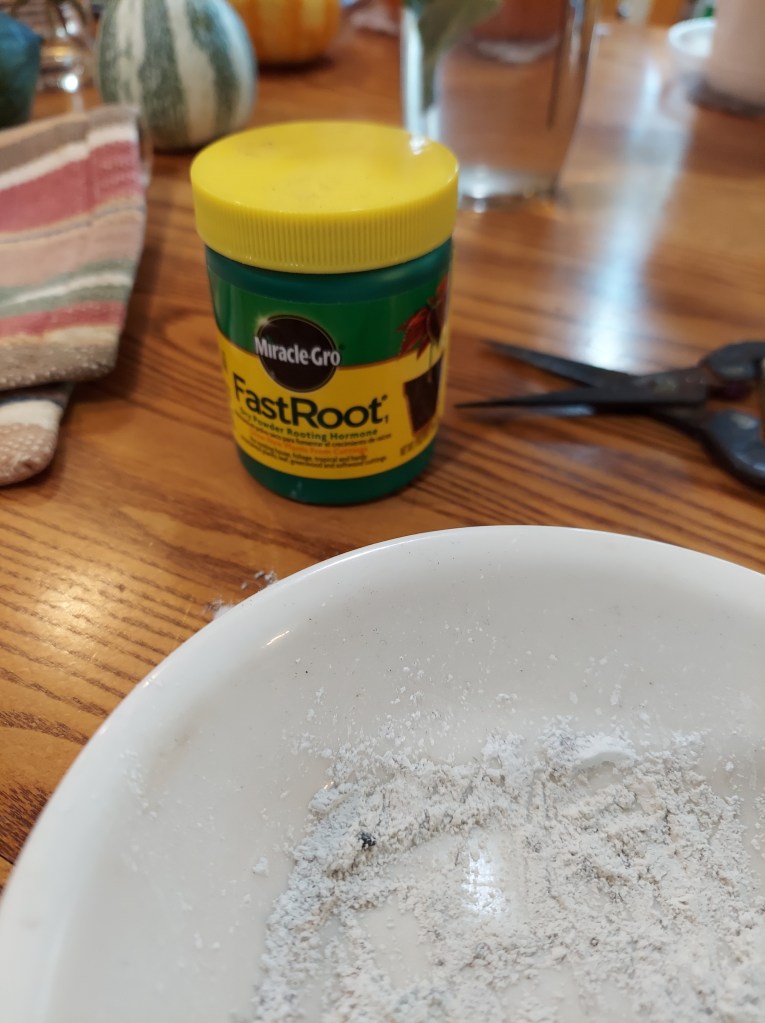
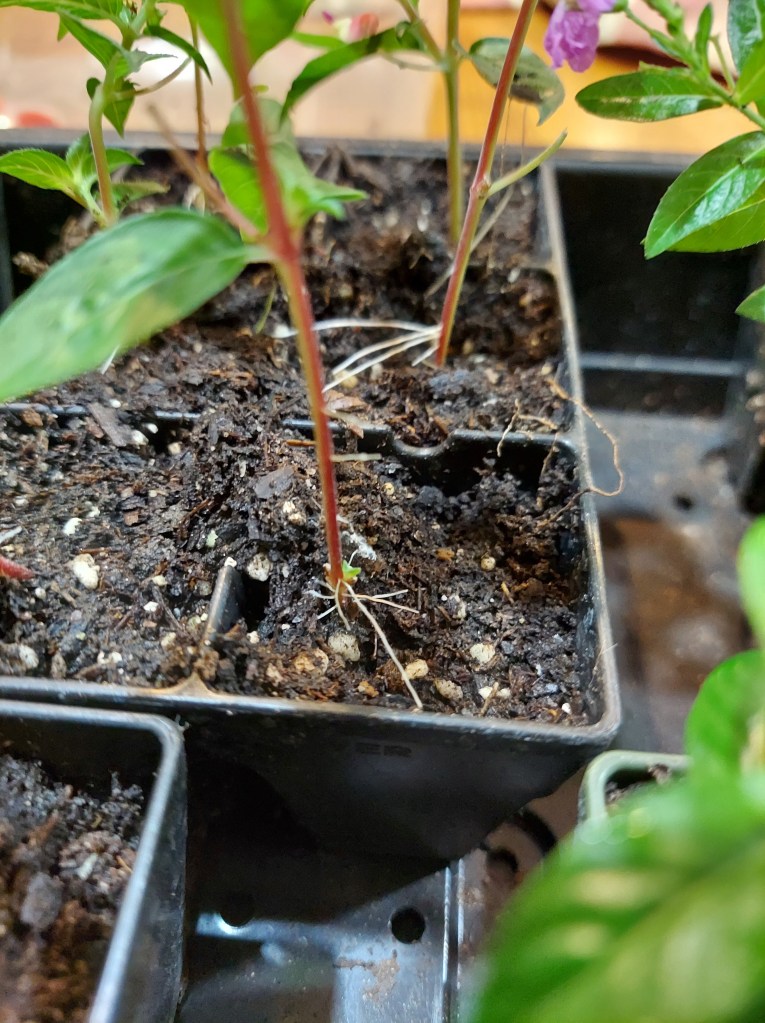
I removed the leaves from the bottom of each stem and then coated them in rooting powder before carefully putting them in seed cells full of soil. I put them in a mini greenhouse for several weeks and watered occasionally.
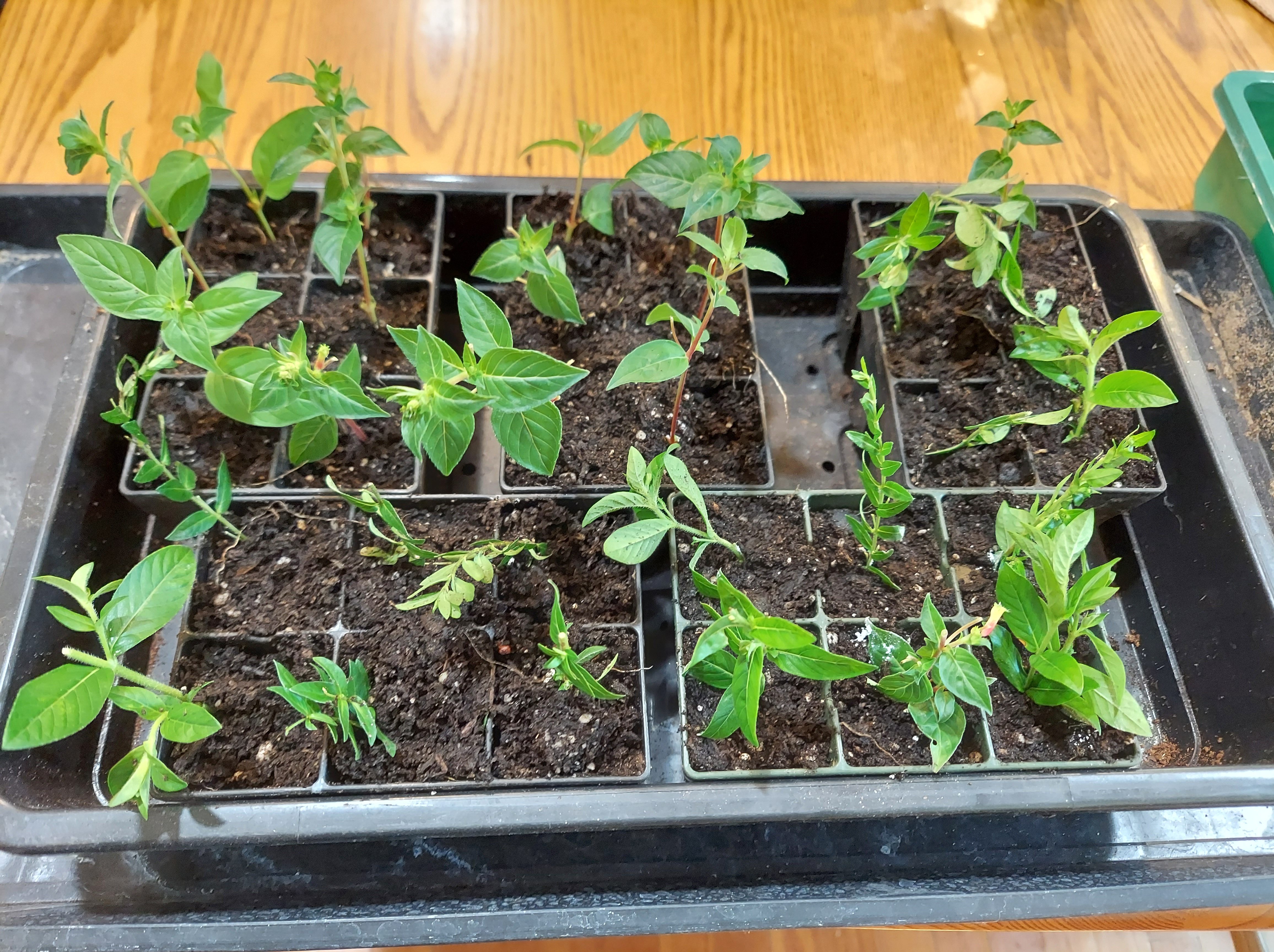
Here they were all ready to be put in a mini-greenhouse. The extra humidity helped them to root faster.
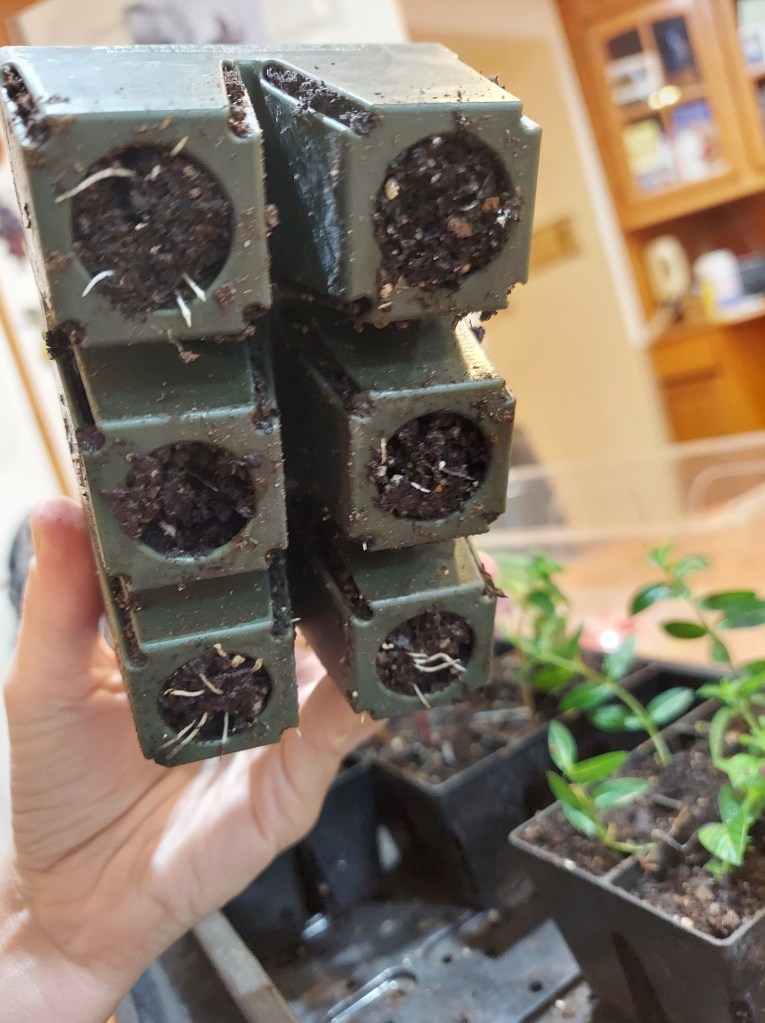
Here’s how they looked at the end of October, nice root development. I transplanted about half of them which had visible roots up to 3-inch pots so they can continue growing.
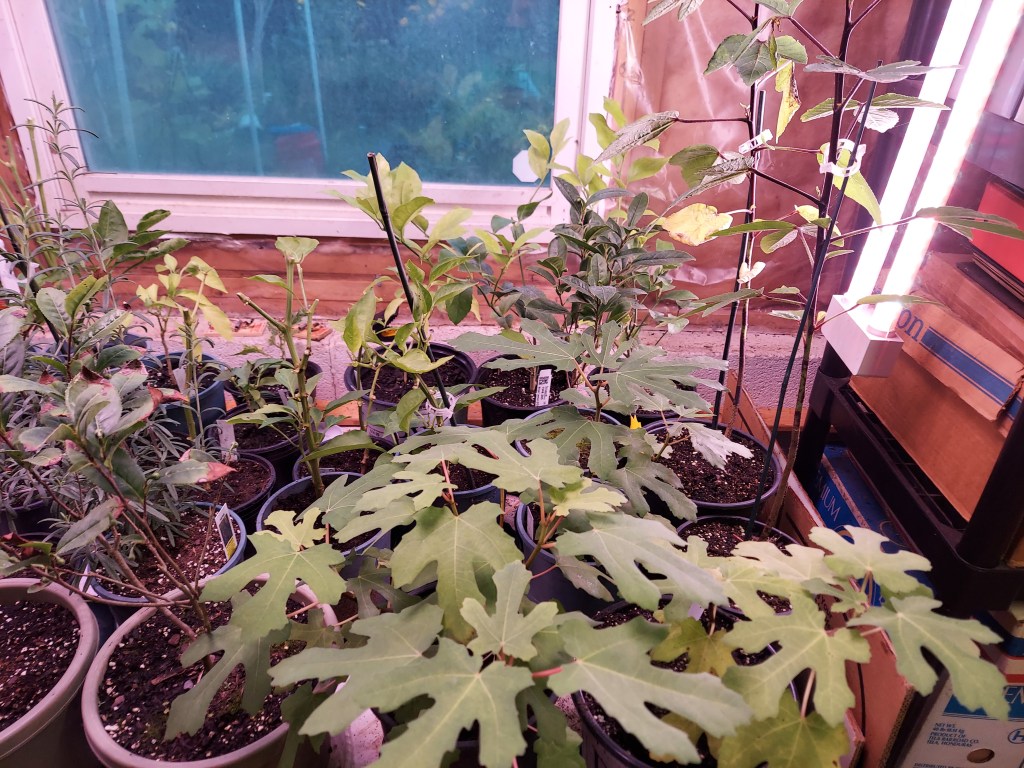
Before the frost hit I also moved a bunch of plants into the basement. All the potted fig trees had to come in. They had been slowing down and had already lost a lot of their leaves by early October. But I didn’t want them caught out in the cold weather. I also moved in some pepper plants, and I dug up the rosemary to try to overwinter. I’ve not had success in the past, but I’m going to try again. Pepper plants are perennials in warmer areas and it would be nice to get fruit earlier in the season if I can keep a few plants alive. They are all sitting near a window and I have grow lights that I keep on all winter. Many of the dormant fig trees are at the other end of the basement where they do not get direct light. I try to water the trees once a week.
I planted out about 80 garlic cloves in their usual in-ground garden bed during the first week of October. I put down a couple of bags of fresh potting soil and compost on top of the bed to add some fertility. In each planting hole I added some slow-release fertilizer and worm castings as well. Once they were in, we added a thick layer of fall leaves to act as a mulch.
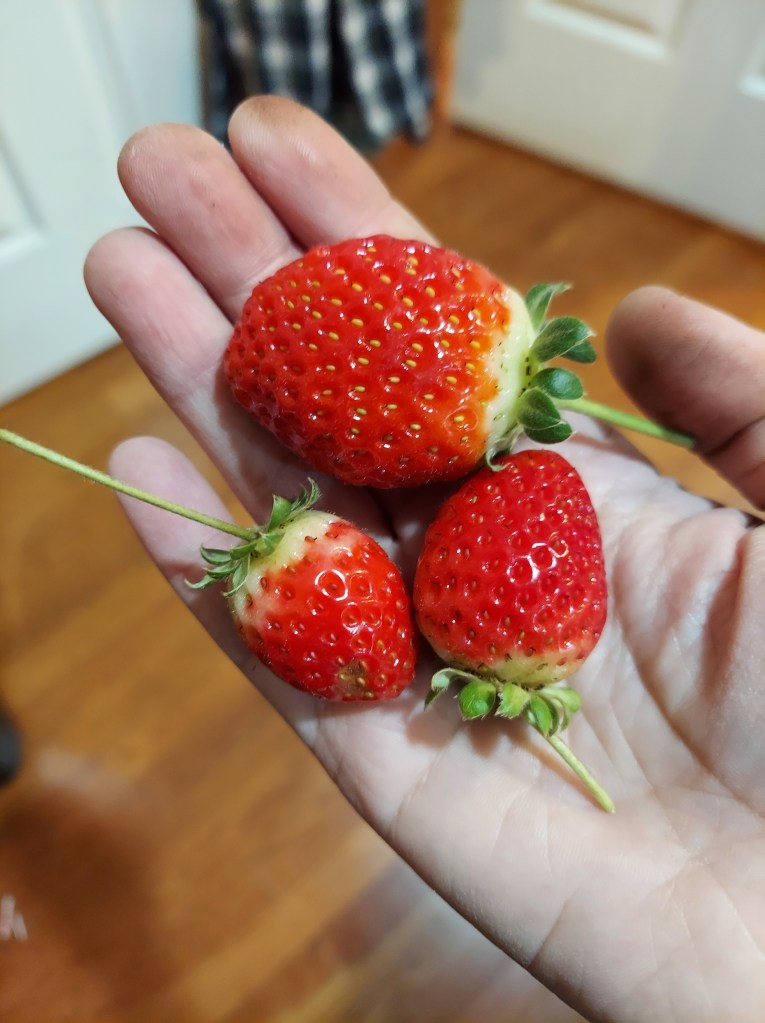
The final three strawberries from the tower before the plants went dormant for winter.
For the 2025 season I had a total of 102 harvest days, from January-October. I grew 215 pounds of fresh fruit, veggies, flowers, and herbs in my backyard garden over the course of the year. Can’t wait to see what will happen next year!
September was a busy month, the garden was very productive, and I had a hard time keeping up with everything. The summer plants were in full swing, and I harvested pounds of tomatoes. The weather was also quite nice and we had a lengthy growing season before the first frost hit in October.
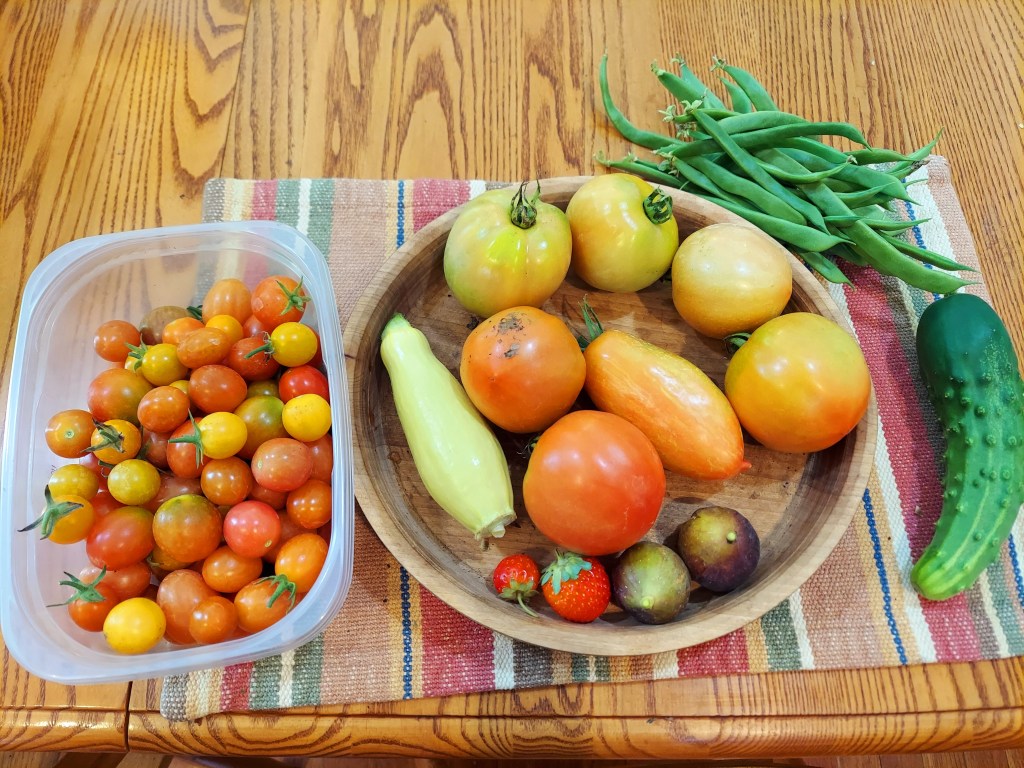
A regular harvest, the cherry tomato plants sprouted up all over the place from dropped fruit from last year, and I left many of them to grow rather than pulling them out. The chipmunks liked the tomatoes too, so I ended up harvesting many of them early and let them ripen on the kitchen counter.
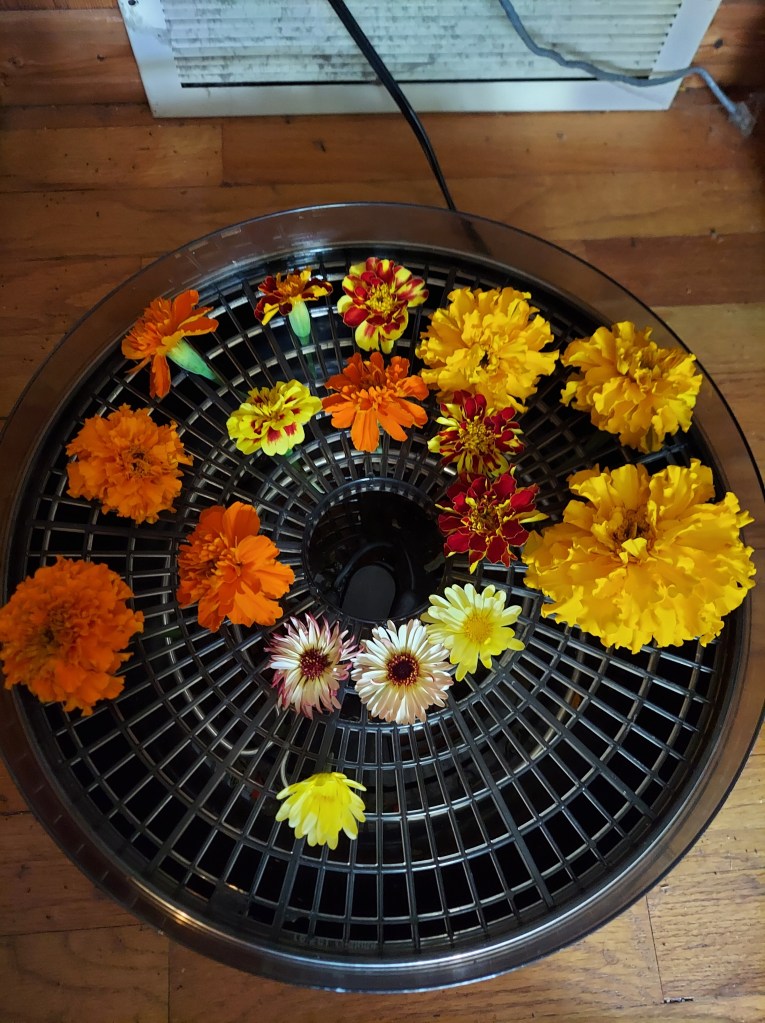
I harvested and dried a bunch of flowers from the garden, including these marigolds and calendula. I also saved cosmos and coreopsis for future natural dye projects.
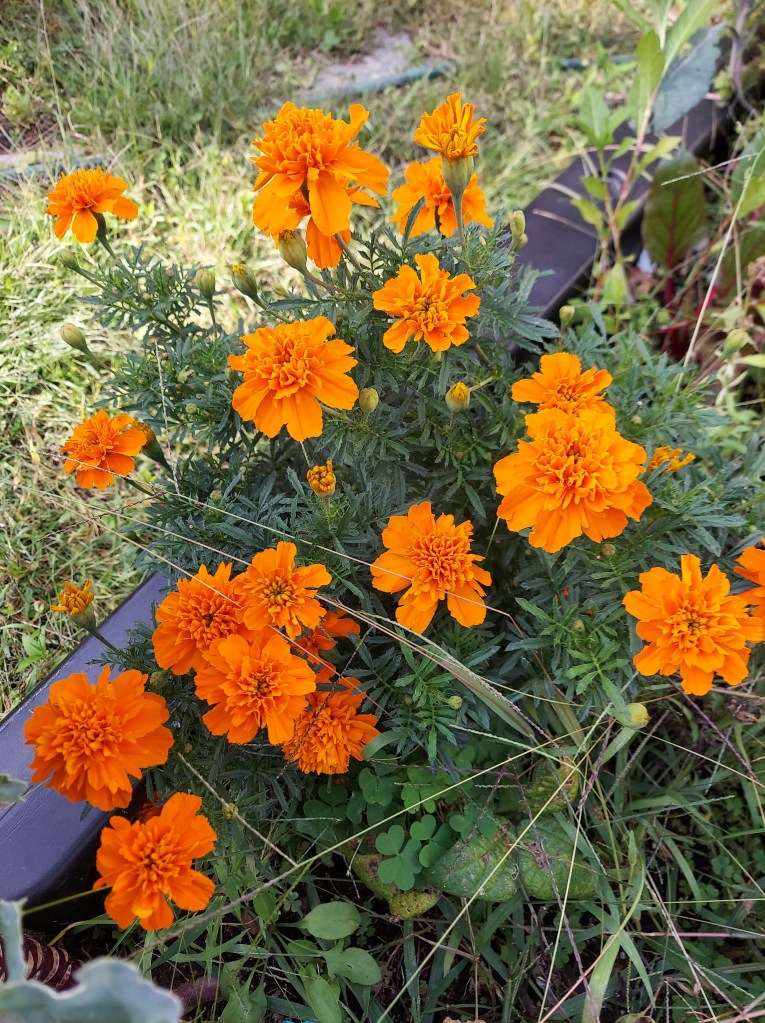
I grew a bunch of marigolds this season scattered throughout the garden. A couple of the plants in the dahlia bed grew to be as tall as the dahlias!
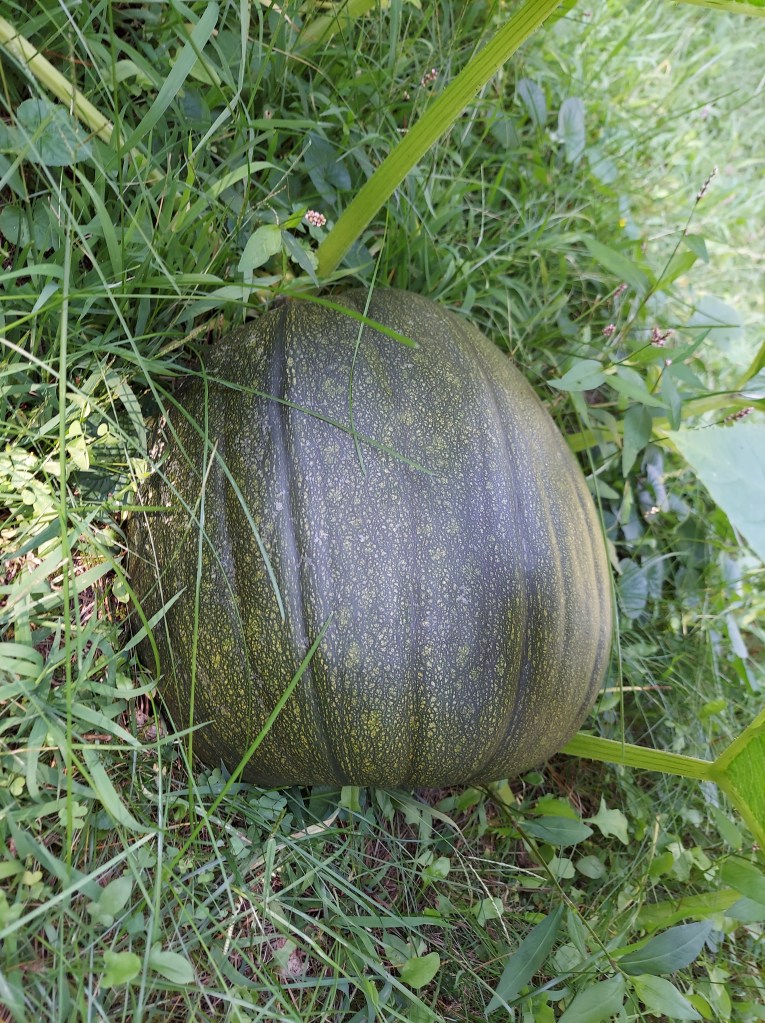
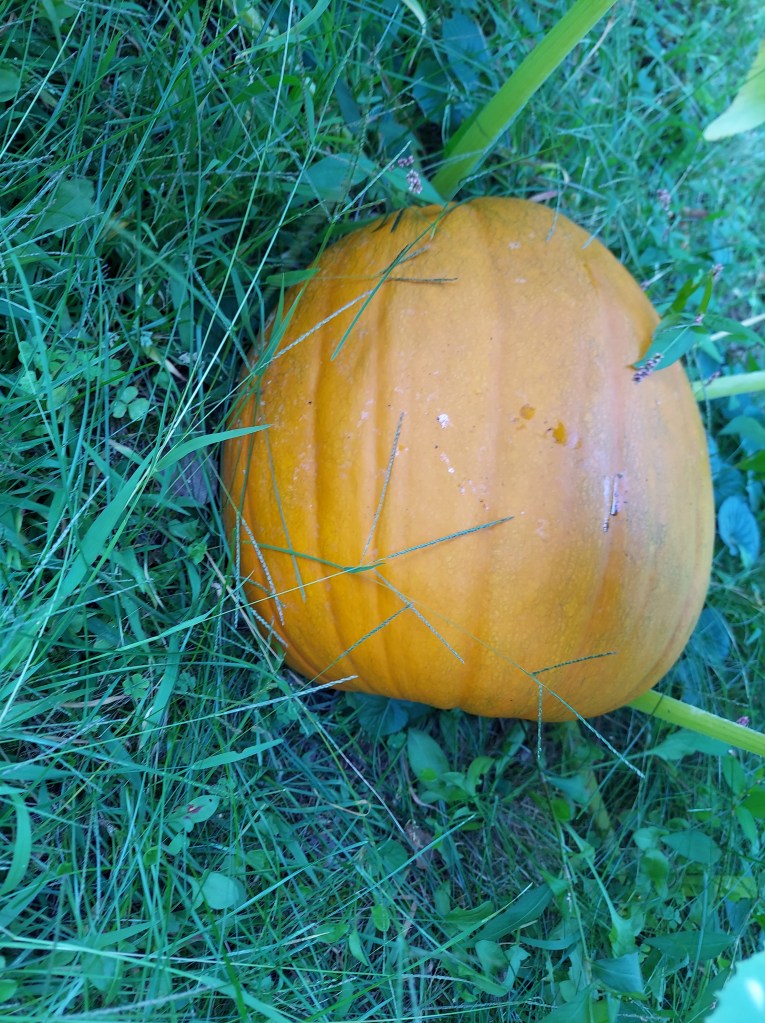
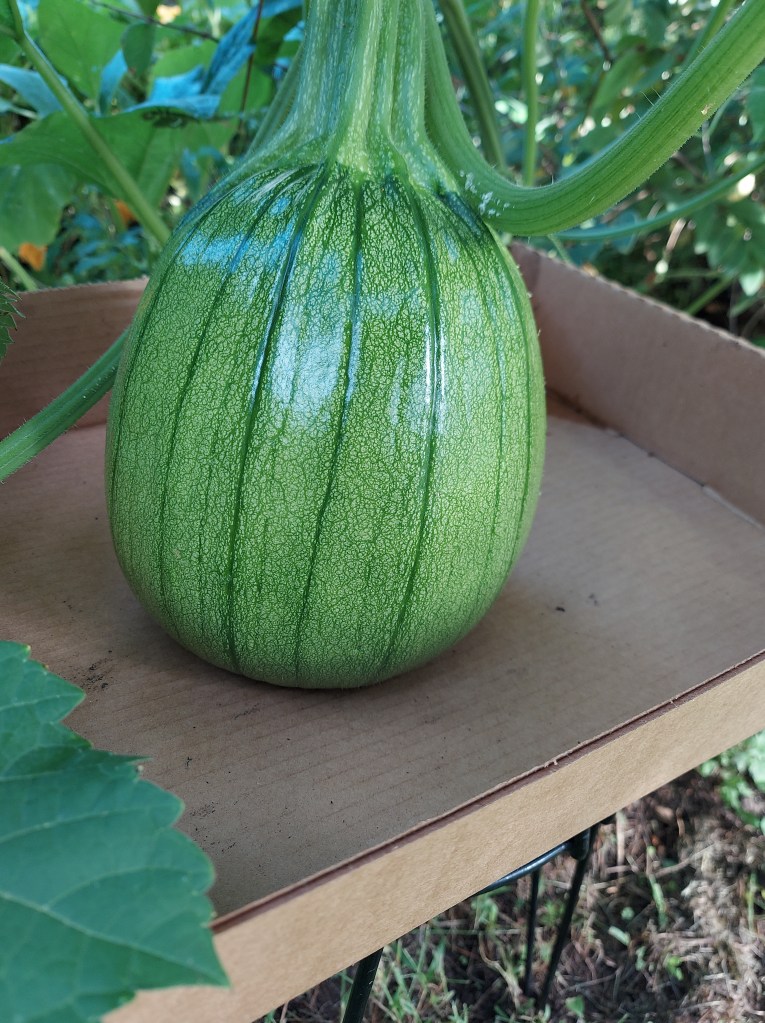
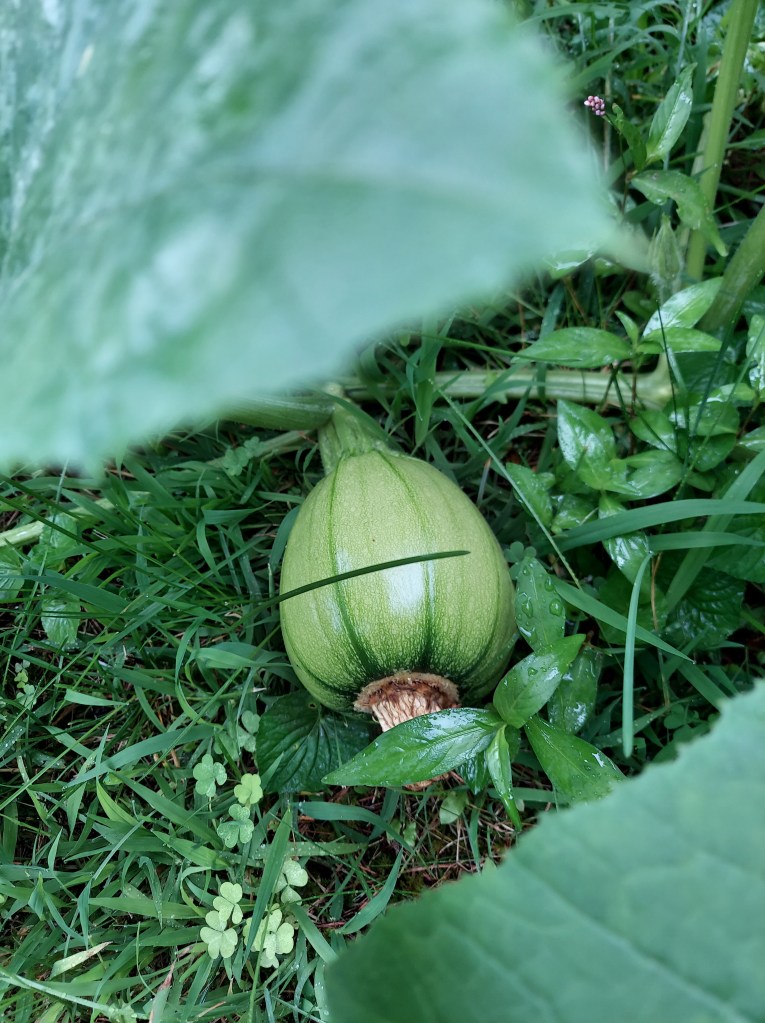
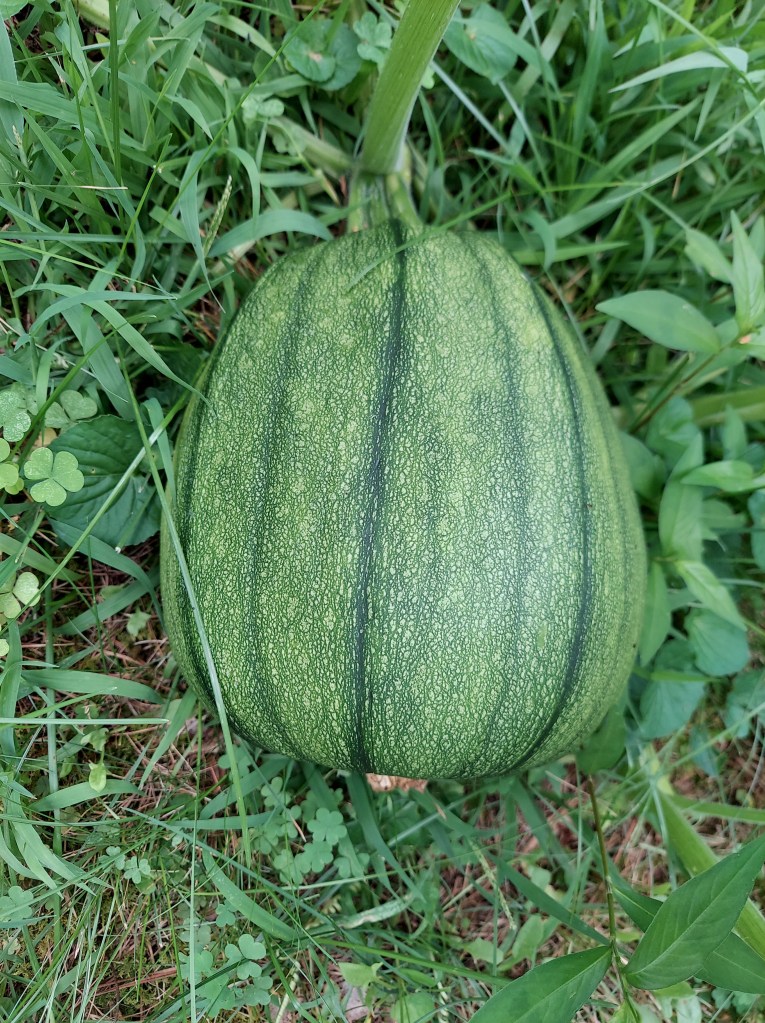
The compost grown pumpkins really came into production in September. I was worried about the lack of fruit earlier in the season, but I did manage quite a good harvest. Two of the jack-o-lantern sized ones remained green since they had a late start, but they made for good decorations.
This particular pumpkin grew about 3 feet off the ground because the vine started climbing a nearby shrub. In order to support the vine, we put a plant stand underneath with a cardboard box on top so it wouldn’t get stuck in the slots.
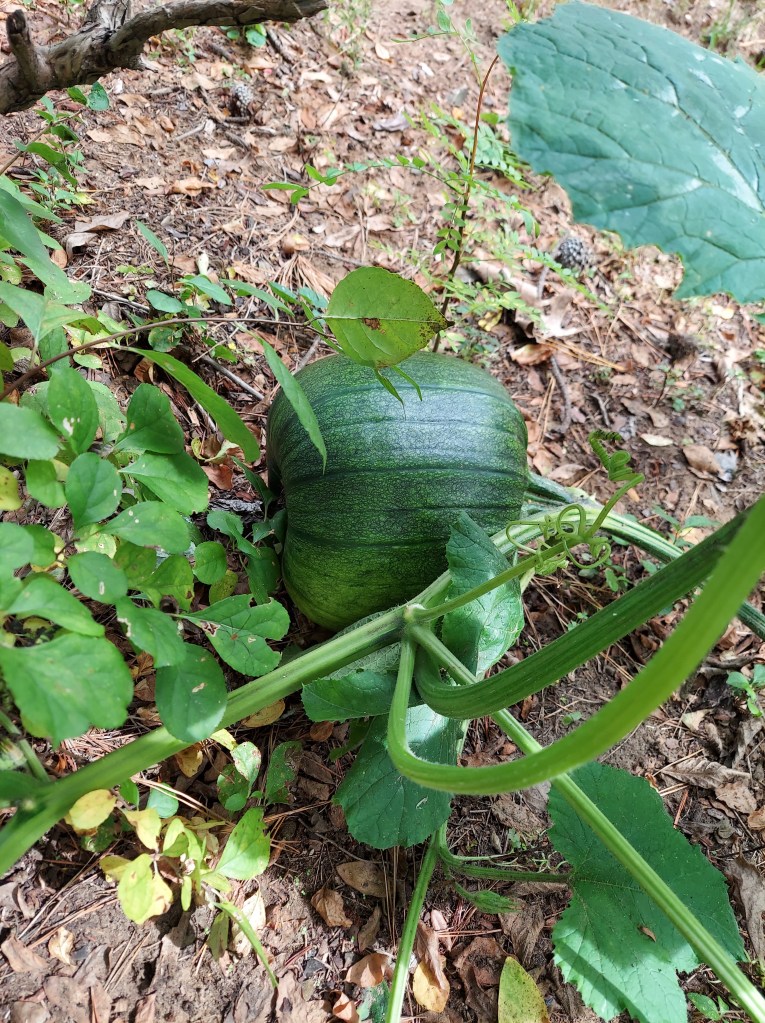
The final full-size unrip pumpkin growing near our magnolia tree. The vine stretched about 25 feet from the compost pile to the border with our neighbor.
I brought home a free passionflower plant from work in mid-August and by late September it was recovering and blooming. The flowers are very unique and pretty.
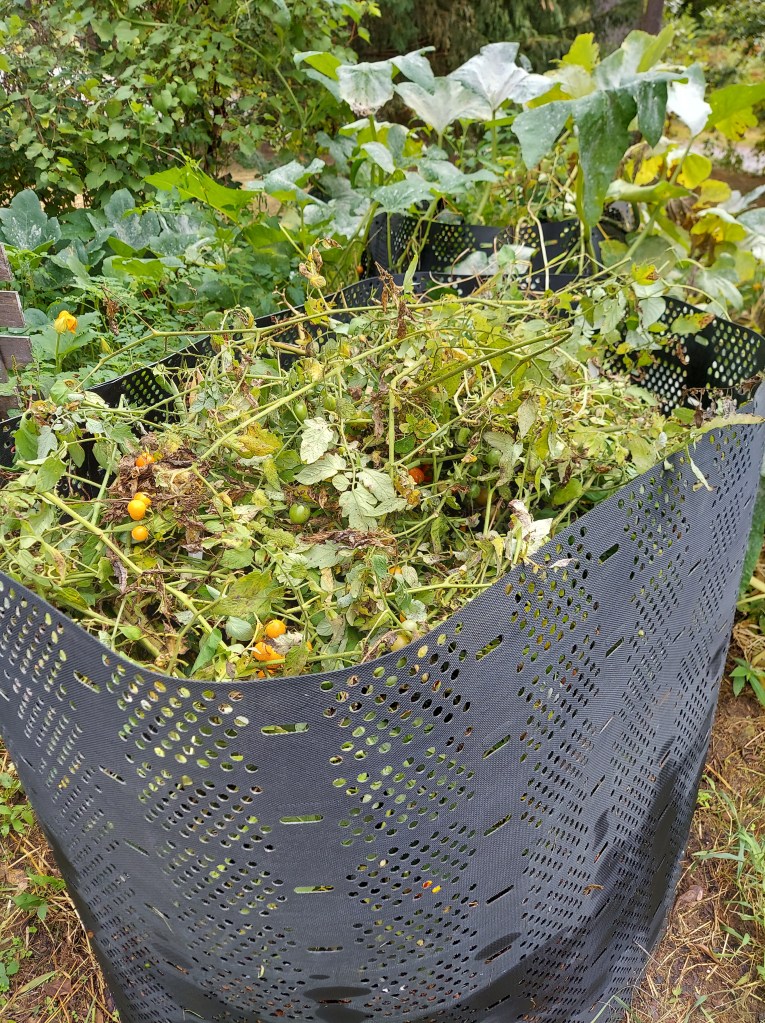
I finally managed to fill the compost bin for the first time all season once I started clearing out summer plants at the end of September. Last year’s compost with the pumpkins growing is just visible behind this bin. The compost in that bin is finished, and I will spread it in the garden in spring. Once that bin is empty, I will turn this bin into it, break up any large stems, and then let it sit and break down for a full year. Composting is a long, slow process, but once I flip the pile, I can basically forget about it. I’m very grateful that we get a bunch of fall leaves, free mulch! I add a bunch to the compost pile to balance out the fresh material and use leaves to protect the fruit trees over winter.
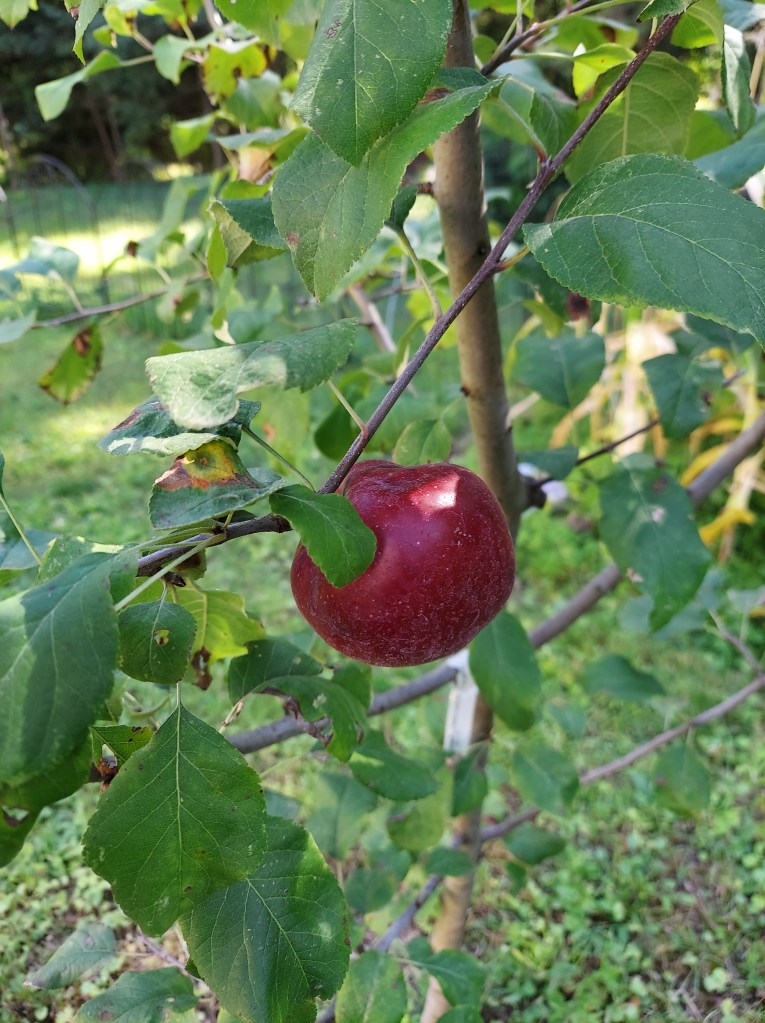
My one-year-old Cortland apple tree actually produced fruit this year! I harvested 3 small apples from it. Looking forward to seeing how many more it grows next year.
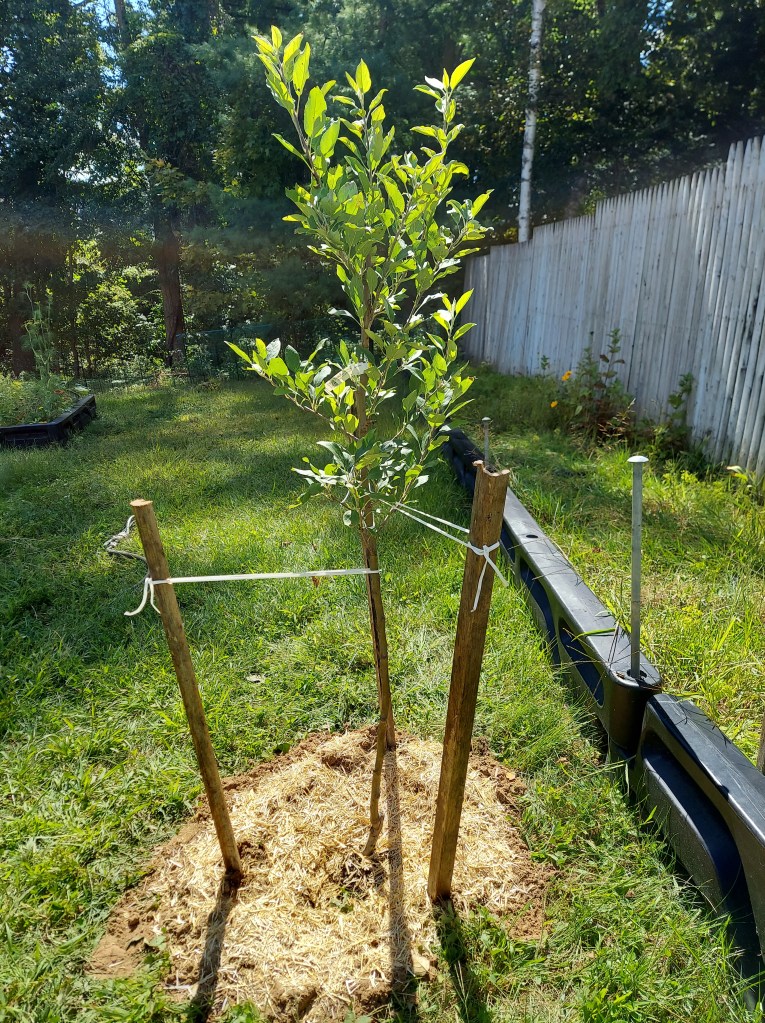
I also bought an additional apple and pear tree from Stark Brothers Nursery because two of mine from last year was not doing well and I wanted to have a replacement if it died over winter. Thankfully they both survived so that meant I had to find new places for the “replacement” trees. They had lived in pots with the fig trees all summer but we planted them out so they could get settled in before the frost hit. We planted them in early September, staked them for additional support and put down a layer of straw mulch to suppress weeds.
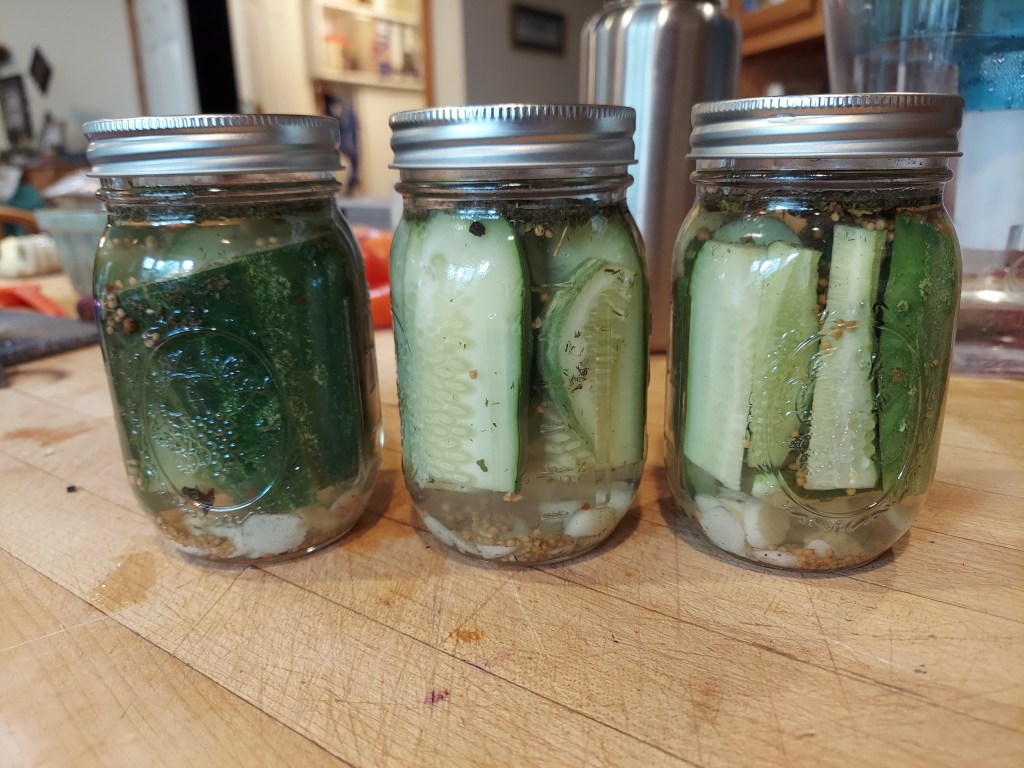
In September I finally had enough cucumbers at once to make a small batch of refrigerator pickles. I’ve never tried canning, but the fresh method works well for making a few jars at a time.
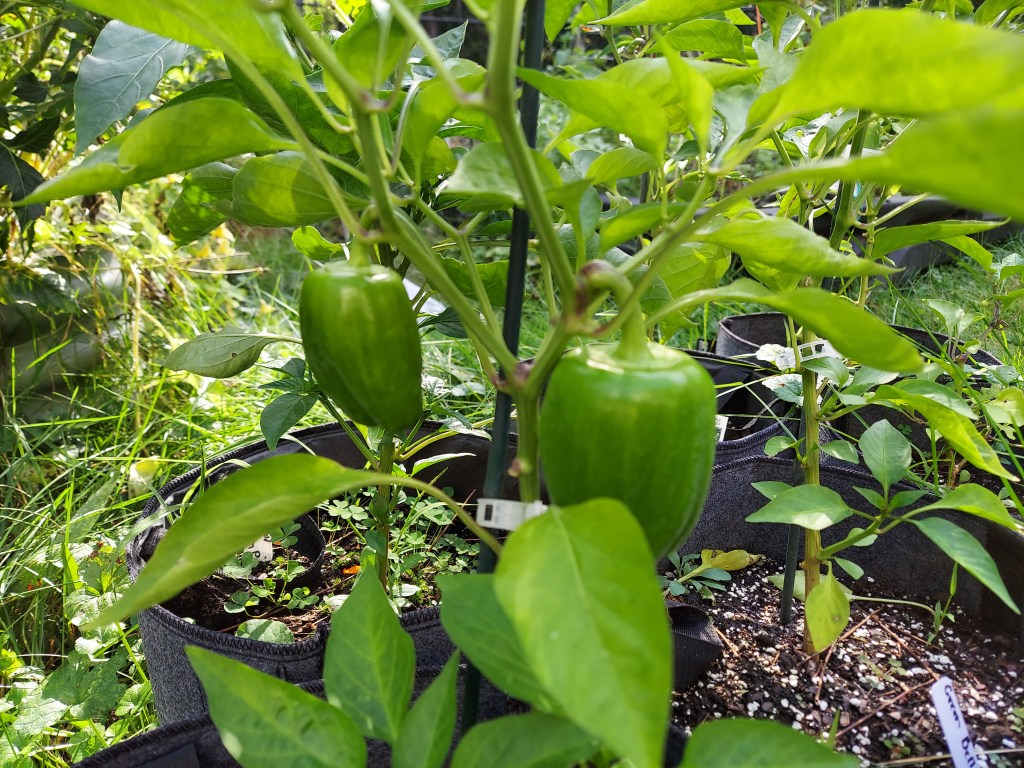
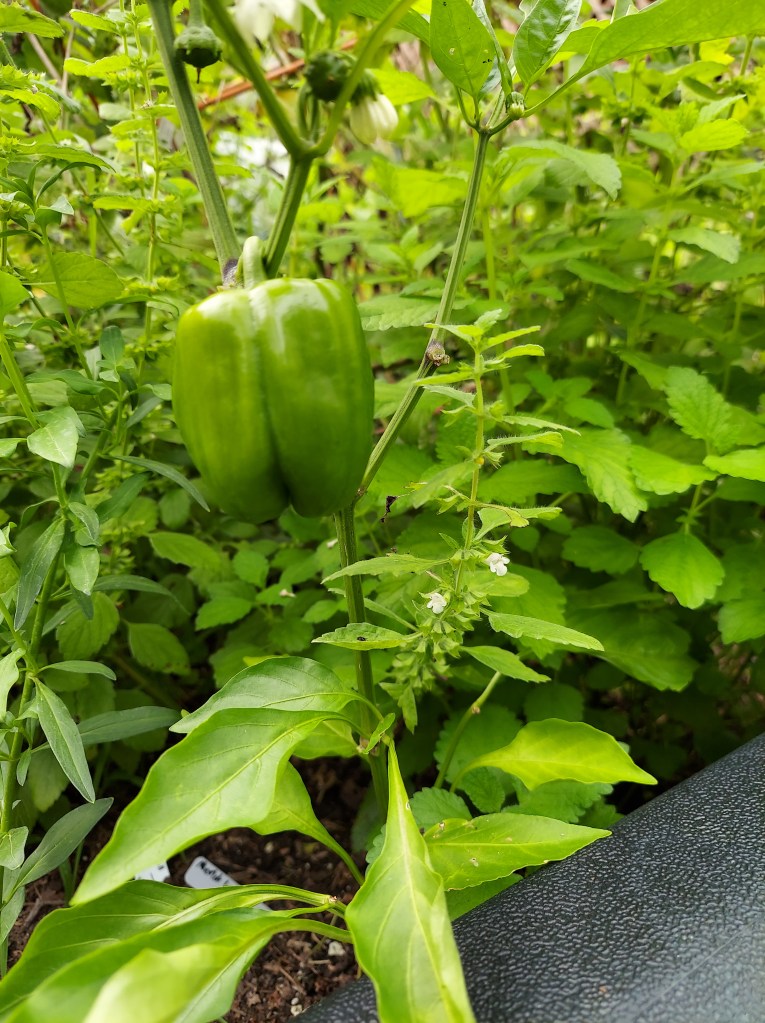
The potted bell pepper plants finally started producing small peppers in late summer. I ended up harvesting them all green and using them when I made pasta sauce. I’m still trying to get peppers right, but I never seem to get fruit until late August/early September, and they almost never have a chance to ripen to their proper color. I will be trying to overwinter some of the plants indoors to see if I can get a faster start to the season next year.
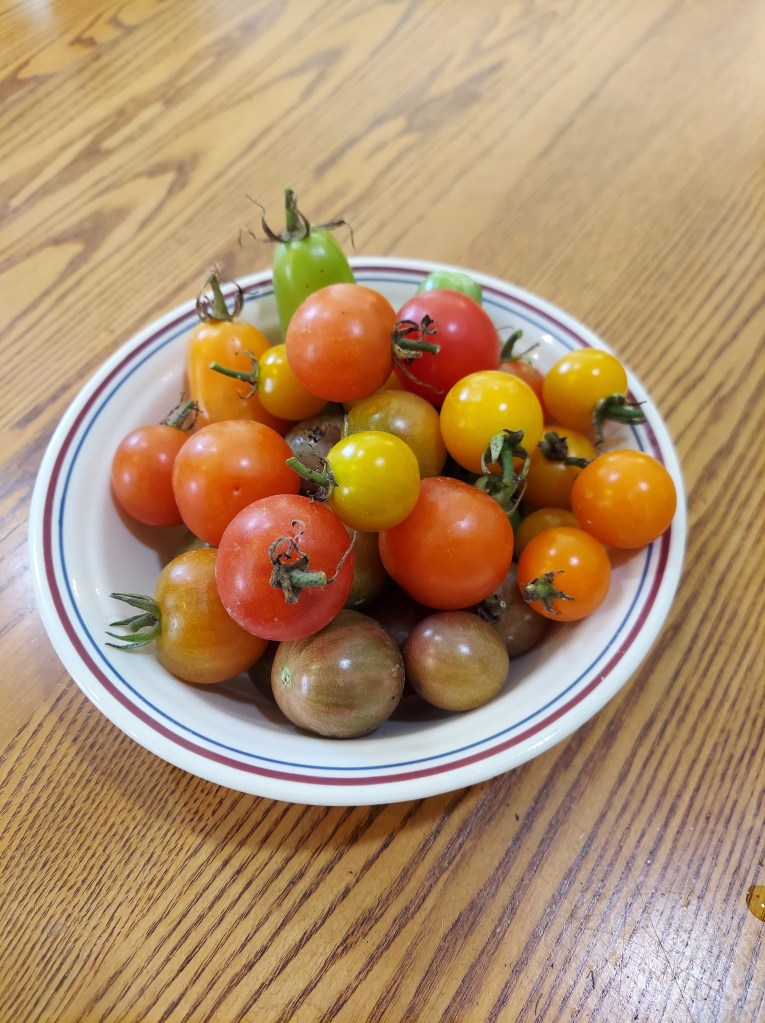
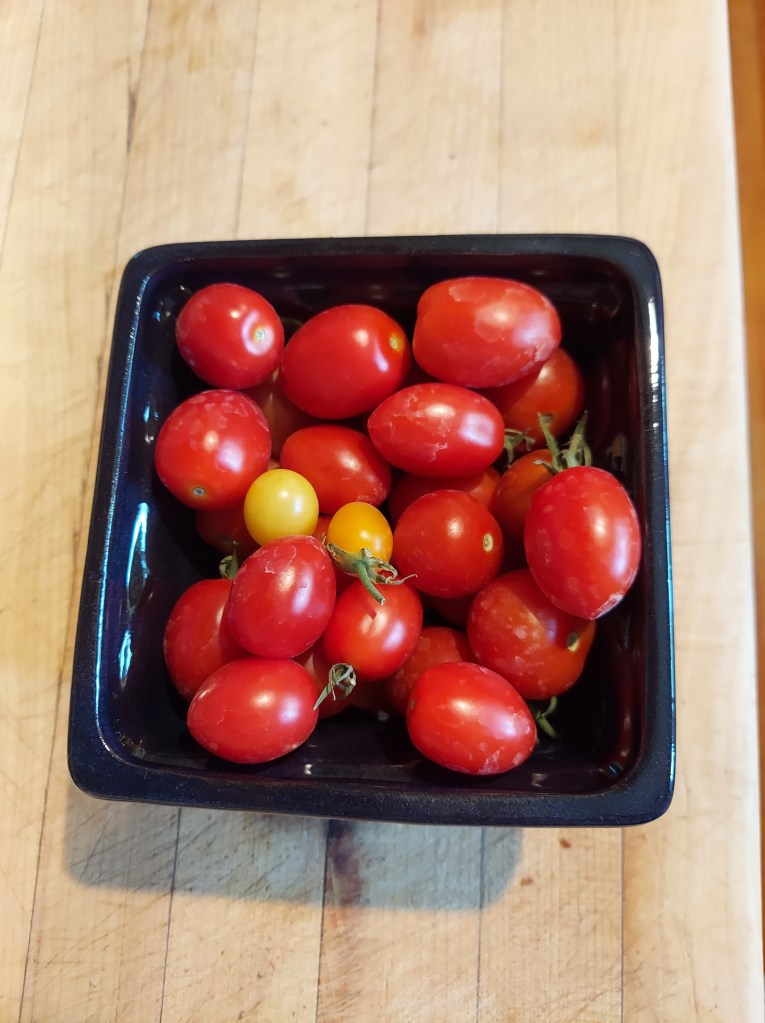
The last bowl of cherry tomatoes before I removed the spent plants to the compost pile. There were many days where I harvested 1-2 pounds of tomatoes.
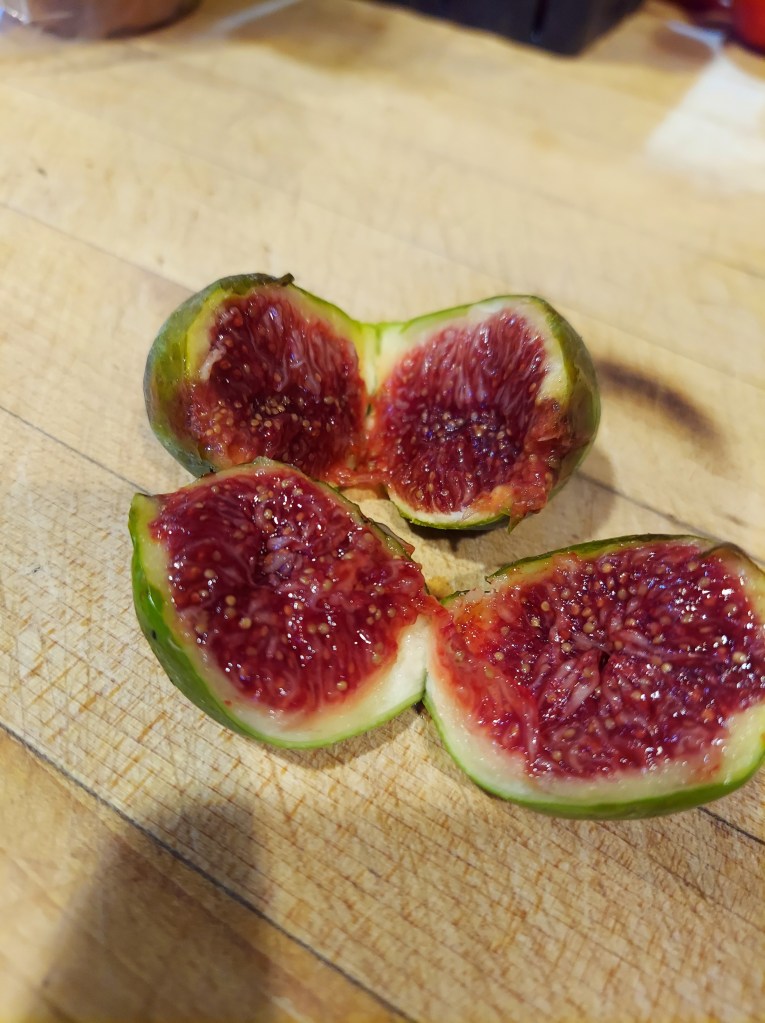
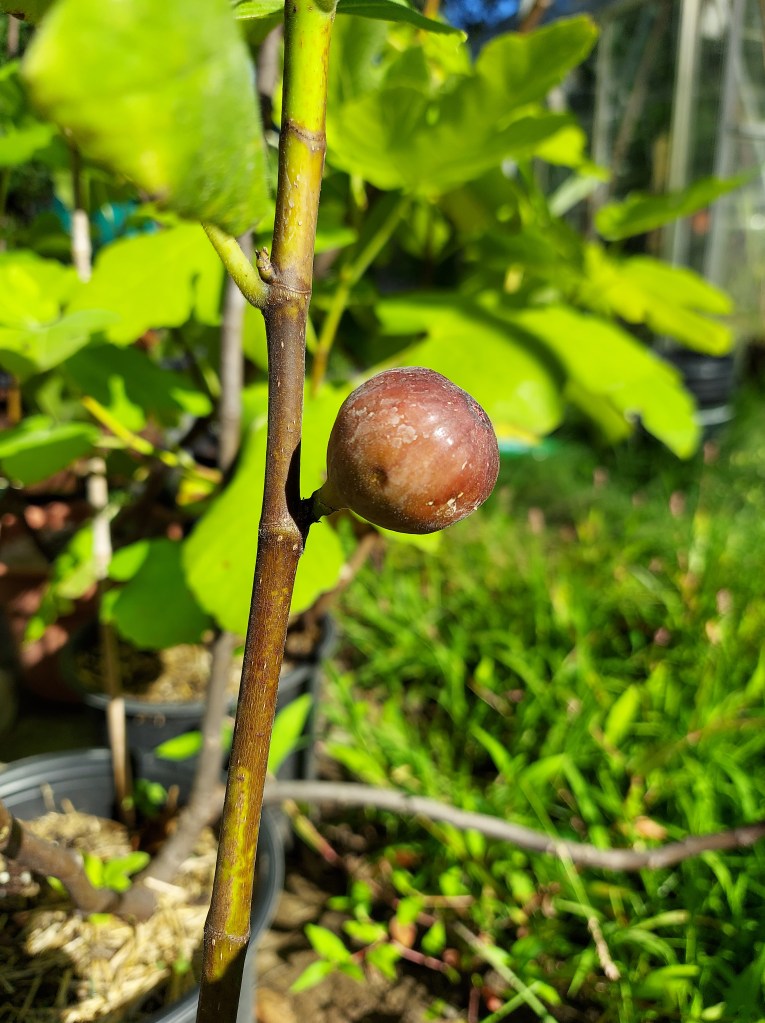
I did manage to get a modest fig harvest this year from my established trees, a few pounds total. These are two of the late season Green Ischia figs I had with breakfast on hobbit day.
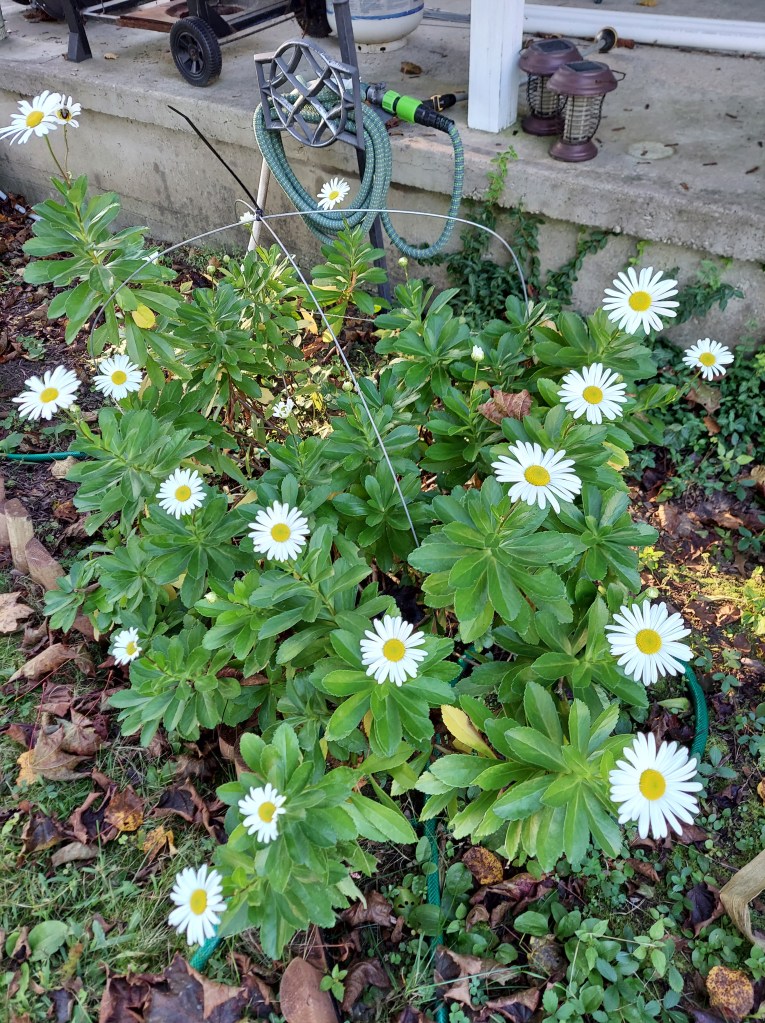
The fall blooming Shasta daisies provided a nice pop of color when most of the other plants were fading away. I still have kale, celery, and some herbs in the outside beds. I planted a few lettuce seedlings in the greenhouse so I’m going to see if they survive winter.
This season proved to be very productive on the whole. There were some surprising wins and some difficult challenges to content with. The year started off with a lot of rain and the spring was very cold and cloudy. As a result, the garlic suffered, but I had my best lettuce season yet. I experimented and grew corn successfully for the first time, not huge ears, but they were edible. My attempt at growing willow did not work out, and the woodchuck ate my squash plants and a lot of the leafy greens. The pumpkins were slow to start but still did well, the other winter squash plants did not do much. The tomatoes did phenomenal; I harvested 73 pounds total! The dahlias were a happy surprise, and I cut over 220 flowers. Next year I will need to stake them better, so they don’t all fall over. I had just over 100 harvest days from the garden over the course of the year. There’s no way to know what next year will bring but I’m looking forward to it.
The late summer garden was very productive. I harvested tons of tomatoes, cut lots of flowers, and finally saw my first few cucumbers and summer squash.
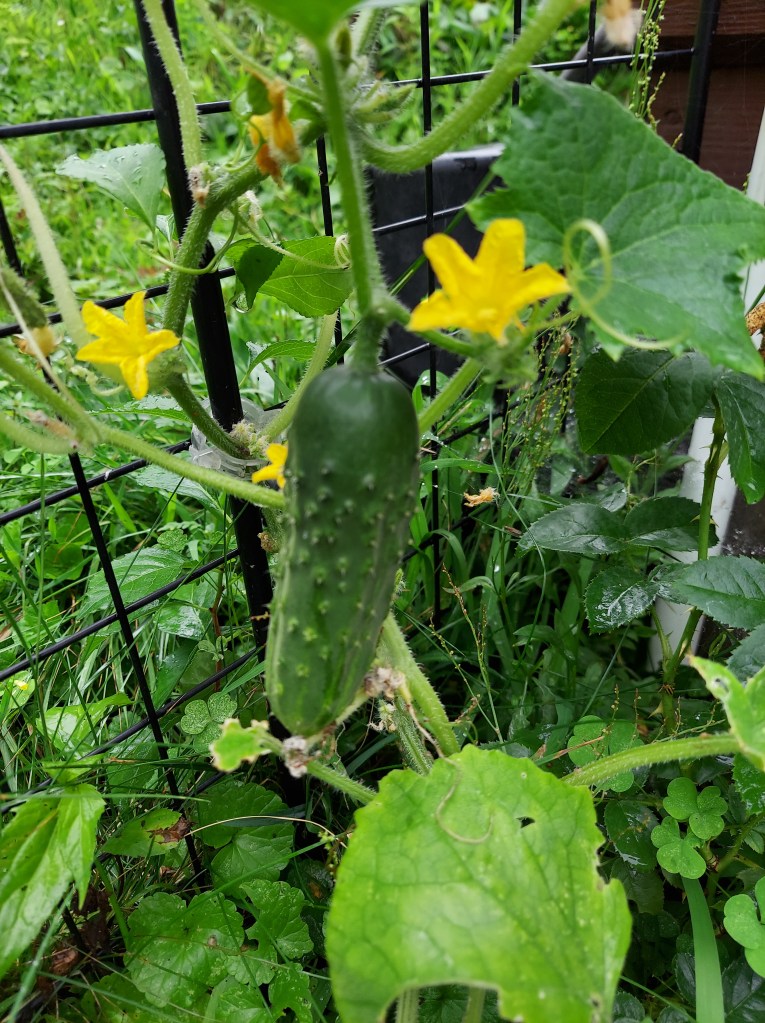
The first cucumber finally arrived on the outside plant in early August, the greenhouse plants followed a couple weeks later. I lost several outdoor plants to the woodchuck, but this one survived by being right next to the rose bush.
Pumpkin fruit also finally made an appearance in August. The huge vines growing from the compost pile put out female flowers at last. By the end of the month there were three growing, and one was almost ready to harvest.
I’m still waiting on this massive jack-o-lantern to fully ripen, but it is getting close. It’s about a foot in length and is currently mostly orange. There are still a couple weeks til the frost, so I may give it all that time.
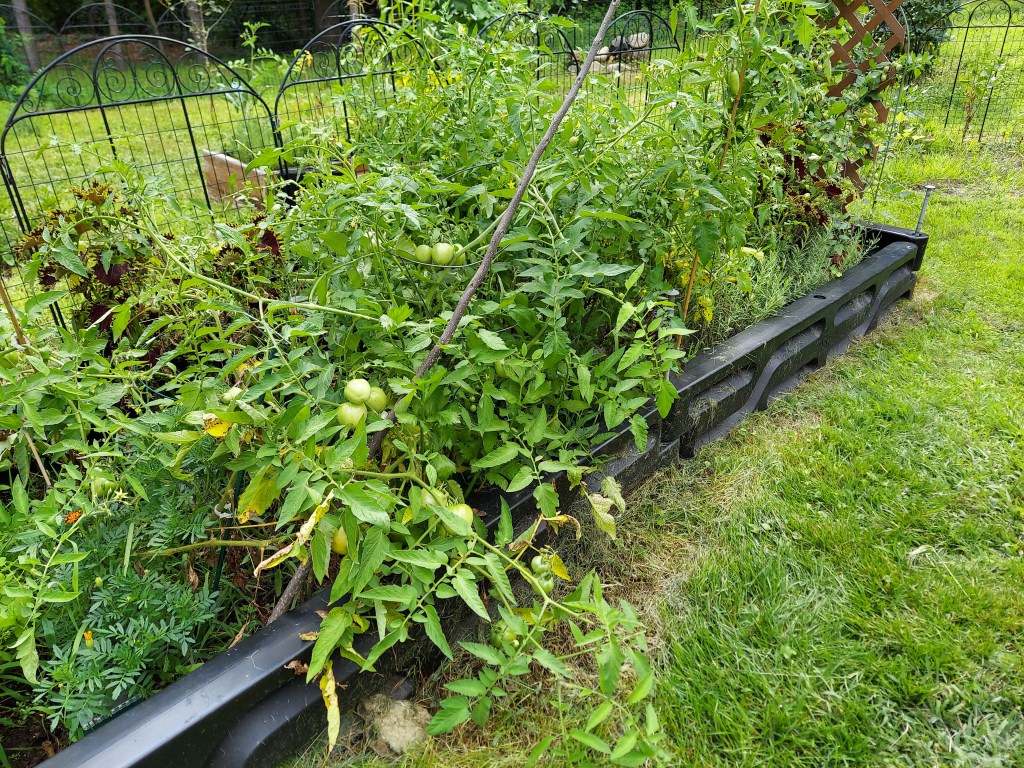
This was the year that tomato plants took over. I planted a nice selection, and then freebie plants kept popping up all over from my homemade compost. Most of them were cherry tomatoes, and I removed a few but let most of them just do their thing. I’ve now harvested over 40 pounds of tomatoes, and don’t want to process any more of them. I made many batches of pasta sauce and gave a bunch away to friends and family.
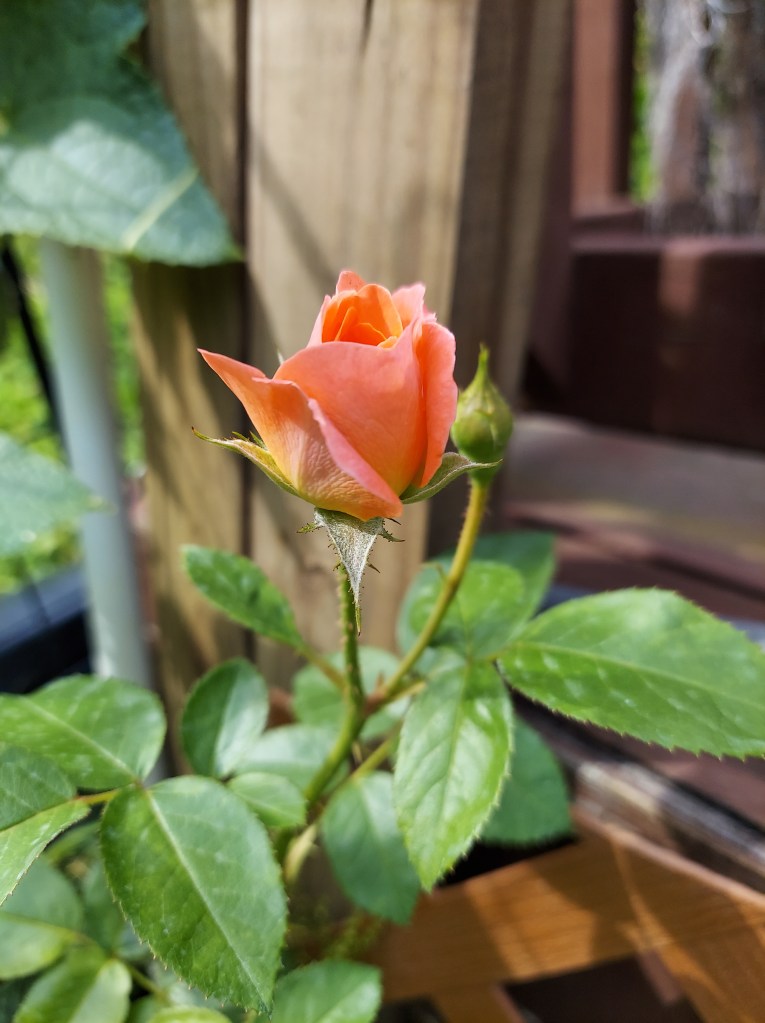
I struggled with several types of plants this year, but thankfully most of the flowers did really well. This new rose bush put out several very pretty flowers, and I’m excited to see how much larger and established it will be for next year. It was a clearance purchase at the end of last season and was only about 4 inches tall when I planted it. One stem put on over a foot of growth this year.
The new cut flower bed was a highlight of the season. I’ve cut over 100 dahlia flowers from just 7 plants. The bed is overflowing with marigolds, cosmos, and nasturtiums as well. I will need to re-think staking for next year as most of the dahlia’s ended up flopping over the edges and growing sideways. I didn’t know how tall and thick they would get. Dahlias are not winter hardy, so the tubers will not survive if left in the ground; they are not a bulb like tulips. I should be able to dig up and save a bunch of tubers to replant next year. I will do that after the frost kills off the plants, but before the ground freezes.
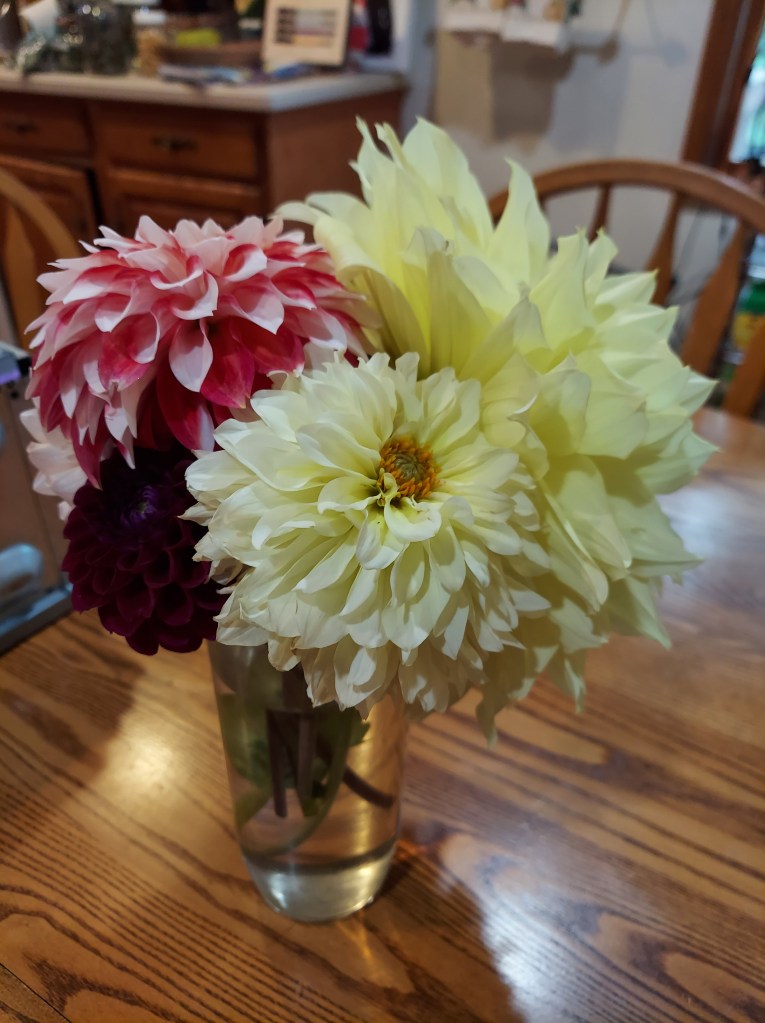
There were several days when I cut 10 or more flowers and had to get out a second vase to display them on the kitchen table.
The pepper plants were very slow to grow this season, even with daily watering from the sprinklers. I finally got a few small bell peppers in late August. I’ve been harvesting most of them green to try and get the plants to grow more.
The Chicago figs started ripening in August, but the Green Ischia are slower. I have harvested about a pound of Chicago so far. I’ve sold several of my propagated fig trees from last winter, which is good. I still have quite a few and I might keep them in the basement. I will mostly likely try to propagate whatever branches I cut off of the mature trees this fall, but it would be good to have a few established small trees as well.
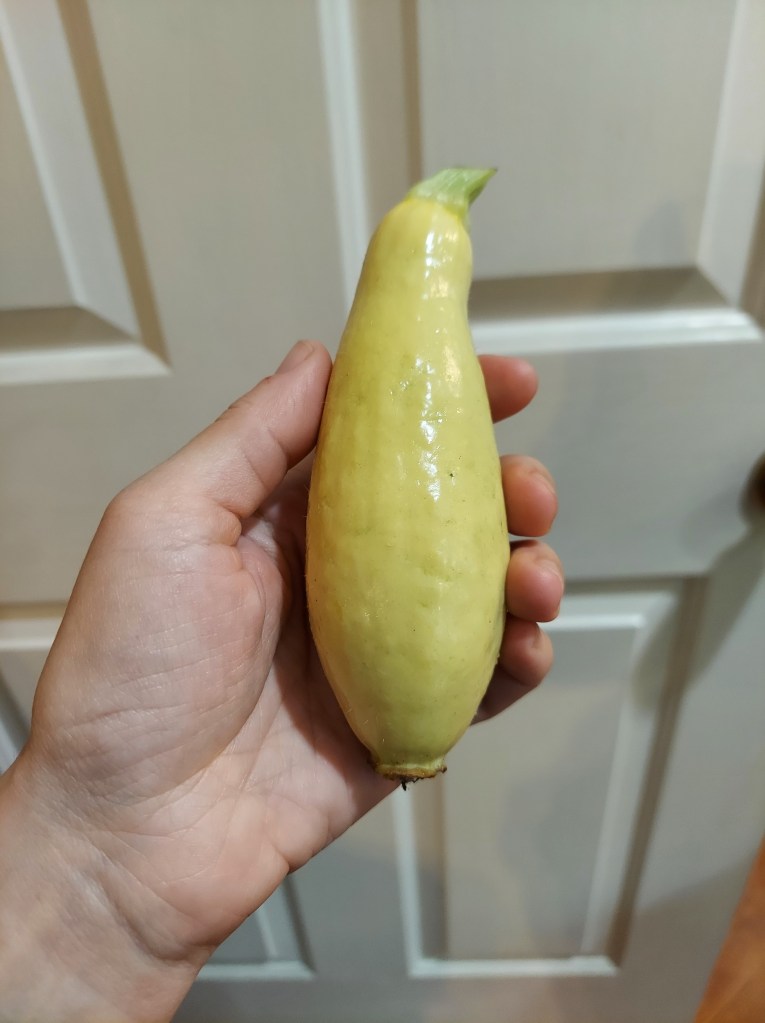
Most of the squash plants were destroyed by the woodchuck, but one summer squash plant was spared. I harvested several small ones in August, and we enjoyed them grilled and steamed with meals.
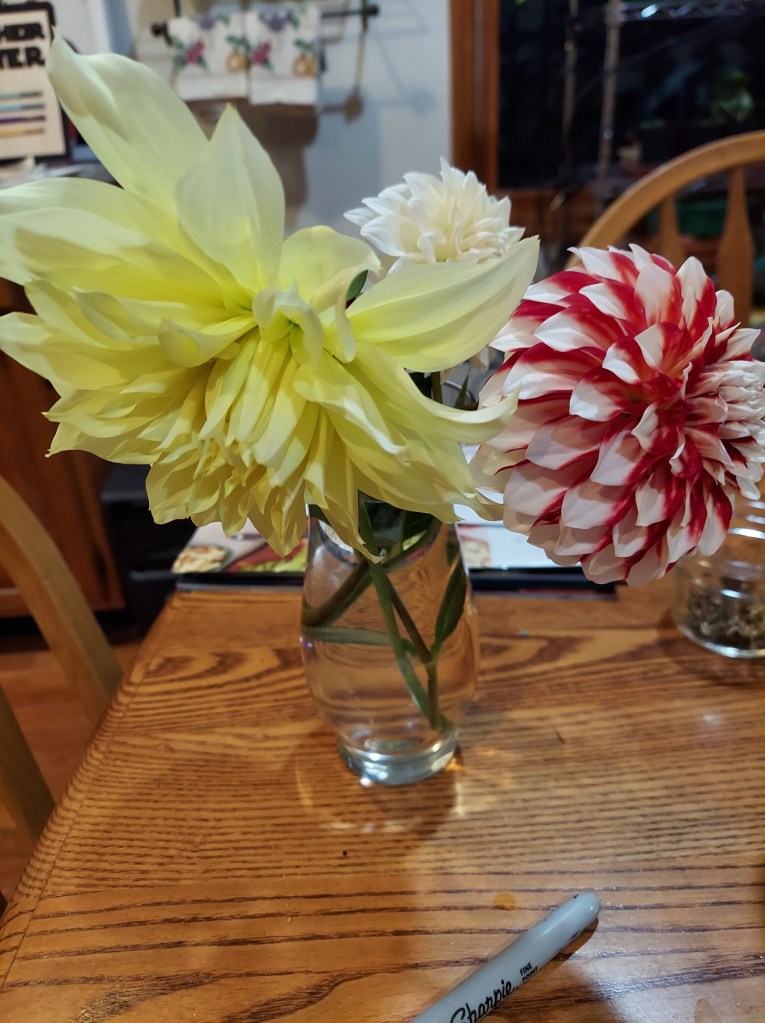
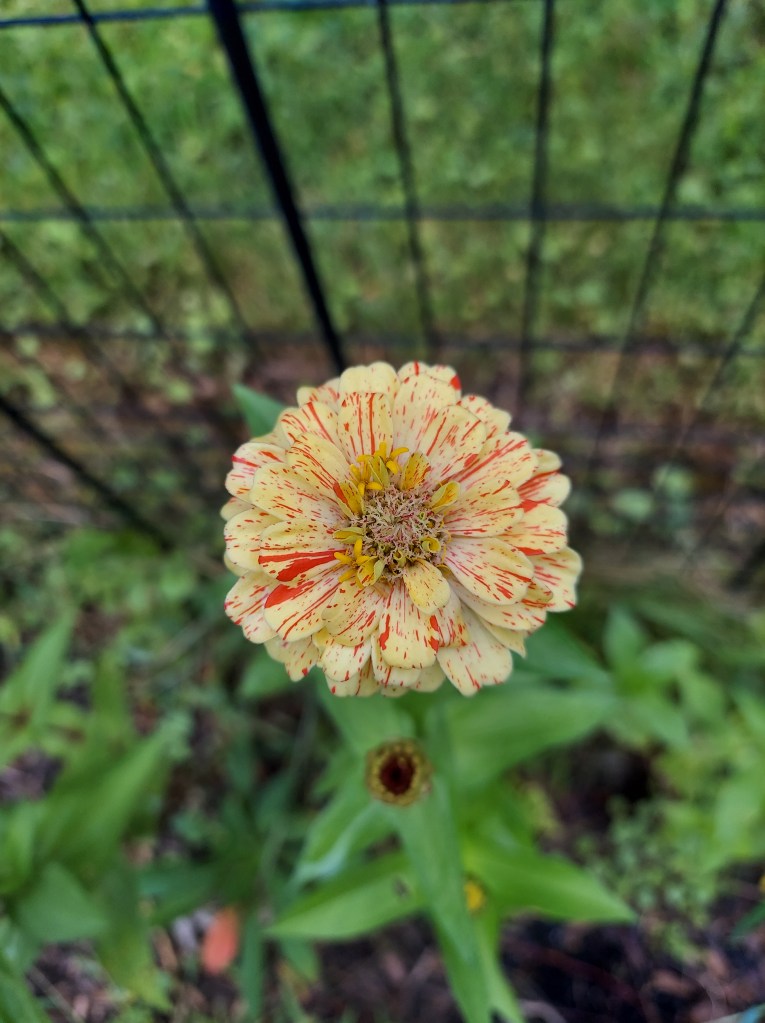
The zinnia plants were small but put out some very pretty flowers. This variety is called candy cane, I direct sowed the seeds in late May. I also have solid orange, pink, and red flowers. They have been added to a few of the kitchen vases alongside the dahlias.
Late July brought the first few ripe tomatoes from the garden. I’m harvesting a handful of cherry tomatoes each day and the larger tomatoes are starting to ripen as well. I’m growing Early Girl, San Marzano, Roma, Cherokee Purple, Jersey Breeze, Honeydrop, Bumble Bee Cherry, and Ruby Crush.
I’ve been cutting a bunch of dahlias each week to put in a vase on the kitchen table. I planted out a bunch of spare plants in the bed where the garlic had been, after extensively weeding and clearing out the grass that had taken over. I had about a dozen tomato plants, a handful of coleus and basil, and a couple of snapdragons. Trying to use all the gardening space I can, and get the last of the mature plants in the ground.
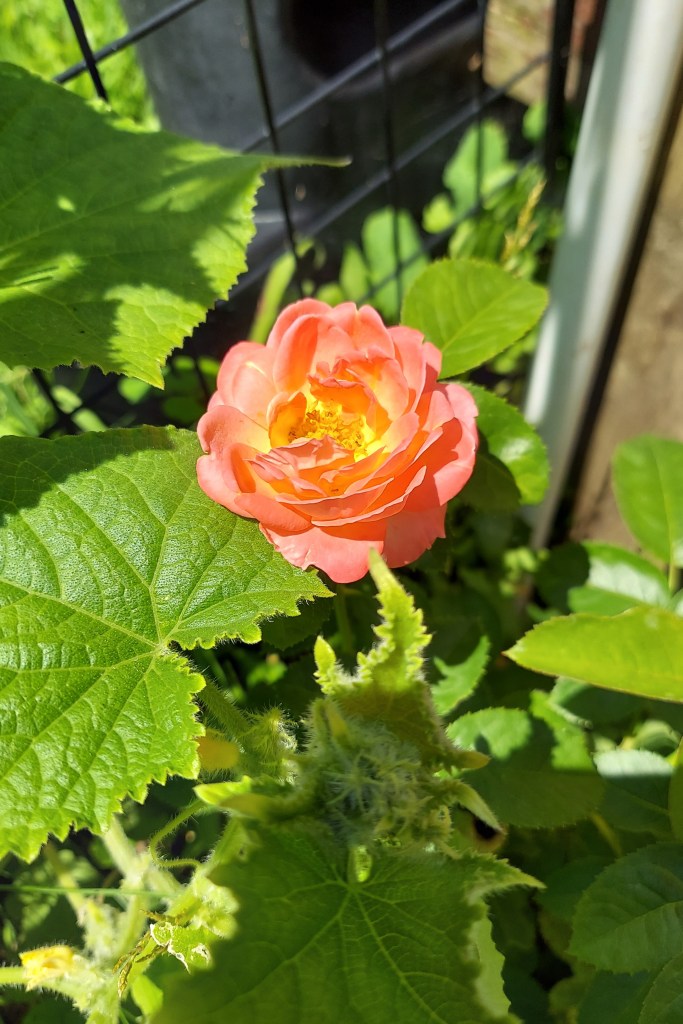
My new rose bush has produced several flowers, and has put on a good amount of new growth. Very happy with this purchase, it seems to be settling in to its spot in the corner near the fence.
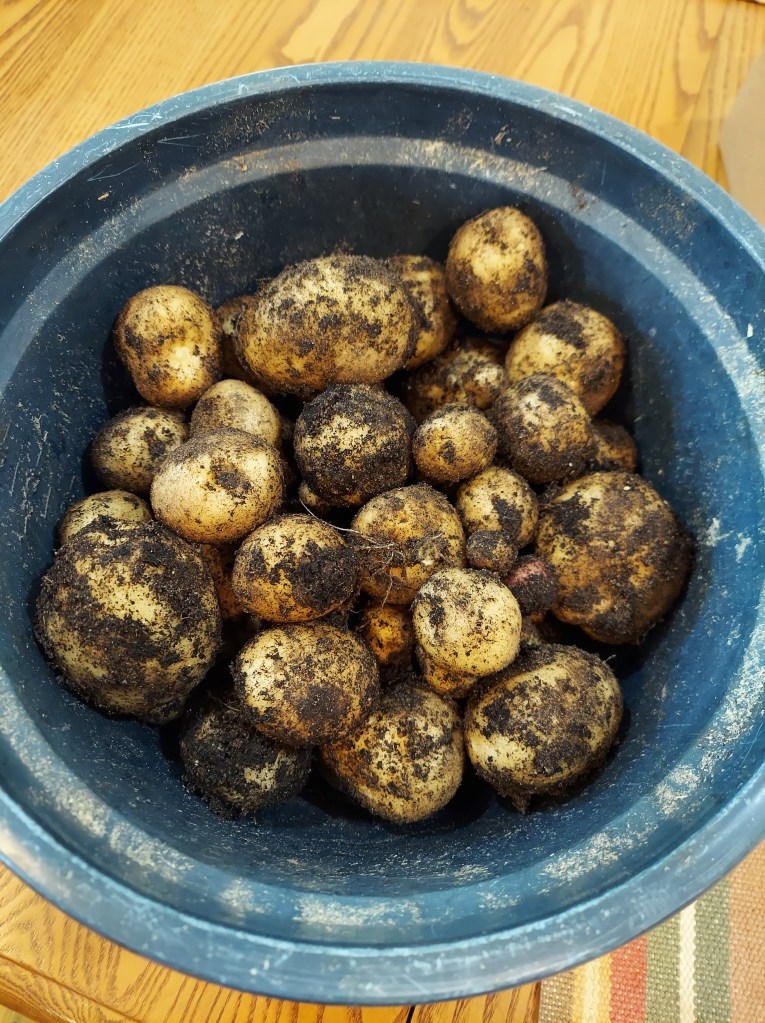
I harvested my potatoes in 2 different batches in July. I had 5 total grow bags, of two different varieties. Keuka gold and Dark Red Norland. I harvested about 4 pounds of each variety, and we have been enjoying them, mostly steamed with butter and sour cream.
I actually managed to grow a few full-sized ones this year, which was a vast improvement over my only previous attempt a few years back.
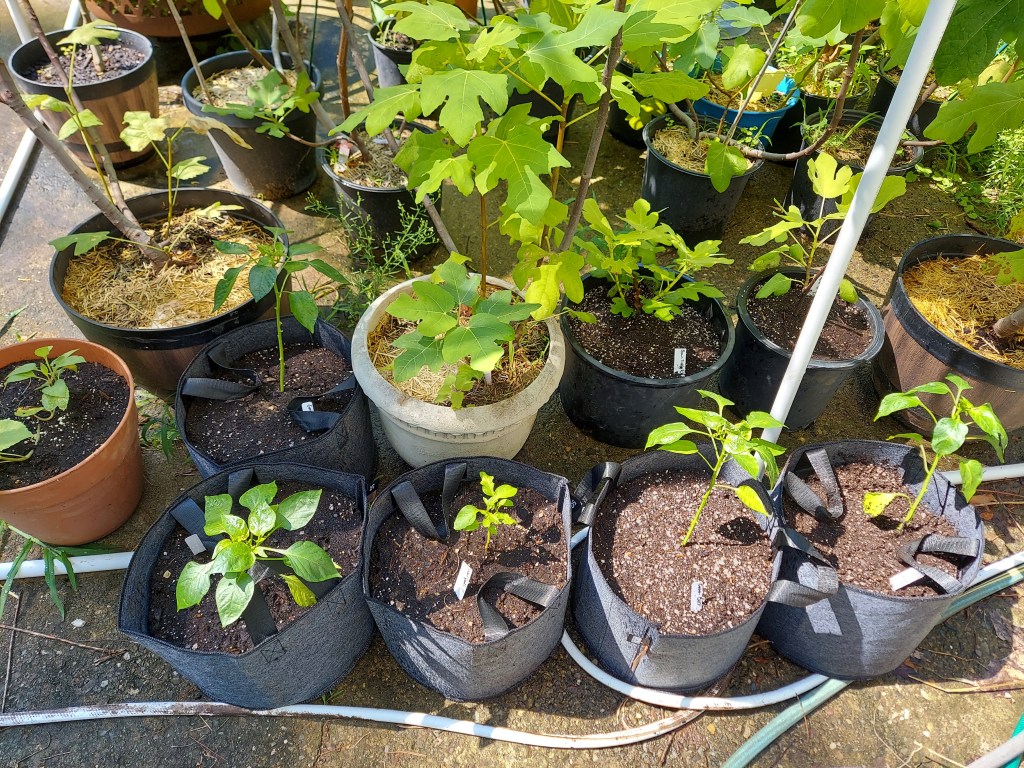
Once the potatoes were harvested, I potted up the last few of my pepper plants into the now empty grow bags and moved them out of the greenhouse. These are a mix of bell and snacking peppers. The fig trees behind them are all coming along quite well and many of them are growing figs. As of right now, I have harvested 4 figs this season. Hoping for a bunch more in August and September as the fruit ripens.
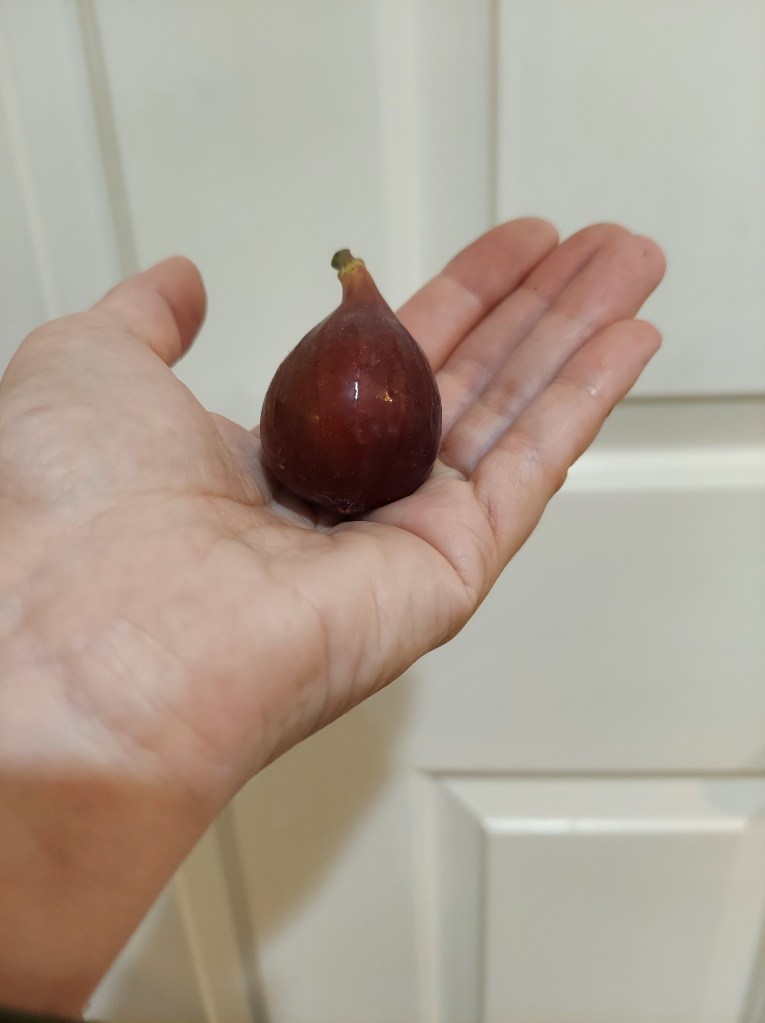
The first ripe Chicago fig
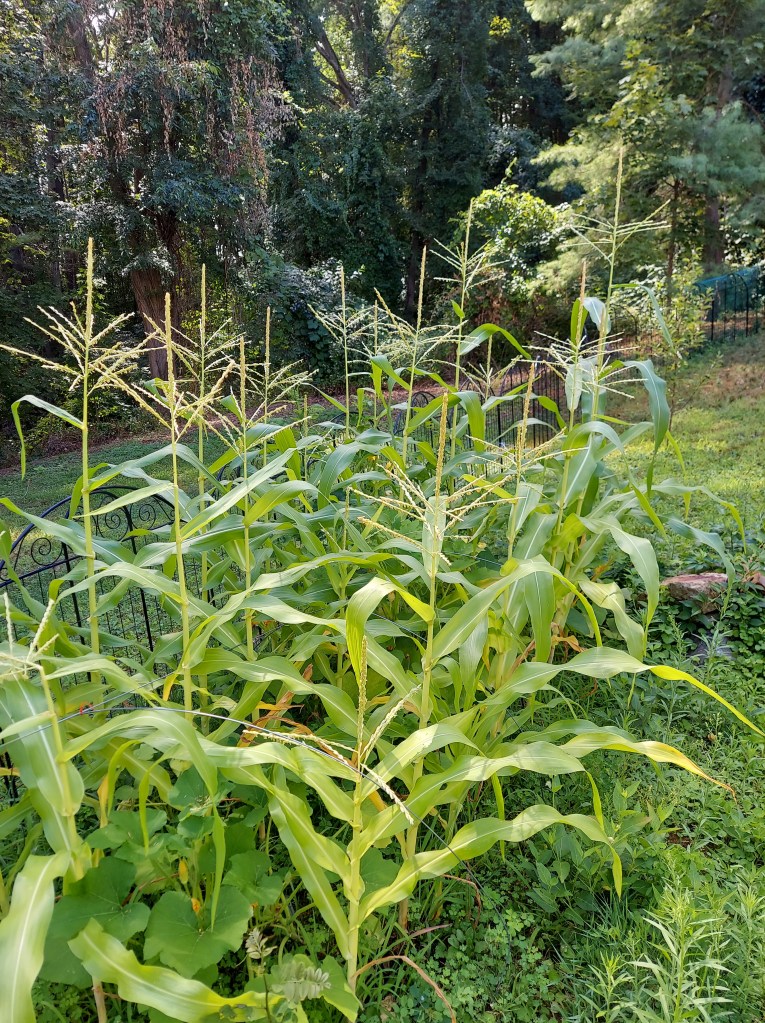
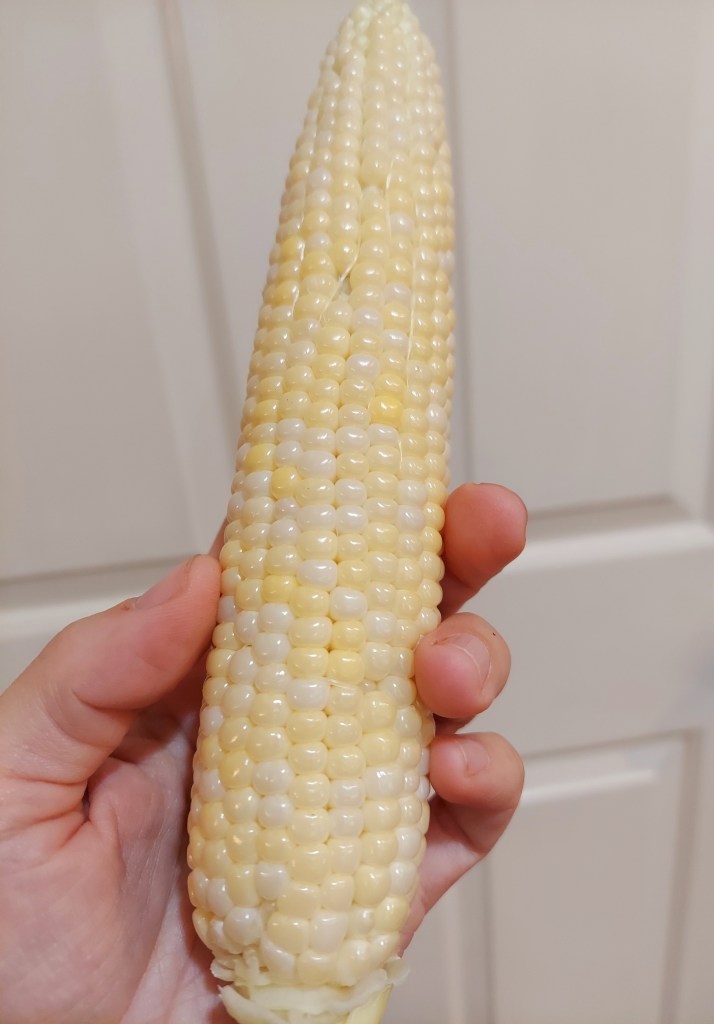
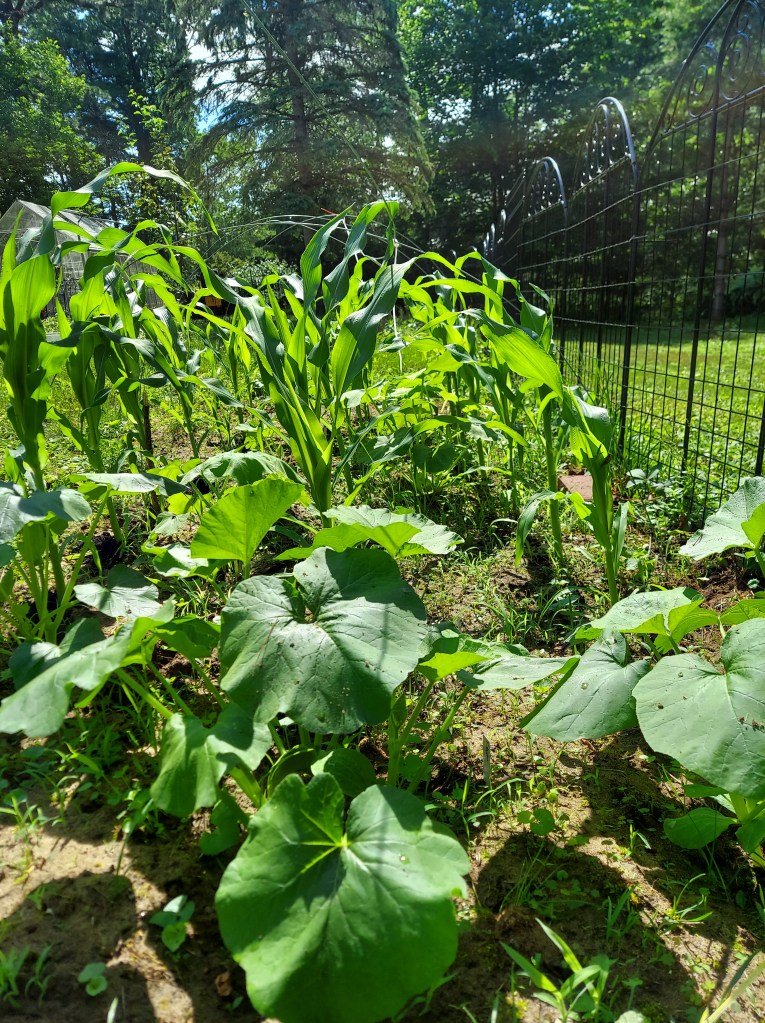
The small corn patch is doing quite well, and I have spotted a good number of ears of corn forming. I harvested the first one last week. It had good pollination, even though it was small in size, and tasted quite good when steamed. This square was native soil (sand), and we only added a bit of compost to each planting hole back in May. Next year I will try to do better at fertilizing and adding nutrients to the soil, to hopefully get larger ears of corn. Overall, I’m happy with how this experiment worked out.
Unfortunately, the attempt at growing winter squash amongst the corn does not seem to have worked nearly as well as I had hoped. As of right now I’ve only spotted one small decorative Jack-be-little pumpkin.
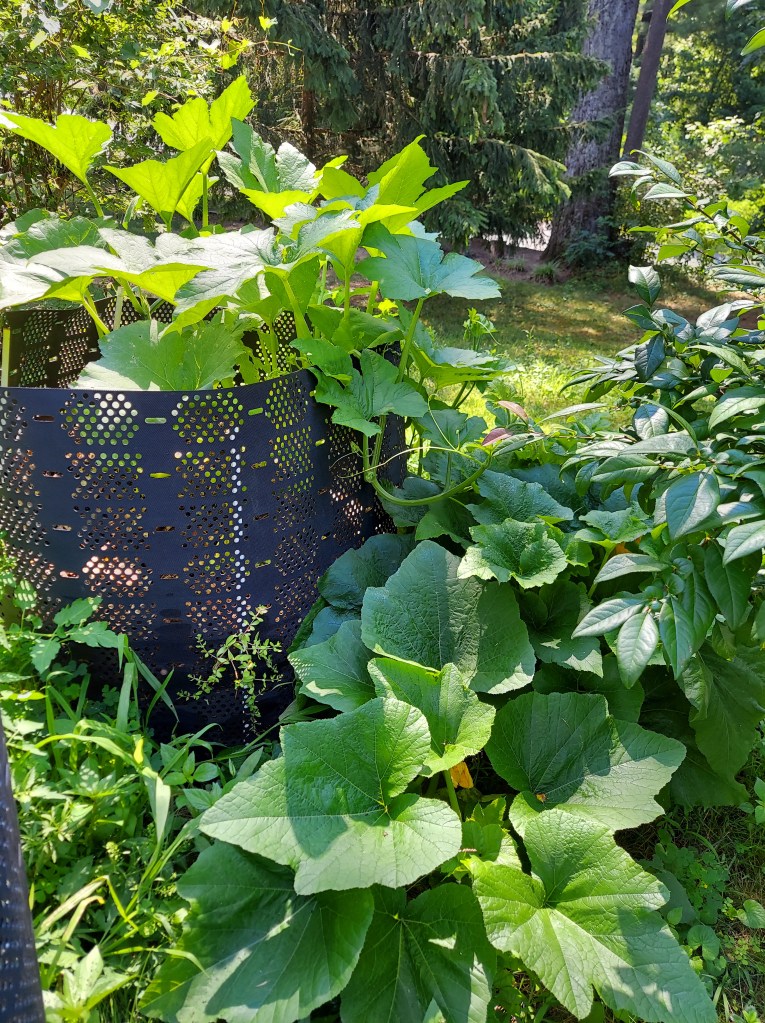
The compost mystery squash (bottom) and purposefully planted pumpkins (top) are sprawling like crazy and putting out tons of leafy growth. There are also lots of freebie tomatoes growing out of the other side of the compost bin. I have seen lots of male squash flowers, but it is hard to see under the leaves to see if any actual squash is growing. The one female flower I spotted at the end of a vine did not appear to be pollinated. Guess it’s just not my year for squash!
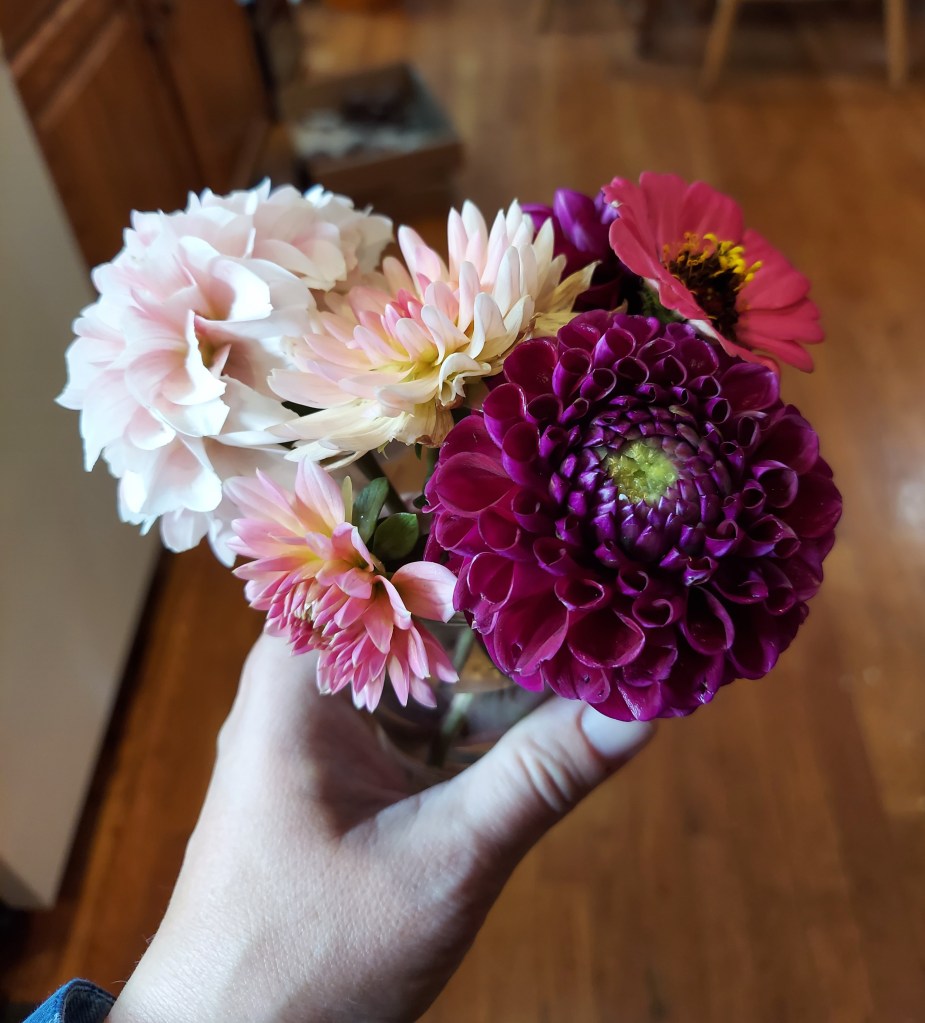
A handful of small dahlia and zinnia flowers heading for the kitchen island.
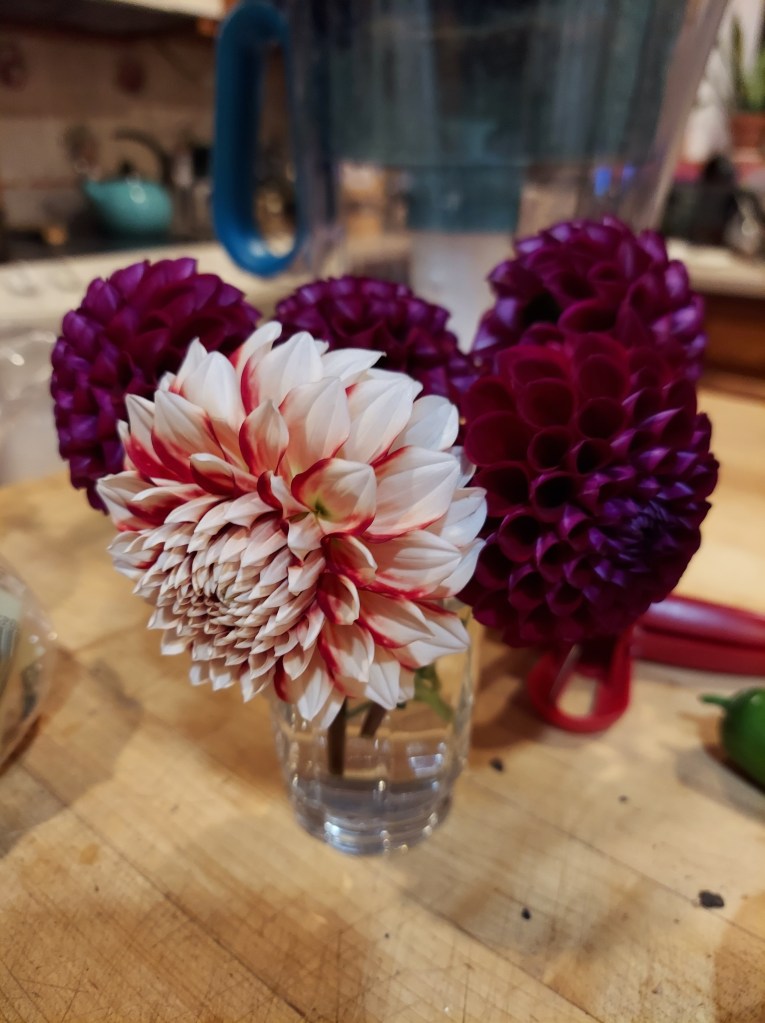
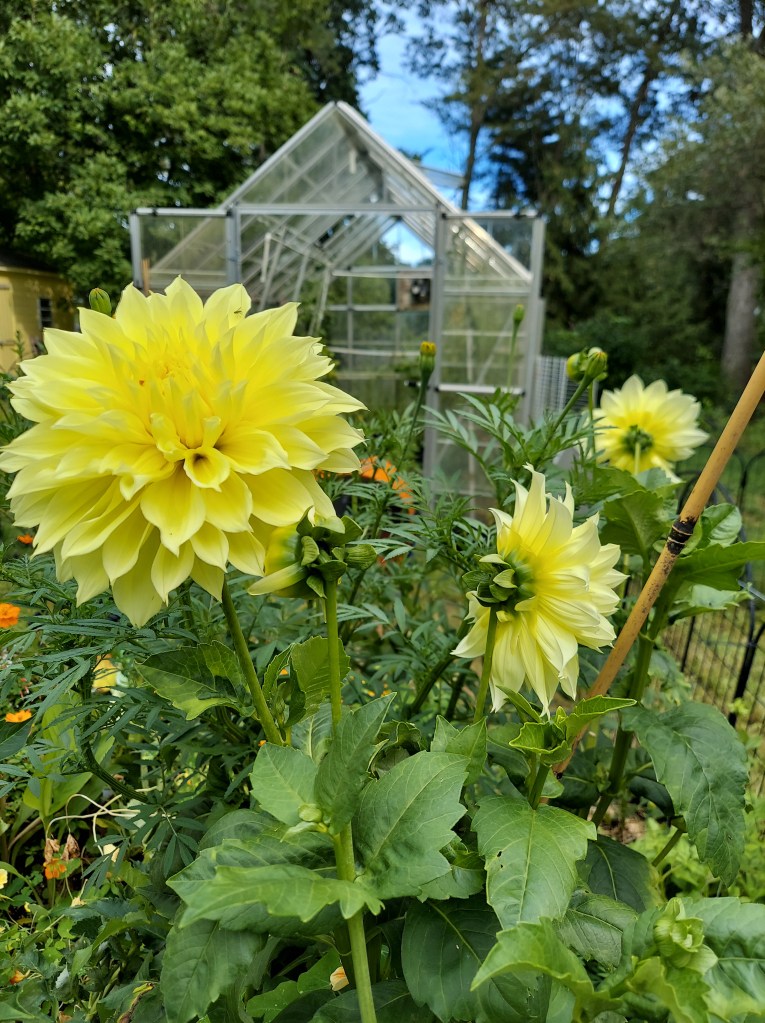
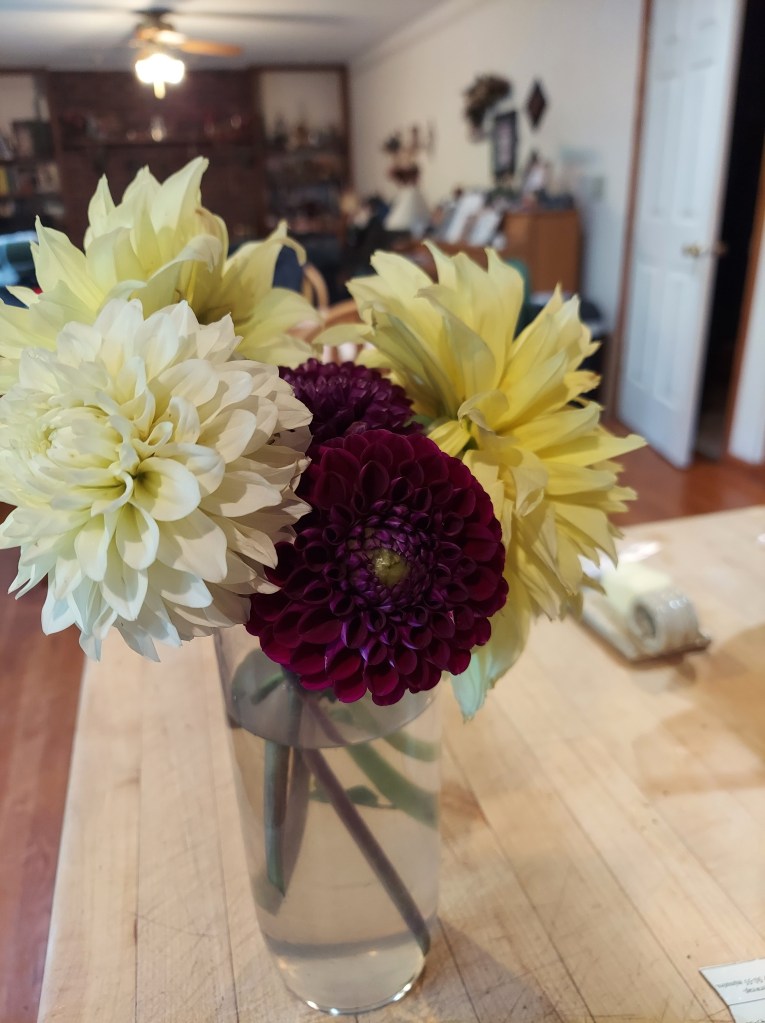
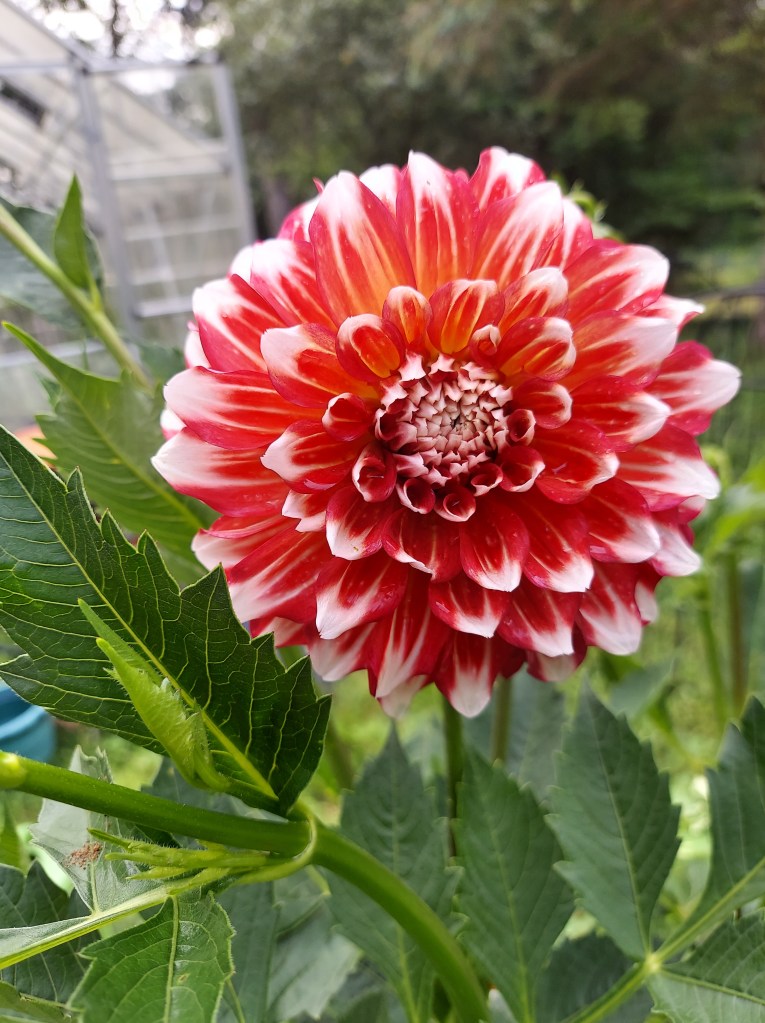
The Kevin Floodlight dahlias have been the most productive of my varieties. They are also the largest, a dinnerplate variety. This vase also contains 2 Ivanetti (purple globe variety). I’m very happy I made a dedicated flower bed this year. The dahlias are growing alongside cosmos, nasturtiums, marigolds, and snapdragons.
I started some seeds for succession crops for the fall. I direct sowed some beet and carrot seeds in a few gaps around tomato plants in the raised beds. Indoors I have started broccoli, cabbage, and lettuce seeds. I plan to start spinach, arugula, and pea seeds this weekend.
I have been harvesting and dehydrating lots of herbs including basil, lemon balm, oregano, and sage. I planted out my small indigo seedlings in late June and they have been slowly growing. I am hopeful that I will be able to do a couple of leaf printing projects before the growing season ends.
My first ever Myrtle Brandy’s dahlia bloomed in early July! The flower is over 5 inches wide, and globe shaped.
I went camping the first week of July and when I came home the first thing I saw in the garden was a woodchuck eating one of my kale plants. So now in addition to voles, chipmunks, and rabbits, I’m also dealing with a woodchuck. He dug under the porch stairs and did a considerable amount of damage.
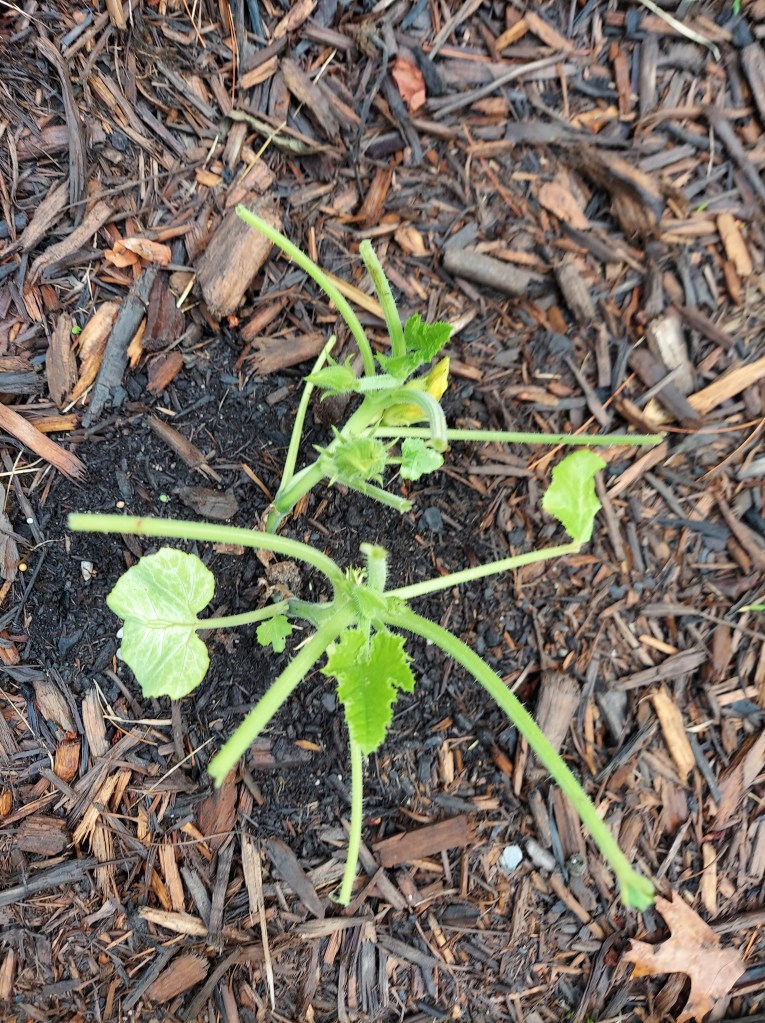
The woodchuck ate all the leaves off my zucchini and yellow squash plants.
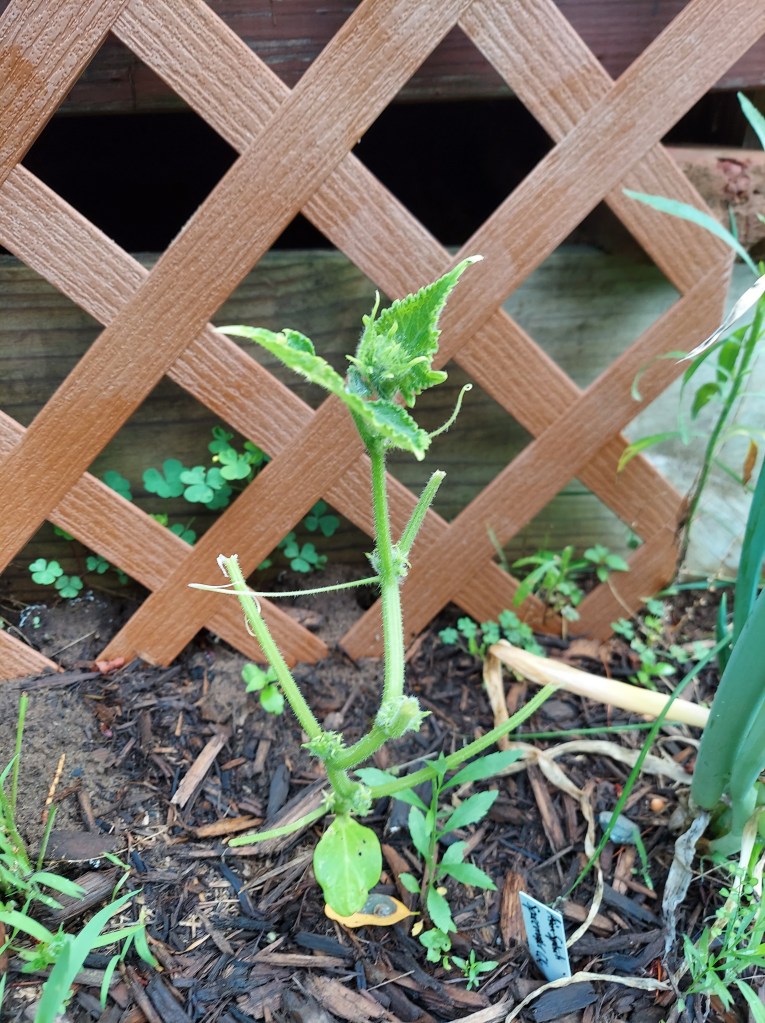
It decimated the outdoor cucumbers as well, and the coneflower that were on either side. Thankfully I have a second batch of cucumbers in the greenhouse, so I should still get some harvests.
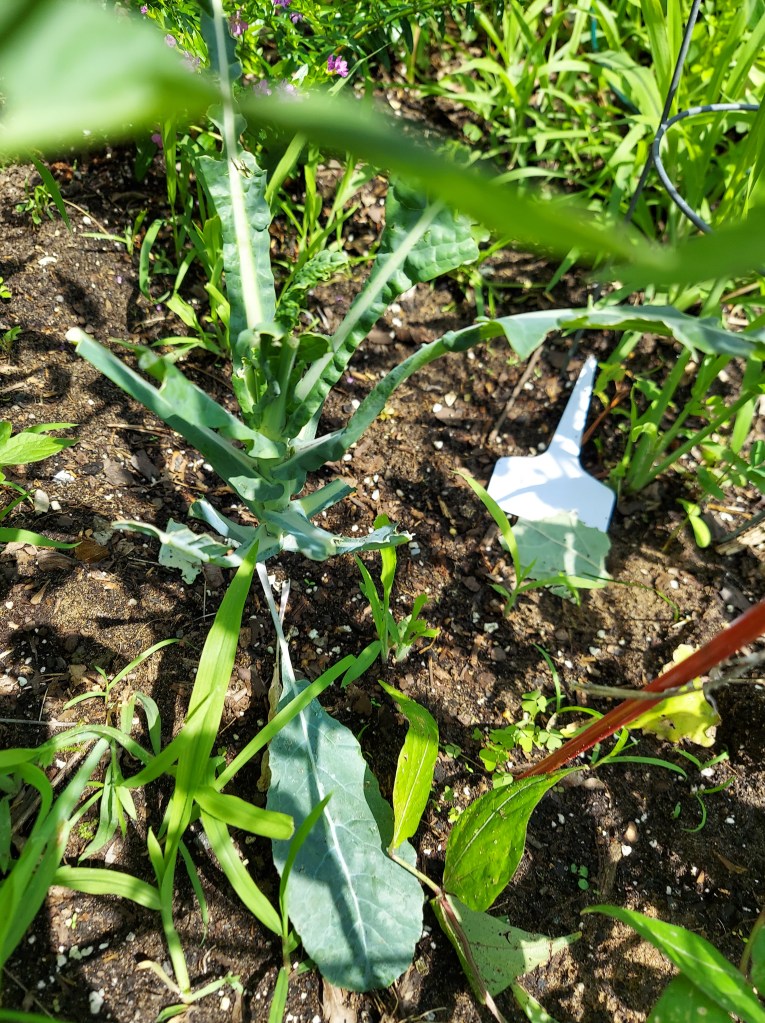
I first spotted the woodchuck as it was stripping a couple of kale plants of all their leaves. It also ate some of the chard leaves, but thankfully not the entire plant. It devoured all the lettuce plants in the same bed.
There has been plenty of good news amongst all the rodent troubles! Many of my tomato plants are currently covered in flowers and starting to produce fruit. There are some nice sized Early Girls and a few full sized clusters of cherry tomatoes in the greenhouse. I spotted the first slightly ripening cherry tomato in the greenhouse today!
The early girl tomato plants escaped their wire cages and are trying to sprawl all over the nearby plants.
The fig trees are doing much better this year than last season. Many of them are covered in figs, I counted more than 40 the other day. I harvested the first 2 right before I left for my camping trip, but will probably have to wait over a month for these ones to reach peak size and ripeness.
The mystery compost squash plant has grown very large and opened up it’s first male flower the first week of July. Hopefully it will begin setting fruit soon. It’s poking out of the bottom of the compost pile and sprawling across the lawn.
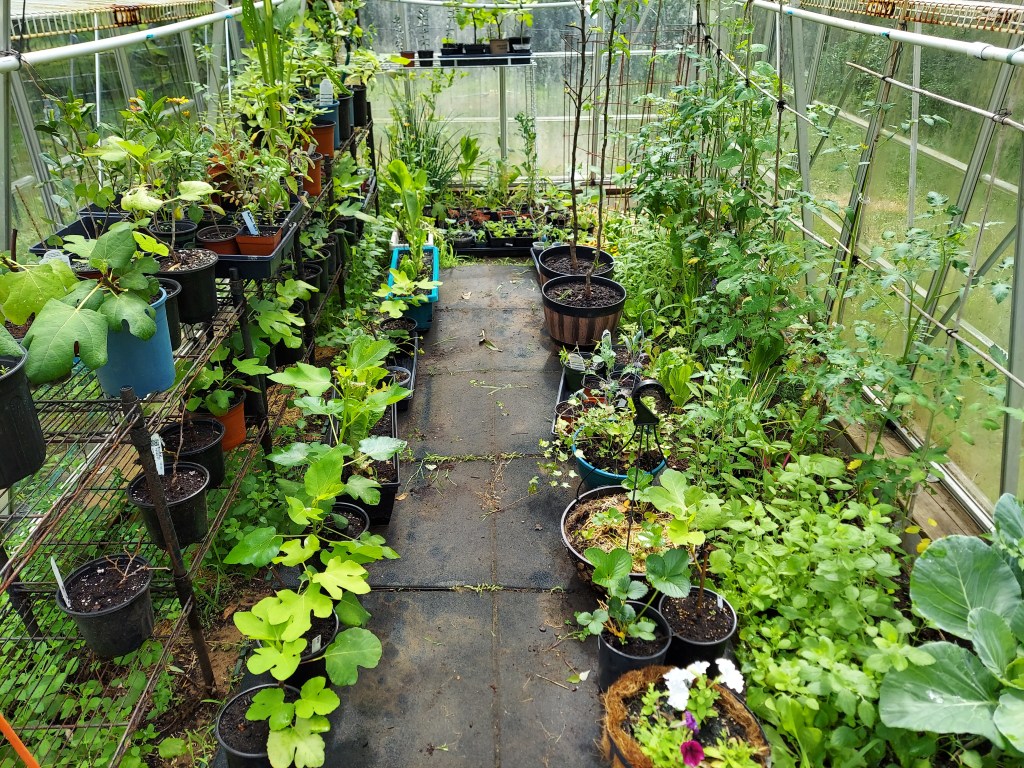
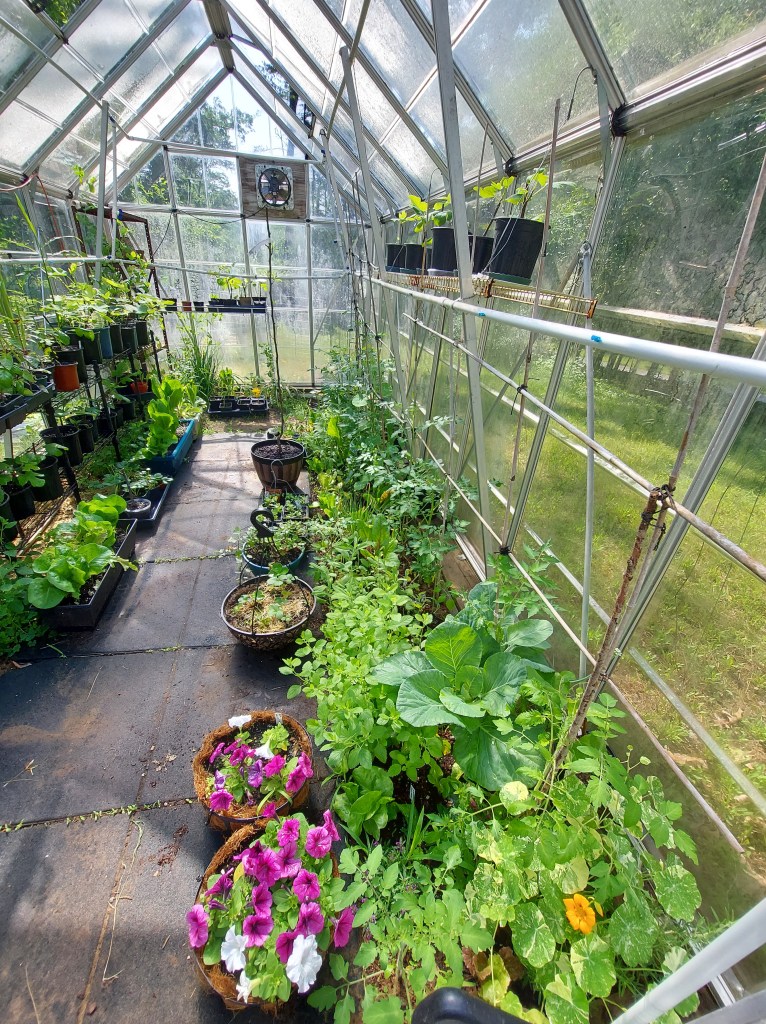
The greenhouse is very full. Tomatoes, cucumbers, peas, and nasturtiums are all climbing various trellises and shelves. There are a bunch of small fig trees, two of which are producing fruit. Lots of herbs, chard, kale, peppers, and flowers are all crammed in together. I also have a couple of trays of extra plants which I will most likely put out in the garden once the woodchuck problem has been dealt with. I still have kale, coleus, basil, and a few peppers that need to go in.
This is my first time ever attempting to grow corn, thankfully the groundhog hasn’t found this part of the yard. I have 22 corn plants and multiple types of winter squash all in the same space. The corn is over waist high right now, so it looks promising.
I plan to harvest the garlic and onions this week since they appear to be done growing. Most of the leaves on the garlic have died back and a few of the onions have flopped over. I just sowed some seeds inside for the fall. I have started lettuce, cabbage, and broccoli seeds so far. Might start more kale and arugula as well. When I clear the onions, I plan to direct sow a few beet seeds to fill in the empty spaces.
We have just passed the summer solstice, and the garden is finally looking full and green. Albany has had a fair amount of rain over the past month, and lots of cloudy weather. It has been warming up over the last couple of weeks, and the summer plants are showing signs of growth. Most of the seedlings are now planted, the garlic is almost ready to come out, and the cucumber and squash seedlings are looking good.
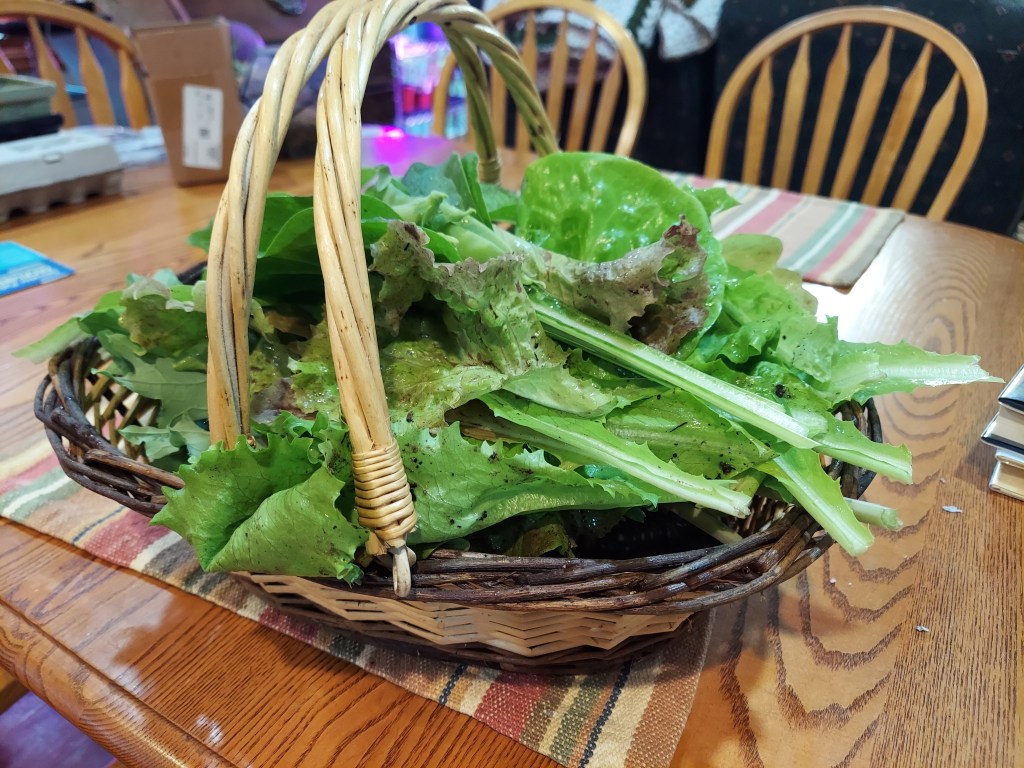
A single day’s harvest of lettuce
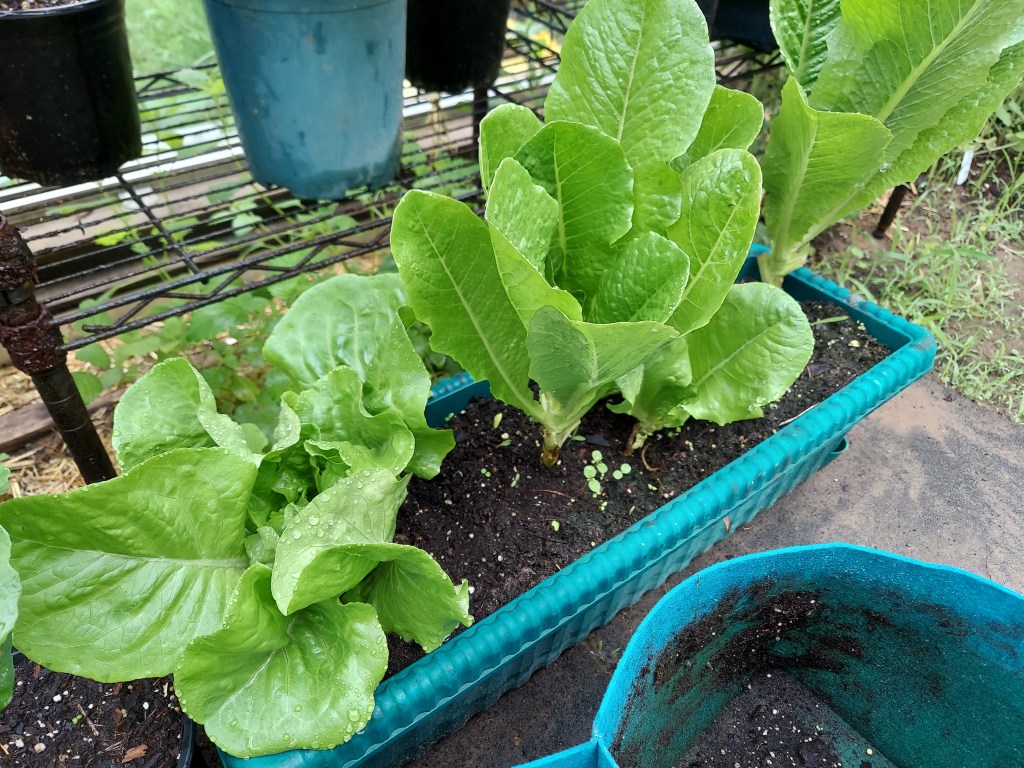
The star of the show for the spring has been lettuce. I’ve never managed to grow this many lettuce plants before, or to have them be so healthy. I’ve been harvesting just the outer leaves of the plants, and the romaine is now producing full sized leaves.
I direct sowed a couple of rows of a mesculin mix in the greenhouse in late April. This produced a variety of seedlings including romaine, butter crunch, oak leaf, and merlot lettuce. I have enjoyed the range of colors and shapes that have been growing. I did not thin them and just let them all grow close together. Then in late May I started transplanting them out of the greenhouse corner into other areas because I needed that spot for the cucumber plants.
About a dozen of the lettuce plants went into planters and the rest were scattered about the garden beds wherever I could find room. The cool spring has allowed them to remain growing longer than I expected. Once the summer heat hits, they will most likely all bolt and start to go to flower. The plants stop focusing on leaves at that point, and they also become bitter. I’m taking advantage now while I have abundant leaves, and am sharing the harvests, since it’s more than 2 people can eat. I plan to sow some more seeds for a fall crop in August.
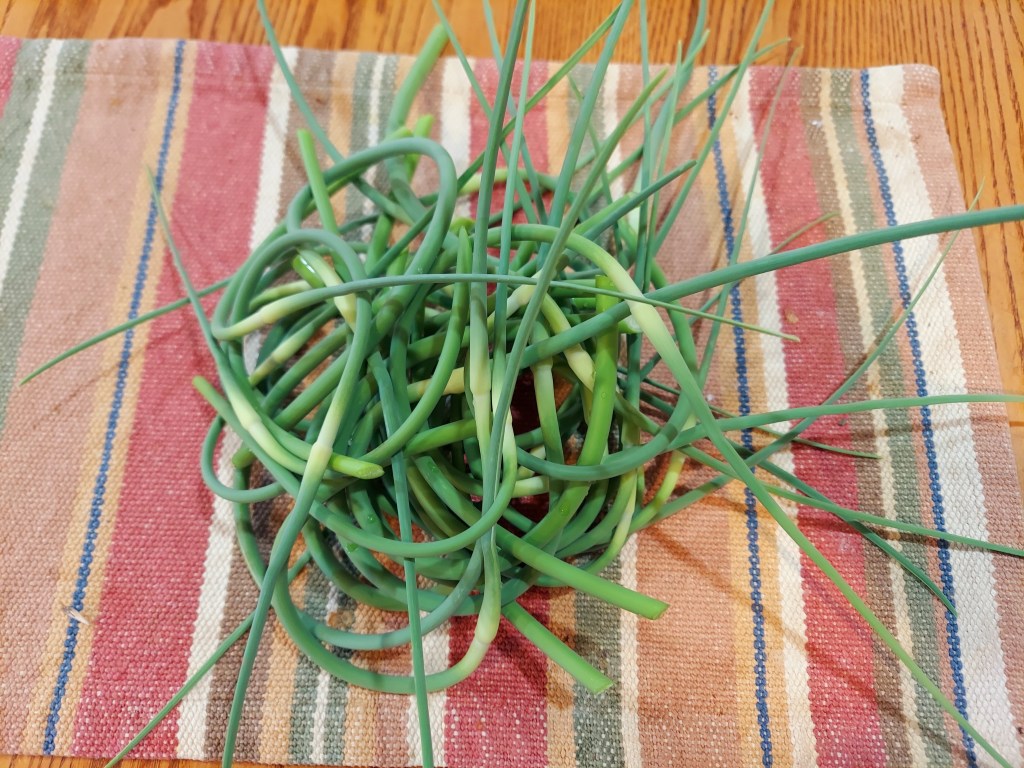
I started harvesting the garlic scapes about 2 weeks ago from some of my plants. I have made 3 total harvests. Removing the scapes, which are actually the flower stalks, encourages the plant to focus it’s remaining energy into bulb production. This final month is when the garlic bulbs put on most of their growth and bulk up. I will probably harvest the garlic in mid-July.
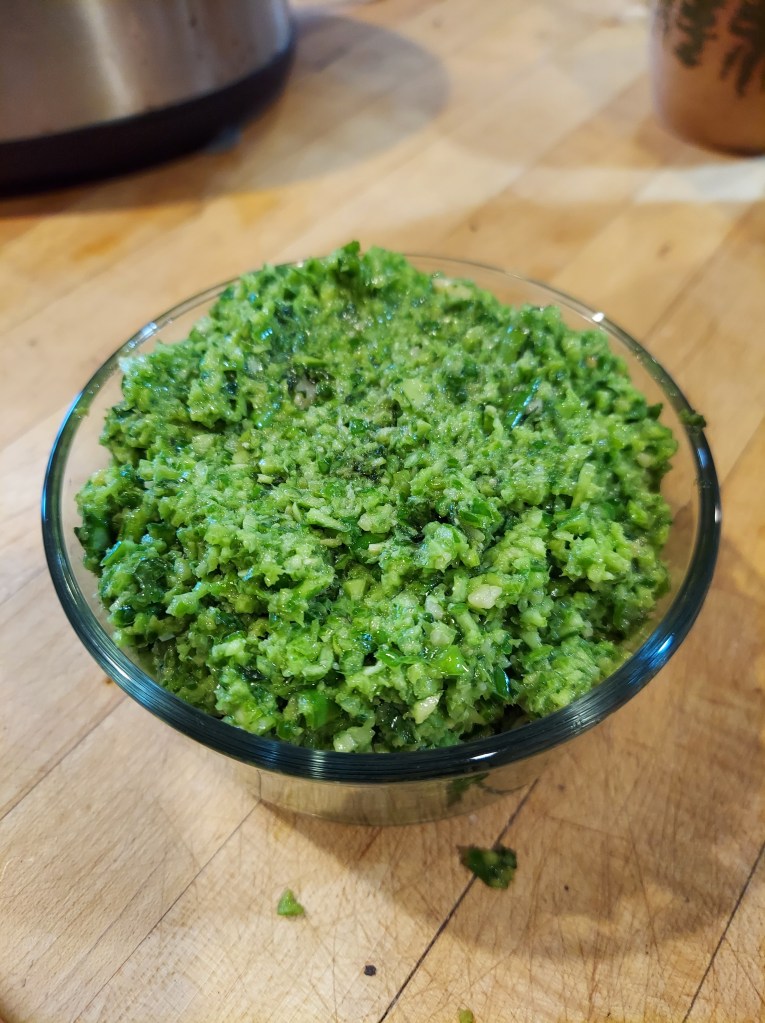
I made my first batch of pesto, using mostly garlic scapes along with a few sprigs of basil off of my small plants. I ended up with 2 cups. I’ve been enjoying it as a dip for chips and on sandwiches.
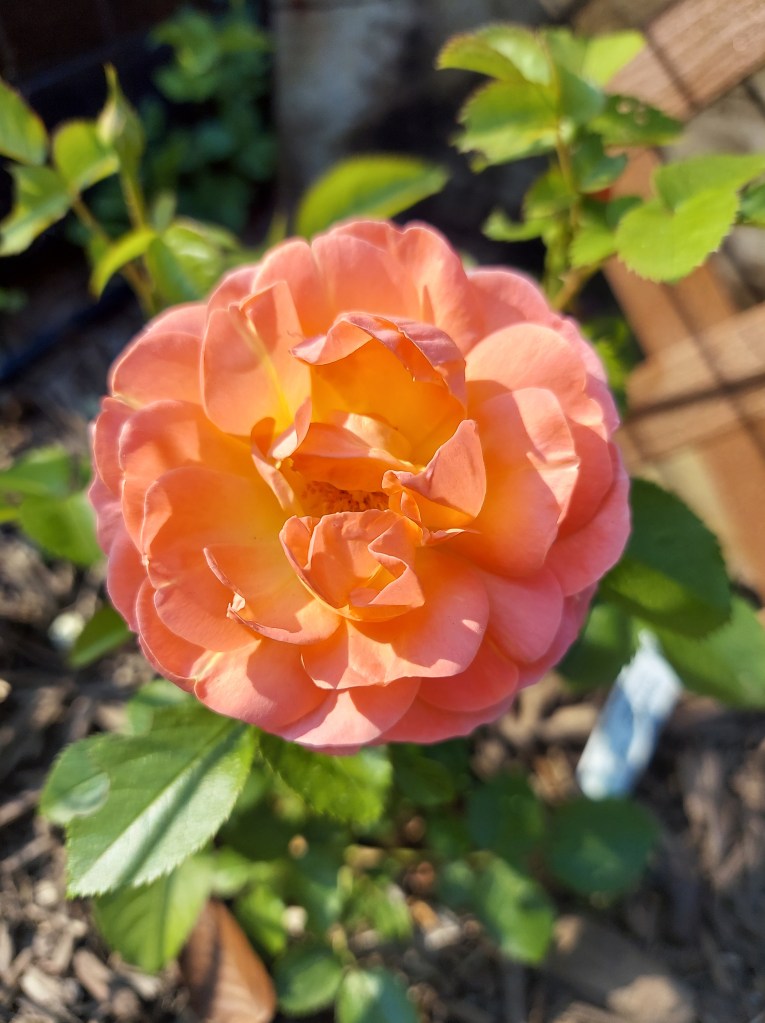
The flowers in the garden have been starting to pop all over the garden. This is on my new, small peach rose bush.
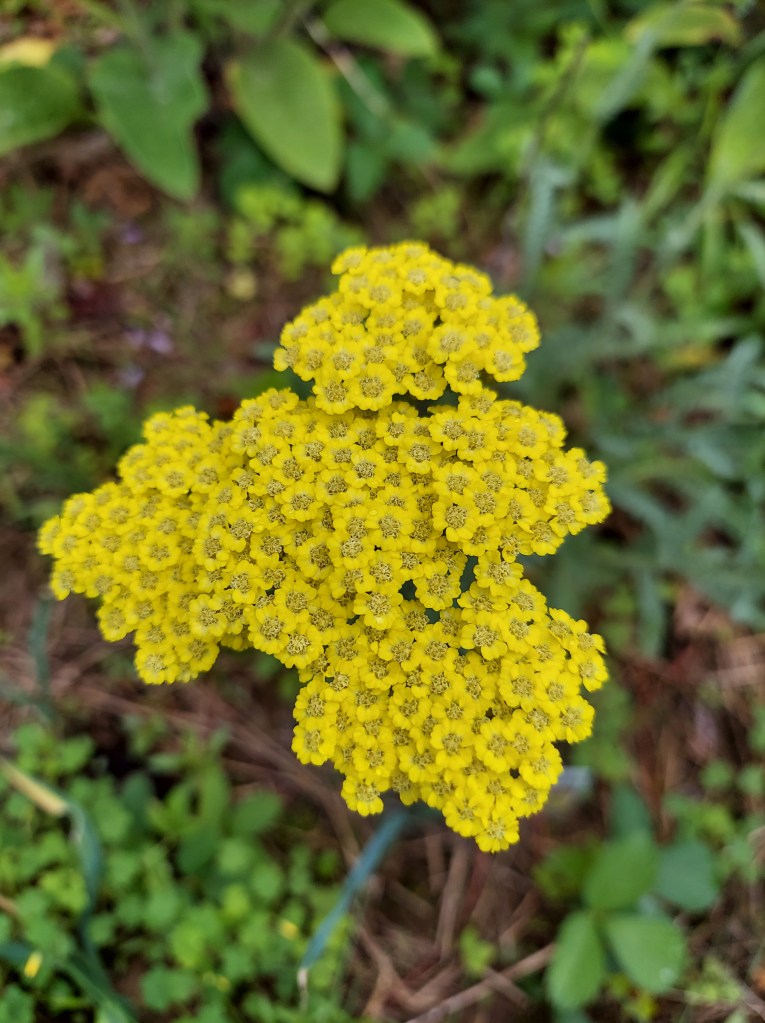
My two small yarrow plants survived the winter and are starting to bloom now. It is a medicinal herb that I can harvest for use in a first aid salve. It’s also good for certain pollinators because it has lots of tiny flowers.
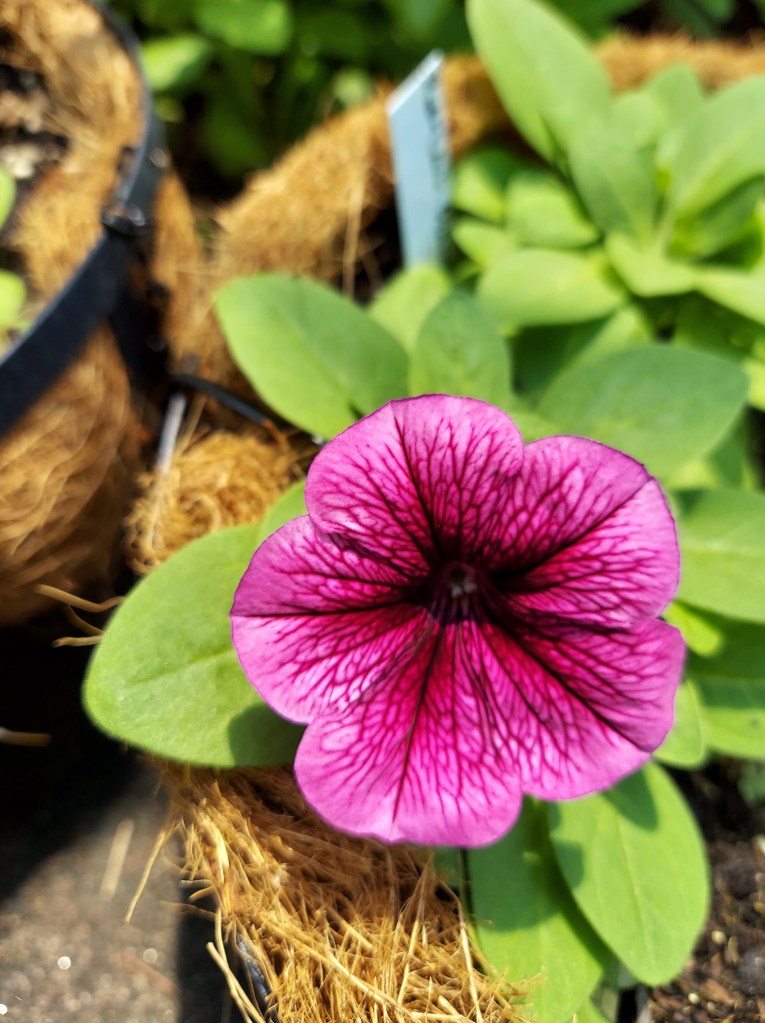
The petunias in my homemade coco-coir hanging baskets are now blooming. I have purple and white flowers. They have been growing in the greenhouse but are now large enough to be moved outside and actually hung up.
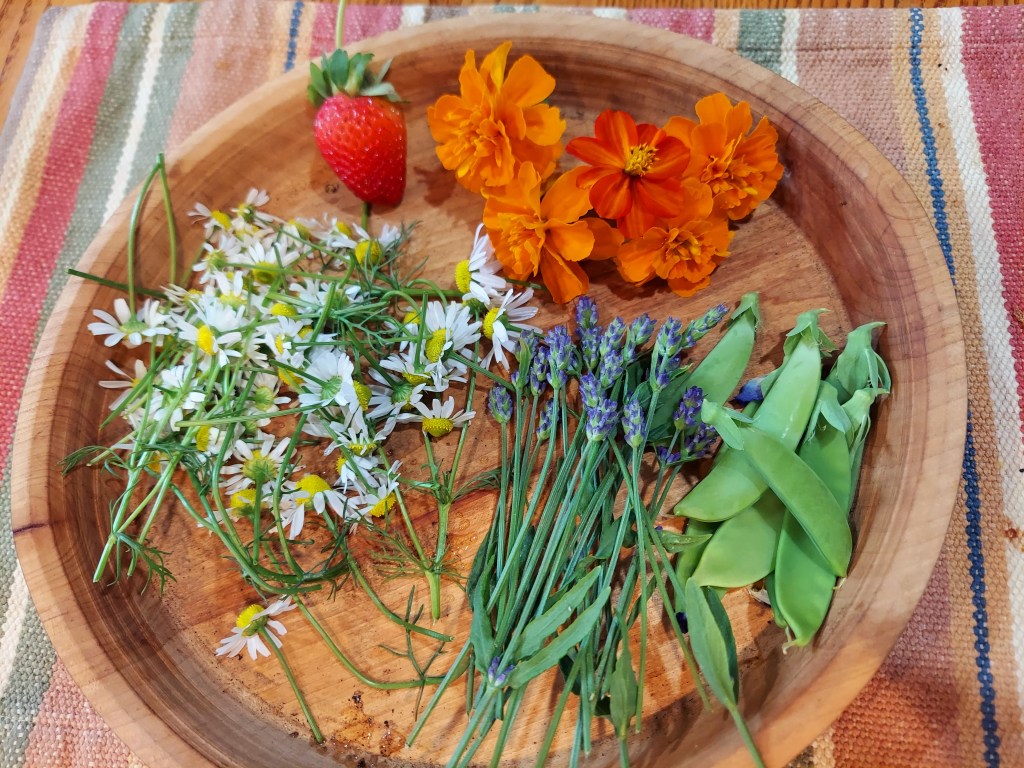
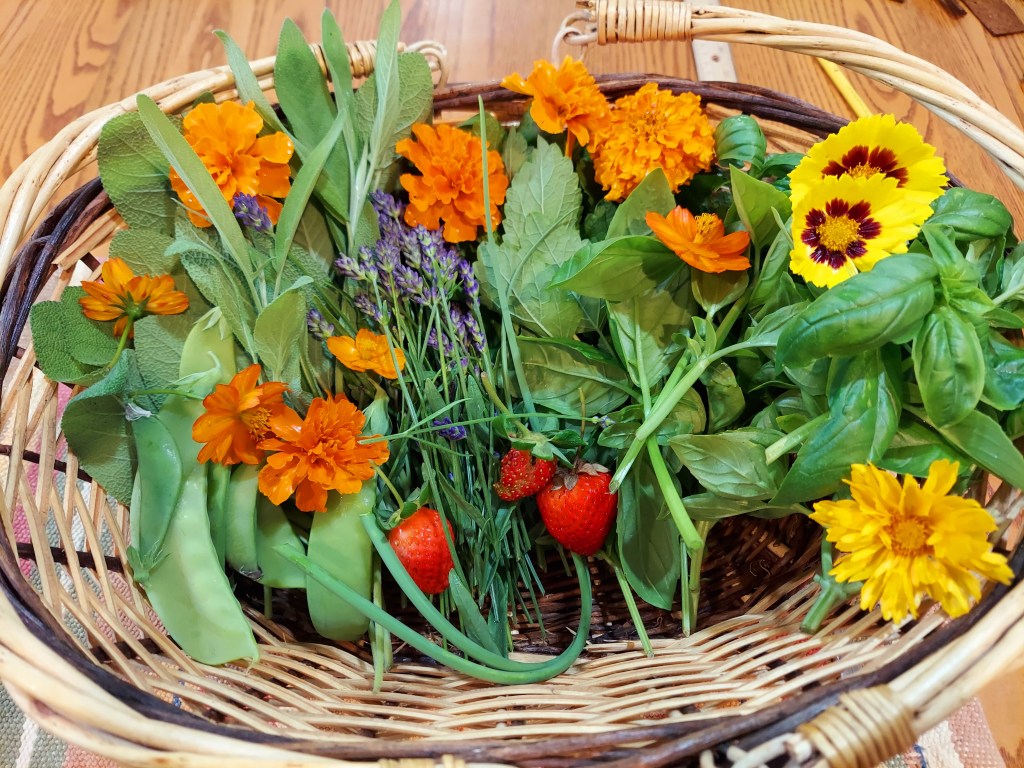
I have been harvesting and drying my first few bunches of flowers, including lavender and chamomile for tea. The marigolds and cosmos can be used for natural dye.
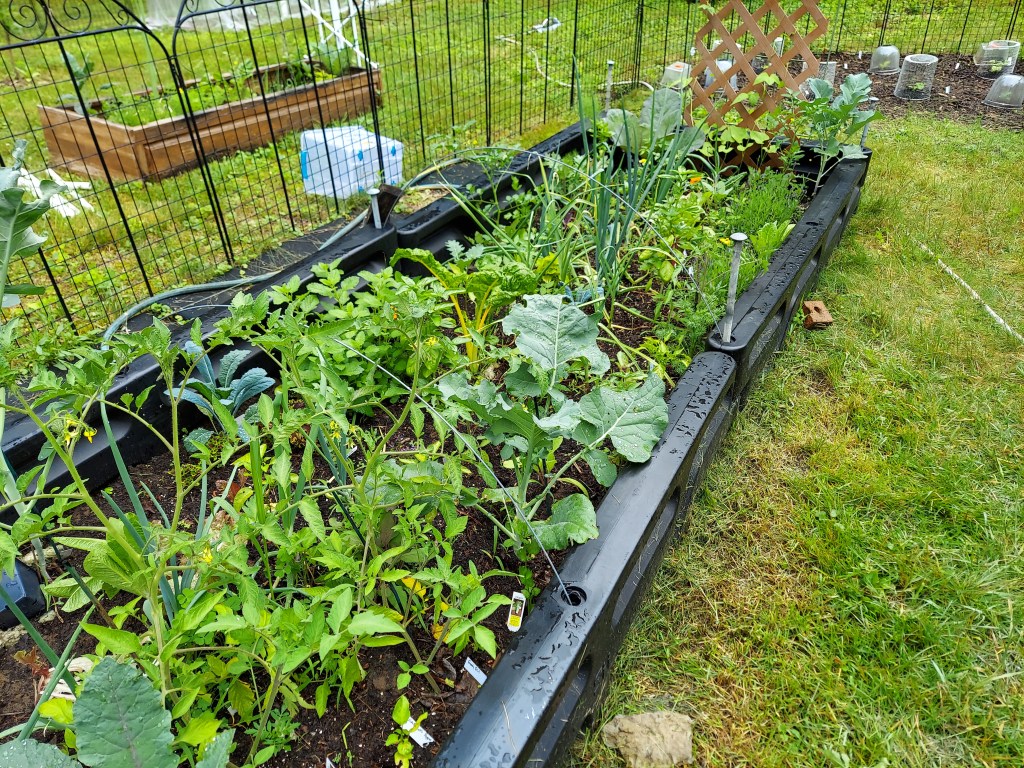
The main garden bed is full of all sorts of plants, in various stages of growth. Garlic and onions run down the middle along with multiple tomatoes, peppers, kale, broccoli, lettuce, herbs and flowers scattered throughout. Beans are starting to climb the trellis on the end.
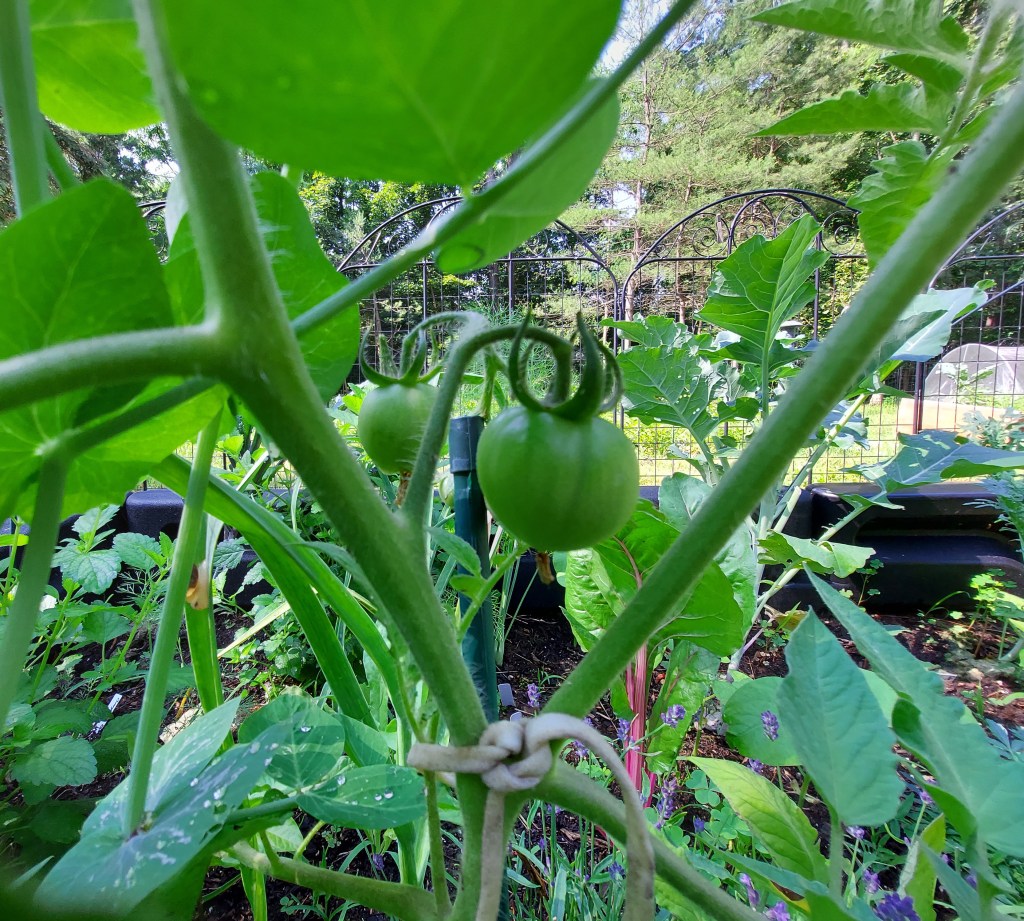
The first of the Early Girl tomatoes are starting to grow, as are some cherry tomatoes. It’s almost tomato season.
The greenhouse is quite full at the moment, lots of plants in the ground and also in containers. There are a bunch of tomatoes near the bamboo trellis with lemon balm, sage, peppers, nasturtiums, lettuce, kale, marigolds, and rosemary interspersed throughout. My small potted fig trees are in the greenhouse, and a couple are even trying to produce figs. The far right corner has 5 cucumber plants and we need to put in the trellis before they get too much taller. The far left corner has snow peas.
Typical late spring harvest, lots of herbs have been hung up to dry, and there are a bunch of strawberries growing on their tower.
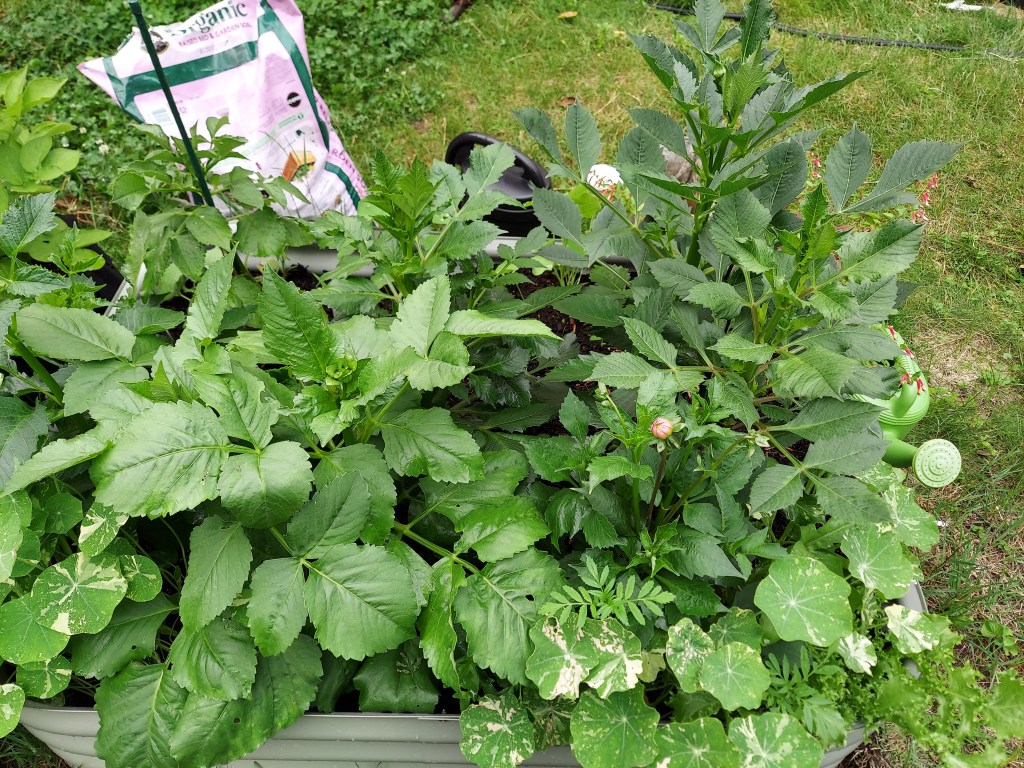
My new raised bed is absolutely brimming with the dahlia plants. There are 7 in the bed along with some nasturtiums, marigolds, and calendula along the edges. The smaller plants are honestly getting crowded out, but I’m leaving everything to see what makes it.
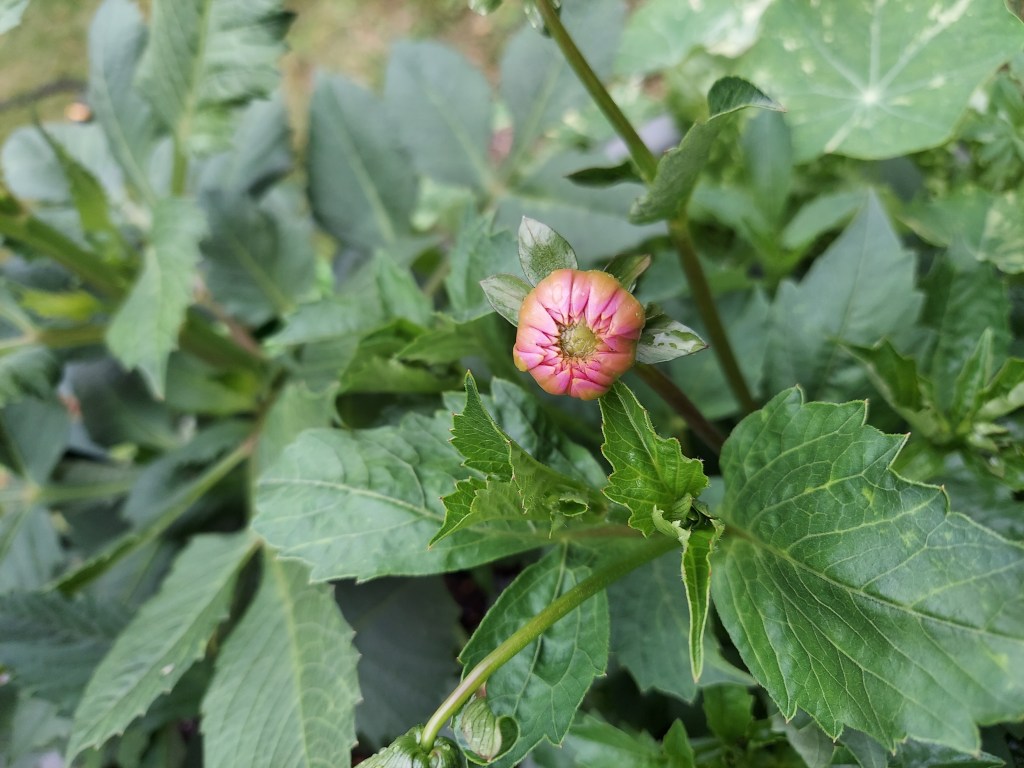
The first dahlia flower is about to open! Can’t wait to see it in full bloom.
I have harvested about 9.5 pounds of produce from the garden so far this season! And that’s been mostly lightweight leafy greens and herbs.




 Greenhouse Haven