This year I will attempt to better record and outline the steps I take when I garden. Here is my process for starting seeds indoors in late winter. This is the process I followed when I started peppers, leeks, and kale in late January. Now that it is approaching spring, I wanted to share it with those who may be new to seed starting.
Materials: necessary: seeds, containers, soil, labels, bottom trays optional: grow lights, heat mat, tray covers
Seeds: I typically purchase from Botanical Interest, Hudson Valley Seed Co, Fruition Seeds, and a couple of Etsy shops. It’s great to have a local seed company if you can find one near you, that way you know the plants will grow in your climate. I’ve also been saving some of my own seeds (mostly flowers) over the seasons, so I will be starting some of them as well.
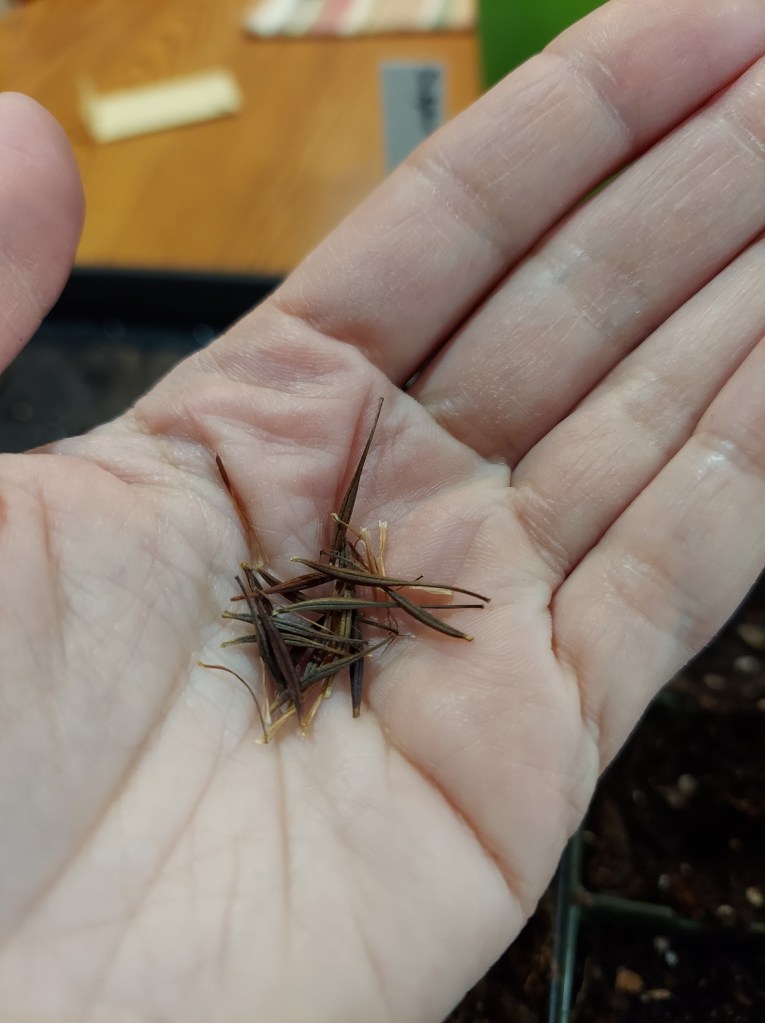
Home saved yellow and orange sulphur cosmos seeds
Make sure to read all the details on the seed packet before planting, such as when to sow and the proper depth to plant the seeds. There are certain seeds that need special attention, such as cold stratification (typically fall sown in my region), soaking overnight, surface sown if they need light, or scarification (scraped or cut to aid the seed in breaking the hard seed coat). I’ve grown canna lilies from home saved seeds and the seed coat was so hard they needed to be cut open with a saw before planting. When dropped on the ground they bounced. Please be aware that some plants are harder to grow from seeds than others.
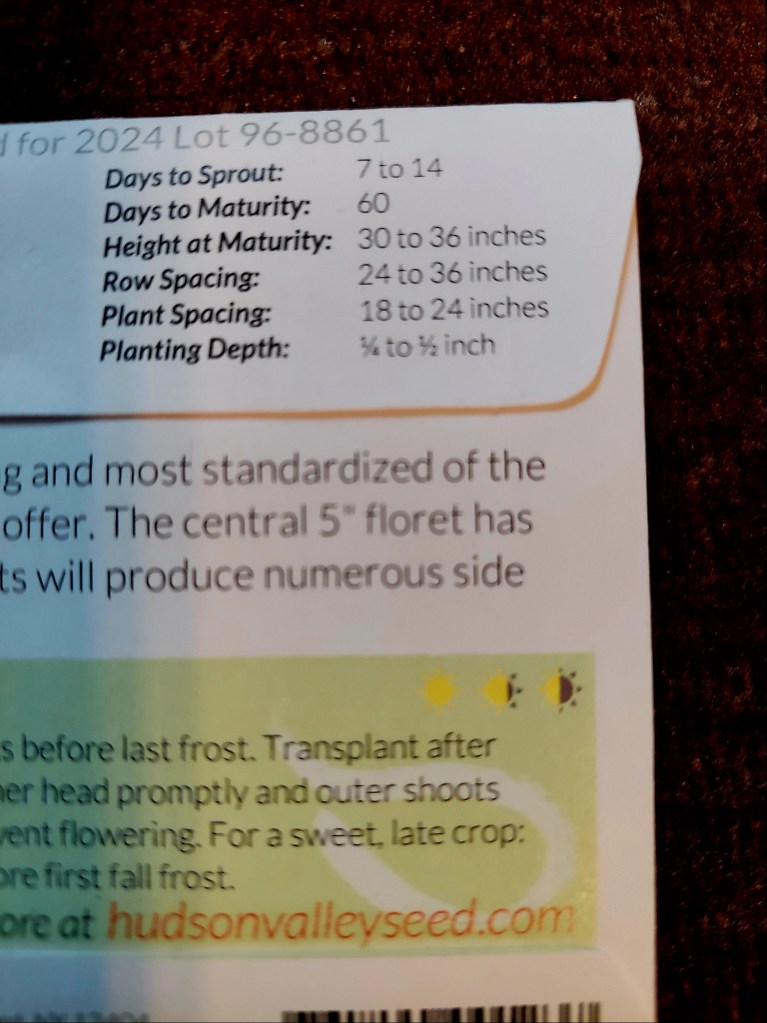
Sample seed packet with planting instructions
Direct sow versus transplant: There are many seeds that can be directly sown into the garden, which don’t require any extra treatment. I personally sow almost all of my seeds indoors, since this allows me better control over the environment, and allows for a jump start on the season. The main seeds I do direct sow are root crops such as carrots, radish, and a few quick growing leafy greens like arugula and spinach. Warm loving, long season crops like peppers, tomatoes, and eggplant need to be started indoors in my climate because they would not be able to reach full size if direct sown in May.
Containers: I use a combination of methods for starting seeds. The most readily available in stores tend to be 6 cell plug trays or peat/compost pots. I use 6 cell seed trays for multisowing things like flowers or herbs. Large seeds like squash or beans get started in 4 cell (3 or 4 inch tall) seed trays.
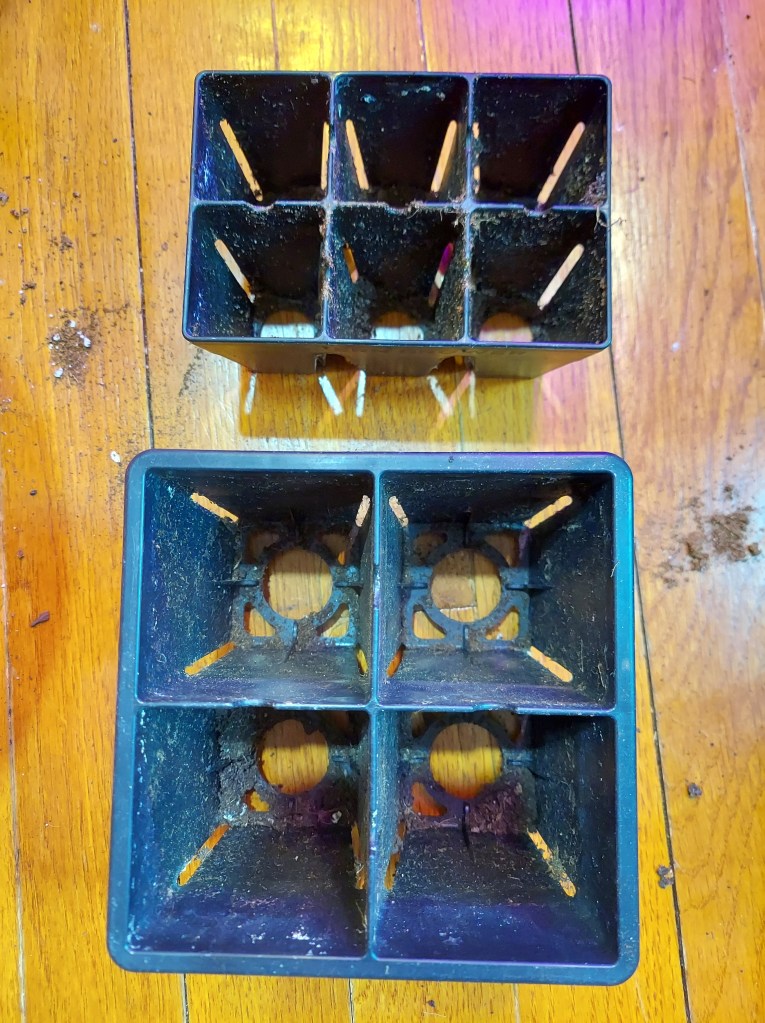
I purchased my trays from Epic Gardening, they are plastic, but really durable and will last a lifetime. They have drainage slits down the sides and large holes in the bottom to make it easy to pop seedlings out for planting. You can also easily monitor the root growth.
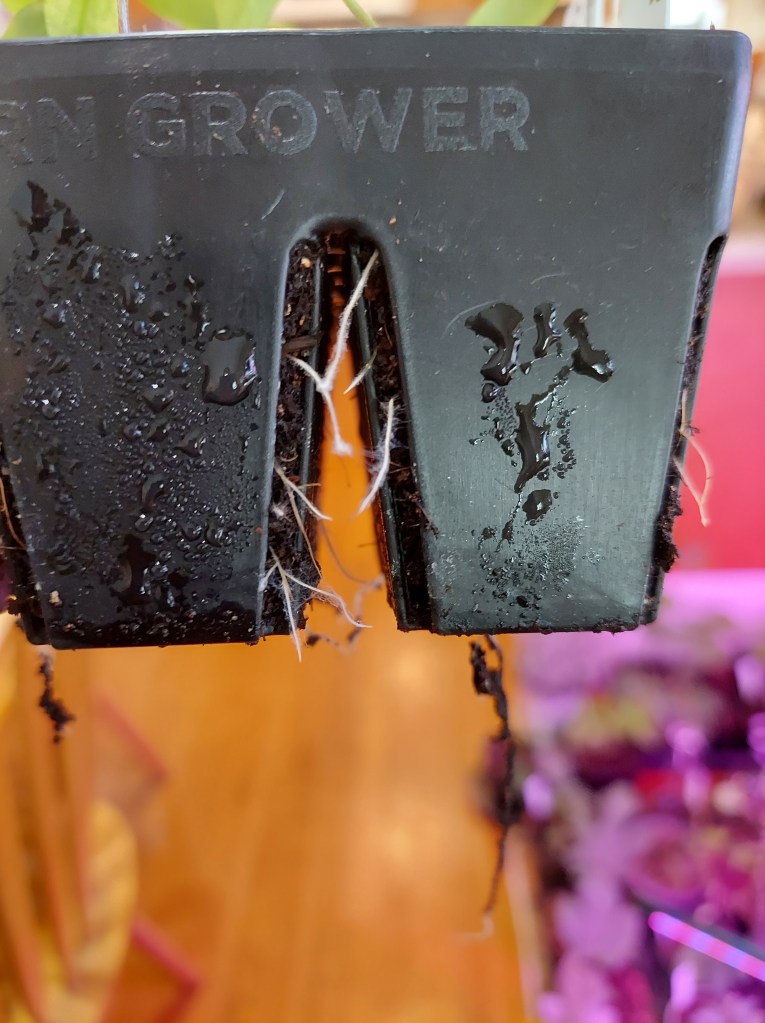
Healthy pepper roots, growing out of the side slits. These are ready to be transplanted to larger pots.
For tiny seeds or things I want a lot of I will typically sow them densely in either a 3 inch pot or rows in a short square pot then prick them out once they have sprouted. This is what I did with my peppers. I sowed 3 or 4 seed types per container, then divided them once the first set of leaves had pushed free of the seed coat. For peppers I do this so that I can fit more seeds together on the heat mat and under the humidity dome for maximum use of space. I also did this for my kale and onion seeds, which did not require heat.
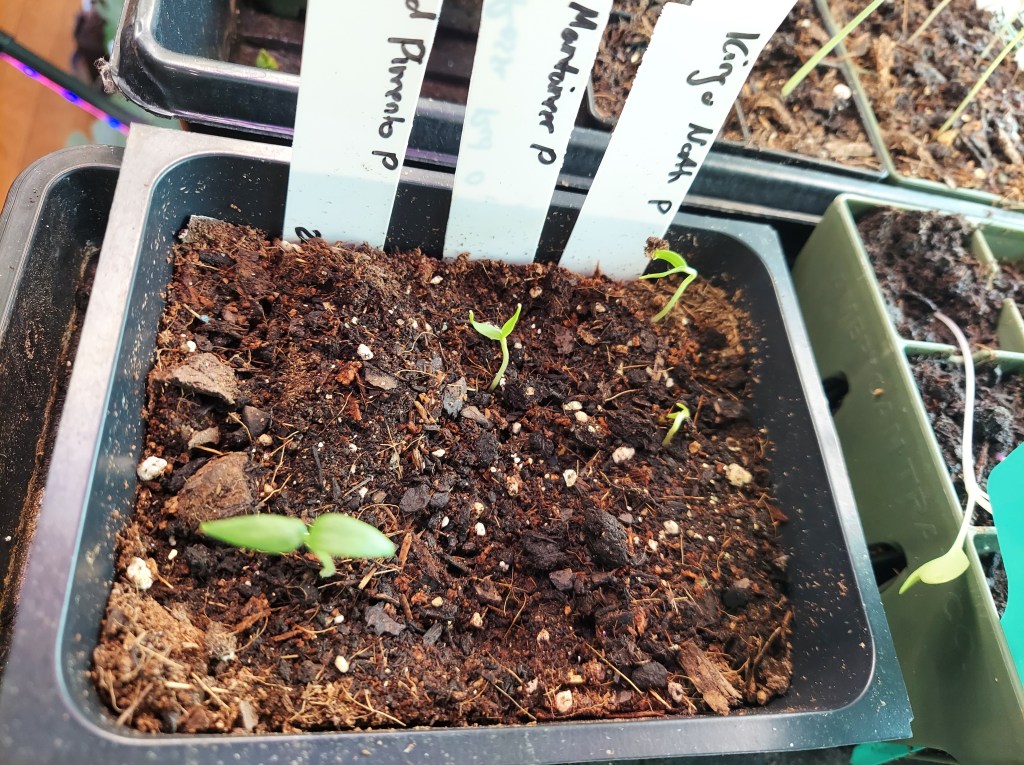
Three types of peppers sown in one shallow tray; they were pricked out to individual cells about a week after sprouting.
Note: I’ve seen folks who recommend egg carton, peat pots, or jiffy pods for seed starting. I have used all three methods and found them unsuccessful. Egg cartons are too shallow and dry out too easily, peat pots are ok, and I have used them in the past for squash seeds. They tend to stay wet and I have had some mold and fall apart on me. The jiffy pods say that the little mesh wraps are biodegradable but not over the course of a single season. I’ve had pepper seedlings really stunted by not being able to grow through the mesh edges. Newspaper pots or toilet paper tubes work better since they are easier to break down out in the soil. Personally, I have not tried soil blocking or other plastic free methods, I don’t mind having sturdy plastic seed trays.
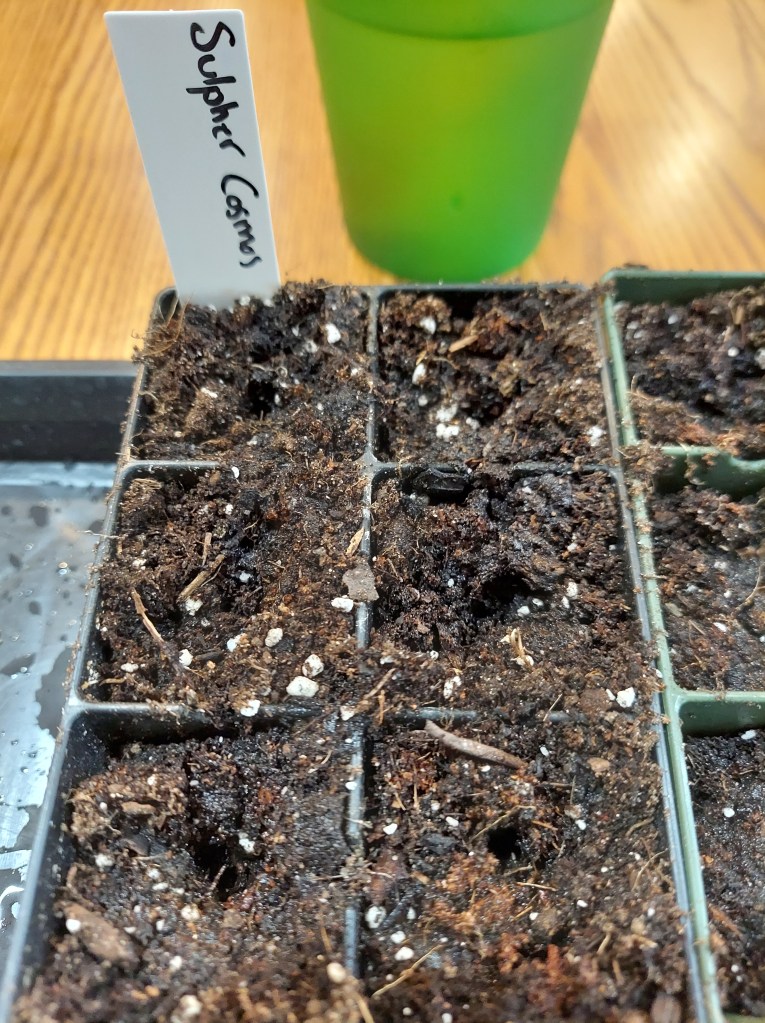
Holes poked, ready for seeds
Soil: I tend to make my own blend of seed starting mix, rather than buying it from the store. Store bought mixes are fine, as long as they have perlite for drainage and small particles. Chunky regular potting mix is not ideal, small seeds can get lost and not have good soil contact for moisture. My preferred mix is made from coconut coir, worm castings, perlite, and old potting mix from the previous year. I have a lot of old soil in pots and a good way to reuse it is to mix it with fresh compost. If the seeds are going to be in the cells for a long time, I will often add a bit of 3-3-3 granular fertilizer as well. If seeds need to be surface sown I will often sprinkle a fine layer of vermiculite over top, this still allows light through but helps with retaining moisture on the top of the seeds. I will also use a spray bottle for watering such seeds so as to not blast them from the tray.
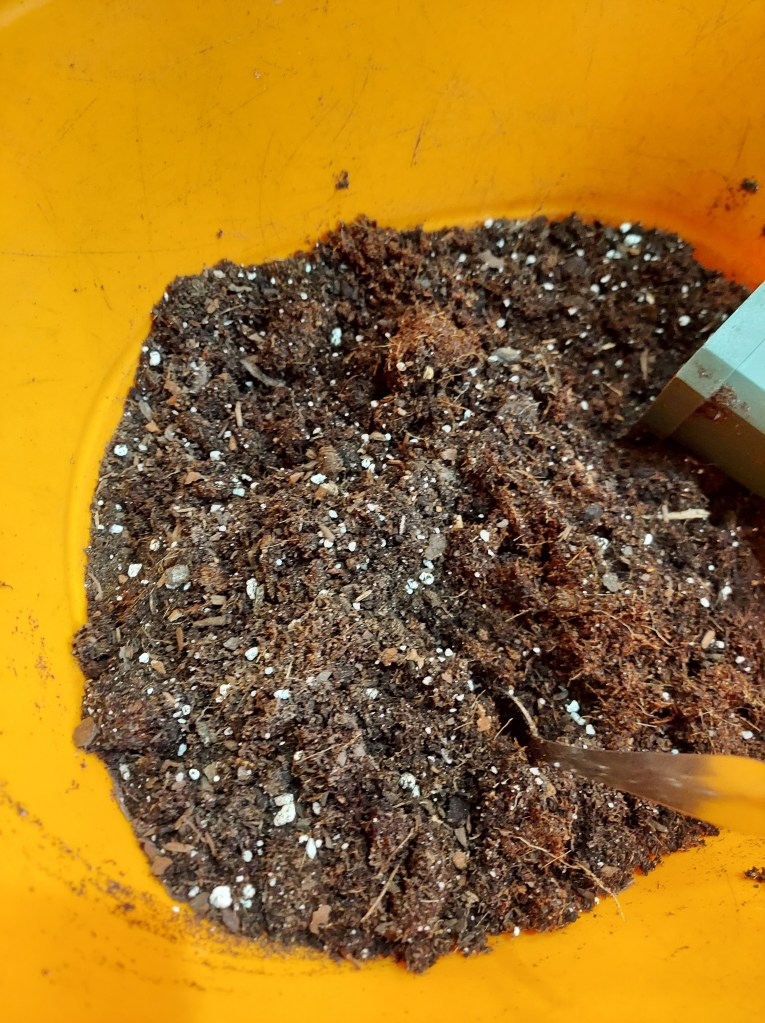
Recent batch of potting mix, all blended together and ready to go
Labels: Make sure you have or make some sort of labels so you remember what you’ve sown. I typically use plastic labels, but I have some bamboo ones too. A sharpie or other weatherproof marker is ideal for seeds going outdoors otherwise the ink or pencil will probably wash off during the course of the season. I’ve learned this the hard way.
Grow lights: Grow lights are only necessary if you are starting seeds indoors in late winter when sunlight is at a weak point. There is a vast range of lights out there, both in terms of light strength, cost, and mounting methods. I personally use cheap, clip-on lights from Amazon. For folks starting seeds in April or May lights are not needed, especially if you have a south facing window.
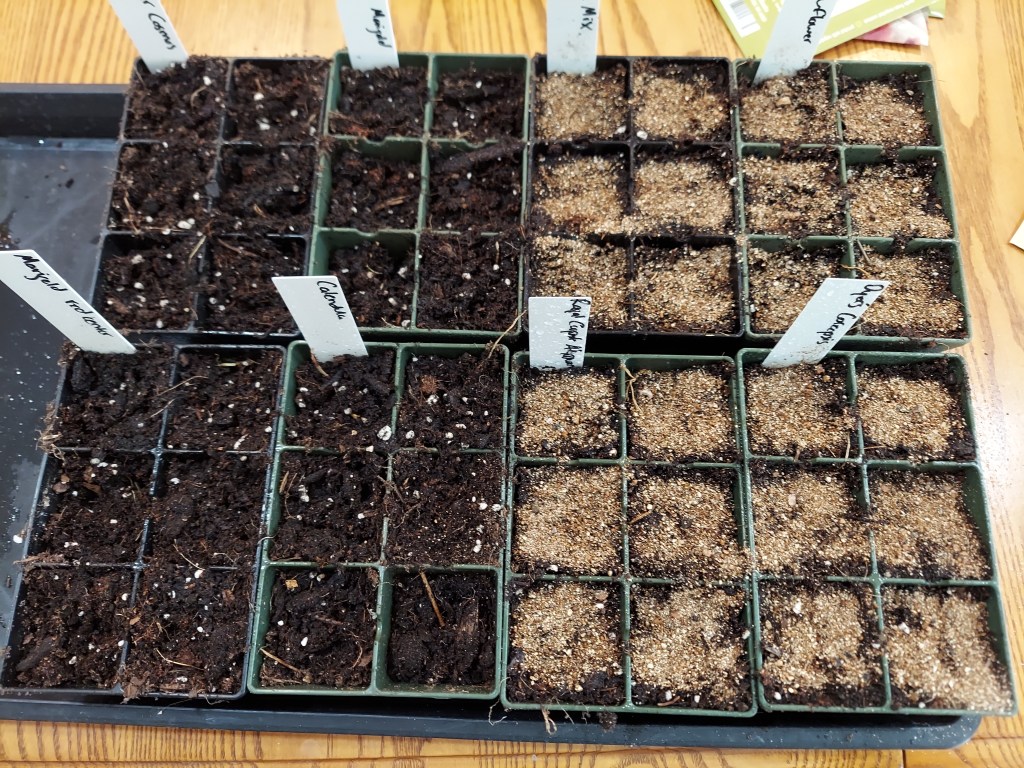
Many tiny flower seeds need light to germinate, so I sprinkled them on the surface of the soil and covered them over with vermiculite (right half of the tray).
Bottom trays: These are solid trays which will hold your seed cells or small pots of seedlings. These are necessary to catch any extra water that drains through the potting mix. Many gardeners recommend “bottom watering” which means pouring water into the bottom of the tray so that it can be whisked up by the potting mix. It encourages the roots to search for water and avoids any potential of disturbing the top of the soil or dislodging small seedlings with too strong a gush of water.
I use two styles of 10×20 bottom trays, one tall with ridges and the other short and smooth. They both work quite well, though the shorter ones are made of sturdier plastic. I purchased the shorter ones from Epic Gardening. I also own lots of the round ones that go under individual pots for my houseplants, both terra cotta and plastic. On occasion, I have also used old plastic tubs and food containers.
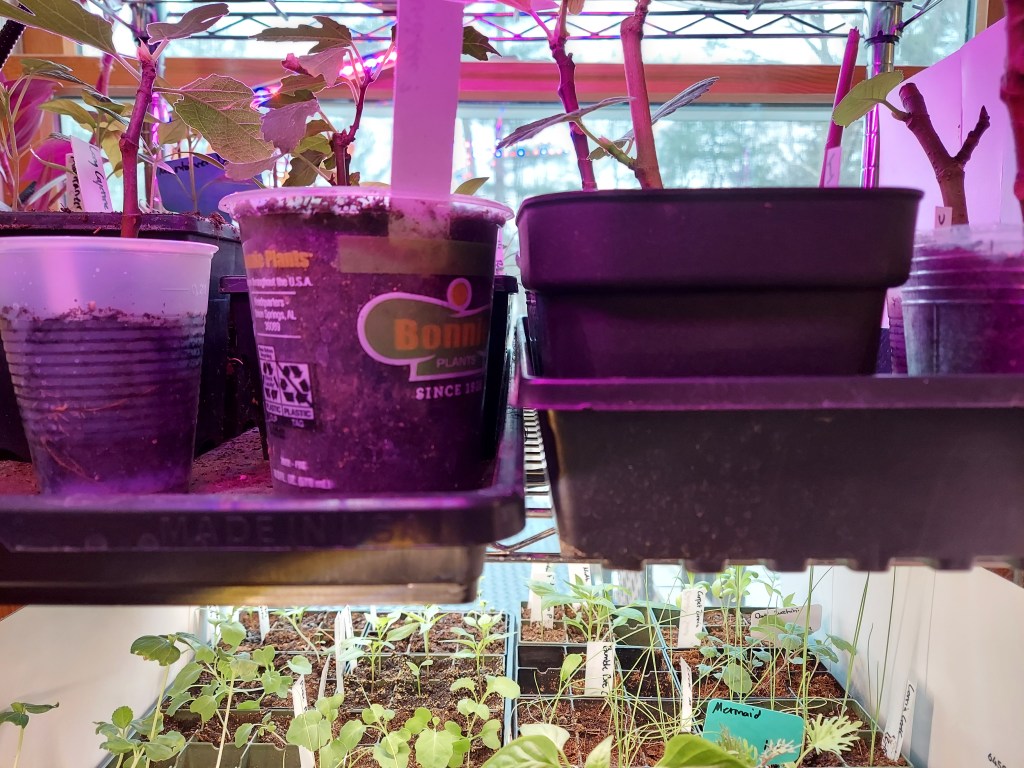
2 types of bottom trays, you can see the height difference between them, and the ridged one on the right versus the flat style on the left
Heat mat: I really only use the heat mat for peppers, tomatoes, and ginger. Most other seeds will sprout fine with regular room temperatures. Again, I got the cheap ones from Amazon. They plug in to the wall and run constantly. I don’t bother with timers or temperature control for seeds, but I did with the fig cuttings.

Tomato seeds on the heat mat
Tray covers/humidity domes: These mini greenhouses with covers are ideal for starting heat loving crops. They help to keep in the moisture and humidity and speed up germination. Just be aware that they need to come off once the seeds have sprouted. Healthy seeds need good airflow, and too much humidity can lead to mold/algae issues on your soil.
Growing Zone: It is very important to know your first and last frost dates before sowing seeds. Growing zones are less important, since your microclimate might vary greatly from the generic zone. If you do not know your frost dates this can easily be found by checking the farmers’ almanac. You can do an online search, and once you enter your zip code it will provide your first and last frost, which is your average growing season. Warm loving crops cannot go outside before the spring frost date, and will be killed off by the first fall frost. My frost free days are typically from mid May-early October. Seed packets will state when they should be sown, often stated as weeks before or after your spring frost date. Please pay attention to these details.
Steps:
- Gather all supplies
- Decide how many seeds you want to start from each packet. I find it’s best to have a few spare plants than to not have enough to fill your space. Seed packets will state their planting distances for ideal growth, this is based on straight row planting. I like to stagger rows and cram things closer than recommended.
- Moisten your potting mix and fill your containers, press down slightly to make sure everything is snug.
- Use your finger or a pencil/chopstick to make a small hole in the potting mix, you typically want this to be twice the depth of the seed size. Most seed packets will tell you how deep to sow the seeds. Most seeds will sprout fine if planted up to 1 inch deep.
- Carefully place a few seeds in the hole. For really tiny seeds I like to carefully tap on the edge of the seed packet and let them drop out. Sprinkle more potting mix over top to cover the seeds. Fill out your label while you still have the seed packet out and put it in the pot.
- Place the pots or cells in a tray near a south facing window or under the grow lights. Check every couple of days to make sure the soil is damp but not soaking wet. Many seeds will germinate within 7-14 days, some take longer.
- If you planted a lot of seeds per cell you will probably need to thin them after sprouting. Some crops do just fine when multi-sown and do not need to be thinned. Good candidates include onions, beets, some herbs and flowers. If however you intentionally multi-sowed in a small pot in order to prick out the seedlings, the best time to do that is about a week after the seed sprouted. This way you can separate them without difficulty. Carefully tease them from the pot, I like to use a chopstick for this, then poke a hole in your 6 cell and carefully guide the roots down. Do not hold the seedlings by the stem, they are very delicate. Snapping them will kill the seedling. Hold them by the leaves, they are sturdier and a plant can survive if one leaf is damaged.
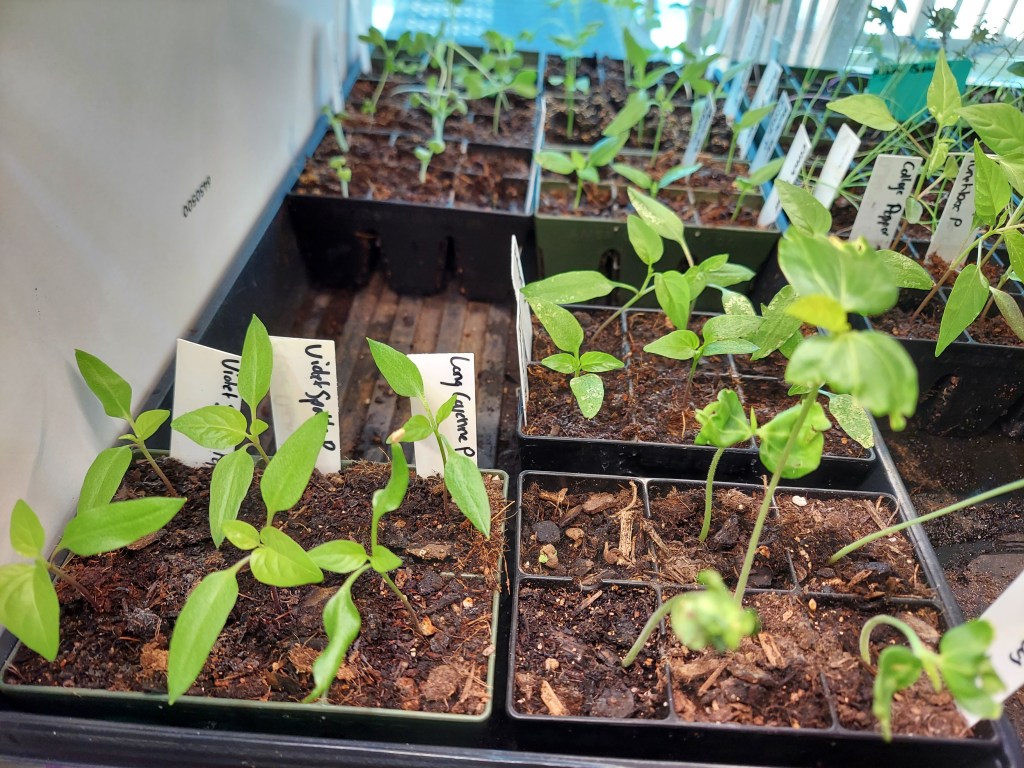
Trays of happy seedlings growing in early March.
One of the most important steps is proper watering, small 6 cells dry out much faster than 3 or 4 inch tall pots. Small seedlings can get waterlogged and die from “damping off,” so it is better to error on the drier side. If the top of the soil is dark chocolate in color they are probably fine, once it gets to milk chocolate you will want to check. I normally lift up the trays and check the bottom of the cells once the top looks dry.
Seedling size also makes a difference. Once seedlings roots fill up the cell they will need more frequent watering, and often benefit from being transplanted into a larger pot if it is still too early to put them outside. This is one of the main reasons why I have both 6 cell trays and the taller 4-inch seed cells. Once seedlings outgrow the 4-inch cells, I generally transplant to a 6-inch pot. Sometimes there is a bit of a waiting game to see how big the plants will get before the weather cooperates and lets you move them outside.
When the weather is warm enough for plants to go outside, they need to be hardened off to ensure they are not shocked by the change to their environment. Hardening off involves leaving trays outside in a sheltered spot for increasing amounts of daylight over the course of a week or 10 days. Start with one hour and work your way up to a full day before transplanting them. This will allow the seedlings to gradually adjust to full sun, outdoor conditions. Then you can transplant them and watch them grow all season long.
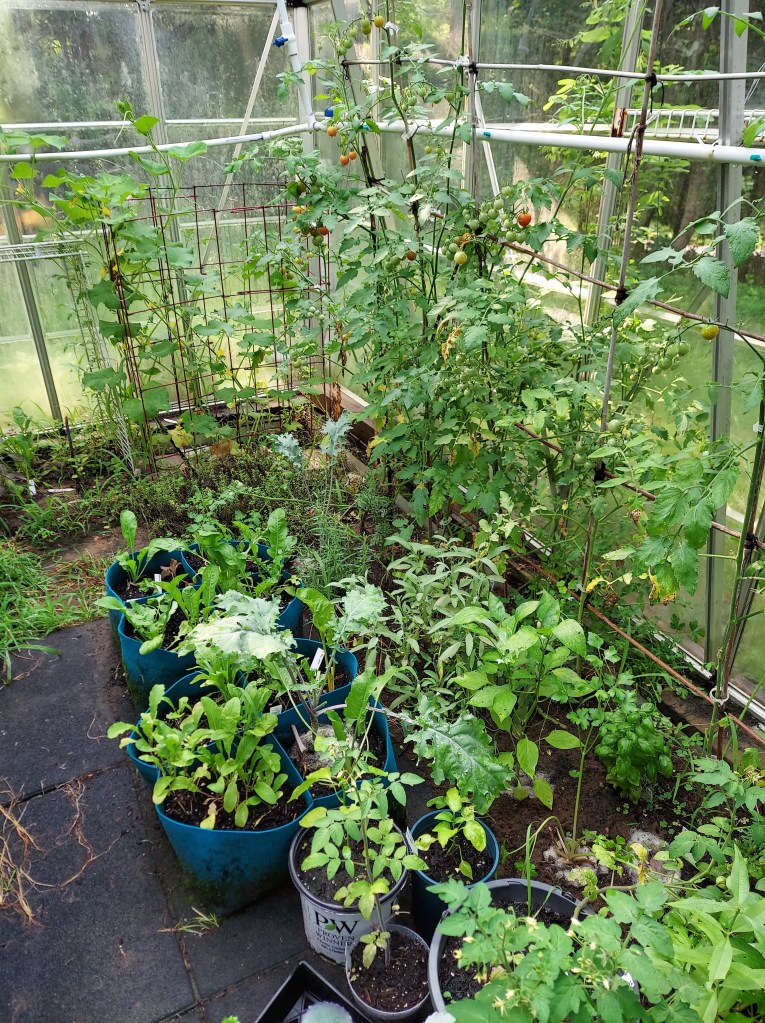
Dreaming of summer and a jam-packed greenhouse!
 Greenhouse Haven
Leave a comment