On this snowy day in February, I think it would be a good time to look forward to spring and post about seed starting for the 2025 garden. It is winter outside, but I am growing tiny plants inside. In the first week of January, I sowed: leeks, red and white onions, shallots, celery, peppers, and dazzling blue kale. Alliums are slow growers, so the longer head start I can give them the better. I managed to grow a few onions last year, but they were very small bulbs at harvest time. I want to improve this year. I have learned from experience that celery takes a very long time to germinate, often taking 4 weeks before the tiny sprouts make an appearance. Then the tiny seedlings take forever to start to size up.
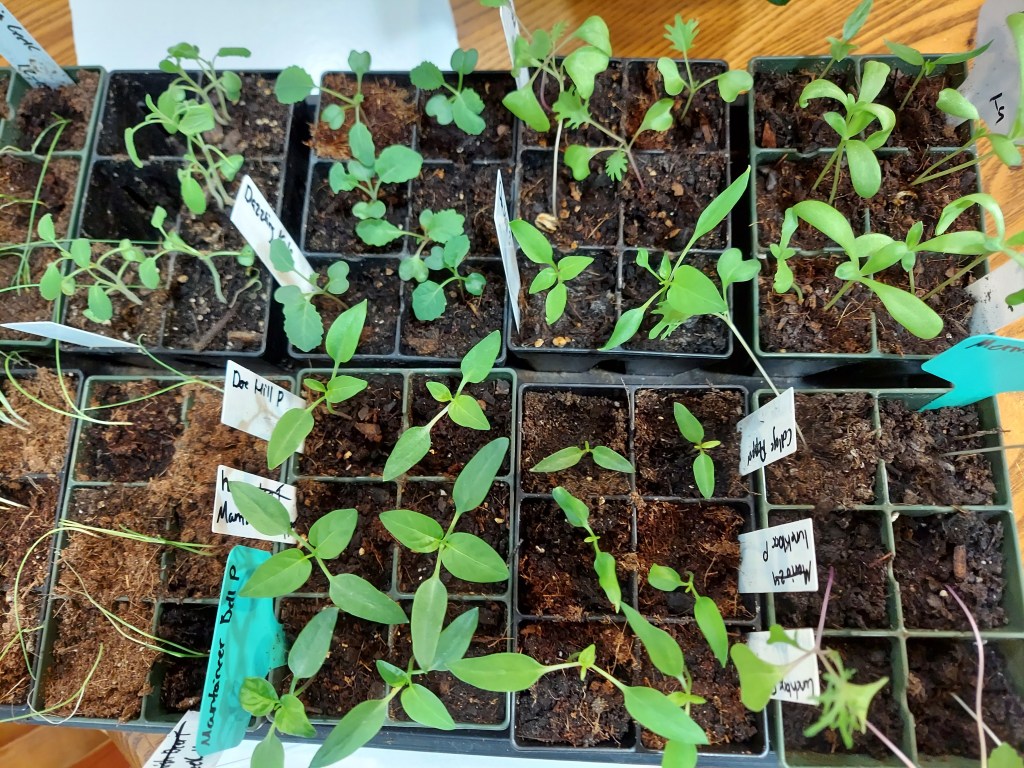
Seedlings after about one month of growth: leeks, sage, kale, peppers, cabbage, and calendula.
Last year I failed at my first attempts at sowing peppers, so I’m giving myself plenty of time for follow up sowings. I’m starting kale earlier than I have in the past because it is a year-round producer, and cold hardy. I am hoping for better slug resistance if I can plant out stronger, larger plants with thicker stems. I use grow lights on all my seedlings and the shelves are in south facing windows. I have heat mats which I use for pepper and tomato seeds to help improve germination. Once it gets close to spring the greenhouse will also give me a season extension and some cold hardy plants can be moved out there before the last frost date.
In the first week of February, I started my second round of pepper seeds. I have about a dozen seedlings from my first round of seeds. I started 4 different varieties of peppers, but want to have backups in case anything happens to them. This second round includes different varieties than from the first sowing. I tend to grow small and medium sized peppers, as I have found they provide more harvests per plant than with bell peppers. No one in my family likes really spicy food, so I don’t have to worry about any of the hot peppers. The varieties Violet Sparkle and Circus are both new to me, they are small brightly colored snacking peppers.

Second round of pepper seeds
I checked on my dahlia tubers in the garage last month and they were still dormant. I will keep checking and if they haven’t sprouted by April, I will bring them inside and pot them up to wake them up. I also ordered a couple of new varieties from Hudson Valley Seed Company, so I am looking forward to growing a couple new colors.
I’ve also started two trays of ginger pieces to pre-sprout them before planting. Much like potatoes ginger has eyes, certain spots that will regrow. However, it can take a very long time to get started and is a nutrient hungry, tropical plant, and it also requires a long growing season (10 months!). These two shallow trays are filled with half lobster compost and half coco-coir with some worm castings and balanced light fertilizer added.
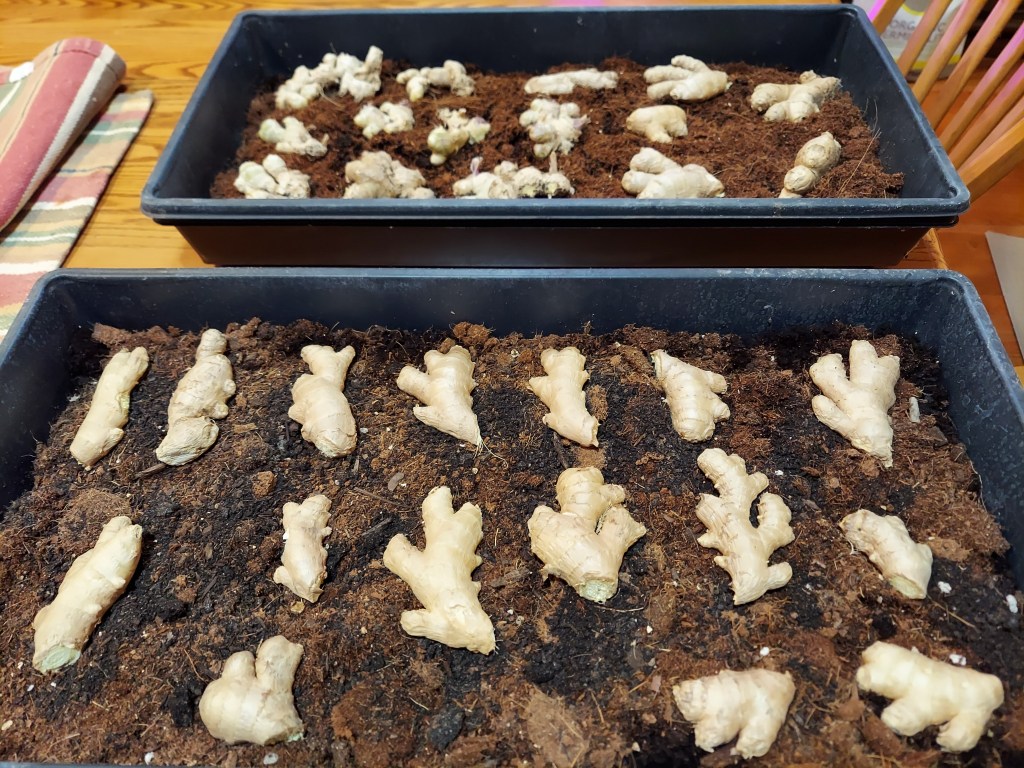
They will now go on heat mats for the next couple of months. As the pieces sprout and put out their first green growth I will carefully lift them from the trays and plant into deeper pots, with lots of compost. Doing them in trays allows me to fit 30 pieces into a small area and ensures that I’m not wasting valuable growing space on pieces that might fail to germinate. After a couple of months, I will check any remaining pieces and then compost the ones that don’t show any signs of growth.
When the warmer weather arrives, I will probably plant a few of the ginger the greenhouse under the shelves since they don’t take up a lot of vertical space. The rest will go in planters, which I typically put outside the greenhouse, but right up against the wall so they get some extra heat. I haven’t managed a bumper crop yet, but I also don’t have the ideal climate for ginger. I have grown a decent amount of small ginger pieces which are perfect for tea and baking purposes.
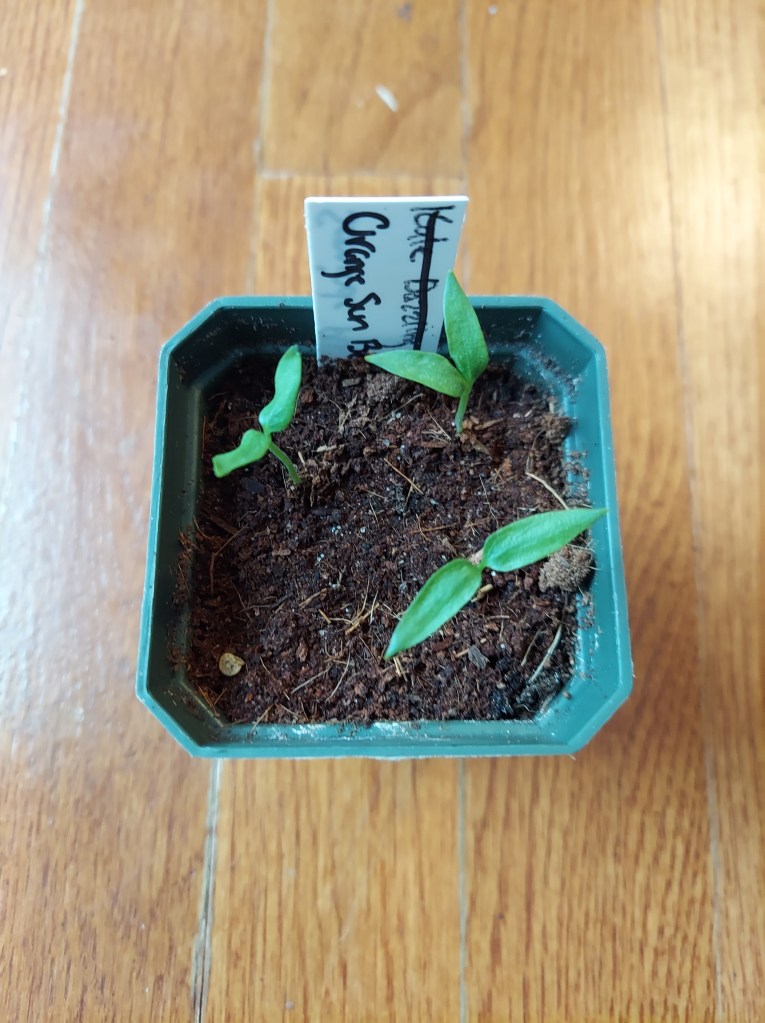
Tiny bell pepper seedlings
I will probably start tomato seeds in early-mid March, since they grow relatively quickly. After that I will start dye flowers such as marigold, indigo, madder, and cosmos. I typically direct sow sunflowers, and hopefully the chamomile self-seeded and will come up all over the place like it did last year. Most root veggies will be direct sown after our last frost. Squash and cucumbers get started inside at the beginning of May because they grow very quickly but are not frost tolerant. I like to get a head start by sowing in plug trays, which also means better protection for the vulnerable seedlings.
This year I am going to try to have extra seedlings ready to go in case of loses along the way. I also want to practice at succession sowing this season, by having plants ready at different points of the season for continual harvests, and keeping the soil used and covered. All the garlic I planted in the fall is currently under a nice layer of snow. I look forward to it poking through and starting to grow green shoots in spring.
 Greenhouse Haven
Leave a comment